
AES Convention 2025: Top 10 Pro Audio Product Announcements That Are Reshaping Studios
September 30, 2025
Meta Connect 2025: How Llama 4 Scout’s 17B Parameters Are Redefining On-Device AI Processing
October 3, 2025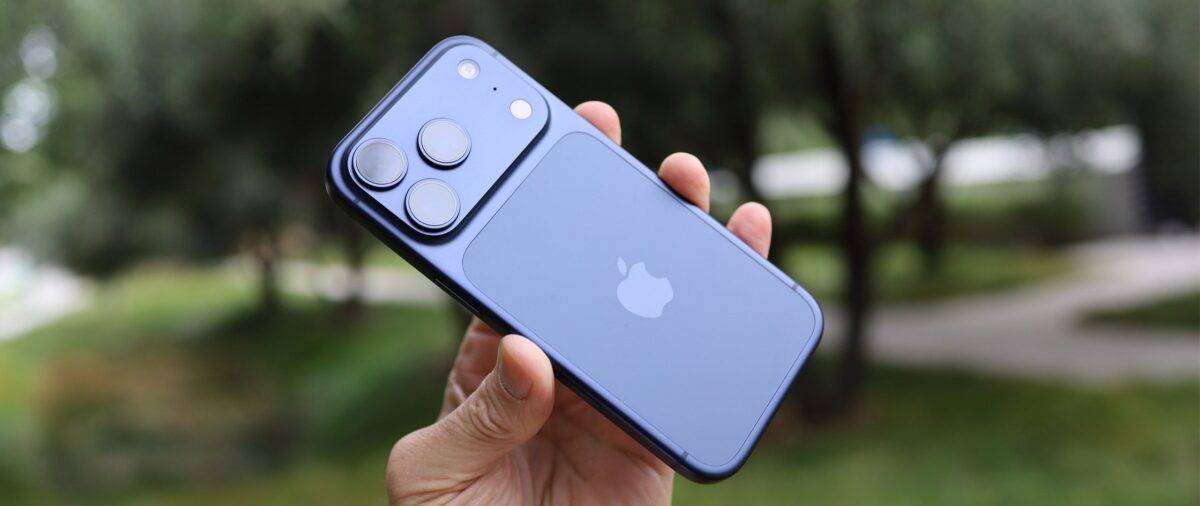
Forget incremental “S” updates — Apple just shipped the biggest iPhone Pro redesign in four years, and the numbers back it up. The iPhone 17 Pro’s A19 Pro chip scores 3,895 in Geekbench 6 single-core, beating AMD’s Ryzen 9 9950X in the same test. The vapor chamber keeps thermals at 29°C under load, down from 40°C on last year’s model. And that camera bar? It’s not just aesthetics.
iPhone 17 Pro Review: The Camera Bar Changes Everything
The most immediately obvious change is the horizontal camera bar stretching across the top of the device. Gone is the square camera bump that’s defined iPhone design since the iPhone 11. In its place, a raised “camera plateau” houses three 48MP sensors, a LiDAR scanner, and the flash — all in a single continuous strip.
This isn’t just a visual refresh. The camera bar eliminates the wobble when you place the phone on a flat surface, redistributes weight for better one-handed shooting, and — critically — provides additional surface area for the new vapor chamber cooling system underneath. Apple’s industrial design team essentially turned a thermal engineering challenge into a design statement.
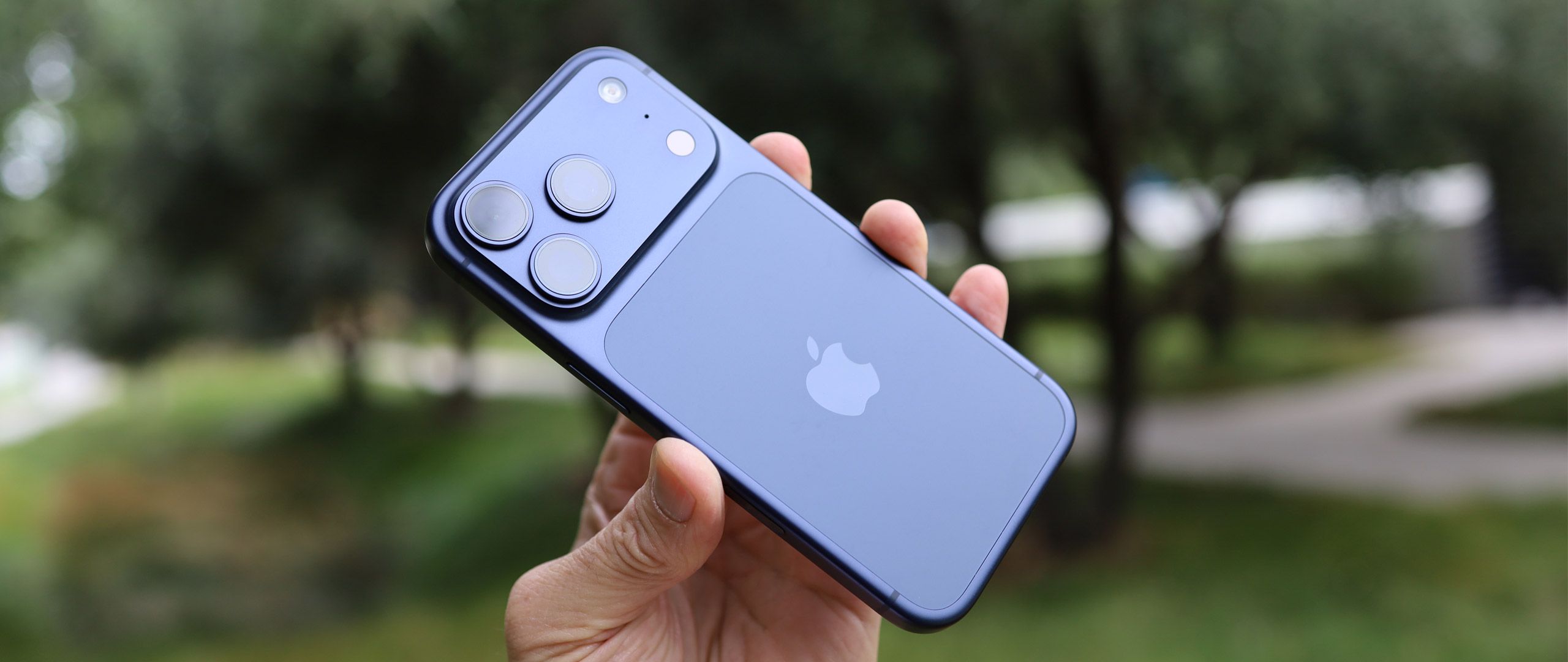
The aluminum unibody construction replaces the titanium frame from the iPhone 16 Pro. Some will see this as a downgrade in materials, but the thermal benefits are substantial. Aluminum conducts heat roughly 10 times better than titanium, making it the ideal partner for the new vapor chamber. The result? TechRadar’s Lance Ulanoff gave it 4.75 out of 5 stars, calling the cameras “fantastic” and the design “bold.”
A19 Pro Benchmarks: 37% GPU Boost and Desktop-Class Single-Thread
The A19 Pro is built on TSMC’s second-generation 3nm process with 12GB of LPDDR5X RAM clocked at 8533 MHz — up from 8GB on the iPhone 16 Pro. Here’s how the numbers stack up:
- Geekbench 6 Single-Core: 3,895 (+11% over A18 Pro)
- Geekbench 6 Multi-Core: 9,746 (+12% over A18 Pro)
- GPU Performance: 37% faster than A18 Pro
- Peak Clock Speed: 4.26 GHz (up from 4.05 GHz)
- Neural Engine: 16-core, hardware-accelerated ray tracing
As Tom’s Hardware reported, the A19 Pro doesn’t just beat Qualcomm’s Snapdragon 8 Elite — it outperforms AMD’s desktop Ryzen 9 9950X in single-threaded workloads. That’s a phone chip beating a $599 desktop CPU. The 37% GPU jump is equally significant for mobile gaming, video editing in LumaFusion, and running on-device AI models.
Vapor Chamber Cooling: 29°C vs 40°C — The Numbers Don’t Lie
This is where the iPhone 17 Pro makes the strongest case for upgrading. Apple’s laser-welded vapor chamber uses deionized water that vaporizes under load, spreading heat across the aluminum unibody instead of creating hotspots. According to NotebookCheck’s thermal testing, the results are dramatic:
- iPhone 17 Pro under sustained load: 29°C
- iPhone 16 Pro under identical conditions: 40°C
- Temperature reduction: 11°C cooler
In practical terms, this means no more thermal throttling during extended gaming sessions, smoother 4K Dolby Vision recording at 120fps, and — most importantly for the Apple Intelligence features — sustained on-device AI processing without the phone turning into a hand warmer. The vapor chamber measures approximately 40mm x 25mm and extends partially under the camera bar, which explains why the module feels slightly warm during heavy use. That warmth is the cooling system doing its job.
Camera System: Three 48MP Sensors and the Longest iPhone Zoom Ever
For the first time, all three rear cameras share the same 48MP resolution — Main (24mm, f/1.78), Ultra Wide (13mm, f/2.2, 120° FOV), and the star of the show: a new Telephoto with 100mm focal length at f/2.8. The next-generation tetraprism design delivers 8x optical-quality zoom with a 56% larger sensor than its predecessor, giving the iPhone 17 Pro a total 16x optical zoom range.
The 18MP Center Stage front camera (f/1.9) is a significant upgrade from the 12MP shooter on the iPhone 16 Pro. It supports landscape-orientation selfies without rotating the phone and uses computational photography to keep groups perfectly framed during FaceTime calls.
Video capabilities include 4K Dolby Vision at up to 120fps, 8K recording on the wide and telephoto lenses (a first for iPhone), and multicam recording from two or three cameras simultaneously. Content creators, take note — this essentially replaces a multi-camera rig for interviews and vlogs.
Android Central’s Harish Jonnalagadda rated it 4.5/5, calling it “the biggest iPhone Pro upgrade in four years,” though noting the telephoto still trails some Android flagships in low-light telephoto performance.
Apple Intelligence on iOS 26: Helpful, Not Revolutionary
Apple Intelligence on the iPhone 17 Pro runs faster thanks to the 12GB RAM and 16-core Neural Engine, but the feature set itself is evolutionary rather than revolutionary. Key capabilities include:
- Live Translation: Real-time translation in Messages, FaceTime, and Phone calls across supported languages
- Visual Intelligence: Capture screenshots and instantly search or take action on anything displayed on screen
- Writing Tools: System-wide text rewriting, summarization, and tone adjustment
- Image Playground: On-device image generation and editing
- Enhanced Siri: More contextual responses, deeper app integration
The vapor chamber cooling is particularly relevant here. Previous iPhones would throttle during sustained AI workloads, but the iPhone 17 Pro maintains consistent performance. That said, multiple reviewers noted that Apple Intelligence still lags behind Google’s Gemini and Samsung’s Galaxy AI in certain areas, particularly in conversational AI and multi-step task automation. The foundation is solid — the execution needs another generation to fully mature.
Battery Life and Charging: 33 Hours and Fast Refueling
Apple claims 33 hours of video playback for the iPhone 17 Pro (39 hours for the Pro Max), and real-world testing supports these figures. The combination of A19 Pro efficiency improvements and the vapor chamber’s ability to prevent thermal throttling means the phone runs more efficiently under sustained loads.
- Fast Charging: 0-50% in 20 minutes with 40W adapter
- MagSafe: Up to 25W wireless charging (up from 15W)
- Qi2: 25W compatible
The jump to 25W MagSafe is long overdue but welcome. For anyone invested in the MagSafe ecosystem, this alone makes the charging experience significantly better — especially for overnight desk charging with the smaller 30W MagSafe charger hitting 50% in 30 minutes.
Display, Connectivity, and What’s Missing
The 6.3-inch Super Retina XDR OLED display hits 3,000 nits peak outdoor brightness with ProMotion at 120Hz. It’s one of the brightest smartphone displays available, and the always-on display remains best-in-class. Wi-Fi 7, Bluetooth 6, and 5G mmWave round out the connectivity package, with dual eSIM (no physical SIM tray).
Colors come in Silver, Cosmic Orange, and Deep Blue. Storage options are 256GB ($1,099), 512GB ($1,299), and 1TB ($1,499). The 2TB option is exclusive to the Pro Max.
What’s missing? No under-display Face ID — the Dynamic Island remains. No USB-C speed upgrade beyond USB 3.2. And the base model still starts at 256GB, which feels restrictive for a phone capable of 8K video recording. The loss of titanium construction will bother some, even if aluminum is objectively better for thermal management.
Should You Upgrade? The Verdict
The iPhone 17 Pro is the most compelling Pro upgrade since the iPhone 12 Pro introduced LiDAR and 5G. The camera bar isn’t just a design flex — it’s a functional improvement that enables better cooling, eliminates surface wobble, and houses the most capable iPhone camera system ever built. The A19 Pro’s 37% GPU improvement and 11°C temperature reduction make a tangible difference in daily use.
If you’re on an iPhone 15 Pro or older, this is the upgrade cycle to hit. The camera improvements, thermal management, and 12GB RAM for AI workloads represent a generational leap. Coming from an iPhone 16 Pro, the case is harder — the vapor chamber cooling and 8x zoom are the strongest arguments, but the A19 Pro’s 11% CPU improvement alone doesn’t justify the cost.
At $1,099, it’s not cheap. But for the first time in years, the “Pro” label feels fully earned. With reviewers consistently scoring it above 4.5/5 across major publications, the iPhone 17 Pro sets a new baseline for what a flagship smartphone should deliver in late 2025.
Want to stay ahead of the latest tech, AI, and audio trends? Get weekly insights delivered straight to your inbox.
Get weekly AI, music, and tech trends delivered to your inbox.