Music Production Resolutions 2026: 7 Studio Workflow Upgrades to Make Before NAMM
January 19, 2026
How to Build a Eurorack Modular System: Beginner’s Budget Guide 2026
January 20, 2026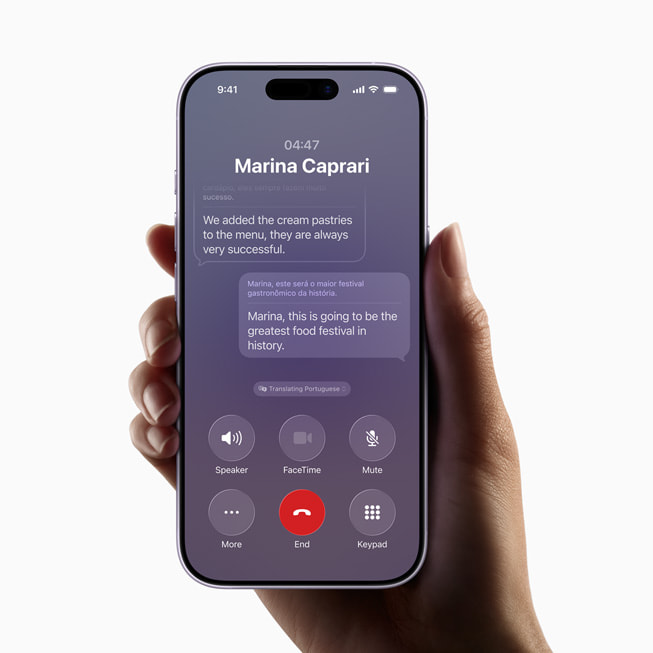
One billion dollars a year. That’s what Apple is reportedly paying Google — not for search engine placement this time, but for something far more significant. Apple Intelligence January 2026 marks the moment Apple admitted that building a competitive AI assistant from scratch wasn’t happening fast enough. So they did what Steve Jobs would have never approved: they bought someone else’s brain for Siri. And that’s just the beginning of what’s happening behind the curtain.
Apple Intelligence January 2026: The Gemini Partnership Nobody Expected
Let’s put this deal in perspective. Apple already pays Google an estimated $20 billion annually to remain the default search engine on Safari. This new agreement — worth approximately $1 billion per year — is entirely separate. Under this multi-year deal, Google’s Gemini models will serve as the core engine powering Apple’s next-generation Foundation Models. This isn’t a simple API integration or a fallback option. Gemini is being woven into the fundamental architecture of what Siri will become.
The strategic reasoning is straightforward, even if uncomfortable for Apple purists. Siri has been the butt of AI assistant jokes for years. While ChatGPT redefined conversational AI and Google Assistant leveraged Gemini’s capabilities, Siri remained stuck in a pattern-matching era. Samsung’s Galaxy AI was outperforming Siri in real-world tasks. Apple needed to close a gap that was widening every quarter, and building everything in-house wasn’t delivering results fast enough.
According to MacDailyNews, this decision didn’t come without internal friction. Steve Jobs famously insisted that Apple must own its core technologies — it’s the philosophy that drove Apple to design its own chips, build its own operating systems, and control the entire hardware-software stack. Partnering with Google for AI’s most critical component feels like a fundamental departure from that DNA. But Tim Cook’s pragmatism has always been about results over ideology, and the results from internal AI development weren’t cutting it.
What makes this partnership particularly interesting is the tension it creates. Apple is simultaneously paying Google $20 billion for search and $1 billion for AI, while also developing its own AI search engine to eventually compete with Google. It’s a relationship built on mutual dependence and mutual competition — and that dynamic will shape the AI landscape for years to come.
Two Versions of Siri: A Ground-Up Rebuild Arriving in Stages
Here’s something most coverage is missing: Apple isn’t building one new Siri. They’re building two, and they’ll arrive at different times with fundamentally different capabilities.
The first version ships with iOS 26.4, expected to enter beta in February 2026 with a public release in March or April. This is “Personalized Siri” — an upgrade focused on three core capabilities that current Siri completely lacks. First, personal context understanding: Siri will learn your habits, preferences, and routines to provide proactive suggestions. Second, on-screen awareness: Siri will understand what’s displayed on your screen and respond accordingly, similar to what Google has offered with Gemini on Android. Third, cross-app actions: Siri will chain together operations across multiple apps, like finding a restaurant in Maps, making a reservation through a booking app, and adding it to your calendar — all from a single natural language request.
The second version is the ambitious one. Coming with iOS 27 (likely fall 2026), this is “Full Chatbot Siri” — Apple’s answer to ChatGPT and Gemini 3. MacRumors reports that Siri has been rewritten from the ground up on LLM infrastructure, abandoning the rule-based system that has defined it since 2011. This isn’t an upgrade — it’s a replacement. The new Siri will handle open-ended conversations, generate content, analyze documents, and perform complex reasoning tasks.
The staged approach is deliberate and smart. iOS 26.4’s Personalized Siri will begin collecting user interaction data (with consent and on-device processing), which feeds into the training and fine-tuning of the Full Chatbot version. By the time iOS 27 launches, Apple will have months of real-world usage data to refine the experience. It’s a classic Apple move — let the competition rush to market with flashy features while Apple takes time to get the implementation right. Whether they’ve waited too long this time remains to be seen.
World Knowledge Answers: Apple’s Secret AI Search Engine
This might be the most consequential development that nobody is talking about enough. Apple is internally developing an AI search engine called World Knowledge Answers, or WKA. 9to5Mac’s reporting reveals that WKA is designed to compete directly with Perplexity AI and ChatGPT’s web search capabilities — not by returning links, but by synthesizing comprehensive answers from multiple sources.
Think about what this means strategically. Apple currently pays Google approximately $20 billion per year to be the default search engine on iOS and macOS. If WKA succeeds, Apple could gradually redirect those search queries to its own AI-powered system, eliminating one of the largest licensing costs in corporate history while simultaneously owning the entire user experience from question to answer.
The implications for Google are enormous. Search advertising is Google’s primary revenue engine, and iOS users represent a massive share of premium search traffic. If Apple successfully diverts even a fraction of those queries to WKA, it would put significant pressure on Google’s advertising business. This adds another layer of complexity to the Apple-Google relationship: Google is powering Apple’s AI assistant while Apple is building a product that could undermine Google’s core business.
For users, the promise is compelling. Instead of asking Siri a question and getting a “Here’s what I found on the web” response with blue links, WKA would deliver a synthesized, cited answer within the Siri interface. Imagine asking “What were the most important announcements at CES 2026?” and getting a comprehensive summary with source citations, all processed through Apple’s privacy-preserving infrastructure. That’s the future WKA is aiming for.
16+ Languages Including Korean and Japanese: Going Truly Global
Apple Intelligence launched as an English-first product, which limited its impact in crucial markets across Asia and Europe. That’s changing substantially. Apple’s official announcement confirms expansion to 16+ languages including Korean, Japanese, Chinese, Danish, Dutch, Norwegian, Portuguese, Swedish, Turkish, and Vietnamese.
The language expansion includes three key capabilities for each supported language. Live Translation in Messages and FaceTime processes translations entirely on-device, meaning your conversations never leave your phone. Text summarization and proofreading adapt to the grammar and style conventions of each language — particularly important for agglutinative languages like Korean and Japanese where English-trained models often stumble. And Siri’s natural language understanding receives language-specific fine-tuning, meaning Korean speakers will get responses that sound natural rather than machine-translated.
The Korean market deserves special attention here. Samsung has had a head start with Galaxy AI, offering Korean language AI features since the Galaxy S25 series. Korean consumers have already experienced on-device AI translation, text summarization, and smart suggestions in their native language. Apple’s late entry means they need to not just match Samsung’s capabilities but exceed them in areas like cross-device integration and ecosystem coherence. The M-series MacBooks and iPads running Apple Intelligence in Korean could be the differentiator that smartphones alone can’t provide — a unified AI experience across every device you own.
The Talent Exodus and Privacy Shield: Apple’s Contrasting Challenges
Not everything in Apple’s AI story is moving in the right direction. January 2026 saw at least four key AI researchers depart Apple, with the most notable being Stuart Bowers, who left for Google DeepMind. In the AI talent war, losing researchers to your technology partner is particularly painful — it means the people who understand your systems intimately are now working on the competing product. This brain drain raises legitimate questions about Apple’s ability to attract and retain top AI talent, especially when companies like Google, OpenAI, and Anthropic can offer both higher compensation and the allure of being at the cutting edge of AI research.
On the flip side, Apple’s privacy infrastructure remains its strongest competitive advantage. Private Cloud Compute (PCC) processes AI tasks that exceed on-device capabilities in the cloud, but with a critical difference: user data is never stored on servers. It’s processed and immediately deleted, with cryptographic verification that even Apple cannot access the data during processing. This is fundamentally different from how Google, OpenAI, and others handle cloud AI — where user interactions may be logged, analyzed, and used for model training.
Apple has also opened a Swift framework for developers to integrate on-device AI capabilities into their apps. This is strategically important because it extends Apple’s privacy-first approach to the entire app ecosystem. Third-party developers can now build AI features that process sensitive data entirely on the user’s device, without ever sending it to external servers. For enterprise users and privacy-conscious consumers, this creates a compelling reason to stay within the Apple ecosystem.
The AppleMagazine deep dive also highlights anticipatory assistance as a 2026 roadmap item — Siri proactively suggesting actions before you ask, based on patterns like your morning routine, commute habits, or meeting schedule. Combined with Visual Intelligence for screen content recognition and expanded developer tools, the 2026 roadmap is ambitious even by Apple standards.
So where does this leave us? Apple Intelligence January 2026 represents a pivotal strategic shift. The Gemini partnership is a pragmatic short-term solution to close the AI gap. The two-stage Siri rebuild shows Apple is thinking long-term about the assistant experience. World Knowledge Answers signals Apple’s ambition to own the entire information pipeline from question to answer. And the expansion to 16+ languages finally makes Apple Intelligence a global product rather than an English-only feature.
The risks are real — talent departures, dependency on a competitor’s technology, and a late start in key markets like Korea. But if Apple can execute on even half of this roadmap while maintaining its privacy commitments, 2026 could be the year Siri finally becomes the assistant Apple always promised it would be. The first real test comes in March with the iOS 26.4 beta. That’s when we’ll know if this is genuine transformation or just another round of promises.
Thinking about implementing AI solutions or building automation systems for your workflow? Let’s talk about what makes sense for your specific needs.
Get weekly AI, music, and tech trends delivered to your inbox.