Sub Bass Processing Streaming: 7-Step Guide to Low End That Translates on Every Playback System
July 21, 2025
W&B Prompts Deep Dive: 5 Ways Weave Is Transforming LLM Debugging and Evaluation in 2025
July 22, 2025
Buried in the iOS 26 beta 4 code, Apple just gave away its worst-kept secret. A settings reference to HomePod “showing” weather, time, and Siri responses confirms what we’ve been hearing for years — a display-equipped Apple HomePod 3 is no longer a matter of “if” but “when.” After seven years of watching Amazon and Google dominate the smart display market, Apple is finally ready to make its move.
Why Apple HomePod 3 Is Coming Now
Apple’s smart speaker journey has been rocky, to say the least. The original HomePod launched in 2018 with exceptional audio quality but was hampered by Siri’s limitations and a premium price tag. The HomePod 2nd generation improved things marginally, but Apple has never been a serious contender in the smart home hub space. That’s about to change.
The catalyst is Apple Intelligence. Unveiled at WWDC 2025, Apple’s on-device AI framework transforms Siri from a basic voice assistant into something that actually understands context, chains commands across apps, and delivers personalized responses. For the first time, Apple has an AI story compelling enough to justify an entirely new product category.
According to MacRumors, the iOS 26 beta 4 discovery is significant because the use of “show” — rather than “speak” or “announce” — directly implies visual output capabilities. The device will reportedly run Weather, Calendar, Apple Music, Photos, and Apple News apps, all controlled through a touch-optimized interface.
Analyst Ming-Chi Kuo has predicted mass production will begin in Q3 2025, following WWDC, with an initial shipment forecast of approximately 500,000 units for the second half of the year.
Apple HomePod 3 Specs: Inside Codename J490
Internally codenamed J490, with its operating system dubbed “Charismatic,” the Apple HomePod 3 with display is not just a HomePod upgrade — it’s an entirely new product category for Apple. Based on the comprehensive reporting from MacRumors’ Apple Command Center guide, here’s what we know.
Display and Design
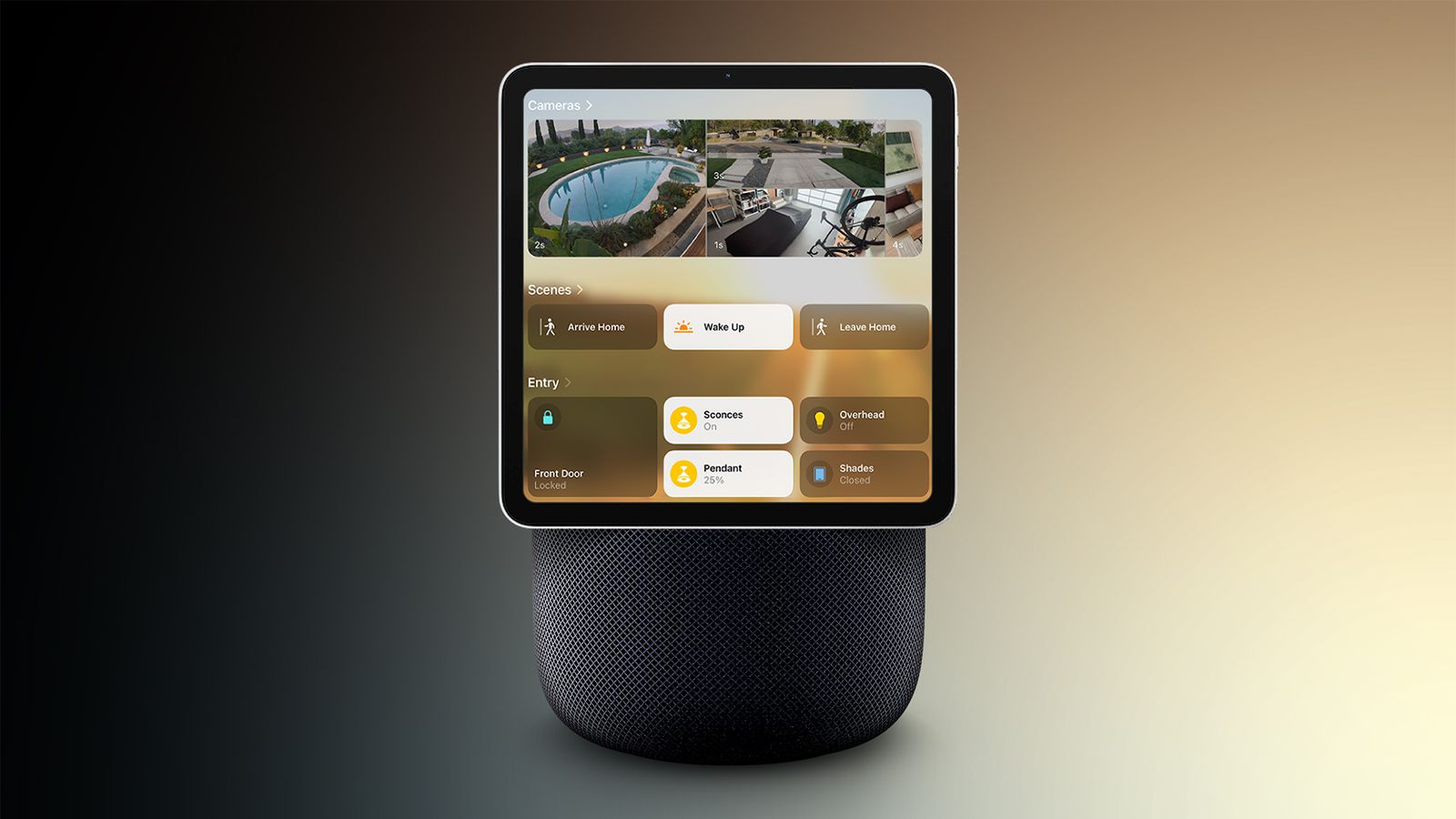
The device features a 7-inch square LCD display — a deliberate departure from the rectangular form factor of iPads and competing smart displays. Apple reportedly chose the square format to differentiate the product visually and functionally from tablets.
Two form factors are in development. The tabletop version features a hemispherical dome speaker base that draws clear inspiration from the iconic iMac G4, while the wall-mounted version offers a slim, panel-like installation. Both come in silver and black. Display panel supplier Tianma has been confirmed, and earlier reports from December 2024 mentioned the possibility of a slightly curved OLED panel — though the LCD version appears more likely for the initial launch.
Processor and AI Capabilities
At the heart of the Apple HomePod 3 sits the A18 chip with a minimum of 8GB RAM — the same baseline Apple requires for on-device Apple Intelligence processing. This is a significant step up from the S7 chip in the current HomePod and signals Apple’s intention to make this device a genuine AI-powered smart home hub, not just a speaker with a screen bolted on.
The A18 chip enables several AI-driven features: proximity sensors that adjust display content based on user presence and distance, hand gesture recognition for touchless control, and Apple Intelligence-powered Siri that can handle complex, multi-step commands. Imagine saying “dim the living room lights, play my dinner playlist, and show me the front door camera” and having it all execute seamlessly.
Camera, Communication, and Connectivity
- 1080p FaceTime camera with Center Stage — the camera automatically pans and zooms to keep you in frame during video calls
- Face ID — enables personalized experiences for each family member, from custom dashboards to individual calendars
- Room-to-room intercom — communicate between HomePod devices throughout the home
- AirPlay receiver — stream audio or video from any Apple device
- Custom Apple Bluetooth and Wi-Fi chip replacing the previous Broadcom components
Software and Apps
The device runs a touch-optimized version of homeOS with pre-installed apps including Safari, Apple News, Apple Music, Notes, Calendar, Photos, and the Home app. Here’s the controversial part: there are currently no plans for an App Store. What ships on the device is what you get — at least initially. This is a bold (some might say risky) choice that limits third-party app support but could also keep the experience focused and polished.
Price and Release Date: The $350 Question
The expected price of approximately $350 puts the Apple HomePod 3 display squarely in premium territory. For context, the Amazon Echo Show 15 retails for $250, the Echo Show 10 for around $200, and the Google Nest Hub Max at $230. At $350, Apple is asking consumers to pay a 40-75% premium over the established competition.
Is it justified? Apple would argue yes. An A18 chip, Face ID, Apple Intelligence, premium audio, and deep ecosystem integration aren’t features you’ll find on an Echo Show. Whether consumers agree with that value proposition will ultimately determine the product’s success.
The release timeline has been a moving target. Originally planned for spring 2025, the device has been delayed multiple times. According to Tom’s Guide, a late 2025 launch is now the most likely scenario, with Bloomberg’s Mark Gurman reporting that the delays stem from AI-enhanced Siri not meeting Apple’s quality bar.
One particularly interesting detail: manufacturing is reportedly taking place in Vietnam rather than China. This represents a significant supply chain shift for an entirely new product category and reflects Apple’s broader diversification strategy.
Apple HomePod 3 vs Echo Show vs Nest Hub: How Does It Stack Up?
Apple is entering the smart display market more than seven years after Amazon launched the original Echo Show. That’s an eternity in tech. But late entries aren’t always disadvantaged — Apple proved this with the Apple Watch, which launched years after Android Wear but went on to dominate the smartwatch market. Can lightning strike twice?
Where Apple Wins
Ecosystem depth. If you’re already invested in Apple’s ecosystem — iPhone, iPad, Mac, Apple Watch, AirPods — the HomePod 3 becomes the natural smart home hub. HomeKit and Matter device control, iCloud photo frames, FaceTime video calls, AirPlay streaming, and seamless handoff between devices create a cohesive experience that Amazon and Google simply cannot match for Apple users.
Privacy-first AI. Apple Intelligence processes most requests on-device thanks to the A18 chip’s neural engine. While Amazon’s Alexa+ and Google Assistant route queries through the cloud, Apple’s approach keeps sensitive data local. For privacy-conscious consumers, this is a meaningful differentiator.
Face ID personalization. Neither Echo Show nor Nest Hub offers facial recognition-based personalization at this level. Each family member gets their own calendar, photo memories, music recommendations, and smart home preferences — automatically, just by walking up to the device.
Where Apple Faces Challenges
Price barrier. At $350, the HomePod 3 costs more than some people’s entire smart home setup. Amazon offers Echo Show devices starting at just $90, making them far more accessible for mainstream adoption.
No App Store. This is potentially the biggest limitation. Without third-party app support, you can’t run Netflix, YouTube, Spotify, or the thousands of other apps that make competing platforms versatile. Apple is betting that its built-in apps — Safari, Apple Music, Apple News, Photos — are enough. That’s a big bet.
Late market entry. Amazon and Google have spent years building developer ecosystems, third-party integrations, and user habits around their platforms. Apple needs to convince consumers to switch or add another device to an already crowded smart home.
The Bigger Picture: Apple’s Smart Home Ambitions
The HomePod 3 with display doesn’t exist in isolation. Reports indicate Apple is simultaneously developing a HomePod mini 2, indoor security cameras (expected 2025-2026), and a broader home entertainment bundle strategy. This suggests Apple is making a comprehensive push into the smart home category — not just dipping a toe in.
The naming is still up in the air. Macworld reports that HomePod Touch, HomePad, and HomeHub are all being considered. Whatever it’s called, this device represents Apple’s most ambitious smart home product to date.
What to Expect Next
The success of the Apple HomePod 3 display model hinges on three critical factors. First, whether Apple Intelligence-powered Siri actually delivers on its promise of contextual, intelligent assistance — because Siri’s track record gives plenty of reason for skepticism. Second, whether the $350 price tag can be justified by the experience. And third, whether a walled garden with no App Store can provide enough utility to justify a dedicated device.
The positive signals are hard to ignore. The A18 chip with 8GB RAM provides genuine on-device AI capability. FaceTime with Face ID creates a differentiated experience no competitor can match. And Apple’s installed base of over a billion active devices means there’s a massive potential market of consumers who will see this as a natural addition to their setup.
With iOS 26 code now revealing concrete evidence of the device’s software capabilities, the Apple HomePod 3 with display feels closer to reality than ever. Whether it arrives in late 2025 as currently rumored or slips into early 2026, one thing is clear: Apple isn’t just building a speaker with a screen. It’s building the command center for the Apple-powered home of the future.
Get weekly AI, music, and tech trends delivered to your inbox.