Universal Audio LUNA Built-In Instruments Guide: 29 Plug-Ins, ChordAXE, and Why Producers Are Switching DAWs in 2026
February 11, 2026
Wireless Studio Headphones Low Latency 2026: 3 Models That Actually Work for Production
February 12, 2026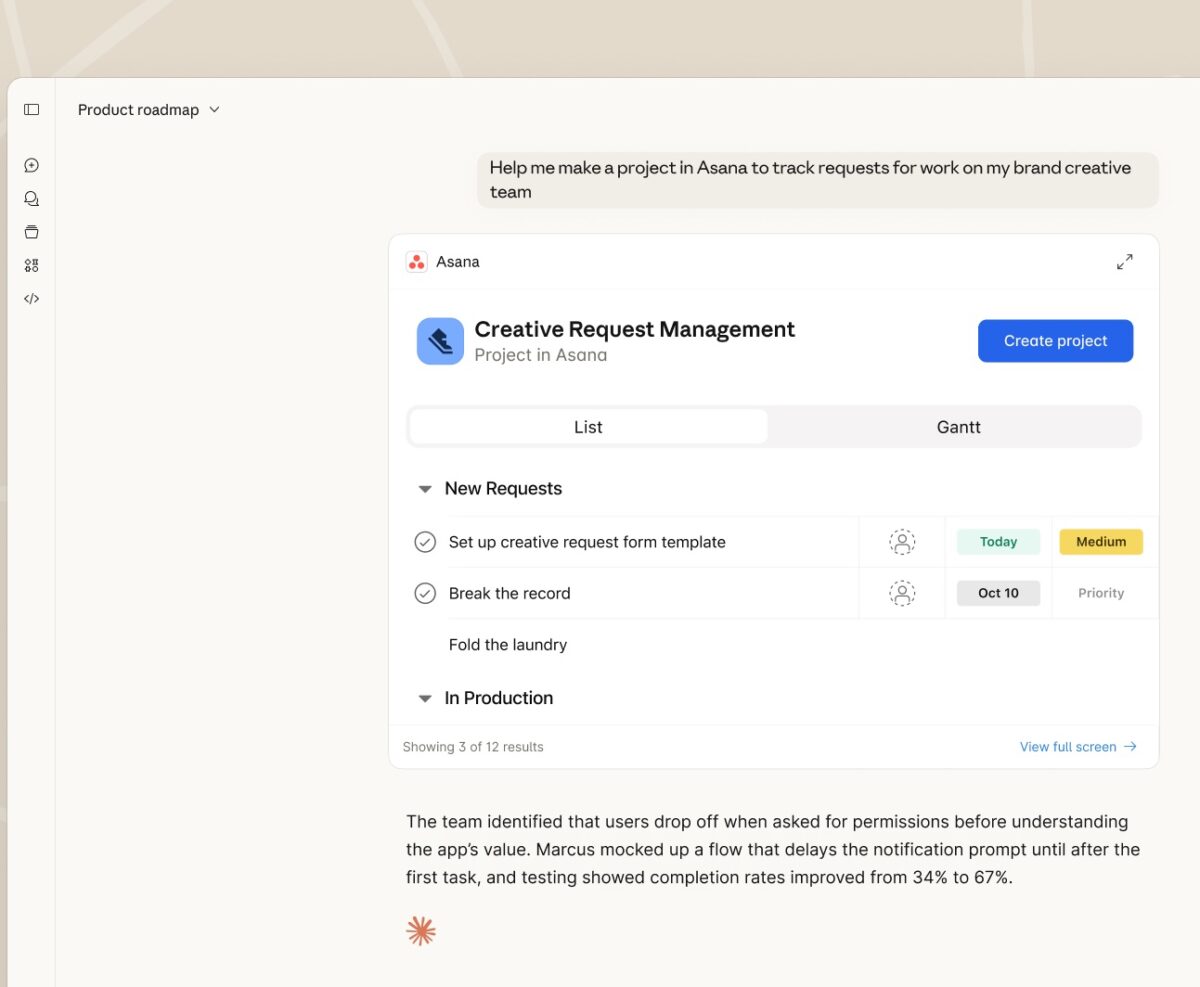
Fifty integrations. That’s how many Anthropic MCP connectors now sit inside Claude’s interface, turning what used to be an AI chatbot into something that looks a lot more like an operating system for work. As of February 2026, you can read Slack threads, edit Notion docs, and review GitHub pull requests without ever leaving your Claude conversation. If that sounds like a productivity dream — or a security nightmare — you’re asking the right questions.
What Anthropic MCP Connectors Actually Are (And Why 50 Matters)
Model Context Protocol — MCP for short — is an open standard developed by Anthropic that gives AI assistants a universal way to talk to external data systems. Think of it as a common language that lets Claude connect to your tools without each integration requiring its own bespoke API plumbing. Pre-built MCP servers already existed for Slack, GitHub, Google Drive, Git, Postgres, and Puppeteer since the protocol’s initial launch, but the February 2026 update represents a significant inflection point.
The connector directory now lists over 50 integrations spanning communication, project management, design, and engineering. This isn’t just a vanity metric. It means the MCP ecosystem has reached the critical density where most enterprise tech stacks can be meaningfully connected to Claude. According to CIO, the broader MCP ecosystem has grown to over 1,000 available servers, with major players like OpenAI, Hugging Face, and LangChain all adopting MCP as their core integration interface. That kind of cross-industry adoption turns a protocol from a nice idea into a de facto standard.
Live Interfaces Inside Claude: How Slack, Notion, and GitHub Actually Work via Anthropic MCP Connectors
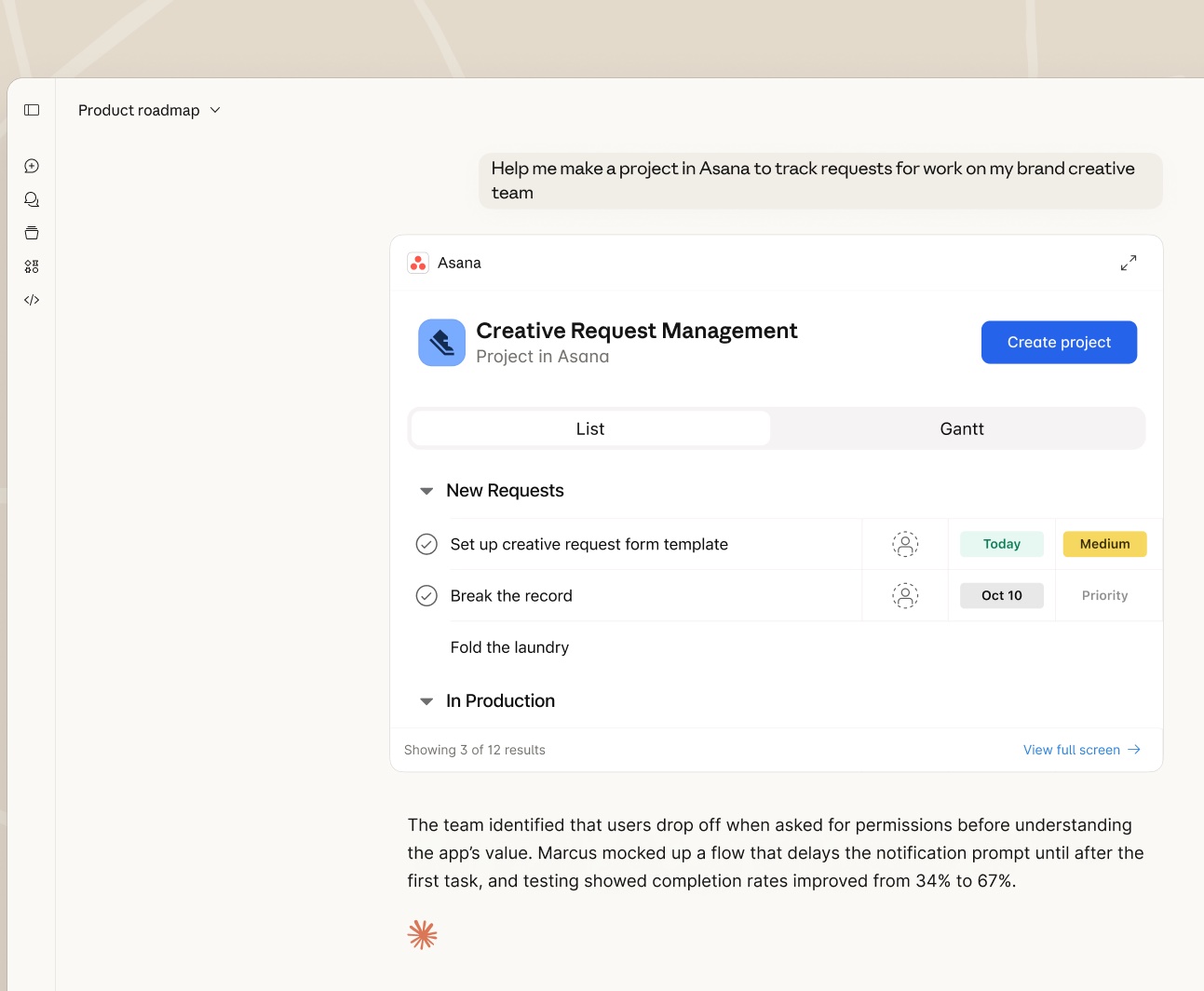
The most transformative part of this update isn’t just data access — it’s that external tools now render live interfaces directly inside Claude conversations. VentureBeat described it as Anthropic turning AI chat into a “workplace command center,” and that framing is accurate. Slack messages, Figma designs, and Asana task boards don’t just get summarized — they show up as interactive elements you can act on.
Here’s what that looks like in practice:
- Slack integration: Ask Claude to “summarize the marketing channel discussions from this week” and the MCP connector pulls real-time channel data through the Slack API. You can reply, react, and even create new threads without switching windows.
- Notion integration: Tell Claude to “add today’s meeting notes to the Q1 roadmap page” and it directly edits the Notion document. Changes appear in Notion instantly, complete with proper formatting and page structure.
- GitHub integration: Request a security review of recent pull requests and Claude analyzes code diffs, flags potential issues, and can even draft review comments — all from the conversation interface.
TechCrunch characterized this launch as Anthropic shipping “interactive Claude apps” that fundamentally change how workplace tools operate. The January 2026 rollout laid the groundwork, and the February update with 50+ connectors fills in the gaps that made early adoption feel incomplete. The upcoming “Cowork” integration promises to take this even further, enabling real-time collaborative workflows between Claude and human team members.
The 2026 MCP Roadmap: Enterprise Readiness Takes Center Stage
Connector count is one thing. Enterprise trust is another entirely. The official 2026 MCP roadmap addresses this head-on with four strategic pillars that reveal where Anthropic sees this protocol heading:
- Transport Scalability: Infrastructure hardening for high-concurrency environments. This matters for enterprises running thousands of simultaneous MCP connections across teams.
- Agent Communication: Multi-agent architectures where multiple AI agents coordinate through MCP. Imagine your research agent, writing agent, and deployment agent all sharing context through a unified protocol — that’s the trajectory.
- Governance Maturation: A Working Groups model for community-driven development of the protocol spec, ensuring no single company controls the standard’s evolution.
- Enterprise Readiness: Audit trails, SSO authentication, gateway behavior controls, and configuration portability. These are the features that get past IT security reviews and procurement committees.
The SSO and audit trail capabilities directly address the biggest concerns enterprise security teams have about AI tools accessing company data. Configuration portability — the ability to export MCP setups from development to staging to production — solves a practical headache that anyone managing multi-environment deployments will immediately appreciate.
Practical Implications: What This Means for Your Workflow
Having run multiple automation pipelines myself, I can tell you that context switching between tools is the single biggest productivity killer in technical work. The cognitive cost of jumping from Slack to Notion to GitHub to your terminal — each with its own interface logic and authentication flow — compounds throughout the day in ways that are hard to measure but impossible to ignore.
MCP’s approach of bringing those tools into a single conversational interface doesn’t just save clicks. It preserves the context that would otherwise be lost in the transition. When Claude can see your Slack discussion, your Notion spec, and your GitHub code simultaneously, the quality of its analysis and suggestions improves dramatically because it has the full picture.
That said, there are important caveats. As MCP connector access broadens, data governance becomes proportionally more critical. The current OAuth-based per-connector authentication is a solid foundation, but granular role-based access control (RBAC) at the team level is still on the roadmap. Early adopters should absolutely involve their IT security teams in scoping which connectors get enabled and what data they can access.
There’s also the vendor lock-in question. While MCP is technically an open standard, Anthropic’s implementation is the most mature. The good news is that with OpenAI and other major providers adopting MCP, the ecosystem is diversifying. This isn’t a proprietary play — it’s shaping up to be genuine infrastructure that will outlast any single provider’s market position.
The bottom line: 50+ Anthropic MCP connectors embedding live tool interfaces inside Claude represents a meaningful shift in how AI assistants integrate with enterprise workflows. Combined with the 2026 roadmap’s focus on security, governance, and scalability, MCP is transitioning from an interesting experiment to essential infrastructure. If you’re building AI-powered workflows or evaluating enterprise AI adoption, now is the time to start exploring what MCP can do for your stack.
Looking to build AI-powered automation pipelines or integrate MCP connectors into your enterprise workflow? Let’s find the right architecture for your team.
Get weekly AI, music, and tech trends delivered to your inbox.