Best MIDI Controllers 2025: 13 Keyboards, Pads, and Faders Compared
December 19, 2025
How to Build a Sample Library: Organization and Tagging Workflow from a 28-Year Producer
December 22, 2025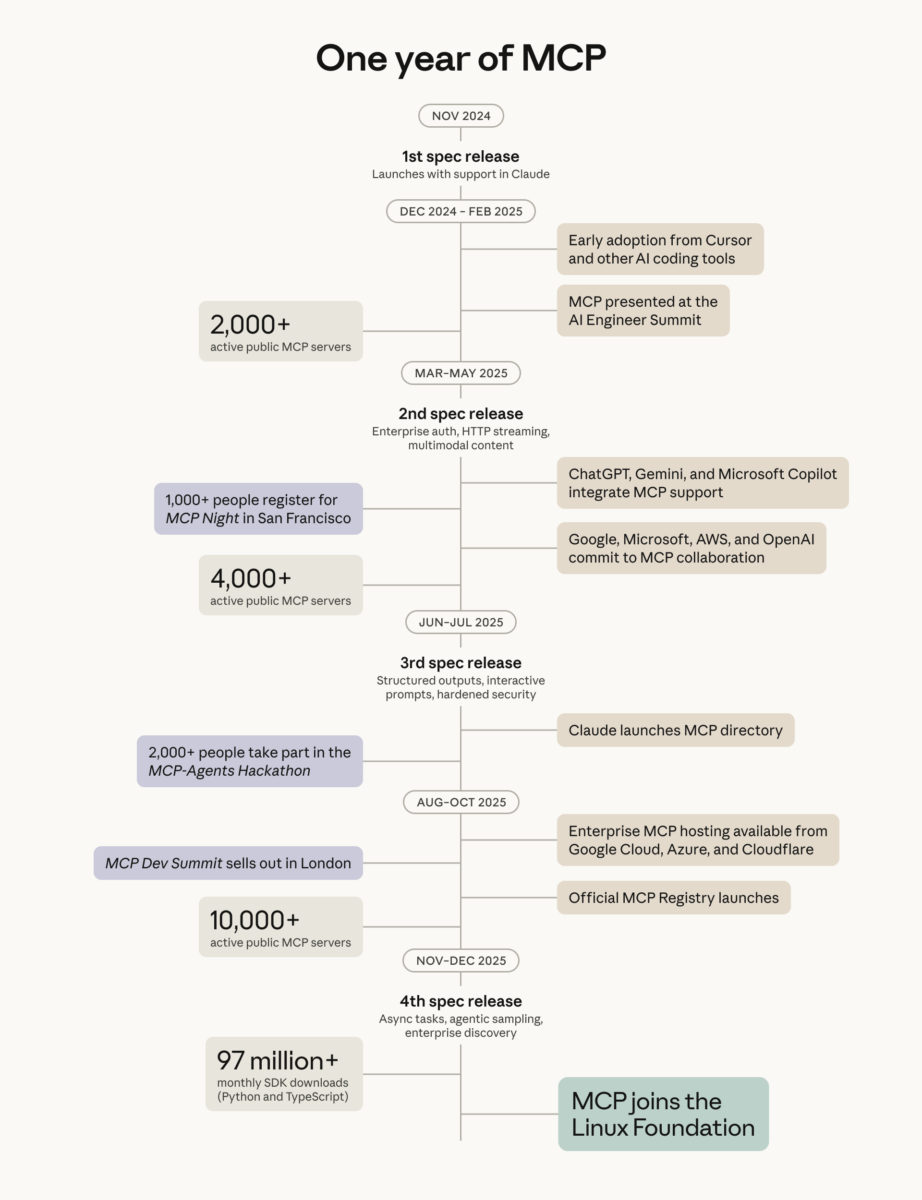
Five major announcements in a single month. Anthropic donated MCP to the Linux Foundation, partnered with Accenture to train 30,000 developers on Claude, signed a $200 million deal with Snowflake, and opened Skills as a cross-platform standard. This Anthropic December 2025 update isn’t just a flurry of press releases — it’s a blueprint for where the Claude model family is headed in 2026. Let me break down each move and explain why, taken together, they paint the clearest picture yet of Anthropic’s long-term strategy.
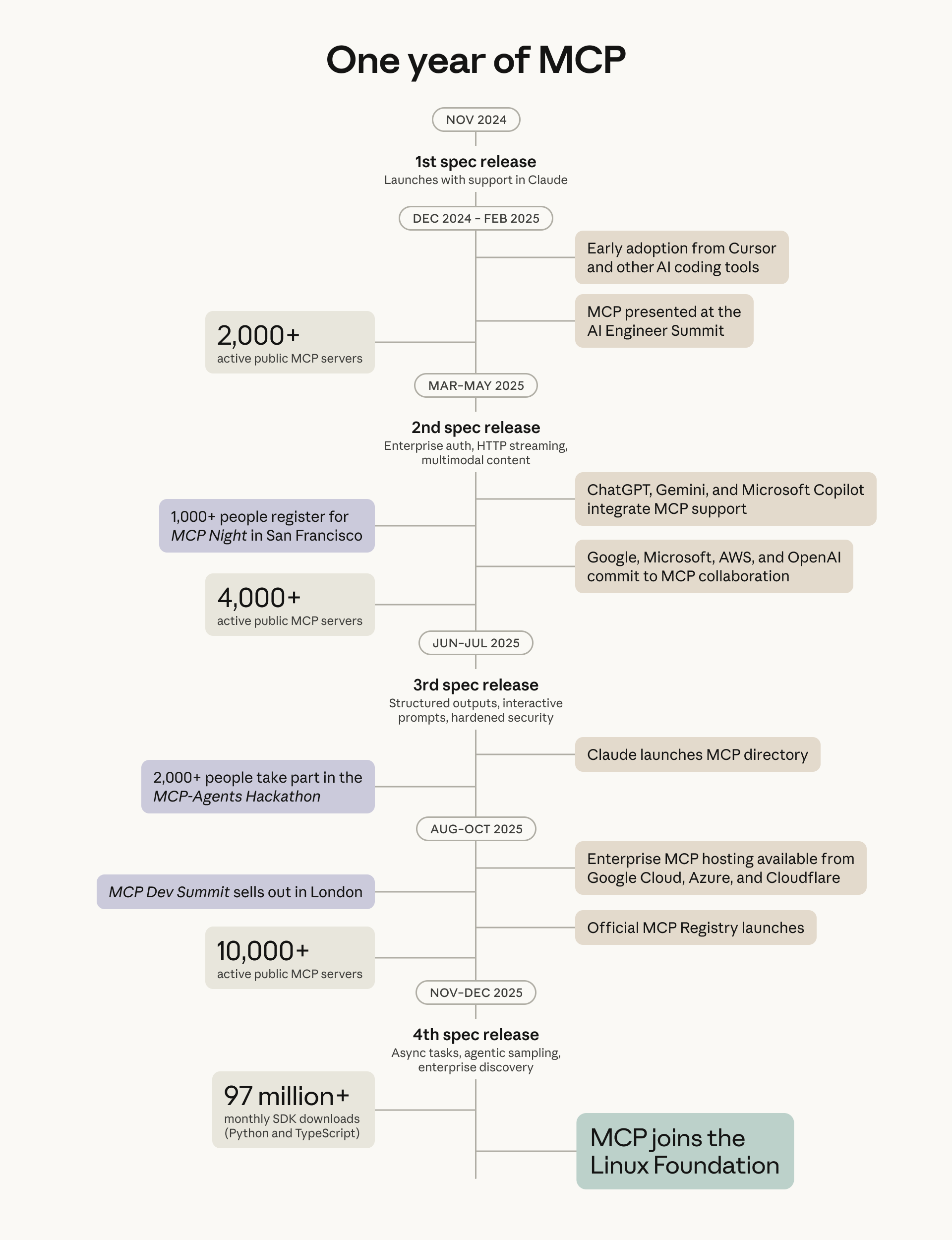
1. MCP Donated to the Linux Foundation’s Agentic AI Foundation (December 9)
Anthropic’s donation of the Model Context Protocol to the newly established Agentic AI Foundation (AAIF) under the Linux Foundation is arguably the most consequential move of the month. The foundation was co-founded by Anthropic, OpenAI, and Block, with Amazon, Google, Microsoft, Bloomberg, and Cloudflare joining as platinum members.
MCP is the standard protocol that allows AI agents to connect with external tools and data sources. Think of it as USB for the AI agent era — a universal connector that lets any agent talk to any tool. Before MCP, every AI platform had its own proprietary way of connecting to external services. If you built an integration for Claude, it didn’t work with ChatGPT, and vice versa. MCP solves this fragmentation by providing a single, standardized protocol.
By donating MCP to an open governance body rather than keeping it proprietary, Anthropic is making a calculated bet: the company that sets the standard shapes the ecosystem. History backs this up. Google donated Kubernetes to the Cloud Native Computing Foundation, and it became the industry standard for container orchestration — while Google Cloud benefited enormously from the ecosystem that grew around it.
As TechCrunch reported, the fact that OpenAI joined the foundation signals that even direct competitors recognize the need for agentic AI standardization. This isn’t corporate altruism — it’s infrastructure strategy. When everyone builds on your protocol, you’re at the center of the ecosystem by default. The AAIF’s platinum member list reads like a who’s who of big tech, and that level of industry buy-in makes MCP the odds-on favorite to become the de facto standard for agent-to-tool communication in 2026.
2. Accenture Multi-Year Partnership: 30,000 Developers Trained on Claude (December 9)
On the same day, Anthropic announced a multi-year partnership with Accenture that’s staggering in scale. Thirty thousand Accenture professionals will be trained on Claude, making this the largest Claude Code deployment to date. Accenture didn’t just pick Claude as one of many tools — they selected Anthropic as their strategic AI partner.
The significance goes beyond the headline numbers. Accenture is the world’s largest consulting firm, with over 700,000 employees serving clients in virtually every industry. When 30,000 of their developers build solutions with Claude, those solutions reach thousands of Accenture’s enterprise clients across banking, healthcare, manufacturing, and beyond. It’s a force multiplier effect that no amount of direct sales could replicate. Each project becomes a case study, each implementation becomes a reference architecture, and each trained developer becomes an evangelist.
For Anthropic, this partnership is a goldmine of real-world enterprise feedback. Edge cases that never appear in benchmarks, integration challenges with legacy systems, compliance requirements from regulated industries — all of this data feeds back into Claude’s development roadmap. The enterprise features we’ll see in 2026 Claude models are being shaped right now by what Accenture’s teams encounter in the field.
There’s also a competitive dimension worth noting. Microsoft has its partnership with OpenAI. Google has Gemini integrated across its cloud services. With the Accenture deal, Anthropic secures its own massive channel into the enterprise market — one that’s vendor-neutral and can deploy across any cloud. That positioning is deliberate and powerful.
3. Snowflake $200M Strategic Partnership: Claude Reaches 12,600+ Enterprises
The $200 million partnership with Snowflake reveals Anthropic’s distribution strategy in its clearest form. Claude will be available to Snowflake’s 12,600-plus customers through Amazon Bedrock, Google Vertex AI, and Microsoft Azure. This is not a small pilot or proof of concept — $200 million is a commitment that both companies are betting their futures on.
The multi-cloud approach is key here. By supporting all three major cloud platforms simultaneously, Anthropic removes the lock-in objection that kills so many enterprise AI deals. A financial services firm running on Azure can access Claude through Azure. A retail company on AWS can use Bedrock. A startup on Google Cloud can go through Vertex AI. Whatever infrastructure a company already runs on, Claude meets them there. It’s a pragmatic approach that prioritizes reach over exclusivity.
There’s a deeper play at work, too. Snowflake is where enterprise data lives — the data warehouses, the data lakes, the structured and semi-structured datasets that power business decisions. By partnering with a data platform company, Anthropic positions Claude at the exact point where AI meets real business data. The killer use case for 2026 isn’t chatbots or content generation — it’s AI agents that can query Snowflake data warehouses, analyze the results, and take action based on what they find. This partnership builds the plumbing for exactly that scenario.
The joint go-to-market strategy for AI agents also signals where Anthropic sees its revenue growth. Enterprise customers don’t just buy API access — they buy solutions. Snowflake’s sales team, combined with Anthropic’s technology, creates a solution-selling motion that can close deals far faster than Anthropic’s direct sales team alone.
4. Skills Made Open Standard: The App Store for AI Agents Arrives (December 19)
The December 19 announcement making Skills an open standard is the companion piece to the MCP donation, and together they form a complete platform stack. Skills are defined packages of specific tasks that AI agents can perform — and they’re now portable across Claude, ChatGPT, Cursor, and other AI platforms.
Notion, Canva, Figma, and Atlassian have already announced integrations. If MCP is the operating system for AI agents, Skills are the apps that run on top. A developer builds a Skill once, and it works across multiple AI platforms — the same cross-platform promise that made the web dominate over native apps. Imagine a “create design mockup” Skill built by Figma that works identically whether you’re using Claude, ChatGPT, or Cursor. That’s the vision, and it’s now becoming real.
The economics of this approach favor Anthropic heavily. When third-party developers invest time building Skills that run on the MCP standard — a standard Anthropic created — the switching cost of moving away from that ecosystem increases with every new Skill published. The more Skills available, the more valuable the platform becomes, which attracts more developers, which produces more Skills. It’s the classic network effects flywheel that has defined every successful platform in tech history.
Notice the pattern: Anthropic keeps opening its technology rather than locking it down. MCP went open. Skills went open. This is the playbook of companies that win platform wars — Android over Symbian, HTTP over proprietary networks, Linux over proprietary Unix. Anthropic is betting that controlling the standard matters more than controlling the implementation. History suggests they’re right.
5. Claude Opus 4.5 + Cowork + HIPAA: The Technical Foundation for 2026
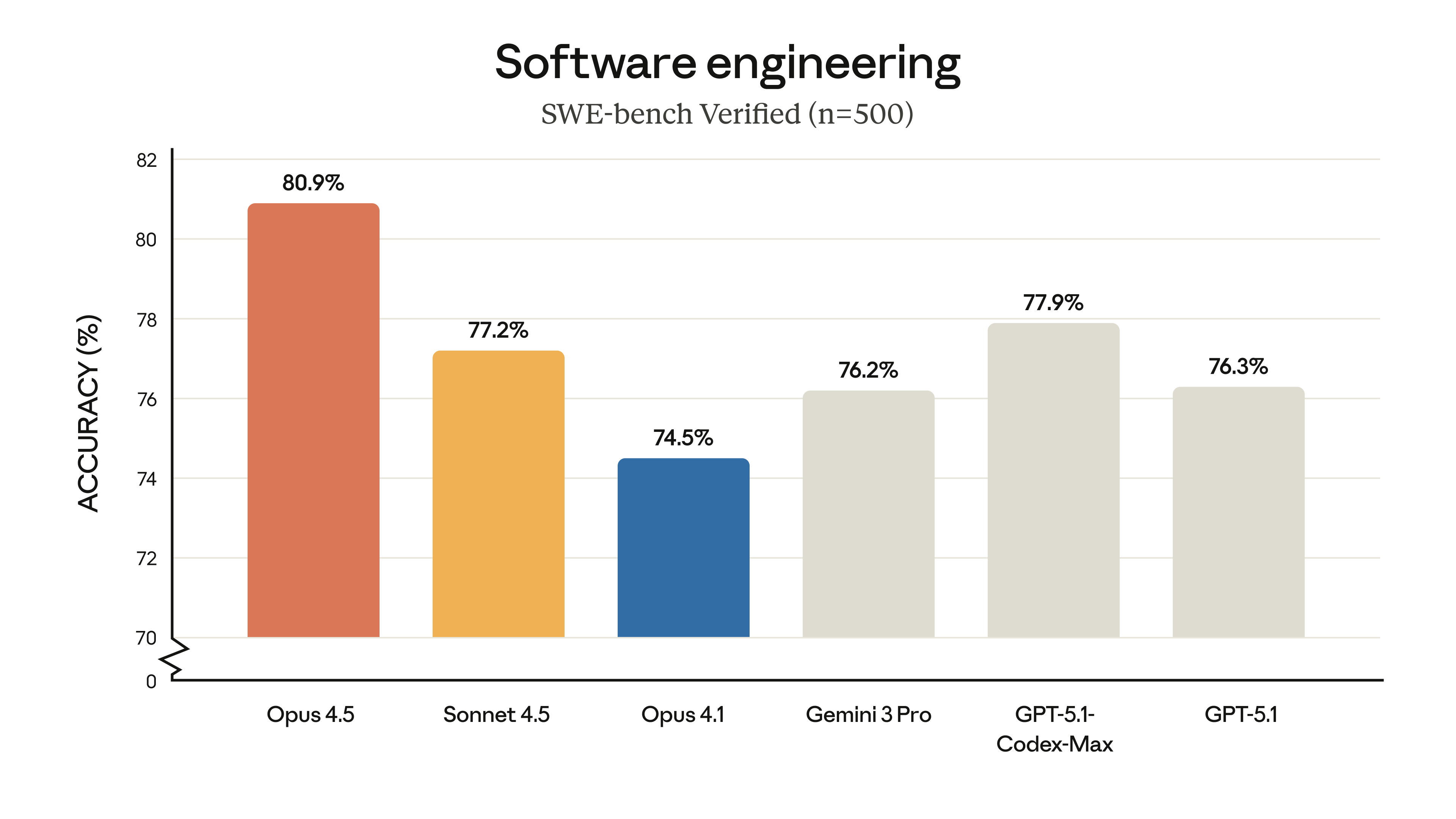
Claude Opus 4.5, released November 24, is the technical backbone behind all of December’s announcements. It’s Anthropic’s most capable model for coding, agents, and computer use — and it represents a significant leap in the kind of sustained, multi-step reasoning that AI agents require. The 30,000 Accenture developers are building on it. The 12,600 Snowflake customers will access it. The Skills running through MCP are powered by it.
The Cowork preview, announced alongside Opus 4.5, introduces a collaborative interface where humans and Claude work on documents together — not just Q&A, but genuine co-creation. Think Google Docs, but your collaborator is an AI that can research, draft, analyze data, and iterate in real time. This is the interaction model that moves AI from “assistant you query” to “colleague you work with.” It’s a subtle but fundamental shift in how enterprise teams will use AI in 2026.
Then there’s HIPAA compliance for enterprise accounts. Healthcare alone represents a $4.5 trillion market in the US, and financial services add trillions more. Both sectors have been largely locked out of advanced AI deployment due to regulatory requirements around data handling and patient privacy. HIPAA certification cracks open the door to healthcare — and it signals that SOC 2 Type II, FedRAMP, and other compliance certifications are likely in Anthropic’s 2026 pipeline. Each new certification unlocks another massive market segment.
Combine Opus 4.5’s agent capabilities, Cowork’s collaboration interface, and HIPAA’s regulatory clearance, and the trajectory for 2026 becomes clear: more powerful agents, more natural human-AI collaboration, and systematic expansion into regulated industries that competitors can’t easily follow into.
What These 5 Moves Tell Us About Anthropic’s 2026 Roadmap
Connect the dots across December’s announcements, and Anthropic’s 2026 strategy emerges in three distinct layers, each reinforcing the others:
- Infrastructure layer: MCP becomes the universal connector for AI agents, with Skills forming the application layer on top. Open standards attract developers, developers build the ecosystem, and the ecosystem makes Claude indispensable. This is the foundation everything else rests on.
- Distribution layer: Snowflake, Accenture, and multi-cloud deployment put Claude in front of tens of thousands of enterprise customers simultaneously. Anthropic doesn’t need to sell directly to every company when its partners do it at scale across every major industry vertical.
- Model layer: Opus 4.5 provides the technical foundation, with agent-specialized models likely evolving throughout 2026. HIPAA compliance opens regulated industries, with more certifications expected to follow. Cowork previews the collaboration paradigm that will define how enterprises interact with AI going forward.
Anthropic is not just building AI models. It’s building protocols, donating standards to open governance, locking in distribution partnerships with industry leaders, and deploying its models on top of it all. This is a platform strategy — the kind that Google executed with Android, that Amazon executed with AWS, that Salesforce executed with its AppExchange ecosystem. The smartest model doesn’t win the AI agent era. The broadest ecosystem does. And Anthropic is positioning itself for exactly that outcome.
As 2025 closes out, these December announcements serve as a preview of what’s coming. 2026 is shaping up to be the year AI agents move from impressive demos to deployed enterprise infrastructure handling real business processes — and Anthropic has spent December making sure it’s at the center of that transformation. For anyone building with AI, investing in AI companies, or simply trying to understand where the industry is headed, these five moves are the most important signals of the year.
Need help building AI agent pipelines or integrating Claude into your enterprise workflow? With 28+ years of tech experience, I can help you navigate the implementation.
Get weekly AI, music, and tech trends delivered to your inbox.