Apple Core AI Framework at WWDC 2026: Why Replacing Core ML Will Reshape iOS AI Development Forever
March 14, 2026
Apple Studio Display XDR Review: 120Hz Mini-LED, 2000 Nits, Thunderbolt 5 — Is $3,299 Worth It for Creators?
March 14, 2026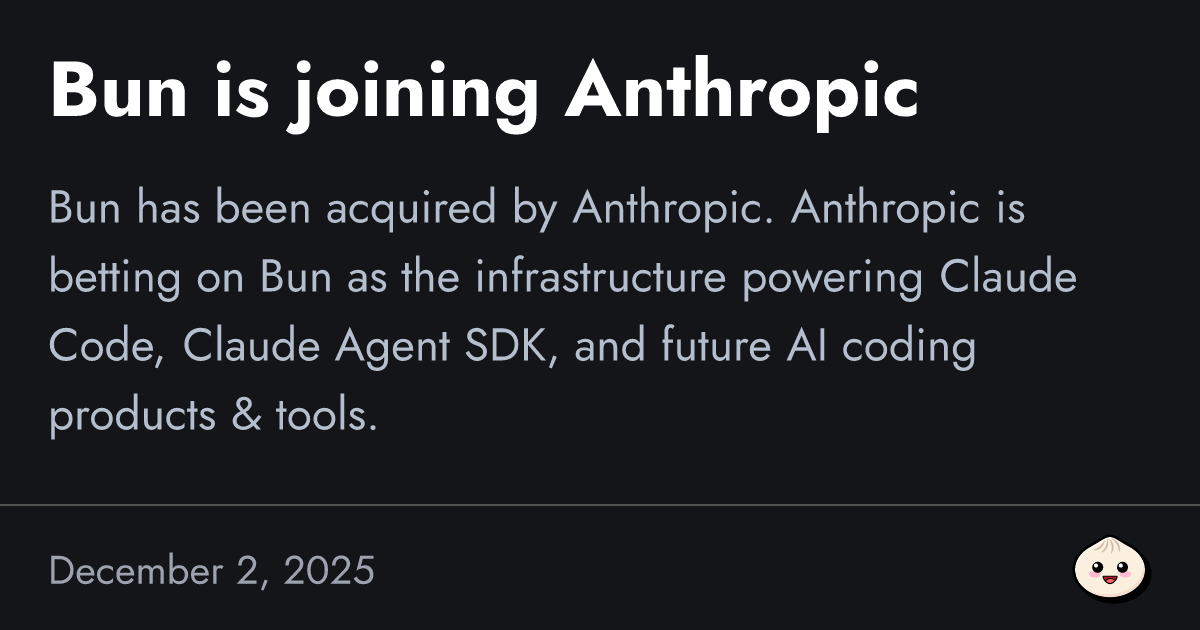
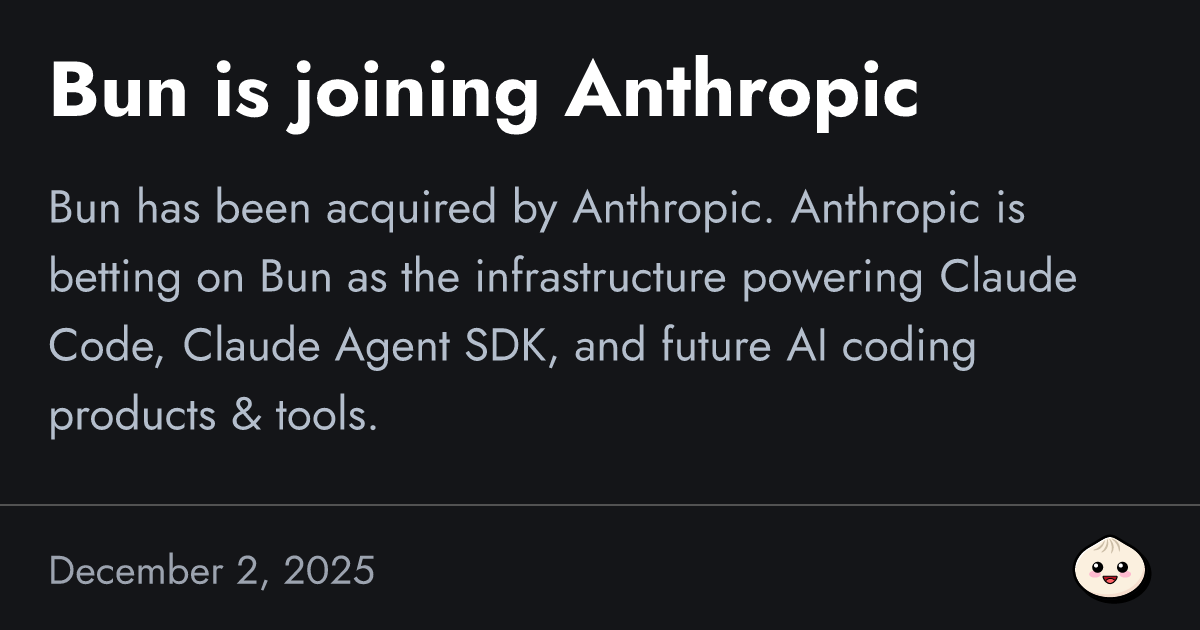
An AI company just bought a JavaScript runtime. Anthropic acquires Bun in what marks the company’s first-ever acquisition — and the timing is no coincidence. Claude Code hit a $1 billion annualized run-rate just six months after public launch, and a significant chunk of that revenue runs on Bun. This isn’t a random tech acquisition. It’s a supply chain play that could reshape the AI coding tool landscape.
Why Anthropic Acquires Bun: The Runtime Behind the Revenue
Here’s the detail most people are missing: when you install Claude Code, you’re already running Bun. Claude Code ships as a Bun executable. The AI coding tool that generates over a billion dollars in annualized revenue is fundamentally built on this runtime. Anthropic didn’t acquire Bun on a whim — they acquired the foundation their most profitable product runs on.
Bun, founded by Jarred Sumner in 2021, has been turning heads in the JavaScript ecosystem with raw performance numbers that make Node.js look sluggish. We’re talking 3-4x faster execution, cold starts of 8-15ms compared to Node.js’s 60-120ms, and a package manager that’s 20-40x faster than npm. It’s not just a runtime — it’s an all-in-one toolkit that bundles a package manager, bundler, and test runner into a single binary.
The $1 Billion Signal: Why Now?
Claude Code reaching $1 billion in annualized revenue within six months of public launch is unprecedented in the AI coding tool space. That kind of growth velocity changes the calculus on infrastructure investments entirely. When your revenue engine depends on a third-party open-source runtime, the rational move is to secure that dependency.
The financial terms of the deal remain undisclosed, but Anthropic has made two strategically important commitments: Bun’s existing development team continues working on the project, and Bun remains open source under the MIT license. These aren’t throwaway promises — they’re calculated decisions to avoid alienating the developer community that made Bun valuable in the first place.
Bun now powers not just Claude Code but also the Claude Agent SDK and Anthropic’s entire pipeline of future AI coding products. Owning the runtime gives Anthropic the ability to optimize at a level that competitors simply cannot match — from memory management to startup time to how AI-generated code gets executed and tested.
The JavaScript Runtime Wars: Where Bun Fits After Anthropic Acquires Bun

The JavaScript runtime landscape is a three-way contest, and this acquisition just added a wild card. Node.js remains the dominant force with over 2 million packages on npm and deep enterprise adoption. Deno differentiates with its permissions-based security model. Bun competes on pure speed.
- Cold starts: Bun 8-15ms vs Node.js 60-120ms vs Deno 40-60ms
- Package installation: Bun is 20-40x faster than npm
- All-in-one toolkit: runtime + package manager + bundler + test runner
For AI coding tools, runtime speed is user experience. AI agents that generate, execute, and test code in rapid loops feel the difference between an 8ms cold start and a 120ms one across every single iteration. Multiply that across thousands of daily operations, and you understand why Anthropic chose the fastest runtime available.
What This Means for Developers and the AI Coding Ecosystem
The positive signal is clear: Bun stays open source, the team stays intact, and it gains the resources of a well-funded AI company. The potential concern is equally obvious: Anthropic’s priorities will inevitably influence Bun’s roadmap. Features that benefit AI coding workflows could get prioritized over general web development needs.
This acquisition also establishes a new competitive dimension. The AI coding tool race has moved beyond model performance into infrastructure. An AI company that owns its runtime can optimize the entire stack — from how code is generated to how it’s executed. Companies like GitHub (Copilot), Cursor, and others now face a competitor with vertical integration they can’t easily replicate.
Node.js isn’t going anywhere — its ecosystem is simply too massive to displace. But the emergence of “AI-optimized runtimes” as a concept signals that the next wave of developer tooling will be shaped as much by AI companies as by traditional infrastructure players. The gap between AI companies that own their infrastructure and those that don’t will widen, and developers building on these platforms will feel the difference in speed, reliability, and capabilities.
Looking to build AI-powered development workflows or optimize your automation infrastructure? Let’s talk.