AI Wearables 2025: Humane AI Pin Dead, Rabbit R1 Surviving, Meta Ray-Ban Dominating — The Brutal Scorecard
May 15, 2025
PS VR2 PC Adapter: Complete SteamVR Setup Guide with 7,000+ Games (2025)
May 15, 2025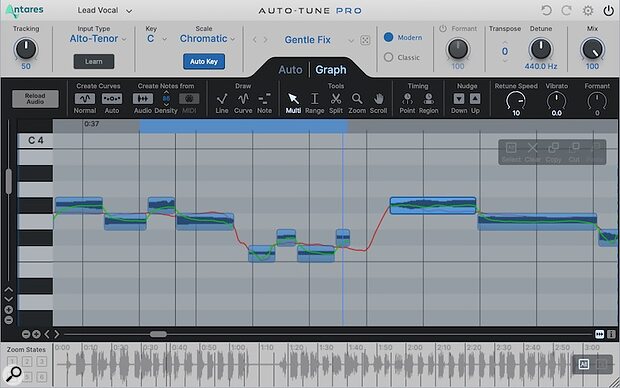
In 1997, Antares dropped a plugin that rewrote the rules of modern music. T-Pain turned it into an art form, and today virtually every vocal track you hear has been touched by its algorithms in some way. Now, more than 25 years later, Auto-Tune Pro X represents the most refined and powerful iteration of that original revolution — and Antares isn’t stopping there.
What Makes Auto-Tune Pro X Different
Released in November 2022, Auto-Tune Pro X isn’t just an incremental update. According to Sound On Sound, the headline features include a completely redesigned Graph Mode, Multi-View for monitoring multiple instances simultaneously, and native Apple Silicon support. The perpetual license runs $459, with a subscription option at $24.99/month.
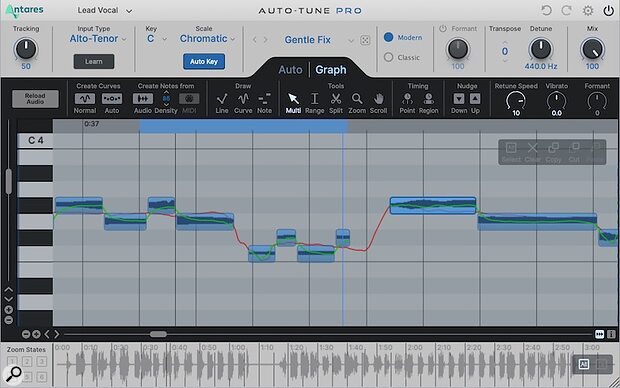
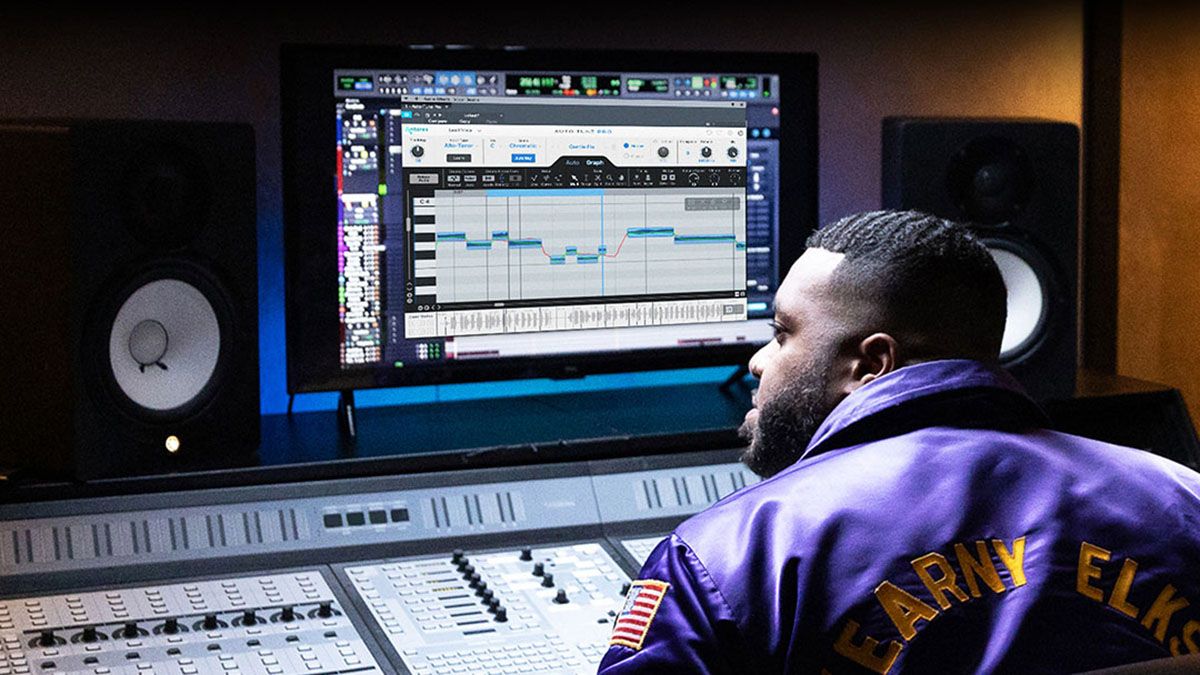
The Graph Mode overhaul is where working professionals will feel the biggest difference. Pitch curves can now be edited with greater precision, the GUI is fully resizable with both Light and Dark modes, and the overall workflow is significantly faster. The new Artist Presets collection and Presets Manager also deserve mention — they provide instant starting points for different vocal styles and genres, saving time during the initial setup phase of any vocal session.
Two parameters deserve special attention. Flex-Tune controls how strictly Auto-Tune corrects pitch — set it low for the classic hard-tune effect that defined T-Pain’s sound and an entire generation of hip-hop and pop, or crank it higher for transparent, natural correction that listeners won’t detect. Humanize preserves the natural vibrato and expression in sustained notes, preventing that robotic quality that plagues over-corrected vocals. Together, these two controls give engineers granular authority over where their correction sits on the spectrum between clinical precision and organic performance.
ARA2 Integration — Seamless DAW Connectivity
The August 2023 update (v10.3.1) brought ARA2 support for Cubase and Nuendo, completing the set alongside Logic Pro and Studio One. Sound On Sound reported that Graph View now instantly populates with pitch data without requiring real-time playback capture — a workflow improvement that alone justifies the upgrade for many engineers.
For those unfamiliar with ARA2, here’s why it matters: traditionally, pitch correction plugins required audio to “pass through” them in real-time before pitch data could be captured and edited. A three-minute vocal take meant waiting three minutes before you could start editing. ARA2 eliminates this entirely by giving the plugin direct access to the DAW’s audio data. The result is instant editing capability that fundamentally changes how quickly you can move through vocal sessions.
The improved Pro Tools AudioSuite compatibility and new Graph Mode scrolling behavior further streamline the editing process. For engineers working across multiple DAWs — which is increasingly common in collaborative workflows — this cross-platform ARA2 consistency is a major quality-of-life improvement.
Auto-Tune Pro 11’s Harmony Player — The Real Game Changer
In April 2024, Antares released Auto-Tune Pro 11, introducing an integrated 4-part Harmony Player that might be the most significant feature addition since the original pitch correction algorithm. Triggered via MIDI, it generates up to four harmony voices in real-time from a single vocal input, with individual control over formant shifting, panning, and level for each voice.
The master section includes EQ, envelope, gate, and width controls — essentially a complete harmony production toolkit built directly into Auto-Tune. Antares described it as “evolution, not revolution” since the core pitch correction engine remains unchanged. But from a practical standpoint, the Harmony Player integration eliminates the need for separate harmony plugins like iZotope Nectar’s Harmony module or TC-Helicon VoiceLive processors for basic harmony work.
The enhanced Graph Mode in Pro 11 also added new keyboard shortcuts and improved zooming capabilities, making the precision editing workflow even faster. These seem like small changes on paper, but when you’re editing 50+ vocal tracks in a session, every saved keystroke compounds significantly.
Auto-Tune Pro X vs Melodyne vs Waves Tune — Choosing Your Weapon
The pitch correction market has three dominant players, each with distinct strengths that make direct comparison nuanced.
Auto-Tune Pro X dominates in real-time correction and creative effects. The hard-tune sound that defined an entire genre of music is Auto-Tune’s territory. Its low-latency mode makes it viable for live performance, and 25 years of industry-standard status means virtually every professional studio has it. MusicRadar called it “the fastest and most streamlined Auto-Tune ever.”
Celemony Melodyne wins in detailed polyphonic editing and natural-sounding correction. Its DNA (Direct Note Access) technology allows editing individual notes within chords — something Auto-Tune simply cannot do. For classical, jazz, and acoustic genres where transparent correction is essential, Melodyne remains the gold standard.
Waves Tune competes on value. At $79 — roughly one-sixth the price of Auto-Tune — it delivers capable pitch correction with particular strength in rock and indie vocals where preserving some natural grit is desirable. However, it lacks Auto-Tune’s Graph Mode depth, real-time performance capabilities, and the extensive ecosystem that Antares continues to build.
The honest answer for most professional studios? You’ll eventually need at least two of these. Auto-Tune for speed and creative effects, Melodyne for surgical precision. Waves Tune serves well as a budget-friendly option for home studios or as a quick-correction tool when you don’t need the full power of either flagship product.
2025: AI Infiltrates the Auto-Tune Ecosystem
Antares’ spring 2025 sale (Auto-Tune Unlimited at 50% off, $180/year) came with two notable announcements. First, Vocal Prep — a standalone noise removal tool available in early access. Second, AI-powered Vocal Chain plugins now included with perpetual licenses.
The strategy is clear: Antares is preserving Auto-Tune’s battle-tested pitch correction core — the algorithm refined over 25+ years — while aggressively deploying AI across the surrounding ecosystem. Noise removal, vocal chain processing, voice modeling through MetaMorph — these are all getting the AI treatment. The company is evolving from a pitch correction specialist into a comprehensive AI vocal processing platform.
This is a strategically sound approach. The core pitch correction algorithm doesn’t need AI — it’s been refined over 25+ years and already works exceptionally well. But the adjacent tasks in vocal production — noise removal, de-essing, compression, EQ, harmony generation, voice transformation — are exactly where machine learning can make transformative improvements. These are processes that traditionally require experienced engineers to dial in manually, and AI can handle the initial heavy lifting while still leaving room for human fine-tuning.
Antares is essentially building an AI-powered vocal production suite with Auto-Tune at its center. The Vocal Prep standalone tool addresses one of the most common pain points in vocal recording — dealing with room noise, mouth clicks, and bleed before the signal even hits the pitch correction stage. By offering this as a separate tool with early access to subscribers, Antares is testing the waters for a complete vocal production pipeline that extends far beyond tuning.
My Take: What 28 Years in Audio Taught Me About This
I’ve used every major version of Auto-Tune across 28 years in the audio industry. I still remember the first time I loaded up the original — the idea that you could correct vocal pitch in real-time felt genuinely revolutionary. And honestly, Pro X is the most refined expression of that revolution yet.
What I value most in daily production work is Graph Mode’s precision. When working on K-Pop vocals — where you need to preserve subtle pitch nuances while still delivering clean correction — the Flex-Tune parameter makes this exponentially more intuitive. Wanting both Melodyne’s naturalness and Auto-Tune’s speed is asking a lot, but Flex-Tune gets surprisingly close to that middle ground.
The one legitimate complaint is price. $459 for a perpetual license is a significant investment for home studio producers, and the subscription model at $24.99/month adds up quickly. But when I calculate the time Auto-Tune saves in professional workflows, the ROI is undeniable. Since the ARA2 integration, my vocal editing time has dropped by an estimated 30-40% — that’s hours saved per week in a busy studio. Pro 11’s Harmony Player has been particularly valuable in demo sessions and pre-production — being able to audition harmony arrangements before booking chorus recording sessions saves both time and studio costs. For anyone on the fence, the 14-day free trial is worth trying before committing.
Bottom line: Auto-Tune Pro X remains the industry standard for real-time pitch correction, and the expanding AI ecosystem is only increasing its value proposition. It’s not an either/or choice with Melodyne — any serious studio should have both in its toolkit. Auto-Tune handles speed, creative effects, and live performance; Melodyne handles surgical polyphonic editing and transparent correction. Together, they cover virtually every vocal production scenario you’ll encounter.
And watching Antares’ AI trajectory in 2025, it’s clear that this company will play a significant role in defining the future of vocal production. The question isn’t whether AI will transform how we process vocals — it’s whether Antares will lead that transformation or simply participate in it. Based on what I’m seeing, they’re positioning to lead.
Looking to optimize your vocal production workflow or need professional mixing and mastering? Sean Kim brings 28 years of audio engineering experience to your project.
Get weekly AI, music, and tech trends delivered to your inbox.