Best DAW for Music Production 2026: Ableton vs Logic Pro vs Cubase Complete Guide
March 12, 2026
Live Nation Antitrust Trial Week 2: 3 Key Testimonies That Could Break Up Ticketmaster
March 12, 2026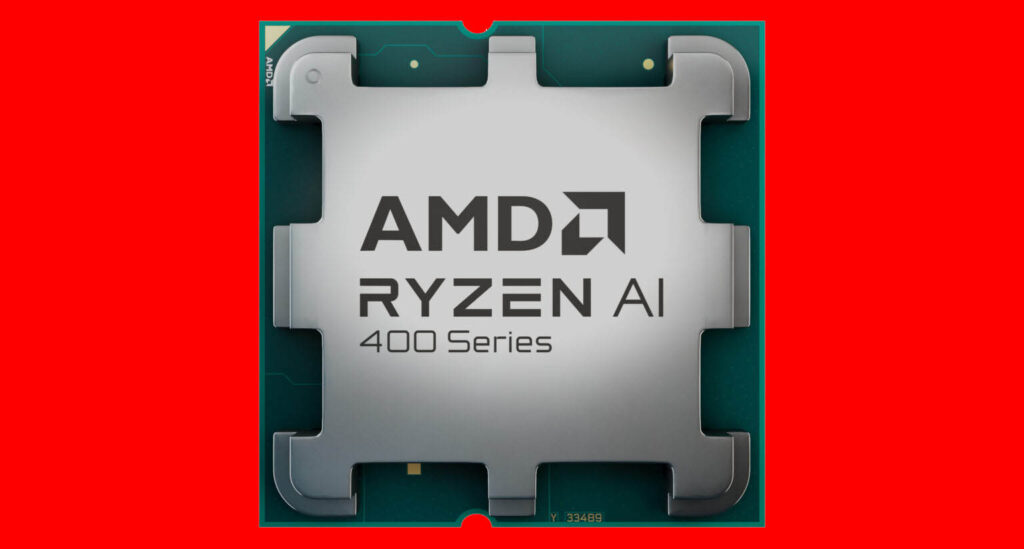
8 cores. Radeon 860M. Under $600 all-in. AMD’s new Ryzen AI 400 desktop APU changes the budget music production calculus — and here’s why every bedroom producer should pay attention.
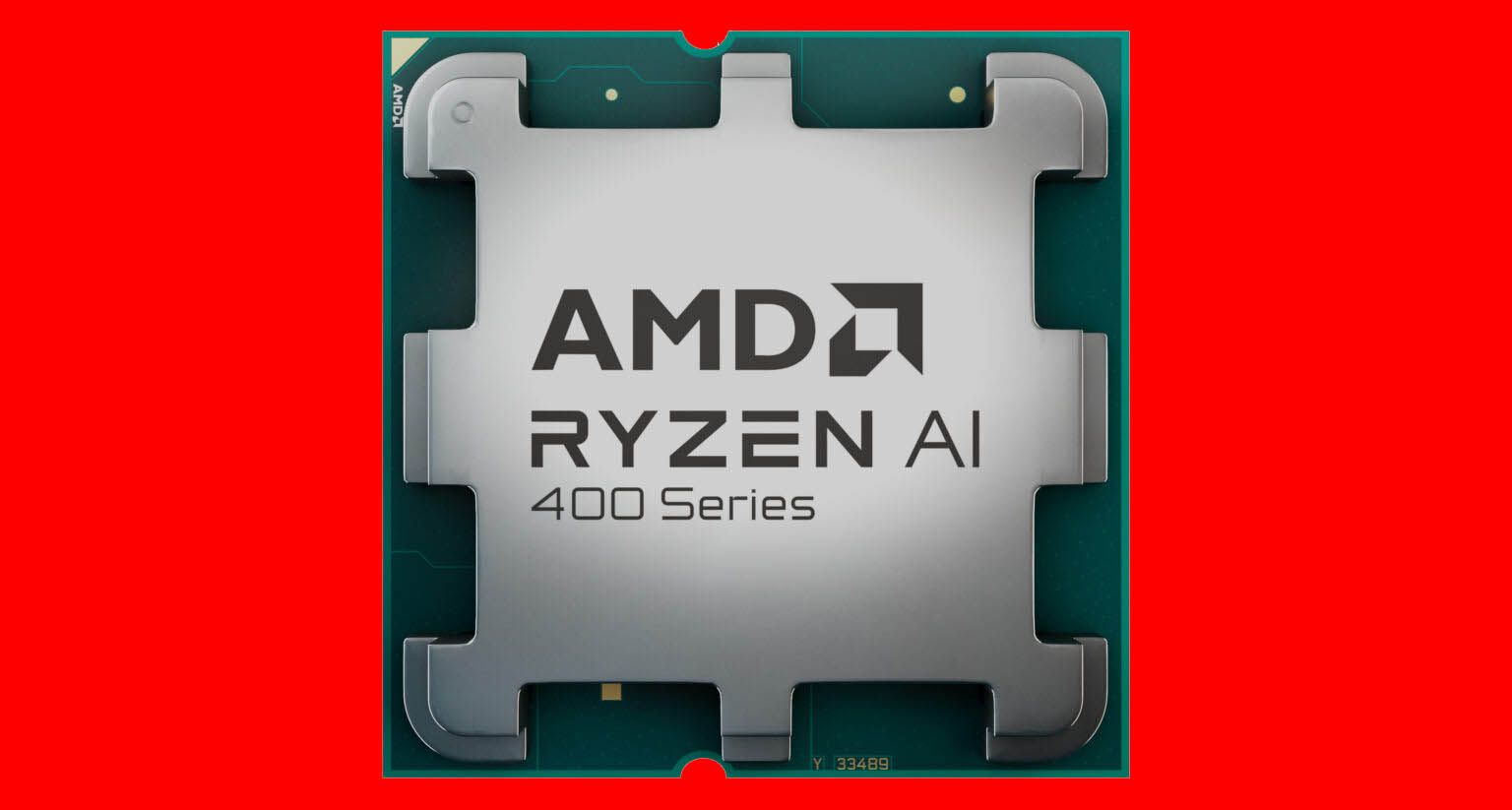
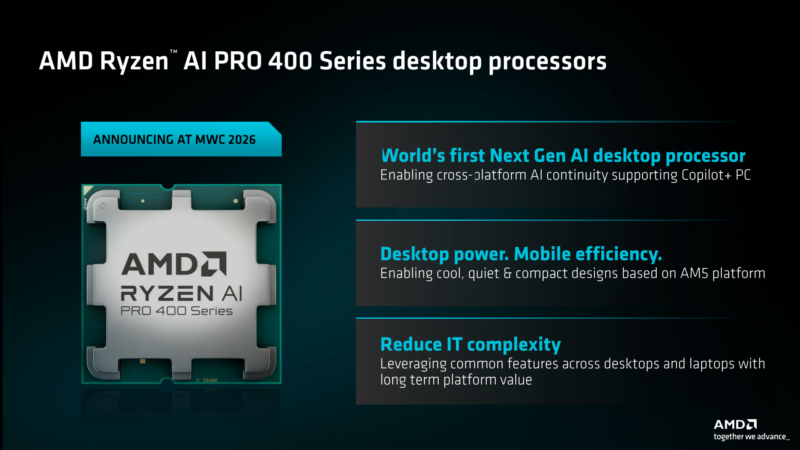
On March 2, 2026 at Mobile World Congress, AMD officially expanded its Ryzen AI 400 series to the desktop AM5 platform. Codenamed “Gorgon Point,” the Ryzen AI 7 450G brings Zen 5 cores, integrated Radeon 860M graphics, and a 50 TOPS XDNA 2 NPU to compact desktop systems — all without needing a discrete GPU.
What Is the AMD Ryzen AI 400 Desktop APU?
The Ryzen AI 400 series for desktop is AMD’s first Copilot+ certified desktop processor lineup. The flagship Ryzen AI 7 450G packs 8 cores and 16 threads with a 5.1 GHz boost clock, 24 MB total cache, and RDNA 3.5-based Radeon 860M integrated graphics featuring 8 compute units. It runs on the AM5 socket — the same platform used by AMD’s high-end Ryzen 9000 series.
Below it sit the Ryzen AI 5 440G and 435G, offering 6 cores and 12 threads with Radeon 840M graphics. These chips will arrive exclusively through OEM partners (HP, Lenovo, Acer, Asus, Dell) in Q2 2026 — they won’t be sold as boxed retail units.
Why This APU Matters for Music Producers
Most “best CPU for music production” guides in 2026 point you toward the Ryzen 7 9800X3D or Apple M4 — chips that start at $400 before you factor in a motherboard, discrete GPU, and RAM. The Ryzen AI 450G flips that equation. Here’s what makes it compelling:
1. No Discrete GPU Required
The Radeon 860M handles all display output and light graphics tasks. For a DAW-focused build, you don’t need a $200–$400 graphics card. This alone slashes total system cost significantly. Most music producers aren’t rendering 3D or gaming — they need stable, low-latency audio processing, and the Radeon 860M handles everything else cleanly.
2. The 50 TOPS NPU Is a Game-Changer for AI Plugins
2026 is the year AI-powered audio tools hit the mainstream. Stem separation (iZotope RX, Audionamix), AI mastering (LANDR, Ozone), noise cancellation (NVIDIA RTX Voice equivalents), and AI mixing assistants all benefit from dedicated NPU acceleration. The Ryzen AI 450G’s 50 TOPS XDNA 2 NPU handles these workloads without touching your CPU or GPU — meaning your DAW tracks keep playing while AI tools run in the background.
3. 5.1 GHz Single-Core Boost for Real-Time Audio
Real-time audio monitoring is still a single-core bottleneck. The Ryzen AI 7 450G’s 5.1 GHz boost clock puts it in competitive territory for low-latency VST processing. While the Ryzen 9800X3D’s 3D V-Cache gives it an edge in plugin-heavy sessions, the 450G’s 5.1 GHz boost handles 32–64 track sessions with moderate plugin loads — exactly what most bedroom producers run.
4. Silent or Near-Silent Operation
The GE (low-power) variants of the Ryzen AI 400 series feature 35W TDP. Combined with the lack of a discrete GPU (which is often the noisiest component in a system), mini-PC builds around these chips can run whisper-quiet. For home recording studios where fan noise bleeds into microphones, this is a massive practical advantage.
5. DDR5 Dual-Channel for Sample Libraries
The AM5 platform supports DDR5 memory. With 32–64 GB of DDR5, Kontakt libraries, orchestral sample banks, and drum machine patches load faster and stream more reliably. This is the silent killer of budget music PCs — cheap DDR4 systems bottleneck on sample library streaming long before the CPU becomes a problem.
The Honest Limitations
The Ryzen AI 450G is not the chip for every music producer. Here’s where it falls short:
- No 3D V-Cache: For producers running 100+ track sessions with heavy convolution reverbs and CPU-hungry synths (Serum, Vital, Pigments), the Ryzen 9800X3D’s cache advantage is real. The 450G will struggle at very low buffer sizes (64 samples) with extreme plugin loads.
- OEM-only availability: You can’t buy just the chip and build your own system. You’ll be buying a complete OEM system, which limits customization options.
- Radeon 860M is not a gaming GPU: If you also want to game or run GPU-accelerated video rendering, the 860M is sufficient for casual use but won’t handle demanding titles or 4K video exports quickly.
Who Should Buy a Ryzen AI 400 Desktop System?
This APU is the right call if you are:
- A bedroom producer building your first dedicated DAW machine on a tight budget
- A podcaster or content creator using AI audio tools alongside a DAW
- A studio owner needing a compact, quiet secondary workstation for tracking or sample browsing
- Anyone who wants Windows-native VST3 compatibility without the M-series Mac premium
- Producers prioritizing low noise floor in their recording environment
It is not the right call if you run 200+ track orchestral templates, do professional mastering with sample-accurate monitoring, or need 4K video editing alongside music production.
The AMD Ryzen AI 400 desktop APU represents a genuine shift in what “budget music production PC” means in 2026. No discrete GPU, AI-accelerated plugins, near-silent operation, and DDR5 memory support — all in an OEM system expected to land under $600. Watch the HP and Lenovo OEM releases closely in Q2 2026.
If you’re building a music production workstation or need hardware optimization advice, feel free to reach out at imseankim.com/contact. I help producers find the right gear for their workflow and budget.
Get weekly AI, music, and tech trends delivered to your inbox.