Samsung Galaxy S26 Early Rumors: Snapdragon 8 Elite 2, One UI 8, and Everything We Know So Far
September 9, 2025
Genelec 8351B SAM Studio Monitor: Why This Three-Way Coaxial Design Changed My Reference Standard
September 10, 2025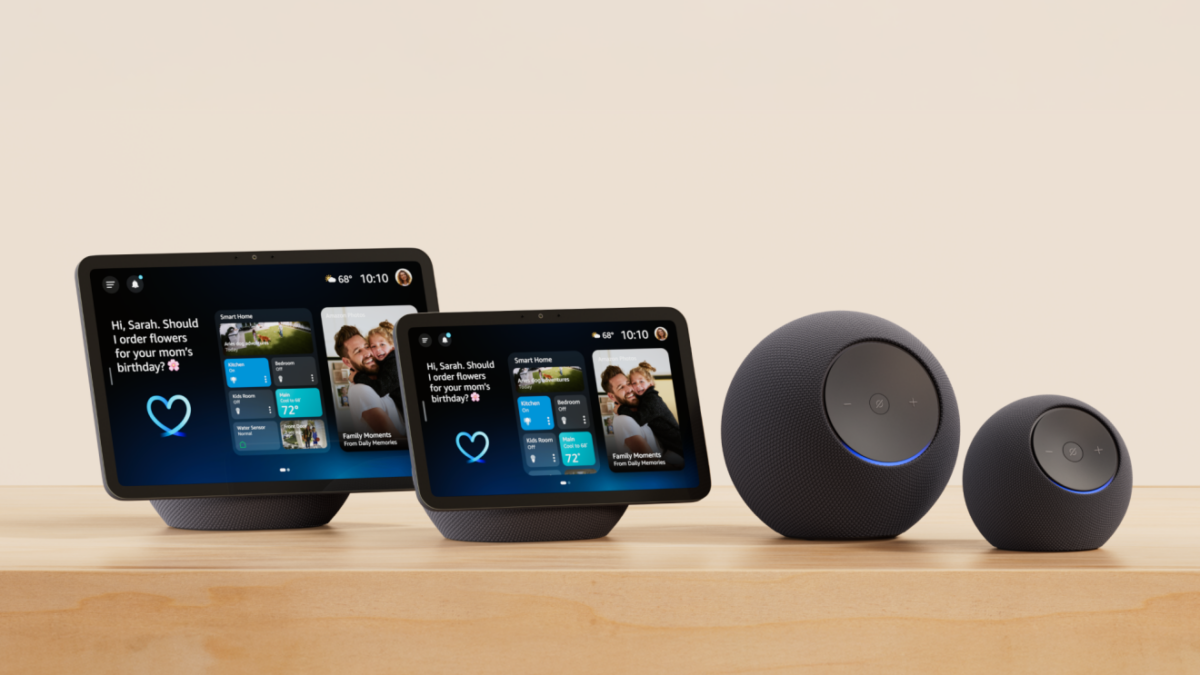
Finally — after years of Alexa feeling like it peaked at setting kitchen timers, Amazon has dropped something genuinely different. Amazon Alexa Plus (officially Alexa+) isn’t just another incremental firmware update. It’s a full architectural rebuild powered by large language models, and the September 2025 preview is showing us exactly where the smart home assistant race is heading.
What Is Amazon Alexa Plus, and Why Does It Matter Now?
Amazon Alexa Plus represents the most significant overhaul in the assistant’s 11-year history. At its core, Alexa+ replaces the old intent-based processing pipeline — the one that matched your words to pre-programmed “skills” — with a generative AI architecture built on Amazon’s proprietary Nova foundation models and Anthropic’s Claude, all hosted on Amazon Bedrock.
The difference is immediately noticeable. Ask old Alexa “What should I cook tonight if I have chicken and leftover vegetables?” and you’d get a web search result. Ask Amazon Alexa Plus the same question, and it pulls from 200+ media outlets, reasons through your dietary history (if you’ve shared it), and delivers a conversational answer that actually sounds like someone who cooks.
The LLM Architecture Behind Amazon Alexa Plus: Nova Meets Claude
Here’s where things get technically interesting. Amazon didn’t just bolt a chatbot onto Alexa and call it a day. The Alexa+ system uses what Amazon calls “experts” — groups of systems, capabilities, APIs, and instructions that accomplish specific task types. Think of it as a multi-agent orchestration layer where each “expert” handles a domain: music playback, smart home control, shopping, calendar management, and so on.
The foundation models powering this include Amazon’s own Nova series alongside Anthropic’s Claude — a partnership backed by Amazon’s $8 billion investment in Anthropic. These models run on Amazon Bedrock, giving Amazon the flexibility to route queries to different models based on complexity, latency requirements, and domain expertise.
What’s particularly clever is the Follow Up Mode. Users only need to say “Alexa” once, and the assistant maintains conversational context for natural back-and-forth exchanges. The old Alexa required the wake word before every single request — a UX friction point that made multi-step interactions painful.
Agentic AI: The Feature That Changes Everything
The most consequential feature in Amazon Alexa Plus is its agentic capabilities. Unlike traditional voice assistants that respond to individual commands, Alexa+ can navigate the internet autonomously to complete multi-step tasks on your behalf. According to Amazon’s announcement, the system orchestrates across tens of thousands of services and devices — a scale the company claims hasn’t been achieved before.
Practical examples include ordering groceries through Amazon Fresh, booking Uber rides, making restaurant reservations, and purchasing concert tickets via Ticketmaster — all through natural language conversation. Tell Amazon Alexa Plus “I need to plan dinner for four tonight,” and it can suggest recipes, order missing ingredients, and even make a restaurant reservation as a backup, all in one conversation thread.
September 2025 Preview: Alexa+ Greetings and the Smart Home Push
The September 2025 update brings a particularly interesting feature: Alexa+ Greetings. This extends the AI assistant’s capabilities to Ring doorbells and security cameras, essentially giving your front door a conversational AI personality. When someone rings your doorbell, Alexa+ can engage visitors with contextual responses — handling package delivery instructions, screening visitors, or simply letting them know you’ll be right there.
This matters more than it sounds. Amazon is moving Alexa+ from being a speaker-bound assistant to an ambient AI that lives across your entire home ecosystem. From living room Echo devices to front door cameras to TV integration, the September preview shows Amazon’s vision of AI that follows you from room to room.
New Echo Hardware: AZ3 Chips and Purpose-Built AI Devices
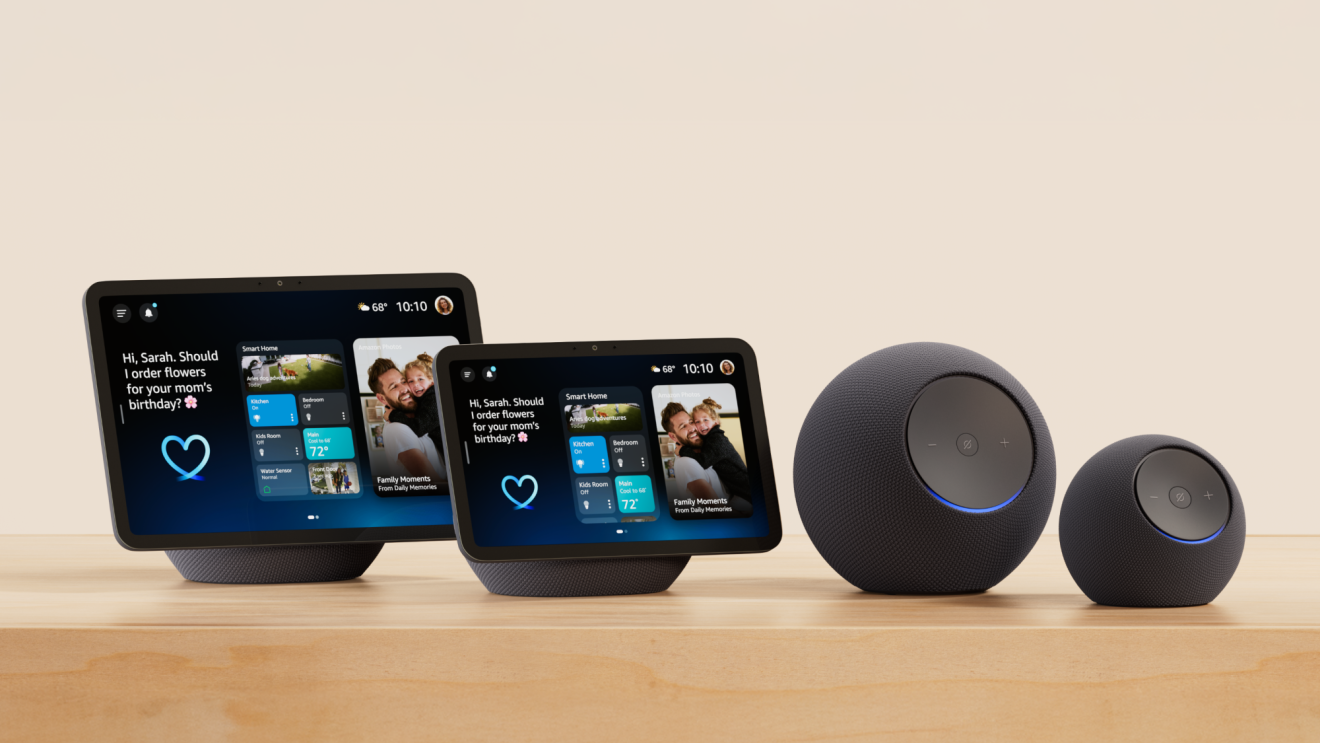
Amazon isn’t just updating software. The company has announced four new Echo devices designed specifically for the Amazon Alexa Plus experience, all powered by custom silicon that makes the AI run locally:
- Echo Dot Max ($99.99) — Powered by the AZ3 chip with over 50% improved wake-word detection, nearly 3x the bass of the Echo Dot 5th gen, featuring a two-way speaker system with high-excursion woofer and custom tweeter
- Echo Studio ($219.99) — Runs on the AZ3 Pro chip, 40% smaller than the original, with high-excursion woofer, three full-range drivers, Dolby Atmos spatial audio support
- Echo Show 8 ($179.99) — AZ3 Pro with 13-megapixel camera, high-density display, front-facing stereo speakers with spatial audio
- Echo Show 11 ($219.99) — AZ3 Pro with the Omnisense platform combining camera, audio, ultrasound, Wi-Fi radar, and accelerometer for contextual awareness

The custom AZ3 and AZ3 Pro chips are the unsung heroes here. The AZ3 Pro includes a dedicated AI Accelerator designed to run edge-based AI models, supporting state-of-the-art language models and vision transformers directly on the device. This means faster response times and reduced cloud dependency for basic interactions.
The Honest Take: What Works and What Doesn’t
Let’s be real — Amazon Alexa Plus isn’t perfect yet. Early access reviews from Fortune and other outlets paint a mixed picture. Some responses take up to 15 seconds — an eternity when you’re standing in your kitchen asking a simple question. Beta testers have reported reliability issues with basic functions like setting alarms, which is frankly unacceptable for a feature that’s worked reliably for a decade.
The smart home controls, while more intelligent, can feel buggy compared to Apple Home, Google Home, and Samsung SmartThings. And in an era where ChatGPT can be accessed from any device, the question becomes: does Amazon Alexa Plus offer enough to justify its ecosystem lock-in?
The answer, for now, is a qualified yes — if you’re already in the Amazon ecosystem. The agentic capabilities are genuinely useful for Amazon services (Fresh, Prime Video, Ring), and the pricing is hard to beat: $19.99/month standalone, or free for Amazon Prime members. That’s a significant value proposition when comparable AI assistants charge similar monthly fees without the smart home integration.
Amazon Alexa Plus vs. the Competition: Where It Stands
The AI assistant landscape in September 2025 is more competitive than ever. Apple Intelligence is expanding across iOS, Google’s Gemini is deeply integrated into Android and Nest devices, and standalone AI assistants like ChatGPT and Claude are accessible everywhere. So where does Amazon Alexa Plus fit?
Smart home control remains Alexa’s strongest advantage. With compatibility across tens of thousands of devices and the new Omnisense platform, no other assistant comes close to matching the breadth of Amazon’s smart home ecosystem. The ability to set proactive alerts — like notifying you if the garage door is unlocked after 10 PM — shows the kind of contextual intelligence that passive assistants can’t match.
Conversational AI quality is where Alexa+ still trails. ChatGPT and Google Gemini consistently deliver faster, more accurate responses for complex knowledge queries. Amazon Alexa Plus is catching up, but the 15-second response times and occasional hallucinations suggest the architecture needs more optimization.
Agentic task completion is Alexa+’s differentiator. While ChatGPT can draft your email and Gemini can search your files, Amazon Alexa Plus can actually book your Uber, order your groceries, and adjust your thermostat — all in one conversation. That’s a meaningful capability gap that competitors haven’t closed yet.
What This Means for the Smart Home in Late 2025
The September 2025 Amazon Alexa Plus preview signals a broader industry shift. Smart home assistants are evolving from reactive command processors into proactive, context-aware AI agents. The new Echo hardware with dedicated AI silicon, the expansion to Ring doorbells, and the growing agentic capabilities all point toward a future where your home’s AI doesn’t wait for commands — it anticipates needs.
For consumers, the calculus is straightforward: if you’re a Prime member with Echo devices, Alexa+ is free and worth trying today. If you’re building a new smart home ecosystem from scratch, the new Echo lineup with AZ3 Pro chips offers the best hardware foundation for what’s clearly Amazon’s AI future. And if you’re waiting for perfection — keep waiting, because every AI assistant in 2025 is still very much a work in progress.
Building a smart home studio or need help integrating AI into your production workflow? Sean Kim has 28+ years of experience bridging music technology and cutting-edge AI systems.
Get weekly AI, music, and tech trends delivered to your inbox.