Rhodes Pianology Plugin Review: 3 Deep-Sampled Pianos That Punch Way Above Their Price — Concert Grand, Upright & Electric Grand in 2026
March 23, 2026
GPT-5.4 Developer Guide: Standard, Thinking, and Pro Compared — 1M Context, Native Computer Use, and Tool Search Explained (2026)
March 23, 2026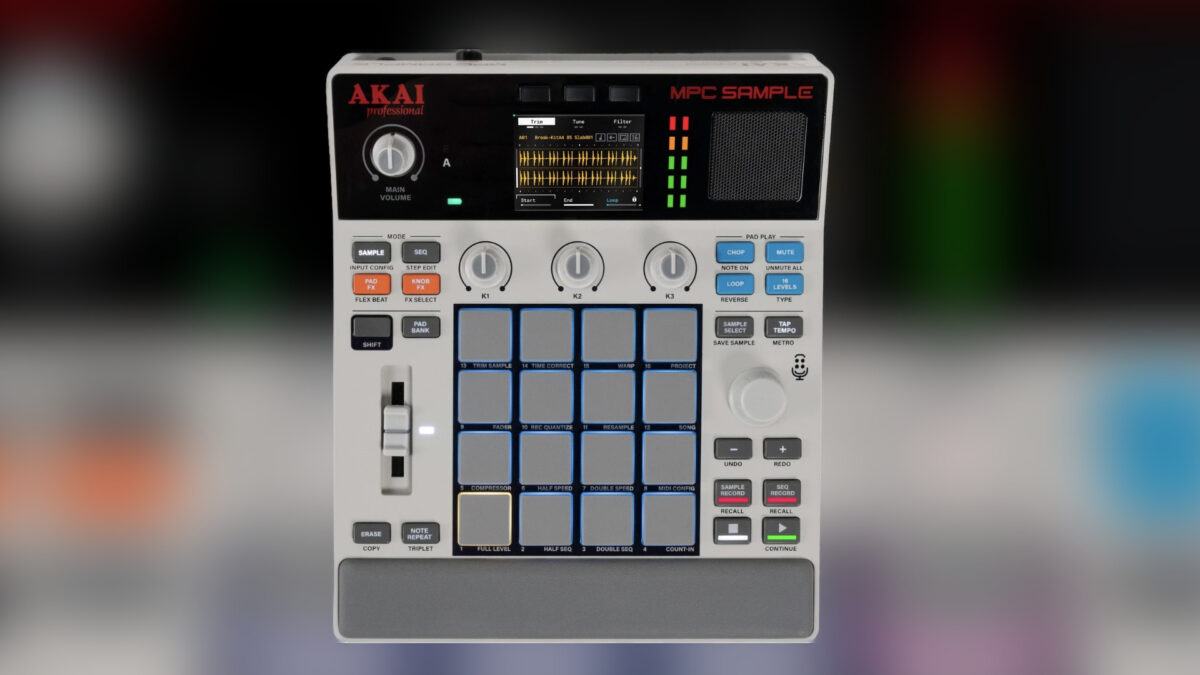
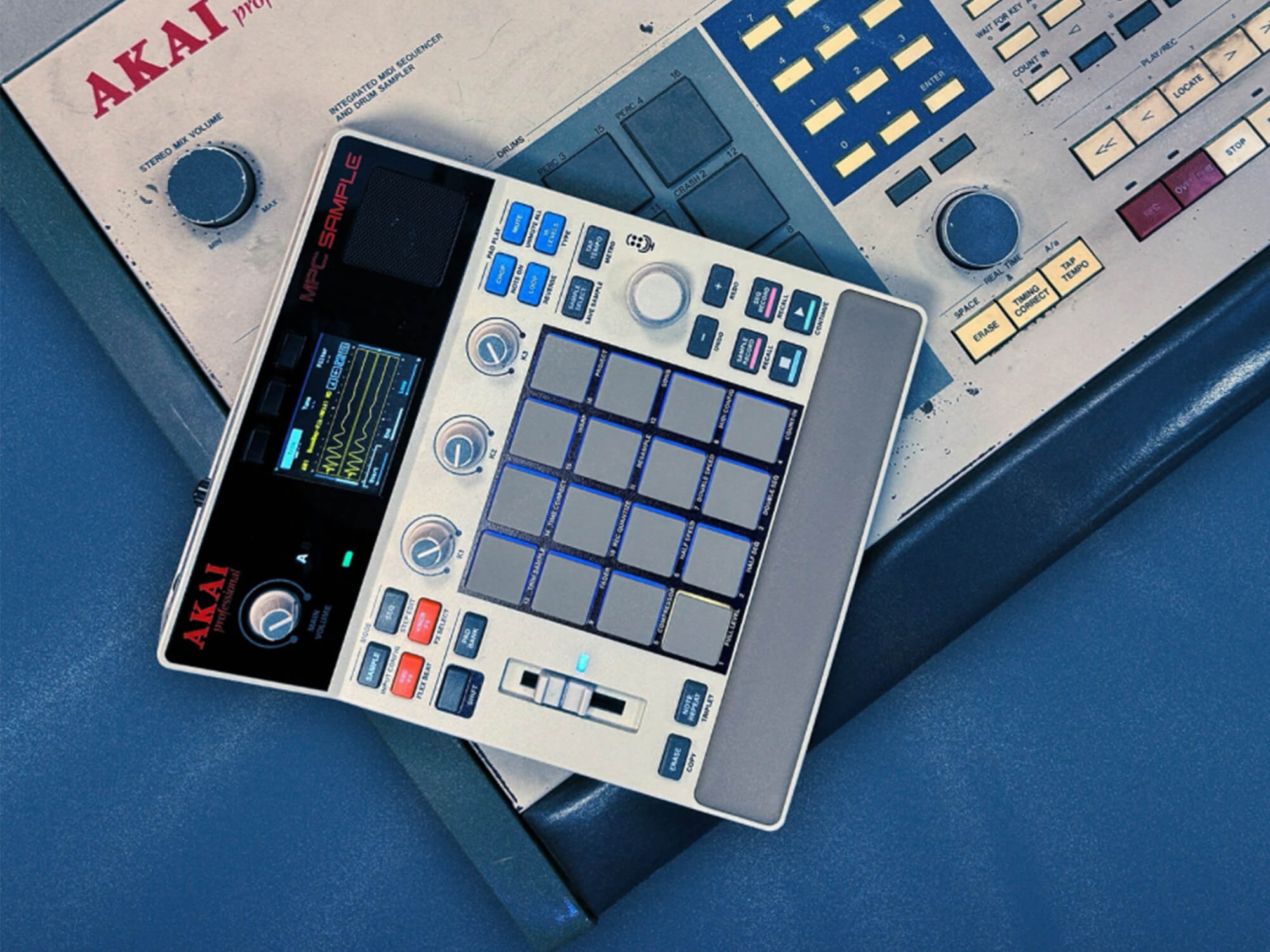
The DNA of the MPC60 and MPC3000 just got a portable reboot. The Akai MPC Sample officially drops on March 24, 2026, at $399 — and it’s about to shake up the portable sampler market that Roland’s SP-404MK2 and Teenage Engineering’s EP-133 KO II have dominated for the past two years. If you’ve been waiting for Akai to bring the legendary MPC workflow into a battery-powered, grab-and-go format, the wait is over.
What Makes the Akai MPC Sample Different
Akai Professional’s pitch is clear: the iconic MPC workflow in your backpack. The MPC Sample is a fully standalone sampler — no computer, no DAW, no compromises. It features the classic 4×4 velocity-sensitive pad layout that defined hip-hop production for decades, paired with a full-color display, a built-in microphone, and a built-in speaker. Everything you need to sample, chop, and build beats from anywhere.
But beyond the headline features, the MPC Sample packs some serious depth under the hood. The sampling engine includes Instant Sample Chop Mode for automatic slicing — feed it a break and it intelligently divides it across the pads. Real-time timestretch and pitch control let you manipulate samples on the fly without artifacts, and internal resampling means you can layer effects and bounce results back into the engine for further manipulation. This is the kind of workflow that made the MPC60 and MPC3000 legendary in the golden era of hip-hop production, now available in a device you can toss in your bag.
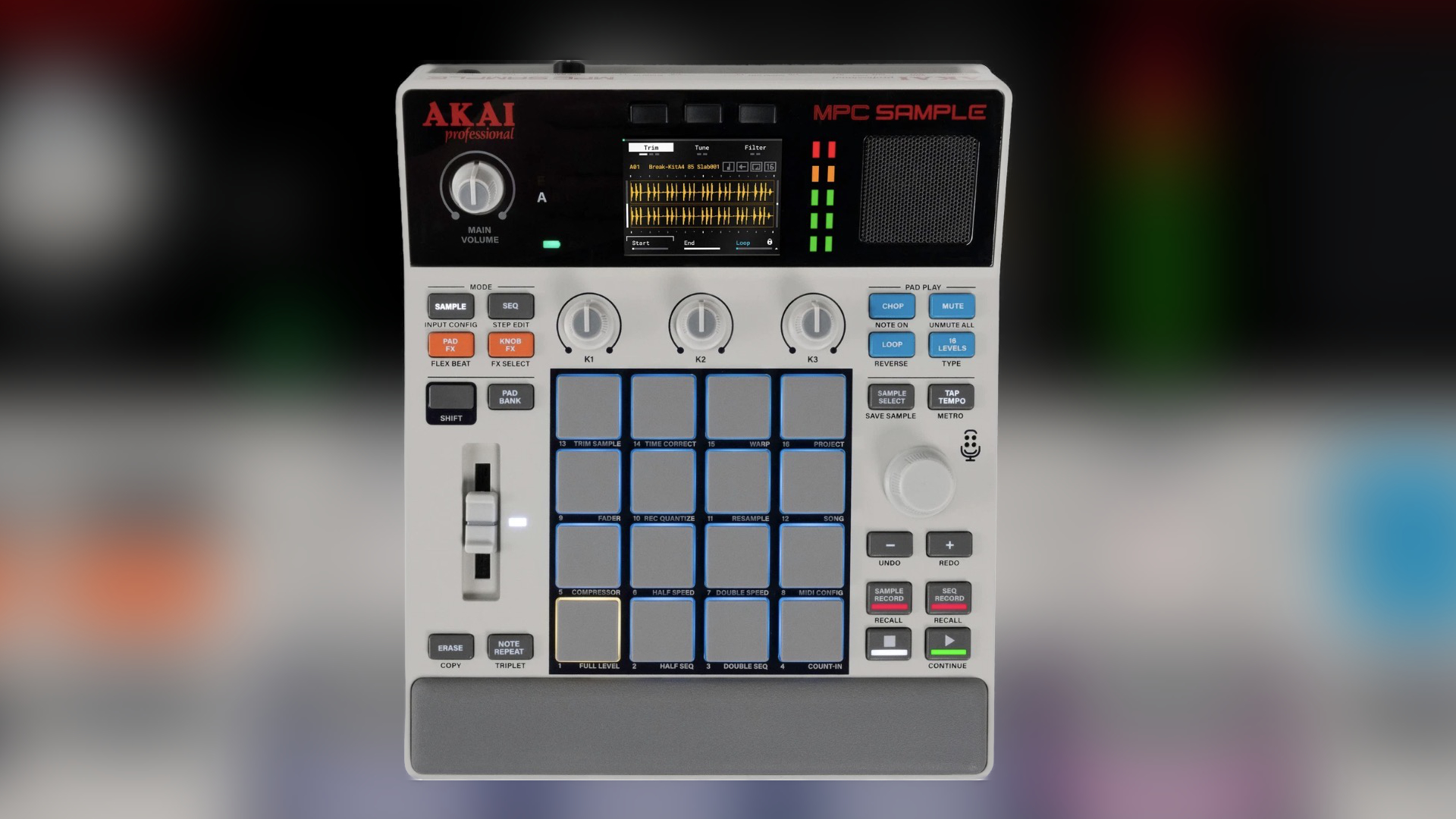
Akai MPC Sample — Full Specs Breakdown
- Pads: 4×4 velocity-sensitive pads (classic MPC layout)
- Display: Full-color LCD
- Sampling Engine: Instant Sample Chop Mode (auto-slicing), real-time timestretch & pitch control, internal resampling
- Sequencer: Built-in sequencer with classic MPC workflow
- Effects: 4 effects engines, 60 effect types (granulator, ring mod, Lo-Fi, delay, reverb, chorus, flanger, phaser, beat repeat, half-speed, color, and more), 100+ effect kits
- Factory Content: 100+ factory kits spanning hip-hop, house, drum & bass, lo-fi, and more
- Battery: Rechargeable lithium-ion, up to 5 hours continuous use
- Audio I/O: Stereo line in/out (6.35mm / 1/4-inch), headphone output
- MIDI: MIDI in/out (TRS), sync output
- Connectivity: USB-C, microSD card slot
- Built-in: Microphone and speaker
- Price: $399 USD / EUR399 / GBP349
The 6.35mm jacks deserve special attention here. While competitors like the Roland SP-404MK2 and Teenage Engineering EP-133 KO II use 3.5mm mini-jacks, Akai went with quarter-inch connections — the same standard used by studio monitors, audio interfaces, and professional mixers. No adapters needed when you want to move from the park bench to the studio desk. That’s a deliberate design choice that signals Akai sees the MPC Sample as more than a casual toy — it’s meant to integrate seamlessly into professional environments.
The effects section is another area where the MPC Sample punches well above its weight class. Four onboard effects engines running 60 different effect types is a staggering amount of processing for a $399 portable device. The granulator alone opens up entire worlds of sound design — feeding vocal samples or field recordings through granular processing and then resampling the results back into the sequencer creates a feedback loop of creative possibilities that you simply can’t get from the other two competitors at this price.
Akai MPC Sample vs Roland SP-404MK2 vs Teenage Engineering EP-133 KO II
With the MPC Sample’s arrival, 2026’s portable sampler market now has a genuine three-way battle. Each device has a distinct philosophy and targets a different type of producer, so let’s break down where they overlap and where they diverge in detail.
Specs Comparison Table
The MPC Sample Advantage: Effects and Connectivity
Where the Akai MPC Sample really flexes is in its effects architecture. Four separate effects engines with 60 types — including granulator, ring modulation, beat repeat, half-speed, and color — give you sound design capabilities that neither the SP-404MK2 nor the EP-133 can match at this price point. The SP-404MK2 comes close with its 41 multi-effects plus 17 input effects (and its legendary Vinyl Simulator remains unmatched for lo-fi aesthetics), but at $600 you’re paying 50% more for the privilege.
The connectivity story is equally compelling. TRS MIDI in and out means you can integrate the MPC Sample into a hardware setup with synths and drum machines without buying dongles or adapters. The sync output lets you clock external gear — synths, modular systems, other sequencers — keeping everything locked to the same tempo. And those 6.35mm jacks? They make the MPC Sample the only device in this three-way comparison that connects directly to professional audio equipment without requiring adapter cables.
Where the SP-404MK2 Still Wins
Roland’s SP-404MK2 didn’t become the go-to live performance sampler by accident. Its 32-voice polyphony gives you significantly more room for layered performances. The OLED display allows direct waveform editing on the device itself — a feature neither competitor offers. With 16GB of internal storage plus SD card expansion, you’re never running out of sample space. And the iconic DJ effects — DJFX Looper, Vinyl Simulator, Cassette Simulator, Resonator — are still the gold standard for real-time performance manipulation.
If your primary use case is live sets, DJ performances, or lo-fi beat sets streamed from a stage, the SP-404MK2 remains king. The trade-off is the $600 price tag and the fact that it runs on 6 AA batteries with only about 3.5 hours of battery life — a significant limitation compared to both competitors. It also lacks a built-in mic and speaker, which means you always need external monitoring.
Where the EP-133 KO II Still Wins
Teenage Engineering’s EP-133 KO II occupies its own creative lane entirely. At $329, it’s the most affordable entry point of the three. Its 20-hour battery life on 4 AAA batteries is frankly absurd compared to the competition — you could run it all weekend without recharging. And Teenage Engineering’s punch-in 2.0 workflow — where you build beats by tapping in patterns with pressure-sensitive pads rather than traditional step sequencing — has a creative immediacy that’s genuinely addictive once you get the hang of it.
The EP-133 also has built-in sidechain compression, which is a surprisingly powerful feature for a device at this price point. It gives your beats that pumping, ducking effect that’s become standard in electronic music production. However, you’re working with 12 pads instead of 16, 128MB of internal memory with no expansion slot, and a single master effect slot with limited parameter control. For producers who want depth and flexibility, those limitations become apparent quickly.
Who Should Buy the Akai MPC Sample
The MPC Sample slots perfectly into several producer profiles. Here’s who should be paying close attention to the March 24 launch:
- MPC loyalists on a budget: If you love the MPC workflow but can’t justify $1,200+ for an MPC One+ or MPC Live II, the MPC Sample gives you the core sampling and chopping experience at $399. It’s the most affordable entry point into the MPC ecosystem.
- Sample-based beat makers: The Instant Sample Chop Mode, real-time timestretch, and internal resampling create a powerful sample manipulation pipeline that’s purpose-built for chopping breaks, flipping records, and building layered compositions from found sounds.
- Hardware setup integrators: TRS MIDI in/out, sync output, and 6.35mm audio connections make the MPC Sample the most studio-friendly portable sampler available in 2026. It plays nicely with existing synthesizers, drum machines, and audio interfaces.
- Sound designers who want portable effects processing: Four effects engines with granulator, ring mod, Lo-Fi, half-speed, and 56 other types in a battery-powered box is a sound design playground. Combined with internal resampling, you can create textures and atmospheres that go far beyond basic beat-making.
- Producers who want one device that does it all: Built-in mic for sampling the world around you, built-in speaker for instant monitoring, microSD for virtually unlimited storage expansion, and a full sequencer for arranging your ideas. It’s a complete beat-making station that fits in a backpack.
What to Watch for After Launch
A few things will determine whether the MPC Sample lives up to its promise. First, firmware updates: Akai has a strong track record of adding features post-launch across the MPC line, so expect the MPC Sample to gain capabilities over time. Second, the community factor — the MPC user base is one of the most active in hardware production, and if the MPC Sample attracts that same energy, we’ll see custom kits, workflows, and tutorials flooding YouTube and forums within weeks of launch. Third, the real-world battery performance: 5 hours is the official spec, but real-world usage with heavy effects processing and display brightness may tell a different story.
Final Verdict — A New Chapter for MPC
The Akai MPC Sample represents something meaningful: Akai finally acknowledging that the future of beat-making isn’t just in studios — it’s on trains, in parks, at coffee shops, and everywhere in between. At $399, it undercuts the SP-404MK2 by $200 while arguably offering more effects power and better professional connectivity. It costs $70 more than the EP-133 KO II, but delivers the legendary MPC workflow, a full-color display, professional 6.35mm I/O, and significantly deeper effects processing with four dedicated engines.
Is it the “best” portable sampler of 2026? That depends entirely on your workflow and priorities. The SP-404MK2 remains unbeatable for live performance. The EP-133 KO II is still the most portable and longest-lasting option. But for producers who want the MPC chop-and-flip experience in a standalone, battery-powered format at a price that doesn’t require a second mortgage — March 24 might just be the date you’ve been waiting for. Check the full details on Akai Professional’s official MPC page and MusicTech’s comprehensive feature breakdown.
Looking for help choosing studio gear or optimizing your music production workflow? Sean Kim has 28+ years of experience in music and audio engineering.
Get weekly AI, music, and tech trends delivered to your inbox.