AI Music Copyright Suno Udio Lawsuits: The Copyright Office Just Changed Everything
May 26, 2025
Logitech G Pro X 60 Lightspeed Review: 5 Reasons KEYCONTROL Changes Everything (and 3 It Doesn’t)
May 26, 2025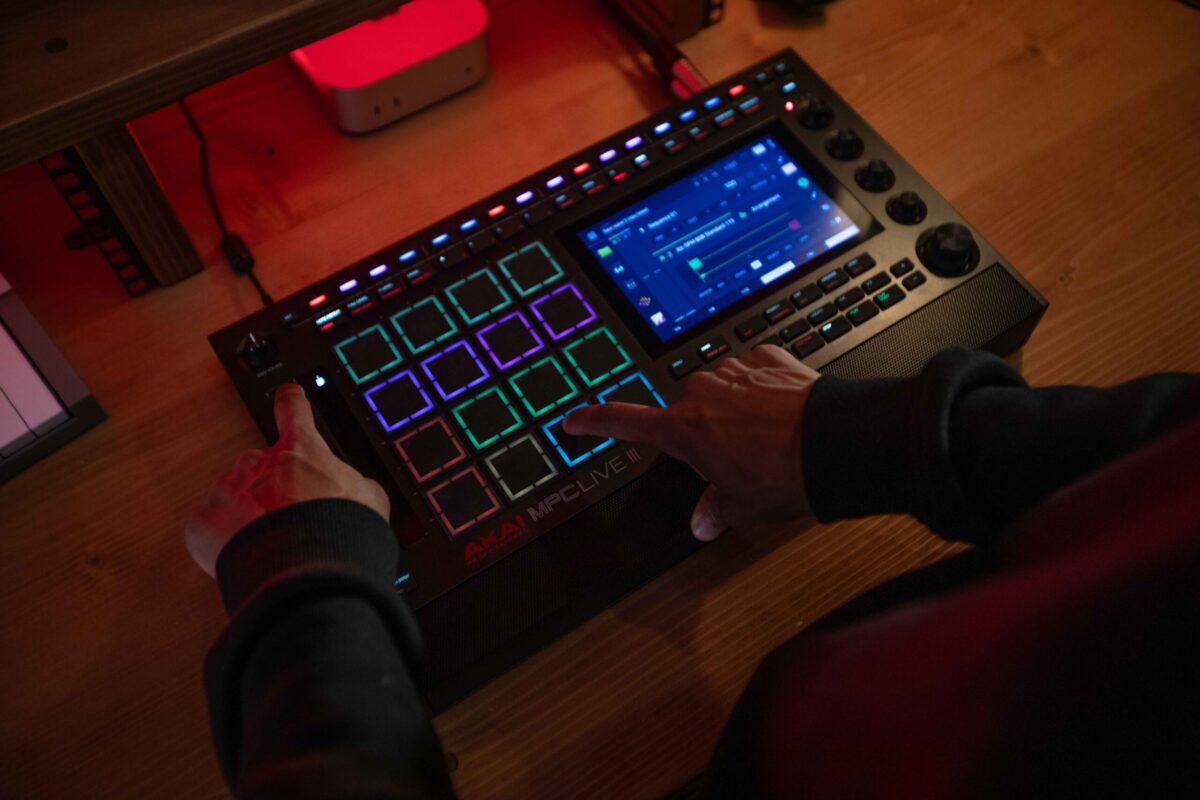
Finally. The Akai MPC Live III is here, and it is not a modest refresh. We are talking about an 8-core processor delivering 4x the power of its predecessor, 8GB of RAM, 128GB of internal storage, and a brand-new set of MPCe 3D pads that sense velocity, polyphonic aftertouch, and X/Y position simultaneously. If you have been pushing the MPC Live II to its limits, this is the upgrade you have been waiting for.
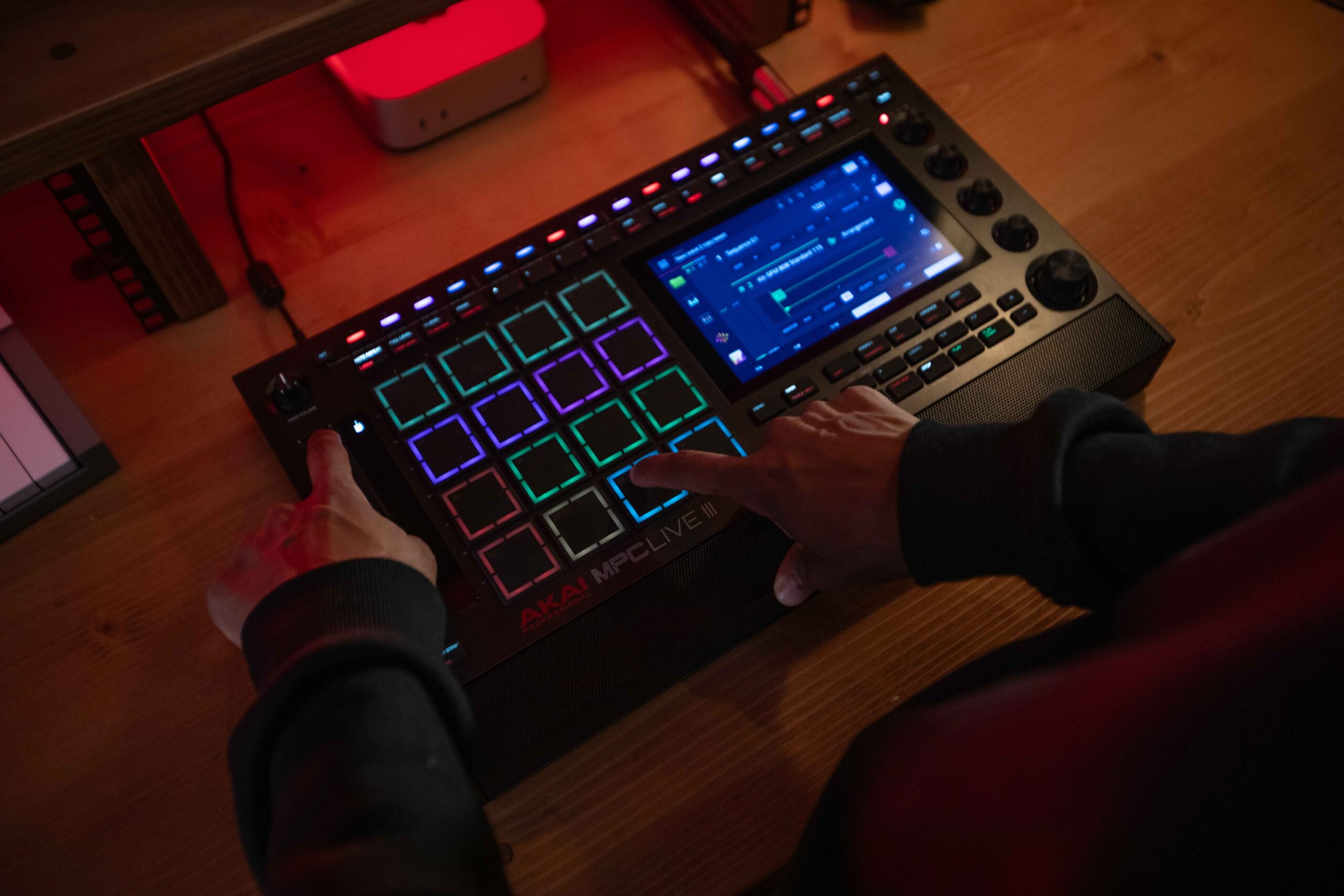
Akai MPC Live III Core Specs: A Quantum Leap in Processing Power
Let us start with the numbers, because they tell a compelling story. The MPC Live III is built around a new 8-core processor that delivers roughly four times the processing power of the MPC Live II. Pair that with 8GB of RAM (up from 2GB) and 128GB of internal storage (up from 16GB), and you have a machine that can handle serious production workloads without breaking a sweat.
What does that mean in practice? You can run up to 32 plugin instances and 16 audio tracks simultaneously. The days of carefully rationing your CPU resources on complex MPC projects are effectively over. The stuttering and crashes that plagued heavy Live II sessions should be a thing of the past. Consider the typical Live II workflow: you would load a few drum programs, add a couple of synth plugins, layer some effects, and suddenly find yourself watching the CPU meter creep into the red. With the Live III, that same project barely registers on the processor. You can stack reverbs, delays, compressors, and synthesizers across multiple tracks without worrying about dropouts or audio glitches.
The 128GB internal storage is another major quality-of-life improvement. On the Live II, 16GB filled up quickly once you started loading multi-sampled instruments and drum kits. Many users relied on SD cards or USB drives to supplement storage, which introduced another point of failure. With 128GB onboard, you can carry a substantial sample library internally, keeping your most-used sounds always available without external media.
The I/O is comprehensive. You get XLR/TRS combo inputs for recording vocals or instruments directly into the unit, six line outputs for multi-track routing to an external mixer or audio interface, built-in stereo speakers for quick monitoring when you do not have headphones handy, and a built-in condenser microphone for capturing ideas on the fly. USB-C handles 24-channel audio and 32-channel MIDI, making it a powerful audio interface when connected to a computer. Wi-Fi, Bluetooth, and CV/Gate round out the connectivity options. The internal rechargeable lithium-ion battery means this is genuinely a go-anywhere production box, whether you are making beats on a flight, in a park, or backstage before a show.
The 7-inch multi-touch display carries over from the Live II, which is perfectly adequate for the MPC workflow. Price sits at $1,699 in the US (EUR 1,649.99, GBP 1,399.99), a noticeable increase from the Live II but one that the spec sheet arguably justifies.
MPCe 3D Pads and Clip Matrix: New Dimensions of Expression
The headline hardware feature is the 16 MPCe 3D pads. These are not just velocity-sensitive pads with a new name. They add polyphonic aftertouch and X/Y axis sensing, which means each pad can detect not only how hard you hit it, but also how you move your finger across it and how much pressure you apply after the initial strike. For expressive drum programming, melodic playing, and performance effects, this is a genuine game-changer.
MusicRadar awarded the MPC Live III a 4.75 out of 5 rating in their review, singling out the expressiveness of the new pads as a standout feature. The ability to modulate parameters in real-time simply by shifting finger position on a pad opens up performance possibilities that were previously impossible on an MPC.
Alongside the pads, there is a new 16-step sequencer grid with a dedicated performance strip. But the real surprise is the clip matrix. If you have used the Akai Force, you know what this is: a real-time loop-launching grid that lets you trigger and layer loops on the fly. DJ TechTools described it as bringing “Force-style clip matrix” functionality directly into the MPC ecosystem, blurring the line between studio production and live performance.
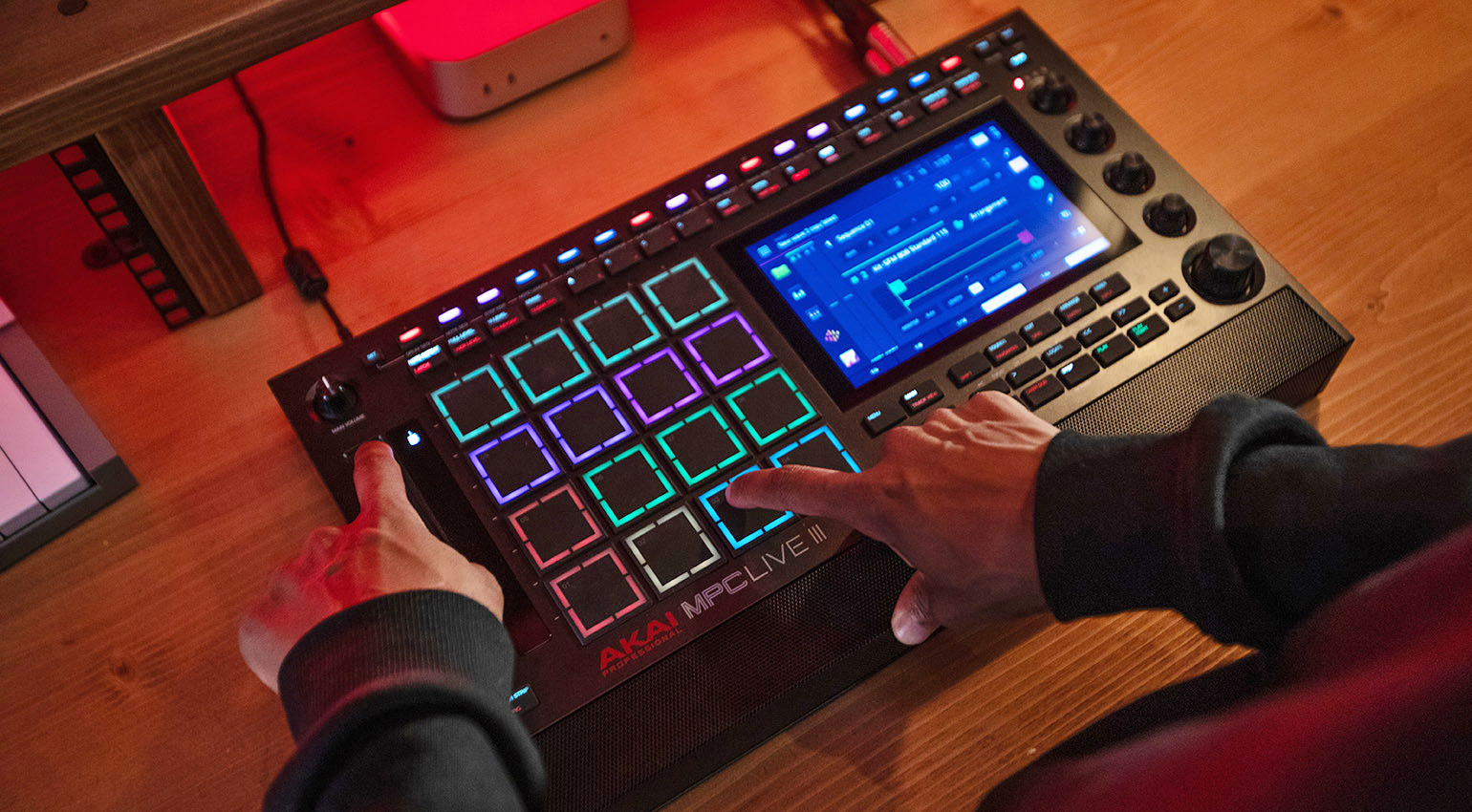
zplane Stems Pro and MPC3 Software: The Complete Production Package
On the software side, the integration of zplane’s Stems Pro technology is perhaps the most workflow-altering addition. Built directly into the MPC Live III, it allows you to separate any audio track into its constituent parts: vocals, drums, bass, and other elements, all in real time. For a sampling-centric workflow, this is transformative. You can pull apart any reference track, isolate the elements you want, and immediately incorporate them into your production.
The unit ships with MPC3 software and the Pro Pack included, along with the AIR effects suite. According to Akai’s official product page, the Live III was designed to “dramatically reduce desktop dependency,” and the combination of processing power, storage, and built-in tools makes that claim credible.
CV/Gate connectivity means modular synth users can integrate the MPC Live III into their setup as a sequencing hub, sending pitch and gate signals to control analog oscillators and envelopes directly from MPC sequences. The Wi-Fi and Bluetooth support opens up possibilities for wireless sample transfer, cloud backup, and controller integration that the Live II simply could not match. Imagine finishing a beat on the train, then wirelessly transferring the project to your studio computer the moment you walk through the door.
MPC Live III vs MPC Live II: Is the Upgrade Worth It?
Let us be direct about the comparison. The CPU is 4x faster. RAM is 4x larger. Storage is 8x bigger. The MPCe 3D pads add an entirely new control dimension that did not exist on the Live II. Clip matrix brings Force functionality into the MPC form factor. Stems separation is built in. There is a built-in condenser microphone and stereo speakers.
On the other hand, MusicRadar noted in their review that the control surface has become “busier,” and the learning curve for all the new features is real. The addition of the step sequencer grid, performance strip, and expanded controls means the top panel is more crowded than the Live II’s cleaner layout. For producers who valued the Live II’s simplicity, this added complexity may take some adjustment. The price increase from the Live II is also substantial. At $1,699, the Live III sits in a price bracket that overlaps with capable laptop-based setups. If you are a producer who uses your Live II primarily for straightforward beat-making and rarely hits CPU limits, you may not need the upgrade immediately.
But if you have been frustrated by the Live II’s processing ceiling, if you have wanted clip-launching capabilities without buying a separate Force unit, or if the idea of real-time stems separation and 3D expressive pads excites you, the MPC Live III is a clear step forward. It is not an incremental update. It is a generational leap.
My Take: What 28 Years in Audio Taught Me About This
I have been working in music and audio for over 28 years, and I remember when the original Akai S-series samplers were the backbone of professional production. What strikes me about the MPC Live III is not just the spec sheet, impressive as it is. It is the fact that we have reached a point where a battery-powered, portable device carries specs that would have been respectable for a desktop workstation a decade ago. 8-core CPU, 8GB RAM, 128GB storage. Standalone production is no longer a compromise. It is a legitimate choice.
The MPCe 3D pads deserve special attention. Polyphonic aftertouch and X/Y sensing have existed in the MIDI controller world for years, notably in instruments like the Roli Seaboard and Sensel Morph. But integrating this level of expression into the MPC’s pad-based workflow is new territory. Drum programming has always been limited by velocity as the primary expressive parameter. Now you can ride pressure curves and positional modulation in real time while programming beats. That fundamentally changes what is possible in a pad-based production environment.
The zplane Stems integration is equally significant from a studio perspective. When a client walks into the studio with a reference track and says “I want that drum sound,” being able to isolate it instantly without firing up a separate application is a workflow win that saves real time and money. That said, $1,699 is a serious investment. I would encourage any producer considering this to honestly evaluate their workflow needs before pulling the trigger. If you are consistently bumping against the Live II’s limits, the upgrade is a no-brainer. If not, the Live II remains a capable machine.
The Akai MPC Live III sets a new benchmark for standalone beat-making hardware. The combination of MPCe 3D pad expressiveness, clip matrix live performance capabilities, built-in stems separation, and raw processing power makes it the most capable standalone production device on the market today. For producers who want a laptop-free production environment without compromises, there is simply nothing else at this level right now.
Have questions about the Akai MPC Live III or need advice on choosing the right production gear? Drop a comment below — I read and respond to every one.
Get weekly AI, music, and tech trends delivered to your inbox.