Mac Studio 2025 M4 Max M3 Ultra Review: Why Apple Skipped the M4 Ultra
June 17, 2025
Home Studio Acoustics on a Budget: DIY Treatment Guide 2025
June 18, 2025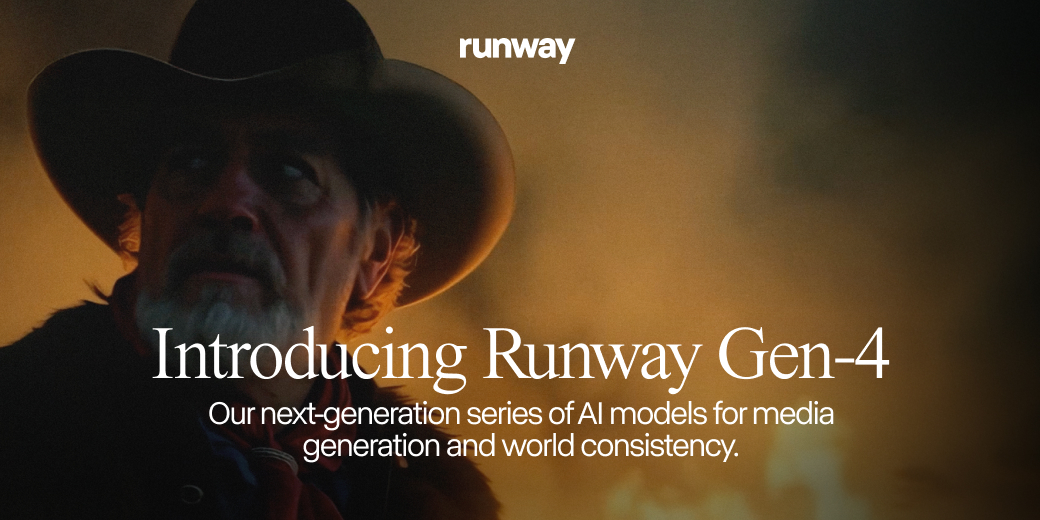
Three months ago, generating a consistent 10-second video clip with AI meant crossing your fingers and hoping the character’s face didn’t melt by frame 240. As of June 2025, four platforms have changed that equation entirely — and the gap between them is narrower than you’d expect.
I’ve spent the past month stress-testing OpenAI’s Sora, Runway Gen-4, Kling 2.1, and Pika 2.2 across identical prompts, measuring everything from photorealism to generation speed to monthly cost. Here’s what the AI video generation comparison revealed — and why the “best” tool depends entirely on what you’re building.
The State of AI Video Generation in June 2025
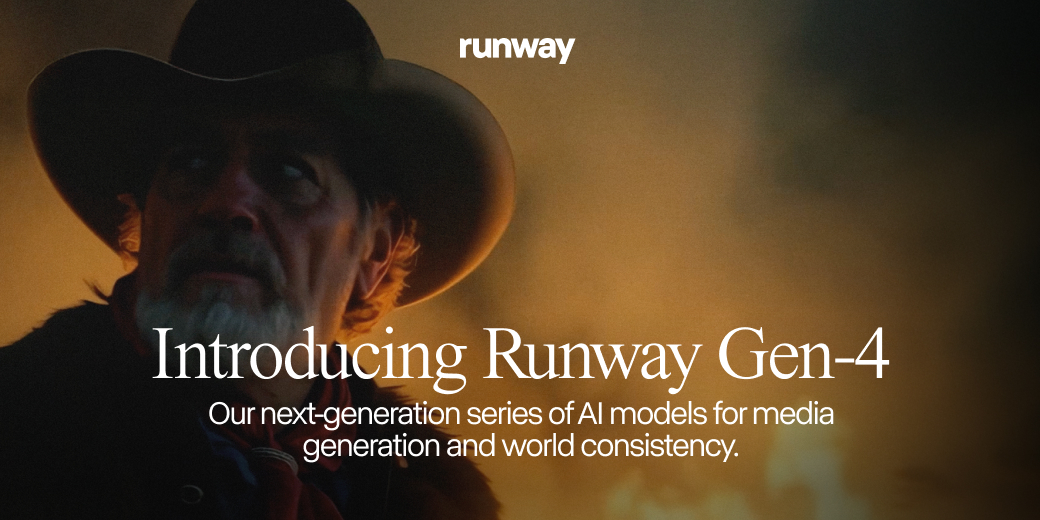
The AI video generation landscape shifted dramatically in spring 2025. Runway dropped Gen-4 on March 31 with a feature filmmakers had begged for: character consistency across multiple shots. Kuaishou followed weeks later with Kling 2.1, quietly crossing the $100 million annualized revenue mark. Pika iterated to version 2.2 with 10-second 1080p clips and creative manipulation tools. And OpenAI’s Sora remained the photorealism king — at a price that makes most independent creators wince.
With Apple’s WWDC 2025 on the horizon and whispers of Apple Intelligence video features, the competitive pressure has never been higher. Let’s break down what each tool actually delivers right now.
AI Video Generation Comparison: Head-to-Head Specs
Before diving into the nuances, here’s the raw specification breakdown as of June 2025:
OpenAI Sora: Up to 1080p resolution, clips up to 5 minutes, credit-based pricing (~$4 per 5-second 1080p clip), ChatGPT Pro required ($200/month). Strongest photorealism and physics simulation in the market.
Runway Gen-4: 720p/1080p at 24fps, 5-10 second clips, $95-$495/month subscription tiers. First tool to nail character and scene consistency across shots. Lionsgate partnership saved “millions” on VFX.
Kling 2.1: Standard (720p) and High Quality (1080p) modes, clips up to 2 minutes, $10-$50/month. Master Edition adds enhanced motion and semantic responsiveness. Over 10,000 enterprise clients globally.
Pika 2.2: 1080p resolution, 10-second generations, free tier available with limited credits. Generation speed of 15-30 seconds — 3-5x faster than competitors. Pikaframes, Pikaswaps, and Pikadditions for creative control.
Sora: The Photorealism Benchmark (at a Premium Price)
OpenAI’s Sora remains the tool that makes you do a double-take. The physics simulation is eerily accurate — water splashes behave like actual water, fabric drapes with realistic weight, and lighting shifts feel natural rather than computed. For high-end commercial work where “is this real?” is the goal, nothing else comes close.
The problem? Access. Sora requires a ChatGPT Pro subscription at $200 per month, and the credit system means a single 5-second 1080p video costs roughly $4. Complex prompts with multiple elements can burn through 800-1,200 credits per generation. For a production team iterating through dozens of variations, the cost compounds fast.
Where Sora excels beyond raw visual quality is scene intelligence. It understands logical scene progression — a person walking through a door will cast appropriate shadows, interact with nearby objects, and maintain consistent appearance throughout. This isn’t just rendering; it’s simulated world understanding.
Best for: Premium advertising, cinematic product demos, any project where photorealism justifies the $200/month entry fee.
One underreported Sora capability: the model handles multi-element scenes with surprising coherence. A prompt describing three people at a dinner table — each with distinct clothing, gestures, and facial expressions — produces results that would have required hours of compositing just a year ago. The generation time is longer (complex scenes can take several minutes), but the output quality justifies the wait for commercial work.
Runway Gen-4: The Professional Filmmaker’s Choice
Runway’s Gen-4 launch on March 31 solved the single biggest frustration in AI filmmaking: character consistency. Upload a reference image, and your character maintains the same face, clothing, and proportions across every generated clip. For narrative content — commercials, short films, explainer videos — this is the difference between a gimmick and a production tool.
The temporal consistency is currently best-in-class. Motion flows naturally between frames, camera movements feel intentional, and style coherence holds even with dramatic prompt changes. Lionsgate’s partnership isn’t just a marketing play — the studio reportedly saved millions on VFX costs using Gen-4 for pre-visualization and background generation.
At Runway’s $3 billion valuation, the company is betting that professional creative tools — not consumer toys — are where AI video generates real revenue. The $95-$495 monthly pricing reflects that positioning. You get 5-10 second clips at 720p or 1080p with 24fps output, plus an in-editor workflow that lets you manipulate subjects via text after generation.
Best for: Professional filmmakers, advertising agencies, VFX pre-visualization, any workflow requiring multi-shot character consistency.
Kling 2.1: The Cost-Efficiency Champion
Kuaishou’s Kling is the story most Western tech media underestimates. In its first year since launch (June 2024), Kling crossed $100 million in annualized revenue by the 10th month — a faster monetization curve than most Silicon Valley AI startups dream of. By June 2025, the 2.1 model serves over 10,000 enterprise clients across advertising, animation, gaming, and smart devices.
The value proposition is straightforward: equivalent quality at roughly 40% of the cost per second of video. At $10-$50 per month, Kling 2.1 offers Standard (720p) and High Quality (1080p) modes, with a Master Edition tier for enhanced motion performance and semantic responsiveness. The maximum clip duration of 2 minutes dwarfs every competitor.
Kling’s facial animation accuracy is particularly impressive — identity consistency in multi-shot sequences and expression preservation across fast cuts. For high-volume social media production where quantity matters as much as quality, Kling has become the default choice for performance marketers and content agencies.
The trade-off? Complex lighting scenarios can flatten, and achieving specific stylized looks sometimes requires extra iterations. But when your monthly video budget is measured in hundreds of clips rather than dozens, those trade-offs become acceptable math.
Best for: High-volume content creators, performance marketing teams, social media agencies, anyone optimizing cost-per-video.
Pika 2.2: The Speed-First Social Creator
Pika occupies a unique niche in the AI video generation comparison: it’s the tool you reach for when time matters more than cinematic perfection. At 15-30 seconds per generation — roughly 3-5x faster than Runway or Kling for equivalent content — Pika 2.2 is built for the iteration speed that social media demands.
The creative manipulation toolkit sets Pika apart from pure generation tools. Pikaframes turns 2-5 static images into smooth transition videos with realistic movement. Pikaswaps replaces objects in existing video (swap a dog for a robot, preserving lighting and motion). Pikadditions inserts new characters or objects into footage. And Pikaffects applies creative manipulation effects — think Instagram filters, but for AI video.
The 1080p, 10-second generation cap and free tier with limited credits position Pika as the on-ramp for creators who want to experiment before committing to Runway’s or Sora’s pricing. The output isn’t as photorealistic as Sora or as cinematically consistent as Runway, but for TikTok, Instagram Reels, and rapid prototyping, the speed advantage is decisive.
Best for: Social media creators, rapid prototyping, creative experimentation, short-form content production.
Which AI Video Tool Should You Choose in June 2025?
After testing all four tools extensively, the decision matrix crystallizes around three variables: budget, volume, and quality threshold.
- Budget under $50/month + high volume: Kling 2.1. The 2-minute duration, dual resolution modes, and 40% cost advantage make it the rational choice for content factories and social media teams.
- Budget $100-500/month + professional quality: Runway Gen-4. Character consistency across shots is non-negotiable for narrative content, and no one else has solved this as well.
- Budget $200+/month + maximum realism: Sora. When the brief says “indistinguishable from live action,” Sora’s physics simulation and scene intelligence justify the premium.
- Free/low budget + speed priority: Pika 2.2. The creative toolkit (Pikaframes, Pikaswaps) and sub-30-second generation are unmatched for social-first workflows.
The real insight from this AI video generation comparison isn’t that one tool dominates — it’s that the market has stratified into clear tiers. Professional creators are increasingly using two or three tools in combination: Pika for rapid concept testing, Runway for hero shots, and Kling for scaling production volume. The single-tool era in AI video is already over.
With Apple’s WWDC 2025 kicking off this week and persistent rumors of native AI video features in iOS 19, the competitive landscape could shift again before summer ends. But as of today, these four tools represent the complete spectrum of what AI video generation can deliver — and the gap between “impressive demo” and “production-ready tool” has finally closed.
A Quick Note on Pricing Trends
One pattern worth tracking in this AI video generation comparison: prices are falling faster than quality is converging. Kling’s $10-$50 range puts professional-grade video generation within reach of solo creators and small businesses for the first time. Runway’s enterprise tier remains steep, but the gap between its $95 starter plan and Kling’s premium output narrows with every model update. Sora’s $200 price point looks increasingly isolated as competitors close the photorealism gap. Expect aggressive pricing moves from all four players before year-end.
Building an AI-powered video pipeline or need help evaluating tools for your creative workflow? Sean Kim has 28+ years of experience in audio/visual production and AI integration.
Get weekly AI, music, and tech trends delivered to your inbox.