Canva Visual Suite 2.0 Magic Studio — AI Video, Voice, and Code Tools That Replace Your Entire Creative Stack
April 24, 2025
NVIDIA H200 Supply Update: 28+ Cloud Providers Now Offer HBM3e Instances — Here’s What It Costs in Q2 2025
April 25, 2025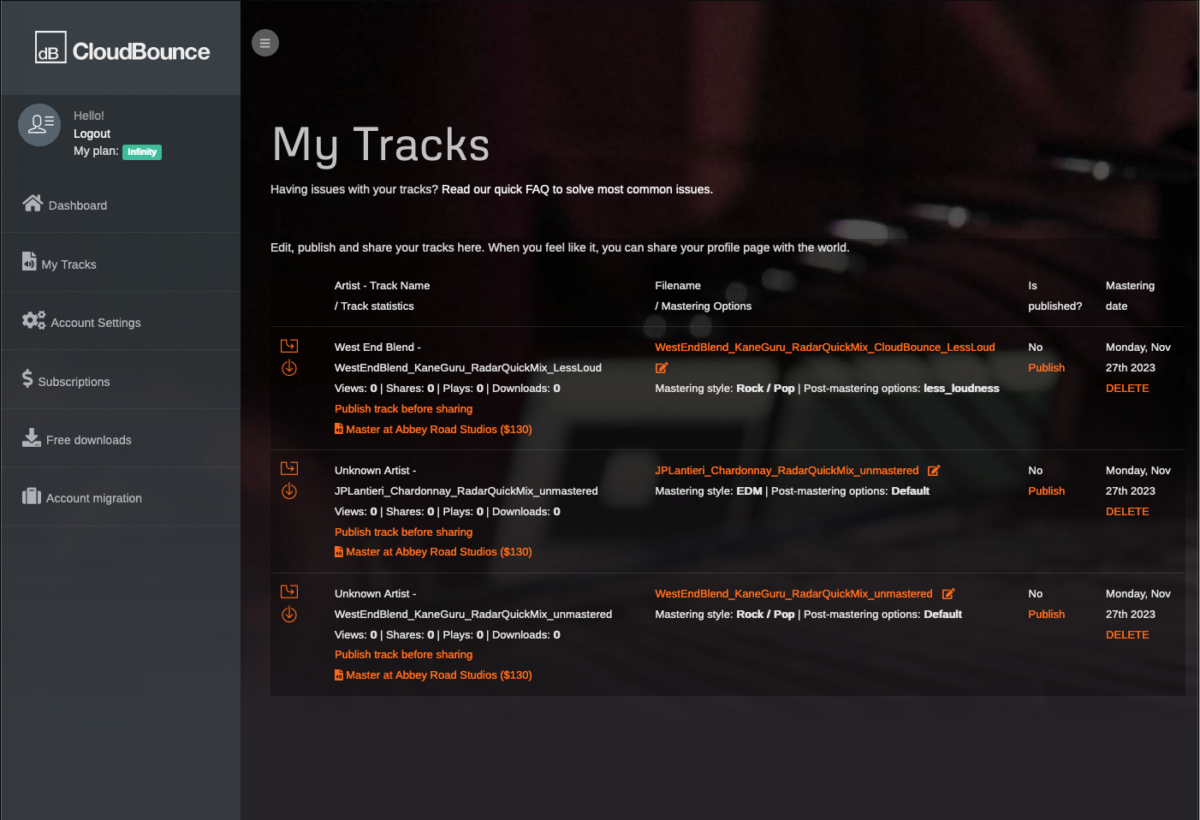
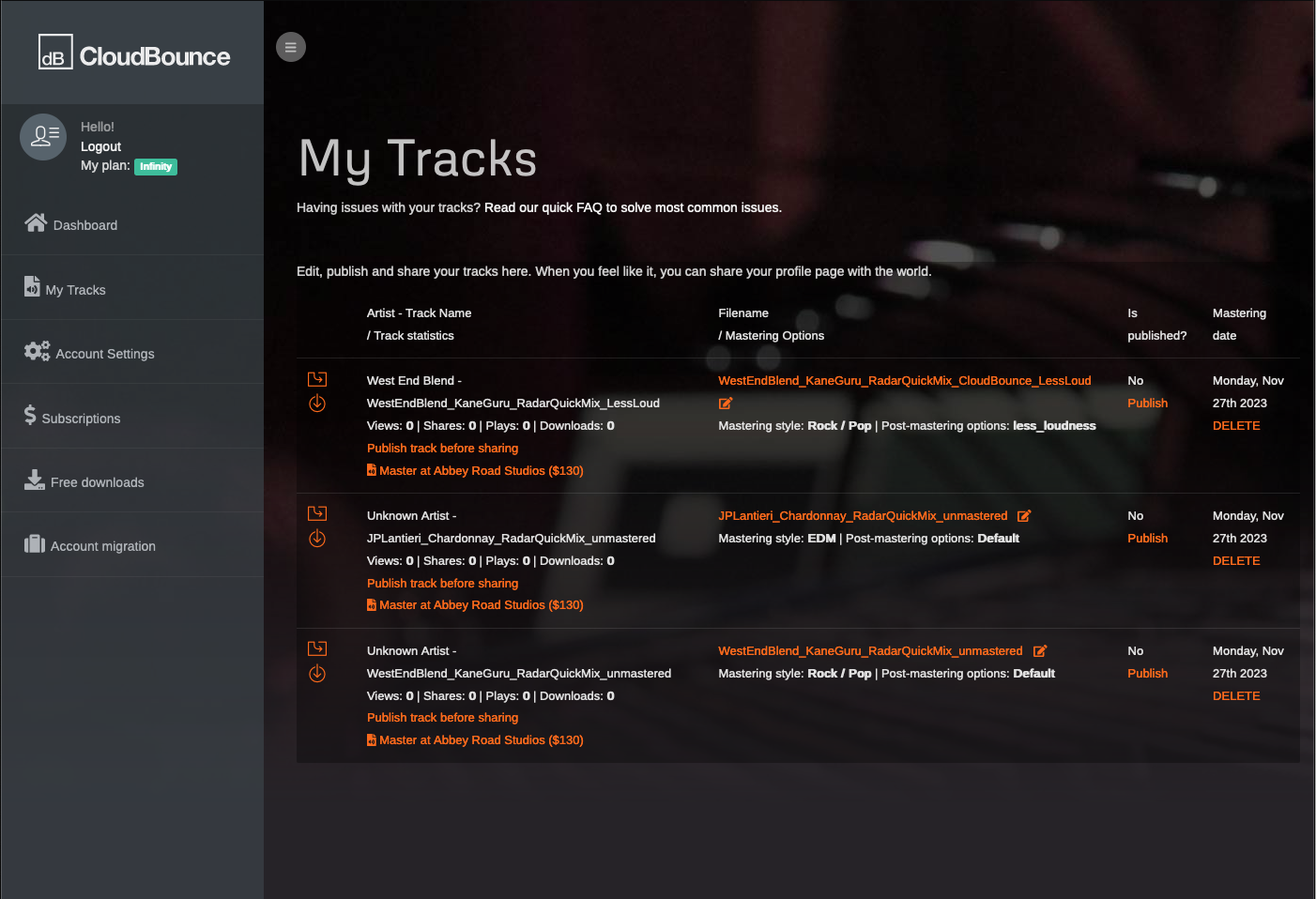
CloudBounce is dead. On April 1, 2025 — and no, this isn’t an April Fools’ joke — the AI mastering service officially shut its doors after being acquired by Image-Line, the company behind FL Studio. If you were one of the producers relying on CloudBounce for affordable $9.90 masters, you woke up to a redirect page and a vague promise that the technology would “live on” inside FL Studio. The AI mastering LANDR vs eMastered vs CloudBounce debate just lost a contender, and the implications for the remaining two are bigger than you think.
This isn’t just a story about one service shutting down. It’s a signal about where the entire AI mastering industry is headed in 2025 — consolidation, deeper DAW integration, and a race between the survivors to capture CloudBounce’s orphaned user base. Let’s break down what LANDR and eMastered actually offer today, what CloudBounce’s death means for the market, and which service deserves your money right now.
The CloudBounce Shutdown: What Actually Happened
CloudBounce had been one of the more budget-friendly options in the AI mastering space, offering genre-specific presets and turnaround times under 10 minutes for as little as $9.90 per track. The service positioned itself as the entry point for bedroom producers who couldn’t afford professional mastering but wanted something better than slapping a limiter on their master bus.
Then Image-Line came knocking. The FL Studio parent company acquired CloudBounce’s AI mastering technology and integrated it directly into FL Studio as “FL Studio AI Mastering” and FL Cloud. For existing FL Studio users, this is arguably good news — they’ll get AI mastering baked into their DAW. For everyone else who relied on CloudBounce as a standalone service? They’re left looking for alternatives.
The acquisition tells us something important about the market: standalone AI mastering services may not be sustainable at the budget end. CloudBounce’s technology was more valuable as a feature inside a DAW ecosystem than as a standalone product. Keep that in mind as we look at how LANDR and eMastered have positioned themselves differently.
AI Mastering LANDR vs eMastered: The Two Survivors Compared
LANDR: The Pioneer With 25 Million Songs and a DAW Plugin
LANDR has been in the AI mastering game longer than anyone, with over 10 years of R&D behind their patented AI engine. The numbers speak for themselves: 5 million+ musicians and 25 million+ songs mastered. They’ve essentially become the default name people think of when someone says “AI mastering.”
What sets LANDR apart in 2025 is their ecosystem play. It’s no longer just an upload-and-download mastering service. The LANDR Mastering Plugin — nominated for a Sound On Sound Award for Best Software Plug-In 2025 — lets you master directly inside your DAW in real time. That’s a fundamentally different workflow from uploading a WAV to a website and waiting for results.
Here’s the LANDR pricing breakdown:
- Pay-per-track: $10 per master (WAV, 16-bit)
- Basic subscription: $12.99/month — unlimited MP3 masters
- Advanced subscription: $24.99/month — unlimited WAV masters, all quality options
- Plugin: Included with subscription or available separately
LANDR also bundles distribution to 150+ streaming platforms, a library of 40+ plugins and samples, and collaboration tools. As Sound On Sound noted in their analysis, LANDR’s genre-recognition ML engine targets emerging producers rather than trying to replace professional mastering engineers — a smart positioning that has clearly paid off given their market share.
eMastered: Grammy Engineers, Stem Separation, and a Distribution Pipeline
eMastered entered the market with a different pitch: their AI was built by Grammy-winning engineers, and they lean hard into that credibility. With 3 million+ artists and over 30 million tracks mastered, they’ve carved out a significant chunk of the market by focusing on audio quality and professional-grade features.
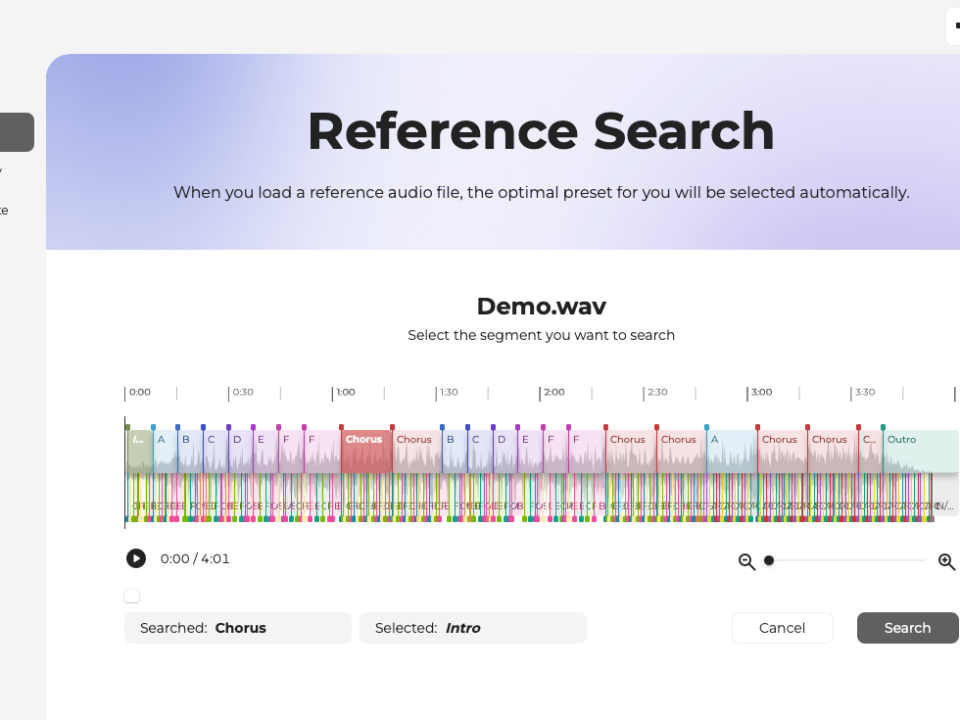
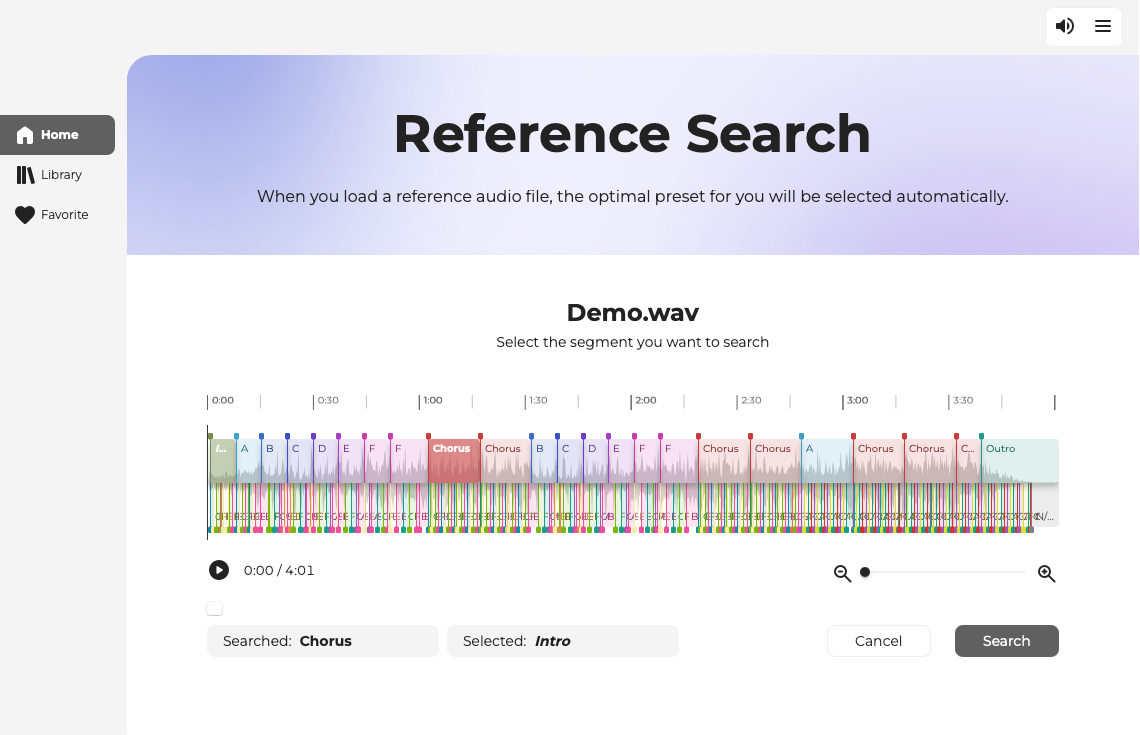
The standout feature in 2025 is reference mastering — you upload a reference track alongside your mix, and the AI analyzes the tonal balance, dynamics, and loudness of that reference to shape your master accordingly. For producers who have a clear sonic target in mind, this is incredibly useful and something that differentiates eMastered from the competition.
eMastered has also expanded beyond basic mastering with Stemify (AI-powered stem separation) and PitchPro (vocal tuning). It’s becoming more of an AI post-production suite than a single-purpose mastering tool.
Pricing for eMastered:
- Monthly: $49/month — unlimited masters
- Annual: $19/month (billed yearly) — unlimited masters
- Prepaid annual: $13/month — best value
- All plans include: Reference mastering, distribution, Stemify
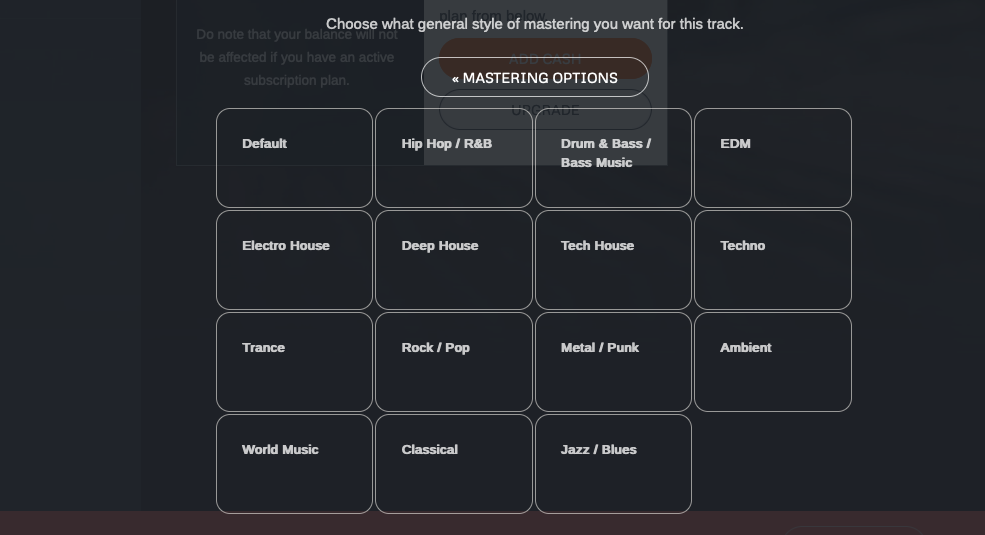
Head-to-Head: LANDR vs eMastered Feature Comparison
Let’s cut through the marketing and compare what actually matters for working producers:
Audio Quality: Both services produce commercially viable masters. In blind tests conducted by MusicRadar, neither consistently outperformed the other — results varied by genre and source material. eMastered’s reference mastering gives it an edge when you have a clear target sound. LANDR’s engine tends to add more warmth and slight compression, which works well for pop and electronic genres.
DAW Integration: LANDR wins decisively here. Their mastering plugin means you never leave your DAW — you hear changes in real time and can A/B against your mix instantly. eMastered remains browser-based, which means uploading, waiting, downloading, and importing back into your session. For iterative workflows, that friction adds up fast.
Reference Mastering: eMastered’s killer feature. While LANDR offers style presets (warm, balanced, open), eMastered lets you upload an actual reference track and match its sonic characteristics. If you’re trying to hit a specific tonal target — say, matching the loudness and EQ curve of a Kendrick Lamar track — eMastered is the better tool.
Pricing Value: LANDR’s $10/track option is great for occasional use. But for heavy users, eMastered’s $13/month prepaid annual plan with unlimited masters is hard to beat. LANDR’s unlimited WAV plan at $24.99/month is almost double the cost. However, factor in LANDR’s bundled plugins, samples, and distribution, and the value proposition gets closer.
Extras: LANDR offers a broader ecosystem — 40+ plugins, sample packs, collaboration, distribution. eMastered focuses more narrowly on mastering quality plus stem separation and vocal tuning. Your choice depends on whether you want an all-in-one platform or a specialized mastering tool.
What CloudBounce’s Death Tells Us About the Future of AI Mastering
CloudBounce didn’t fail because its technology was bad. It failed because the standalone budget AI mastering model is increasingly untenable. Image-Line saw more value in the technology as a built-in feature than as a standalone business. This is a pattern we’re seeing across creative AI tools — the technology gets absorbed into larger platforms.
For LANDR, the lesson was learned early. They pivoted from being just an online mastering service to building an entire music production ecosystem with plugins, distribution, and DAW integration. eMastered has taken a middle path, adding adjacent tools like stem separation while keeping mastering quality as their core value proposition.
The FL Studio integration of CloudBounce’s tech is worth watching. If Image-Line can deliver competent AI mastering as a built-in DAW feature — essentially free with your FL Studio license — it puts pressure on every standalone service. Expect to see more DAWs follow suit. Logic Pro, Ableton, and Studio One all have the resources and user bases to develop or acquire similar technology.
Who Should Use What: Practical Recommendations
Choose LANDR if: You want AI mastering integrated into your DAW workflow, you value having an all-in-one platform with plugins and distribution, you work primarily in pop/electronic/hip-hop genres where LANDR’s engine excels, or you only need occasional masters and prefer the $10/track model.
Choose eMastered if: Audio quality is your absolute top priority, you rely heavily on reference mastering to match specific sonic targets, you need stem separation or vocal tuning alongside mastering, or you master a high volume of tracks and want the best per-track value at $13/month prepaid.
Wait for FL Studio AI Mastering if: You’re already an FL Studio user, you were previously using CloudBounce, or you want AI mastering as a zero-cost addition to your existing DAW.
Neither if: You’re releasing commercially important music where mastering decisions directly impact revenue. At that level, a human mastering engineer with calibrated monitors, years of experience, and genre-specific expertise will still outperform any AI. AI mastering is a tool for demos, pre-release previews, independent releases on a budget, and iterative workflow — not a replacement for the best human engineers.
My Take: A Producer’s Perspective on AI Mastering in 2025
After 28 years in music production and audio engineering, I’ve watched the mastering conversation shift dramatically. When LANDR first launched, the reaction from the professional audio community was borderline hostile — “AI can’t replace human ears” was the universal response. And honestly? That statement is still technically true. But it misses the point entirely.
The real question was never whether AI could replace a top-tier mastering engineer at a world-class facility. The question was whether AI could give independent producers — the ones who were releasing music with zero mastering at all — a meaningful improvement over nothing. And the answer to that question has been a resounding yes for years now.
What I find most telling about the CloudBounce acquisition is the direction of integration. Image-Line didn’t buy CloudBounce to run it as a standalone service — they bought it to make FL Studio stickier. This is exactly the pattern I predicted when I first started testing these services: AI mastering would become a commodity feature, not a standalone product. LANDR understood this early and built an ecosystem. eMastered focused on quality differentiation. CloudBounce tried to compete on price alone, and that’s a losing strategy in AI.
In my studio work, I use AI mastering for one specific purpose: quick reference masters during the mixing phase. Being able to hear a rough master while I’m still mixing helps me make better mix decisions. For final delivery, I still work with dedicated mastering engineers or handle it myself with calibrated monitoring. But for the thousands of independent artists releasing music every day, services like LANDR and eMastered have genuinely democratized access to competent mastering — and that’s a net positive for the industry.
The bottom line: if CloudBounce’s shutdown has you scrambling, LANDR’s DAW plugin is the closest replacement for an integrated workflow, while eMastered’s reference mastering gives you more control over the final sound. Both are legitimate tools. Just don’t confuse “good enough for Spotify” with “ready for vinyl pressing” — know what level of mastering your project actually needs.
Need help choosing the right mastering workflow for your project, or looking for professional mixing and mastering that goes beyond what AI can deliver?
Get weekly AI, music, and tech trends delivered to your inbox.