Samsung 990 EVO Plus 4TB Review: 7,250 MB/s Reads Meet 73% Better Efficiency
August 26, 2025
Audio Cable Guide: XLR, TRS, TS — When to Use What in Your Studio
August 27, 2025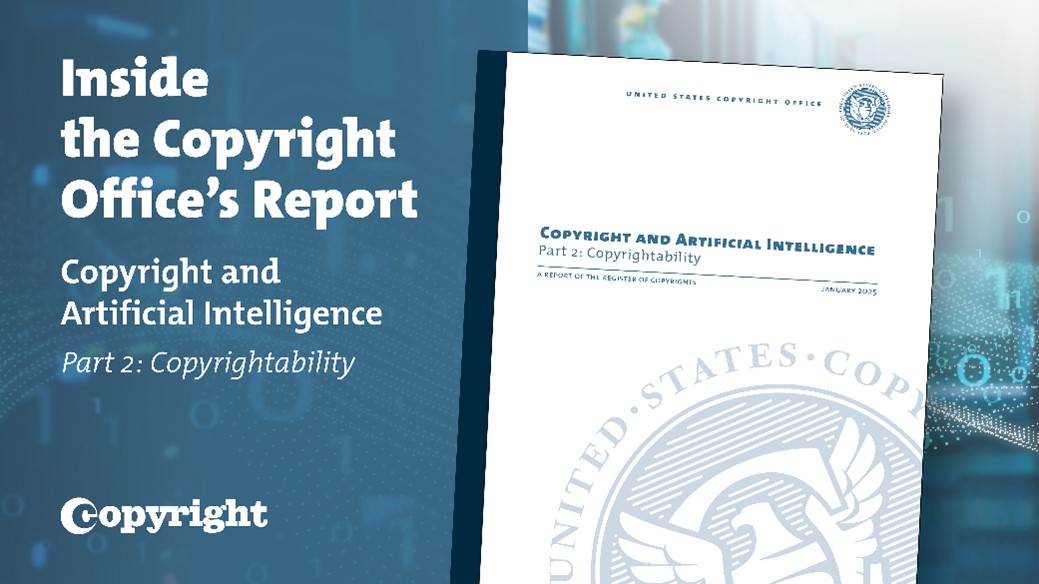
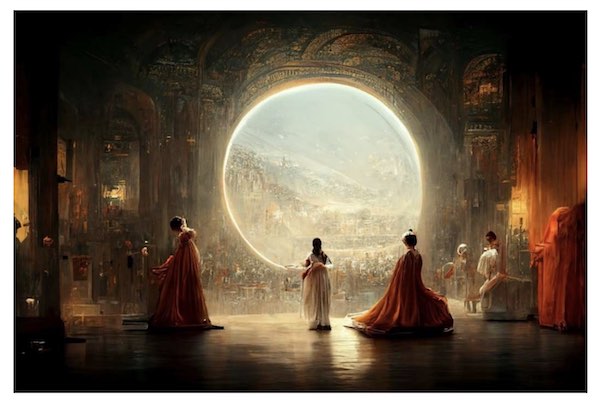
624 prompts. Hundreds of hours of iterative refinement. A first-place finish at the Colorado State Fair’s fine arts competition. And yet, the US Copyright Office refused to register the work. In August 2025, the most significant legal challenge over AI art copyright officially landed in federal court — and its outcome could reshape how we think about creativity, authorship, and the tools we use to make art.
The AI Art Copyright Case That Could Change Everything
In late August 2025, AI artist Jason Allen filed a Motion for Summary Judgment in the US District Court for the District of Colorado. His target: the Copyright Office’s refusal to register his Midjourney-generated artwork Théâtre D’opéra Spatial. As reported by IPWatchdog, Allen’s legal challenge represents the most direct confrontation yet between an AI creator and the federal agency that determines what counts as protectable expression in the United States.
The backstory matters here. Allen’s Théâtre D’opéra Spatial first made headlines in September 2022 when it won the digital arts category at the Colorado State Fair, sparking fierce debate about whether AI-generated images should be eligible for art competitions at all. What many critics overlooked, however, was the sheer amount of human creative effort that went into the piece. Allen didn’t simply type “make me something beautiful” and call it a day. His process involved 624 or more distinct prompt iterations, each one a deliberate creative choice about composition, lighting, color palette, character placement, and aesthetic direction.
Allen’s legal team built their argument on two foundational copyright precedents. First, the landmark 1884 Supreme Court case Burrow-Giles Lithographic Co. v. Sarony, which established that photography deserved copyright protection despite being a “mechanical” process. When cameras were new, skeptics argued that simply pointing a device at a scene and pressing a button required no creative authorship. The Court disagreed, recognizing the photographer’s choices — subject selection, lighting, composition, timing — as protectable creative expression. Allen’s attorneys argued the parallel is unmistakable: if a photographer’s choices about where to point a camera constitute authorship, then an AI artist’s choices across hundreds of iterative prompts should qualify as well.
Second, Allen invoked the Feist Publications v. Rural Telephone standard, which established the famously low threshold of a “spark of creativity” as sufficient for copyright protection. His filing argued that 624 prompt iterations, with careful selection and refinement at each stage, far exceeds even this minimal requirement. Perhaps most provocatively, Allen accused the Copyright Office of unconstitutionally “policing creator’s methods” — evaluating the tools an artist used rather than the creative merit of the final work.
A Year of Seismic Shifts in AI Art Copyright Law
Allen’s lawsuit didn’t arrive in a vacuum. By mid-2025, the legal landscape around AI-generated art had already undergone dramatic transformations that set the stage for this confrontation. Understanding the full context requires looking at three major developments that reshaped the playing field before Allen ever filed his motion.
Thaler v. Perlmutter: The Human Authorship Baseline
On March 18, 2025, the DC Circuit Court of Appeals delivered its ruling in Thaler v. Perlmutter, a case that had been working its way through the courts since 2018. Stephen Thaler had attempted to register an image called A Recent Entrance to Paradise, listing his AI system — the “Creativity Machine” — as the sole author. The Copyright Office rejected the application, and Thaler sued.
The appellate court sided firmly with the Copyright Office. As Skadden’s detailed legal analysis explained, the court affirmed the “bedrock” principle that copyright requires a human author. The court also dismissed the argument that denying AI authorship would disincentivize creativity, noting that the Copyright Act has always been rooted in human expression.
But here’s where it gets interesting — and why the Thaler ruling doesn’t automatically doom Allen’s case. Thaler’s situation involved a work created autonomously by AI with minimal human involvement. He wanted the AI itself recognized as the author. Allen’s case is fundamentally different: he’s arguing that he is the author, and Midjourney was merely a sophisticated tool in his creative process. This distinction between “AI-generated” and “AI-assisted” work is precisely the fault line where AI art copyright law is being actively reshaped.
The Copyright Office’s New Copyrightability Framework
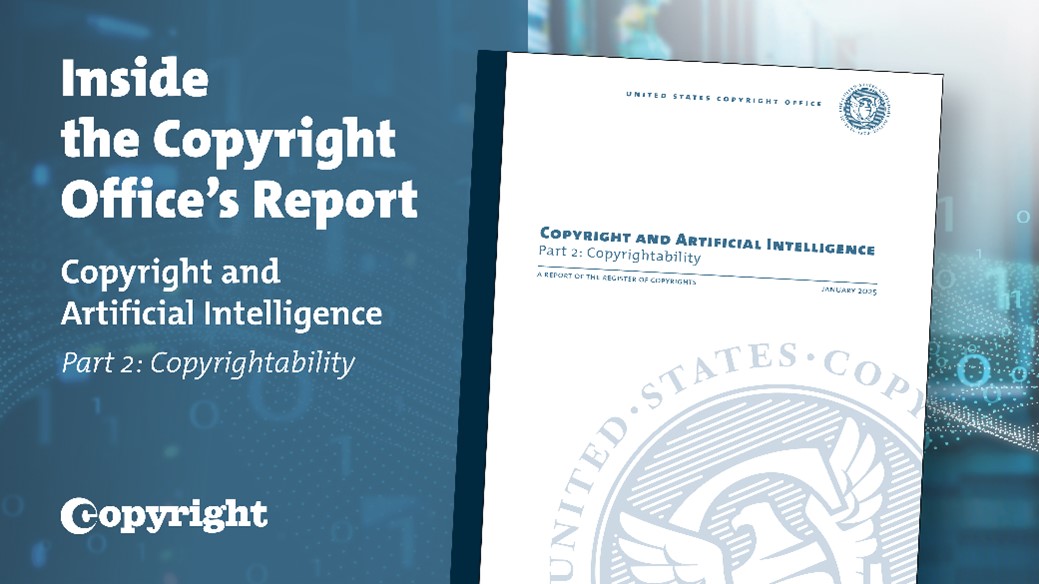
In January 2025, the US Copyright Office released Part 2 of its landmark AI and Copyright report series, directly addressing the question of when AI-related works can qualify for copyright protection. Published through the Library of Congress blog, the report offered the most comprehensive official guidance to date on how the Office evaluates AI-assisted creative works.
The central finding was nuanced: AI outputs can receive copyright protection, but only where a human author has determined “sufficient expressive elements.” The Office outlined four distinct categories of human contribution that could support a copyright claim:
- Facilitating the creative process — setting up the parameters, selecting models, and directing the overall creative vision
- Prompt engineering and input — crafting and iterating on prompts to achieve a specific artistic result
- Providing expressive inputs — supplying reference images, style direction, or other creative material that shapes the output
- Human modifications and arrangements — editing, selecting, combining, or otherwise refining AI-generated output through human judgment
Crucially, the report stated that prompts alone are generally insufficient for establishing authorship. This creates the central question for the Allen case: does his process of 624 iterative prompts — with creative selection, refinement, and artistic direction at every step — transcend “mere prompting”? The answer to this question could define how millions of AI-assisted creative works are treated under copyright law for years to come.
Part 3: The AI Training Report and Its Fallout
The Copyright Office’s work didn’t stop at copyrightability. In May 2025, it released a pre-publication version of Part 3 of its AI report series, which tackled an even more contentious question: whether using copyrighted works to train AI systems constitutes fair use. The report’s conclusions were notably skeptical of AI companies’ positions, arguing that commercial use of copyrighted materials for AI training that directly competes in existing markets exceeds the bounds of fair use. It also stated that training on pirated datasets weighs heavily against any fair use defense.
The Political Firestorm: When AI Art Copyright Policy Met Presidential Power
Perhaps the most unexpected chapter in the AI art copyright saga unfolded not in a courtroom but in the corridors of power in Washington, D.C. Days after the Part 3 pre-publication was released, TechCrunch reported that the Trump administration fired Register of Copyrights Shira Perlmutter. The timing was impossible to ignore: the nation’s top copyright official was removed shortly after her office published findings that threatened the business models of major AI companies.
The firing triggered immediate backlash. Critics called it a transparent act of political interference in copyright policy — an attempt to silence an agency that had taken positions inconvenient for powerful tech interests. Perlmutter didn’t go quietly. She filed a lawsuit challenging her termination, and an appeals court subsequently ruled she could keep her position. The entire episode served as a stark reminder that AI copyright policy has become not just a legal and technical question, but a deeply political battleground where tens of billions of dollars and the future of creative industries are at stake.
The Broader Landscape: 50+ Active AI Copyright Lawsuits
Allen’s case doesn’t exist in isolation. By August 2025, more than 50 AI-related copyright lawsuits were active across the United States, spanning visual art, music, literature, and software. These cases collectively represent the largest expansion of copyright litigation in decades, and they’re testing legal frameworks that were designed for an era when creative tools were far simpler.
What makes Allen’s case stand out from the crowd is its focus on the creative process itself. Many of the other active lawsuits deal with AI training data — whether companies like OpenAI, Stability AI, and others had the right to train their models on copyrighted works. Allen’s case asks a different question entirely: when a human uses an AI tool to create something new, who owns the result?
It’s worth noting that the Copyright Office has already granted registrations for some AI-assisted works where meaningful human authorship was demonstrated. As Harvard’s Journal of Sports and Entertainment Law documented, the Office’s approach isn’t a blanket rejection of all AI-involved creativity — it’s an attempt to draw a principled line between works where humans make substantive creative decisions and works where AI operates largely on its own. The question is whether Allen’s 624-prompt process falls on the right side of that line.
What Creators Need to Know Right Now
If you’re using AI tools in your creative process — whether that’s Midjourney for visual art, AI-assisted music production, or any other generative tool — the Allen case carries direct implications for your work. Regardless of how the court rules, there are concrete steps you can take now to protect yourself:
- Document everything. Allen’s 624-prompt record is his strongest piece of evidence. Keep detailed logs of your creative process — every prompt, every iteration, every selection decision, every manual edit, and the artistic rationale behind your choices. Screenshots, version histories, and timestamped records all strengthen your position.
- Understand the AI-generated vs. AI-assisted distinction. The Copyright Office treats fully autonomous AI output differently from work where humans make substantive creative decisions. Be intentional about how you describe and position your creative process.
- Go beyond prompts. The Copyright Office has explicitly stated that prompts alone may not establish sufficient authorship. Demonstrate additional creative contribution through selection among multiple outputs, arrangement and composition decisions, manual modifications, and the application of artistic judgment at every stage.
- Stay current with the legal landscape. The Allen ruling, upcoming Copyright Office guidelines, potential revisions to the Compendium of Copyright Office Practices, and possible congressional legislation could all shift the ground beneath your feet. What’s true today may not be true in six months.
- Consider professional consultation. If your livelihood depends on AI-assisted creative work, the investment in intellectual property legal counsel is becoming increasingly worthwhile as the legal landscape crystallizes.
The AI art copyright battle is far from over — in many ways, it’s just entering its most consequential phase. Whether the court sides with Allen or the Copyright Office, the ruling will send shockwaves through every creative industry that touches AI, from visual art and graphic design to music production and filmmaking. For anyone working at the intersection of technology and art, this is the case to watch. The precedent set in a Colorado courtroom could define the rules of creative ownership for the AI era.
Get weekly AI, music, and tech trends delivered to your inbox.