Best Wireless Keyboard and Mouse Combos August 2025: 7 Office Productivity Picks Tested
August 20, 2025
Linux Music Production 2025: Bitwig, REAPER, and Ardour Setup Guide
August 21, 2025
Google is charging $0.10 per million input tokens. Anthropic just launched a model at $15. That’s a 150x price gap — and both companies claim their API is the best value for developers. Welcome to the AI API pricing war of August 2025, where the only thing more confusing than the models themselves is figuring out what you’ll actually pay.
The AI API Pricing War 2025: Three Strategies, Three Price Points
The summer of 2025 has turned into a full-blown pricing battlefield. OpenAI, Anthropic, and Google aren’t just competing on model quality anymore — they’re weaponizing price to capture developer loyalty, enterprise contracts, and market share. But each company has chosen a radically different pricing strategy, and understanding these differences could save your team thousands of dollars per month.
Here’s the reality: choosing the cheapest API isn’t always the smartest move. Let’s break down exactly what each provider charges, what you get for it, and where the real value lies as of August 2025.
OpenAI: The Tiered Empire — GPT-4o, 4.1, and the Mini Revolution
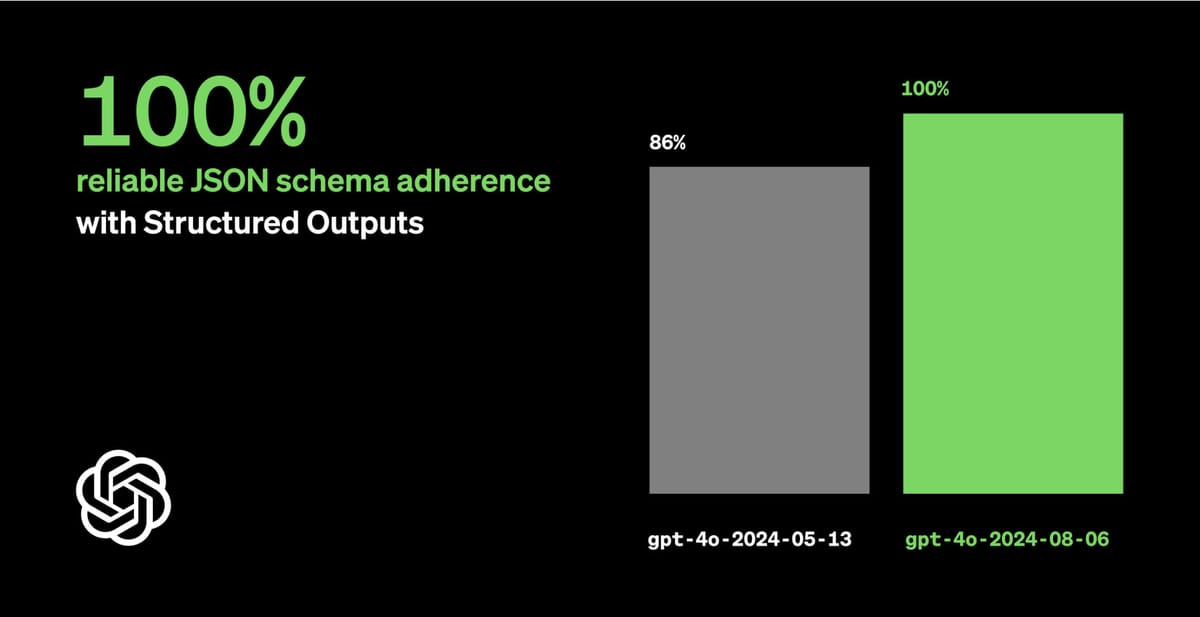
OpenAI has built the most layered pricing structure in the AI API pricing war 2025. With at least seven models available through their API, they’ve created a menu that covers everything from hobby projects to enterprise reasoning tasks.
OpenAI API Pricing Breakdown (August 2025)
- GPT-4o: $2.50 input / $10.00 output per million tokens (128K context) — The mainstream flagship. After the 50% price cut in August 2024, GPT-4o remains OpenAI’s most popular model for production applications.
- GPT-4.1: $2.00 input / $8.00 output per million tokens (1M context) — Launched April 2025 with a massive 1 million token context window. Better instruction following and 20% cheaper than GPT-4o despite being newer.
- GPT-4.1 mini: $0.40 input / $1.60 output per million tokens (1M context) — The sweet spot for most production workloads. Excellent quality-to-cost ratio with full 1M context.
- GPT-4.1 nano: $0.10 input / $0.40 output per million tokens (1M context) — OpenAI’s answer to Gemini Flash. Budget classification and extraction tasks.
- GPT-4o mini: $0.15 input / $0.60 output per million tokens (128K context) — Still the go-to for lightweight tasks. Launched July 2024, it replaced GPT-3.5 Turbo entirely.
- o1: $15.00 input / $60.00 output per million tokens (200K context) — The reasoning heavyweight. Expensive, but excels at math, code, and multi-step logic.
- o1-mini: $1.10 input / $4.40 output per million tokens (128K context) — Budget reasoning. Competitive with Claude 3.5 Sonnet for coding tasks at a fraction of the cost.
OpenAI’s strategy is clear: offer a model at every price point. Whether you’re spending $0.10 or $15.00 per million tokens, there’s a GPT for that. The GPT-4.1 series in particular has been a game-changer, delivering 1M context at prices that undercut even their own GPT-4o lineup.
Anthropic: Premium Positioning with Claude Opus 4.1’s Bold Bet
Anthropic made waves on August 5, 2025, launching Claude Opus 4.1 at $15.00 input / $75.00 output per million tokens — the most expensive mainstream API model on the market. It was a deliberate strategic choice that divided the developer community.
Anthropic API Pricing Breakdown (August 2025)
- Claude Opus 4.1: $15.00 input / $75.00 output per million tokens (200K context) — Launched August 5, 2025. Anthropic’s most capable model ever, with exceptional performance on complex reasoning, coding, and creative tasks. The $75 output cost means a 10,000-token response costs $0.75 — roughly 7.5x what GPT-4o charges.
- Claude 3.5 Sonnet: $3.00 input / $15.00 output per million tokens (200K context) — The production workhorse. Most developers use this for 90% of their workloads. Excellent balance of quality and cost.
- Claude 3.5 Haiku: $0.80 input / $4.00 output per million tokens (200K context) — Anthropic’s budget option. Faster and cheaper, but noticeably less capable than Sonnet for complex tasks.
The gap between Haiku ($0.80) and Opus ($15.00) is nearly 19x — a wider spread than any other provider. Anthropic is betting that developers will pay a premium for the best quality, while still offering Sonnet as a competitive mid-tier option. In July 2025 alone, startups increased Anthropic spending by 275% month-over-month, suggesting this strategy is working despite the high price tags.
Google: The Aggressive Undercut — Gemini’s Price-to-Performance Play
Google has taken the most aggressive pricing stance in the AI API pricing war 2025, and it’s not even close. Gemini 2.0 Flash at $0.10 per million input tokens makes it 25x cheaper than GPT-4o and 150x cheaper than Claude Opus 4.1 for input processing.
Google Gemini API Pricing Breakdown (August 2025)
- Gemini 2.0 Flash: $0.10 input / $0.40 output per million tokens (1M context) — The undisputed budget king. 1 million token context at prices that seem almost predatory. Plus, Google offers a generous free tier for developers.
- Gemini 1.5 Pro: $1.25 input / $5.00 output per million tokens (2M context) — Two million tokens of context at mid-range pricing. No other provider offers this context length.
- Gemini 1.5 Flash: $0.075 input / $0.30 output per million tokens (1M context) — Even cheaper than 2.0 Flash for basic tasks, though the older model has lower quality benchmarks.
Google’s advantage isn’t just pricing — it’s context windows. Gemini 1.5 Pro’s 2 million token context dwarfs everyone else. For developers processing long documents, entire codebases, or multi-hour audio/video, Google is the only viable option at scale. The combination of massive context and rock-bottom pricing makes Gemini the clear winner on pure economics.
Head-to-Head: The Real Cost of Running 1 Million API Calls
Theory is one thing. Let’s run the actual numbers for a realistic production scenario: 1 million API calls per month, each with an average of 1,000 input tokens and 500 output tokens.
Monthly Cost Estimate (1M calls × 1K input + 500 output tokens)
- Gemini 2.0 Flash: $0.10 + $0.20 = $0.30/month
- GPT-4.1 nano: $0.10 + $0.20 = $0.30/month
- GPT-4o mini: $0.15 + $0.30 = $0.45/month
- Claude 3.5 Haiku: $0.80 + $2.00 = $2.80/month
- GPT-4.1 mini: $0.40 + $0.80 = $1.20/month
- GPT-4.1: $2.00 + $4.00 = $6.00/month
- GPT-4o: $2.50 + $5.00 = $7.50/month
- Claude 3.5 Sonnet: $3.00 + $7.50 = $10.50/month
- o1: $15.00 + $30.00 = $45.00/month
- Claude Opus 4.1: $15.00 + $37.50 = $52.50/month
At the budget tier, the differences are negligible. But scale this to 100 million calls and the gap explodes: Gemini Flash costs $30/month while Claude Opus 4.1 costs $5,250/month. That’s the kind of difference that makes CTOs lose sleep.
Beyond Price Tags: The Hidden Costs Nobody Talks About
Raw token pricing tells only half the story in the AI API pricing war 2025. Here are the factors that can double or halve your actual bill:
- Prompt caching: Anthropic’s prompt caching gives 90% discount on cached input tokens. If your application sends repeated system prompts, Claude’s effective cost drops dramatically. OpenAI and Google offer similar caching, but Anthropic’s implementation is particularly aggressive.
- Batch API discounts: OpenAI offers 50% off for batch processing (non-real-time). If your workload can tolerate 24-hour turnaround, GPT-4o effectively costs $1.25/$5.00 — suddenly competitive with Gemini Pro.
- Rate limits and throttling: Google’s free tier is generous but heavily throttled. Enterprise customers on all three platforms get significantly higher rate limits, and the negotiated pricing can be 30-50% below list prices.
- Context window efficiency: Gemini’s 2M context means you can process documents in a single call that would require multiple calls (and multiple output charges) on GPT-4o’s 128K context.
- Output quality variance: Cheaper models often produce longer, less focused outputs — meaning you pay more in output tokens for lower quality. Claude Opus 4.1’s concise, high-quality outputs can actually reduce total costs despite the higher per-token price.
Which Provider Wins for Your Use Case?
After analyzing the full pricing landscape across all three providers, here’s the practical recommendation for August 2025:
- High-volume classification/extraction: Google Gemini 2.0 Flash or OpenAI GPT-4.1 nano. Both at $0.10/M input, they’re essentially free at scale. Choose Gemini for its 1M context, GPT-4.1 nano for OpenAI ecosystem integration.
- Production chatbots and assistants: OpenAI GPT-4.1 mini ($0.40/$1.60) offers the best quality-to-cost ratio with 1M context. Claude 3.5 Sonnet ($3/$15) is the premium alternative when you need superior conversational quality.
- Complex reasoning and coding: Claude 3.5 Sonnet for most tasks. Upgrade to Claude Opus 4.1 or o1 only for the most demanding multi-step reasoning problems. The 7x price premium of Opus over Sonnet is only justified for genuinely hard problems.
- Long document processing: Google Gemini 1.5 Pro’s 2M context at $1.25/$5.00 is unmatched. No other provider comes close for full-codebase analysis or book-length document processing.
- Cost-optimized enterprise: OpenAI’s Batch API (50% discount) combined with GPT-4.1 gives you flagship quality at mid-tier prices for non-real-time workloads. This is the most underused cost optimization in the market.
The Pricing War Isn’t Over — It’s Just Getting Started
With OpenAI burning $14 billion annually and both OpenAI and Anthropic preparing for potential IPOs, the era of subsidized AI pricing may be ending. But for now, August 2025 is a golden moment for developers: three world-class AI providers are actively undercutting each other, and the real winner is anyone building with these APIs.
Chinese providers like DeepSeek are adding even more pressure from below, offering competitive quality at a fraction of Western prices. The pricing floor hasn’t been found yet, and the next six months will likely bring even more aggressive moves.
The smartest strategy? Don’t lock into a single provider. Use routing layers like OpenRouter or LiteLLM to dynamically route requests to the cheapest capable model. The AI API pricing war 2025 rewards flexibility — and punishes loyalty.
Need help optimizing your AI API costs or building intelligent routing systems? Sean Kim provides tech consulting on AI infrastructure and automation.
Get weekly AI, music, and tech trends delivered to your inbox.