Cubase 14 Update v14.0.40: 7 Critical Bug Fixes Every Producer Needs to Know
November 17, 2025
Dolby Atmos Mixing Guide: Free DAW Tools for Your First Immersive Mix in 2025
November 18, 2025
Six months ago, building an AI agent meant duct-taping LangChain calls together and praying nothing broke overnight. Now? There are at least six production-grade frameworks fighting for your pip install, and three of them just hit major milestones in the same month. November 2025 is shaping up to be the month the AI agent frameworks November 2025 landscape finally matured — here’s what actually changed and which framework deserves your next project.
The Big Picture: Why November 2025 Is a Turning Point for AI Agent Frameworks
Three things happened almost simultaneously. LangGraph hit 1.0 with durable state and human-in-the-loop baked in. Microsoft merged AutoGen and Semantic Kernel into a single Agent Framework. And AutoGPT shipped a visual builder with an agent marketplace that lets non-developers build autonomous workflows. Meanwhile, CrewAI quietly crossed 10 million agent executions per month and AG2 (the community fork of AutoGen) launched a ground-up Beta rewrite. The result? Developers now have more choice than ever — but the frameworks have also diverged enough that picking the wrong one could cost you weeks of refactoring.
AutoGPT Platform: From Viral Experiment to Visual Agent Builder
Remember when AutoGPT was just a Python script that recursively called GPT-4 and occasionally tried to take over your filesystem? That era is definitively over. The AutoGPT Platform now offers a full low-code agent builder with a drag-and-drop interface where each block performs a single action — web search, file operations, API calls, code execution — and you connect them into workflows visually.
The standout feature is the Agent Marketplace: a community-driven store where developers publish pre-built agents that others can deploy with one click. Think of it as the WordPress plugin directory for autonomous AI. Need an agent that monitors competitor pricing? Someone’s probably already built one.
There’s a catch, though. The platform code uses the Polyform Shield License, not MIT — meaning you can’t use it to build a competing product. The original AutoGPT agent and supporting tools (Forge, agbenchmark) remain MIT-licensed, but the platform itself is commercially restricted. For internal enterprise use, this isn’t a dealbreaker. For startups building agent-as-a-service products, it’s a significant constraint.
LangGraph 1.0: The First Stable Durable Agent Runtime
LangGraph 1.0 is arguably the most important release in the AI agent frameworks November 2025 cycle. After powering agents at Uber, LinkedIn, and Klarna through its pre-release period, LangGraph has committed to no breaking changes until 2.0 — a rare promise in the fast-moving agent space.
Three features define the 1.0 release:
- Durable State: Agent execution state persists automatically. If your server restarts mid-conversation, it picks up exactly where it left off without losing context.
- Built-in Persistence: Save and resume agent workflows at any point without writing custom database logic. Multi-day approval processes and background jobs work out of the box.
- Human-in-the-Loop: First-class API support for pausing execution for human review. This makes it trivial to build systems where humans stay in control of high-stakes decisions.
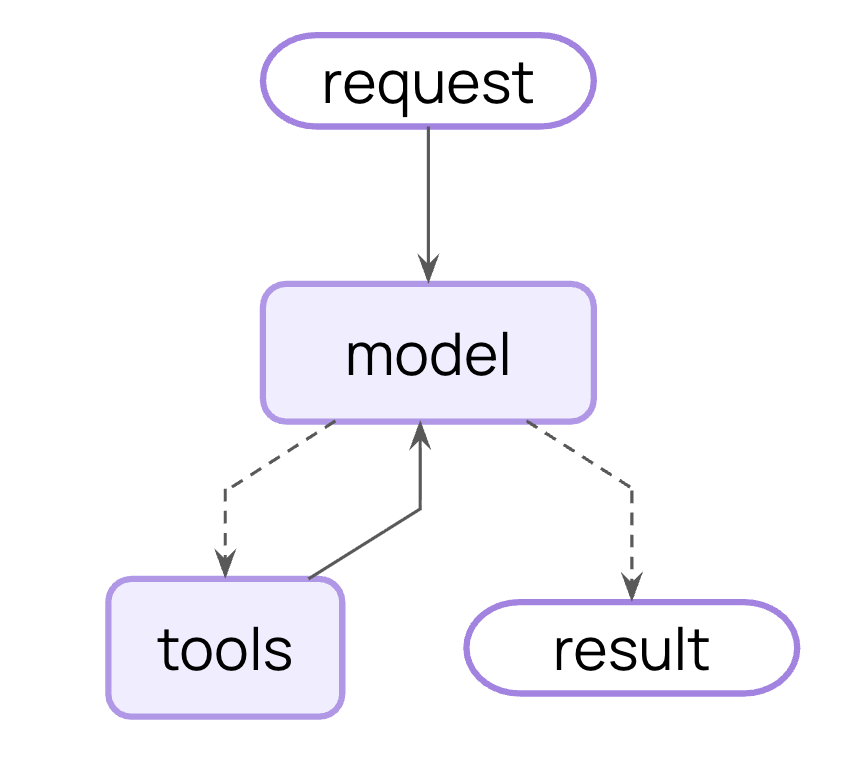
LangGraph is now the default runtime for all LangChain agents. When you call create_agent in LangChain, you’re already running on LangGraph under the hood. Start with LangChain’s high-level APIs, then drop to LangGraph when you need custom orchestration — no migration required.
Microsoft Agent Framework: The Enterprise Consolidation Play
Microsoft’s move is perhaps the most strategically significant. On October 1, 2025, they released a public preview of the Microsoft Agent Framework, which merges AutoGen’s dynamic multi-agent orchestration with Semantic Kernel’s production foundations. Both predecessor frameworks are now in maintenance mode — bug fixes and security patches only, no new features.
The unified framework brings experimental orchestration patterns from AutoGen — group chat, debate, and reflection — into an enterprise-durable package built on Microsoft.Extensions.AI. General availability is set for Q1 2026 with multi-language support (C#, Python, Java) and deep Azure integration.
If you’re already in the Azure ecosystem and need .NET support, this is the obvious choice. If you’re a Python-first team without Azure commitments, the value proposition is less clear — especially since LangGraph and CrewAI both offer more mature Python tooling today.
CrewAI: $18M, 10 Million Agents Per Month, and Fortune 500 Adoption
CrewAI’s trajectory since its $18M Series A (led by Insight Partners, with Andrew Ng among the investors) has been remarkable. The platform now executes 10 million+ agents per month and claims adoption by nearly half of the Fortune 500. Their first 150 enterprise beta customers signed up in under six months.
What makes CrewAI different from LangGraph is the orchestration philosophy. CrewAI uses role-based orchestration — you define agents by their job title, backstory, and goals, then let the framework figure out collaboration patterns. LangGraph uses state machine-based control where you explicitly define every transition. CrewAI is faster to prototype; LangGraph gives you more control in production.
CrewAI Enterprise adds templates, VIP support, built-in security, and deployment monitoring. The combination of a generous open-source tier and a polished enterprise offering is what’s driving the Fortune 500 adoption numbers.
AG2 Beta: AutoGen’s Community Fork Goes Its Own Way
When Microsoft merged AutoGen into its Agent Framework, the open-source community didn’t just accept maintenance mode. AG2 (formerly AutoGen) emerged as an independent fork with a ground-up Beta rewrite focused on production agentic systems.
AG2 Beta introduces a streaming, event-driven architecture built around MemoryStream — a pub/sub event bus that isolates state and enables real-time streaming. Every conversation runs on its own MemoryStream, making agents safely reusable across concurrent users. Other notable additions include multi-provider LLM support (OpenAI, Anthropic, Google Gemini, Alibaba DashScope, Ollama), dependency injection with typed tools, and first-class testing support with TestConfig and TestClient for unit tests with zero network calls.
AG2 is a strong choice for teams that valued AutoGen’s conversation-driven multi-agent approach but need modern architecture. The risk is ecosystem fragmentation — with Microsoft’s framework and AG2 both claiming the AutoGen lineage, community and documentation are split.
OpenAI Swarm: The Educational Framework That Spawned an SDK
OpenAI’s Swarm framework deserves a mention, though its role has evolved. Originally released as a lightweight, educational multi-agent orchestration tool under the MIT license, Swarm focused on just two abstractions: agents and handoffs. Its simplicity was both its strength and its limitation.
Swarm has now been superseded by the OpenAI Agents SDK, which takes the same core concepts — routines and handoffs — and wraps them in a production-ready package with active maintenance from OpenAI. If you built prototypes on Swarm, the migration path to Agents SDK is straightforward. If you’re starting fresh, go directly to the Agents SDK.
Head-to-Head: Which AI Agent Framework Should You Choose in November 2025?
Here’s how the six frameworks stack up across the dimensions that matter most for production deployments:
Framework          | Orchestration     | License         | Best For
-------------------|-------------------|-----------------|---------------------------
AutoGPT Platform   | Visual/low-code   | Polyform Shield | Non-dev teams, marketplaces
LangGraph 1.0      | State machine     | MIT             | Complex production agents
CrewAI             | Role-based        | MIT (OSS)       | Fast prototyping, enterprise
MS Agent Framework | Hybrid            | MIT             | Azure/.NET shops
AG2 Beta           | Conversation      | Apache 2.0      | Multi-provider, streaming
OpenAI Agents SDK  | Routines/handoffs | MIT             | OpenAI-first teams
Choose LangGraph 1.0 if you need maximum control, durable state, and are comfortable with graph-based thinking. It’s the most battle-tested option with the strongest stability guarantees.
Choose CrewAI if you want the fastest path from idea to deployed agent and value role-based abstractions over explicit state machines. The enterprise tier is especially compelling for large organizations.
Choose AutoGPT Platform if your team includes non-developers who need to build agents visually, or if you want to leverage a marketplace of pre-built agents.
Choose Microsoft Agent Framework if you’re committed to Azure and need C#/.NET support. Wait for GA in Q1 2026 for production workloads.
Choose AG2 if you loved AutoGen’s conversation-driven approach and want a modern, streaming-first rewrite without Microsoft’s enterprise governance layer.
What This Means for Developers Building AI Agents
The AI agent frameworks November 2025 landscape has matured enough that the framework wars are essentially over — not because there’s a winner, but because the frameworks have diverged into distinct niches. The real skill isn’t picking the “best” framework; it’s matching the framework’s orchestration philosophy to your use case.
Two trends to watch heading into 2026: MCP (Model Context Protocol) support is becoming table stakes — frameworks that don’t adopt it will face increasing integration friction. And the line between frameworks is blurring: LangGraph already serves as an orchestration backbone that delegates subtasks to CrewAI agents or AutoGen conversations, combining each framework’s strengths in a single pipeline.
The barrier to building useful AI agents has never been lower. Whether you’re a solo developer experimenting with AutoGPT’s visual builder or an enterprise team deploying CrewAI across dozens of departments, November 2025 delivered the tools to make it real. The only mistake now is waiting too long to start.
Building AI agent pipelines or need help choosing the right framework for your team? Sean Kim has been automating production workflows with multi-agent systems since 2024.
Get weekly AI, music, and tech trends delivered to your inbox.