NVIDIA RTX 5060 Ti Review Roundup: Blackwell GB206 Benchmarks, 8GB VRAM Controversy, and $429 Price Reality
April 22, 2025
SoundID Reference Room Calibration 2025 Update: 500+ Headphone Profiles and the Mobile Ecosystem Push
April 23, 2025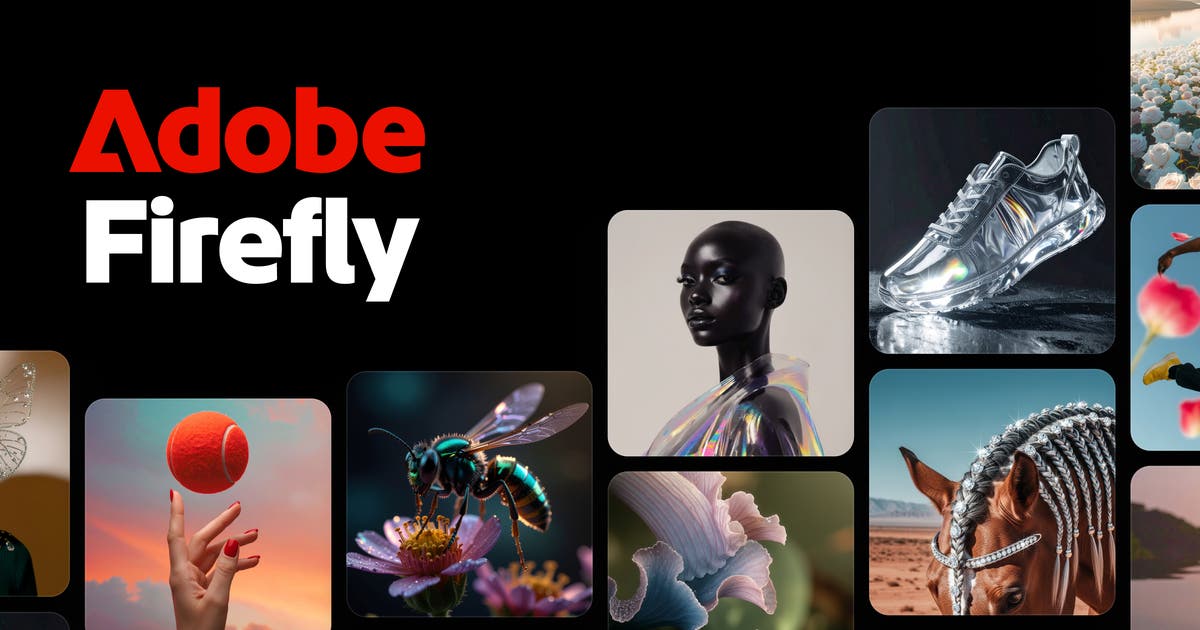
Seven billion AI-generated images and counting — and yet most enterprises still won’t touch AI image generators with a ten-foot pole. The reason? Legal liability. Adobe Firefly 3, unveiled at MAX London in April 2024, is Adobe’s direct answer to that corporate paralysis, delivering a foundation model trained exclusively on licensed content with full IP indemnification baked in from day one.
Why Adobe Firefly 3 Matters for Enterprise Creative Teams
Let’s get the elephant in the room out of the way. Previous Firefly models were, frankly, underwhelming. While Midjourney was producing jaw-dropping photorealistic imagery and DALL-E 3 was nailing text rendering, the original Firefly felt like bringing a butter knife to a sword fight. TechCrunch noted that critics pointed to distorted limbs, flat landscapes, and poor prompt comprehension as persistent issues.
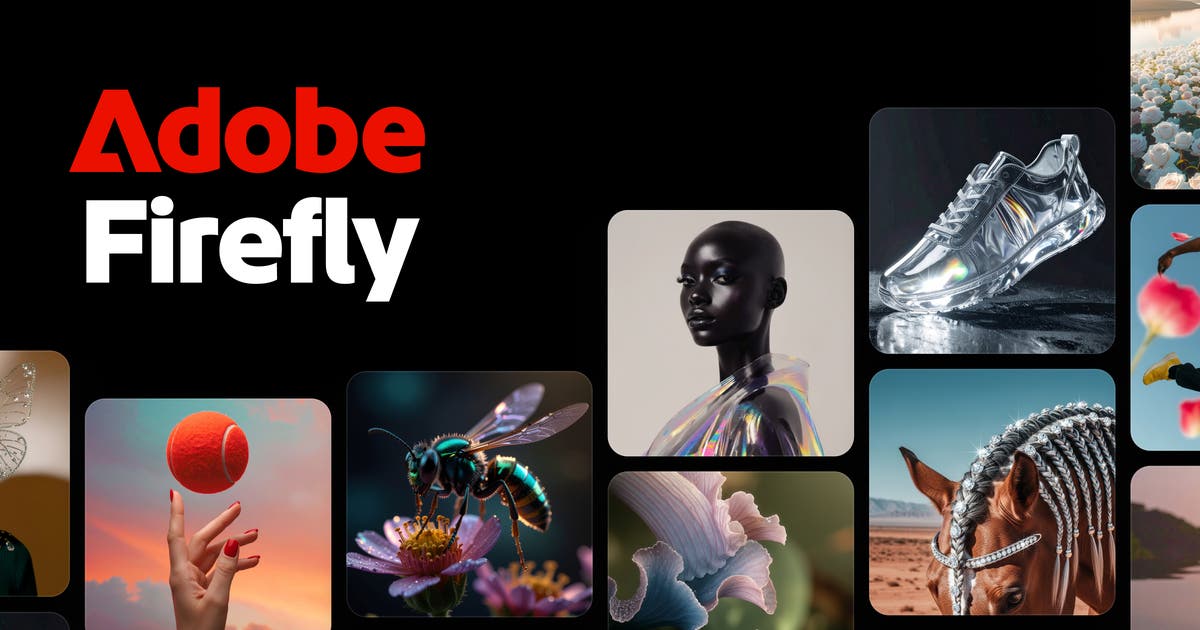
Adobe Firefly 3 Image Model changes the calculus entirely. This isn’t just an incremental update — it’s a ground-up rethinking of what commercially safe AI image generation can deliver. The new auto-stylization engine produces varied, nuanced outputs that finally compete on visual quality while maintaining the one thing competitors simply cannot match: legal safety for commercial use.
Key Features: What Adobe Firefly 3 Actually Brings to the Table
Structure Reference and Style Reference
These two features alone justify the upgrade for professional creative workflows. Structure Reference lets you upload an image and use its compositional layout — the spatial arrangement of elements — as a guide for new generations. Style Reference does the same for visual aesthetics: color palettes, lighting moods, and artistic treatments. Together, they dramatically reduce the trial-and-error cycle that has plagued AI image generation in production environments.
For creative directors managing brand consistency across dozens of campaign assets, this is a genuine workflow accelerator. Instead of spending 30 prompts trying to get a consistent look, you upload one reference and the model maintains coherence across outputs.
Generative Expand
Need to convert a 16:9 hero image to a 9:16 Instagram story format? Generative Expand handles aspect ratio changes by intelligently extending the scene rather than cropping or stretching. According to Adobe’s official blog, this feature leverages the model’s scene understanding to generate contextually appropriate extensions that maintain visual consistency.
Enhanced Photorealism and Text Rendering
The quality leap is substantial. Tom’s Guide’s hands-on review confirmed that Firefly 3 takes photorealism to a new level, particularly with human subjects and detailed environmental scenes. Lighting is more natural, skin tones are more accurate, and the infamous “AI hands” problem has been significantly reduced. Text rendering in generated images — always a weak point for AI models — has also seen meaningful improvement, making Firefly 3 a viable option for mockups, social media templates, and presentation materials that require readable text overlays.
Better Prompt Understanding
One of the less discussed but critically important improvements in Adobe Firefly 3 is its enhanced prompt comprehension. Complex, multi-element descriptions that would have confused earlier models — think “a vintage red bicycle leaning against a weathered stone wall with morning light casting long shadows and a tabby cat sleeping in the basket” — now produce coherent results that actually match the intent. This matters enormously for production workflows where creative briefs are detailed and specific, leaving no room for the model to hallucinate random elements or ignore key descriptors.

The Enterprise Advantage: Why Commercial Safety Is Not Just a Feature — It’s the Product
Here is where Adobe Firefly 3 separates itself from every competitor in the market. Three pillars define this advantage:
1. Training Data Provenance
Adobe Firefly 3 is trained exclusively on licensed Adobe Stock content, openly licensed material, and public domain works. This is not a marketing claim that collapses under legal scrutiny — it’s a verifiable training methodology. When a Fortune 500 CMO asks “can we use this in our global campaign without getting sued?” the answer is an unqualified yes.
2. IP Indemnification
Adobe provides full intellectual property indemnification for commercial outputs generated through Firefly. If a legal challenge arises, Adobe assumes the liability. In enterprise procurement, this single feature often outweighs every technical specification combined. When I talk to creative directors at agencies, the IP indemnification conversation ends negotiations faster than any feature demo ever could. Try getting that guarantee from Midjourney or Stable Diffusion — you simply cannot.
3. Content Credentials (C2PA)
Every image generated by Adobe Firefly 3 carries Content Credentials — tamper-evident metadata based on the C2PA standard that identifies the content as AI-generated. Adobe co-founded the Content Authenticity Initiative (CAI), which now has over 2,500 members. In an era of deepfakes and misinformation concerns, this transparency layer is increasingly becoming a regulatory and brand-safety requirement.
Adobe Firefly 3 vs. Midjourney vs. DALL-E 3: The Honest Comparison
Raw image quality? Midjourney v6 still edges ahead in artistic creativity and fine detail rendering. DALL-E 3 maintains an advantage in text rendering accuracy and prompt fidelity for complex multi-element scenes. These are facts, not opinions.
But here is the distinction that matters for anyone spending real money on content production: neither Midjourney nor OpenAI can offer the same level of commercial safety guarantees. Midjourney’s training data provenance remains opaque. OpenAI faces ongoing litigation regarding DALL-E’s training data. Adobe’s clean-room training approach on licensed content is, as of April 2025, still unique in the industry at this scale.
As Futurum Group’s analysis noted, competitors occasionally leapfrog Adobe on technical capabilities, but commercial buyers consistently prioritize efficiency, content authenticity, and legal safety — areas where Adobe’s ecosystem is unmatched.
Deep Photoshop Integration: Where Firefly 3 Lives in the Real Workflow
Adobe Firefly 3 does not exist in isolation. Its deepest impact comes through integration with Photoshop, where five new AI-powered features leverage the model directly:
- Reference Image — Upload a reference to guide AI generation style and composition within Photoshop
- Generate Image — Create entirely new images from text prompts directly on the canvas
- Generate Background — Replace or extend backgrounds with AI-generated environments
- Generate Similar — Produce variations of selected elements for rapid exploration
- Enhance Detail — Upscale and add fine detail to AI-generated elements
According to Computerworld’s coverage, these features also expand output styles to include illustrations, photographic art, and vector iconography — making Firefly 3 useful far beyond photorealistic imagery.
Adobe CTO Ely Greenfield stated it clearly: “Firefly has become the image generation tool of choice used by millions of creators to ideate every day.” With over 7 billion images generated since the original Firefly launch in March 2023, the usage numbers validate the claim.
This integration depth is what separates Adobe’s approach from standalone tools. Midjourney lives in Discord. DALL-E lives in ChatGPT. Firefly lives where creative professionals already spend their working hours — inside Photoshop, InDesign, and Adobe Express. That workflow proximity eliminates the context-switching penalty that kills productivity in professional environments, and it means generated assets can be immediately refined using the full power of industry-standard editing tools.
My Take: A Producer’s Perspective on Enterprise AI Image Generation
After 28 years working across music production, audio engineering, and creative technology, I have seen plenty of “game-changing” tools that turned out to be impressive demos with no staying power. Adobe Firefly 3 is not one of those.
Here is what I see from the production side: the creative industry’s adoption of AI image generation has been throttled not by capability but by risk tolerance. I have worked with advertising agencies and content teams that would love to use Midjourney-quality outputs in their campaigns — but their legal departments shut it down every time. The training data question is not academic. It is a deal-breaker for any organization that has been through a copyright dispute.
Adobe Firefly 3 removes that specific barrier. Is it the most visually stunning AI image generator available? No, not yet. But it is the only one that a Fortune 500 legal team will approve without a six-month review process. And in real-world production environments — where speed, consistency, and risk mitigation matter more than pixel-level perfection — that makes it the practical winner for commercial work.
The Structure Reference and Style Reference features deserve particular attention. In my experience managing creative pipelines, the single biggest time sink with AI image tools has been achieving visual consistency across a campaign. You generate one perfect image, then spend an hour trying to get the next nine to match. Adobe’s reference-based approach solves this systematically, and the Photoshop integration means it fits into existing workflows without requiring teams to learn a new tool.
Looking ahead to where we are now in April 2025 — with Firefly Image Model 4 and 4 Ultra already released — the Firefly 3 launch was clearly the inflection point. It was the moment Adobe proved that commercial safety and competitive quality could coexist. Every subsequent Firefly model has built on that foundation, and the gap with competitors on raw quality continues to narrow while the commercial safety moat remains wide.
The Bottom Line for Creative Professionals
Adobe Firefly 3 Image Model did not win every benchmark when it launched. It won something more valuable: trust. For enterprise creative teams, marketing departments, and agencies that need commercially safe AI image generation integrated into professional workflows, Firefly 3 established the standard that the industry now measures against.
If you are evaluating AI image generation tools for commercial production, the question is not “which one makes the prettiest pictures” — it is “which one will my legal team, my procurement department, and my brand safety officer all approve?” As of today, Adobe Firefly remains the only answer that satisfies all three.
Exploring AI-powered creative tools for your team or building automation pipelines around generative AI? Let’s talk about what actually works in production.
Get weekly AI, music, and tech trends delivered to your inbox.