AI Music Licensing 2026: How $500M Copyright Lawsuits Became 7 Industry-Changing Deals
March 31, 2026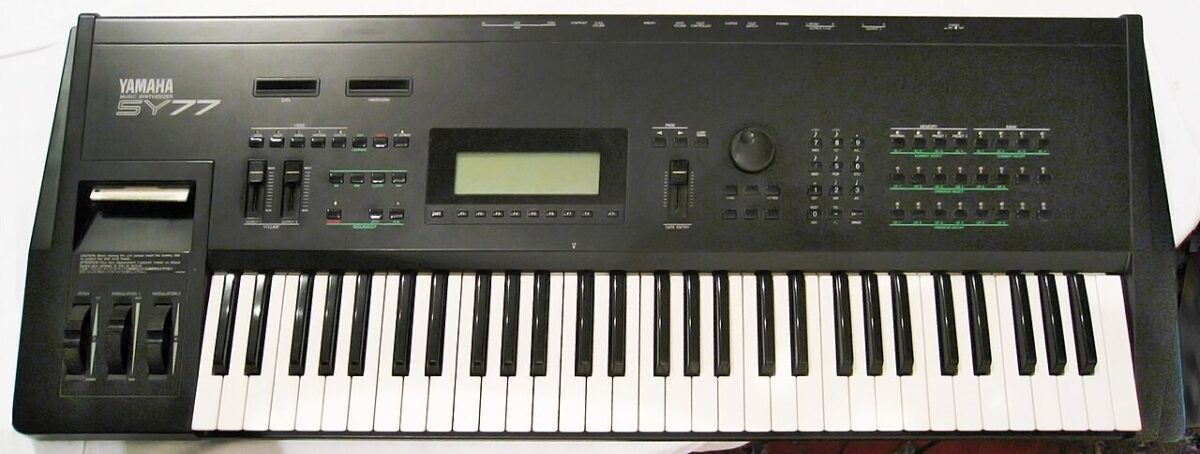
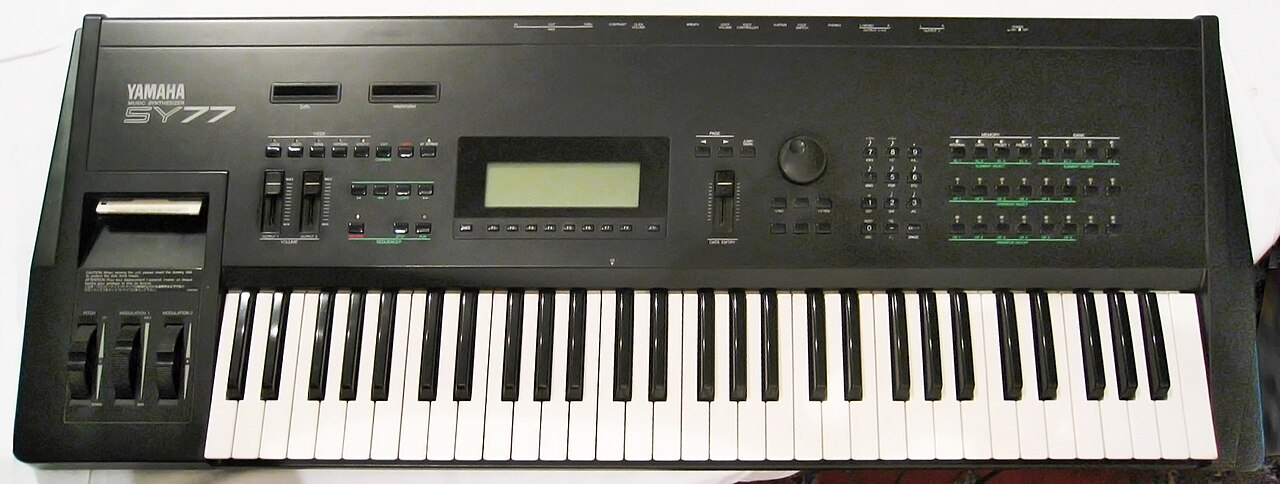
In 1989, one synthesizer did what no other instrument had done before: it fused FM synthesis with sample-based waveforms inside a single keyboard. Brian Eno used it for ambient textures. Vangelis scored films with it. 808 State built entire tracks around its distinctive timbres. Chick Corea layered its FM bells over PCM strings in live performances. The Yamaha SY77 was a quiet revolution — and then it faded into the background, overshadowed by the digital workstation wars of the ’90s. Now, 37 years later, a small developer called Stryde Audio has brought it back as a $99 plugin called Swayed. And here’s the twist that makes this more than just another nostalgia play: you can load your original SY77 SysEx patches directly into it, and export new ones back to the hardware.
Why the Yamaha SY77 Matters — The Foundation Behind Stryde Audio Swayed
The Yamaha SY77 wasn’t just another FM synth. Released in 1989, it was the world’s first synthesizer to integrate three distinct synthesis methods into one architecture: AFM (Advanced FM) synthesis with six operators, AWM2 (Advanced Wave Memory) sample playback, and RCM (Realtime Convolution and Modulation) — a system that allowed FM operators and PCM samples to modulate each other in real time. With 16-voice multitimbral capability and a built-in sequencer, it was a complete production workstation that could serve as the centerpiece of an entire studio.
What made the SY77’s RCM synthesis truly groundbreaking was the concept of cross-modulation between FM and sampled waveforms. In a traditional FM synth like the DX7, you could only modulate sine waves with other sine waves. The SY77 allowed you to use a PCM sample — a piano attack, a vocal snippet, a drum transient — as a modulator for an FM operator, or vice versa. This created an entirely new category of sounds: organic textures with synthetic precision, metallic tones with natural warmth, evolving pads that blended acoustic and electronic characteristics in ways no other instrument could achieve.
The problem was always accessibility. Used SY77 units currently trade between $400 and $800 on the secondhand market, and finding one in good working condition is increasingly difficult. Failing backlit LCDs, dead internal batteries wiping factory presets, corroding ribbon cables, and the sheer 15-kilogram weight of the unit — these are the unglamorous realities of vintage hardware ownership in 2026. Beyond physical condition, the SY77’s notoriously complex programming interface meant that many owners never ventured beyond the factory presets. Stryde Audio saw this gap between the instrument’s potential and its real-world usability, and built Swayed to bridge it.
Stryde Audio Swayed Core Specs: What $99 Gets You
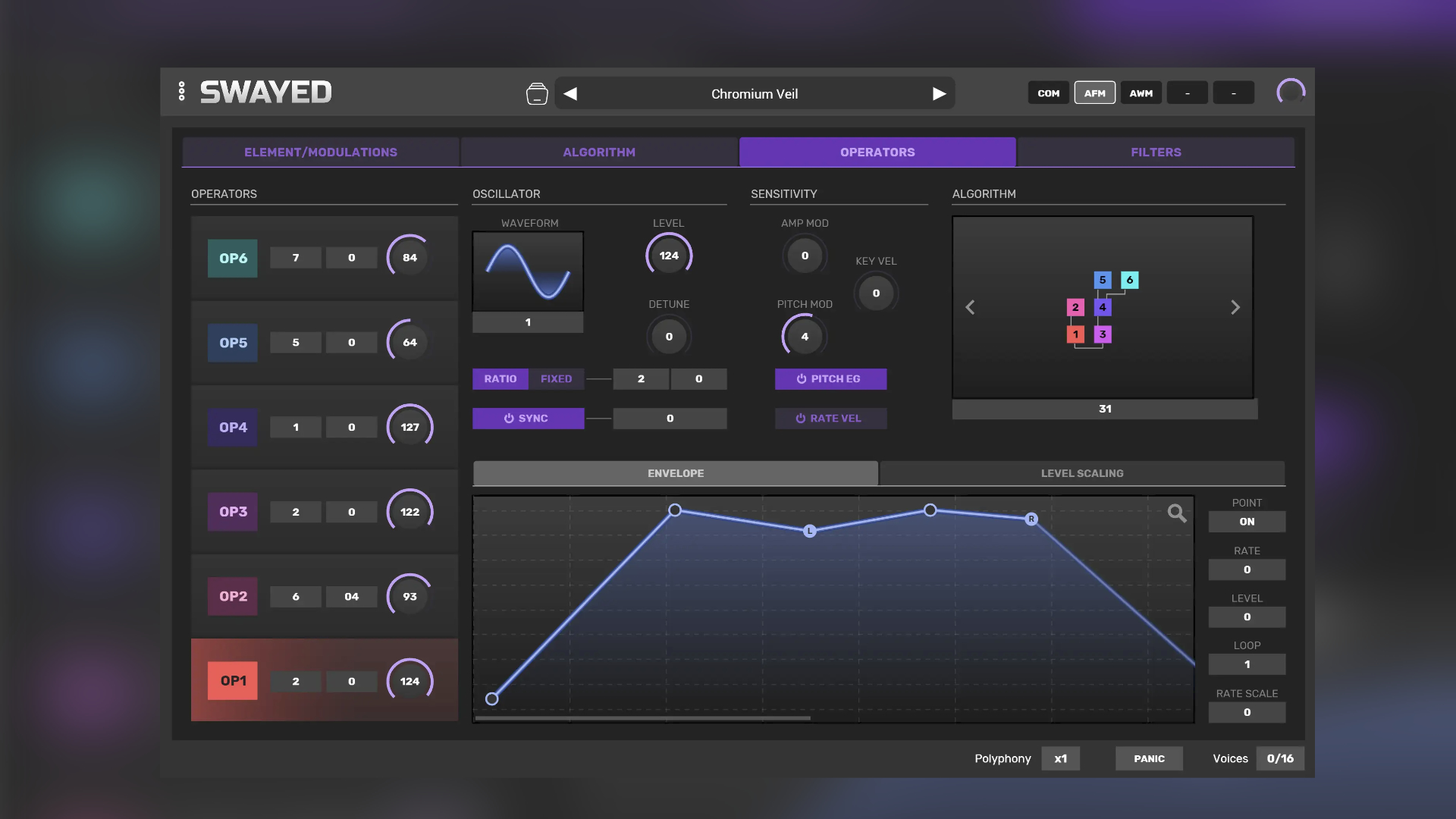
Stryde Audio Swayed officially launched on March 31, 2026, recreating the SY77’s synthesis architecture for modern DAW environments. The spec sheet reveals just how ambitious this project is — this isn’t a simplified “inspired by” recreation, but a comprehensive emulation that aims to capture the full depth of the original instrument:
- 6-Operator FM Engine — matching the original SY77’s AFM architecture with full operator-level control
- 45 Algorithms + Freeform Mode — all original fixed routings plus a free-patching capability that goes beyond the hardware
- 193 PCM Waveforms — 112 factory waveforms faithfully recreated from the original ROM, plus 81 expansion waveforms
- Bidirectional SysEx Compatibility — import original SY77 patches and export new ones back to hardware
- 44 Built-in Effects — reverbs, delays, chorus, flanging, distortion, and more
- Dual Resonant Filters — adding subtractive synthesis character to FM and PCM sounds
- Dual LFOs + 64 Panning Envelopes — precise modulation control for movement and spatial design
- 128 Factory Presets + 140 by Saif Sameer — covering classic SY77 territory plus modern sound design
- VST3/AU Support — macOS 12+ (Apple Silicon native + Intel), Windows 8+, 64-bit only
The standout feature is the freeform algorithm mode. The original SY77 offered 45 fixed algorithms — predetermined routings between the six operators that you could select but not modify. Swayed keeps all 45 original algorithms for authentic recreation but adds a freeform mode where you can connect operators in any configuration you want, routing any operator as a carrier or modulator for any other. This goes well beyond what the original hardware could do and dramatically expands the sonic possibilities of FM sound design. For advanced users, freeform mode essentially turns Swayed into a modular FM synthesizer with visual patching.
The dual resonant filters are another notable addition. The original SY77 had digital filters, but they were basic and often bypassed by power users. Swayed’s filters bring proper subtractive synthesis character to the FM and PCM engine, letting you sculpt the harmonically rich FM output with low-pass, high-pass, band-pass, and notch filtering — complete with resonance that can push into self-oscillation. This hybrid approach opens up a new dimension of tonal control.
Bidirectional SysEx: What Makes Stryde Audio Swayed Truly Different
The soft synth market is saturated with products claiming to “emulate” classic hardware. But being able to load original SysEx patches from the actual hardware? That’s exceptionally rare. Most “inspired by” plugins recreate the sound engine but not the data format, meaning years of community patches become useless. Stryde Audio Swayed’s SysEx compatibility isn’t a marketing bullet point — it’s a genuine workflow differentiator that has practical implications for anyone who has ever engaged with the SY77 ecosystem.
Here’s what this means in practice: decades of SY77 SysEx patch libraries shared across the community — on sites like Yamaha’s own archives, dedicated SY77 user groups, and vintage synth forums — are immediately accessible. Download any vintage SY77 sound bank from the internet, drag the .syx file into Swayed, and you have instant access to those carefully crafted sounds without owning the hardware. The reverse works too — export patches from Swayed as SysEx data and send them to a real SY77 via MIDI. For studios that maintain hybrid hardware-software setups, this bidirectional bridge is invaluable.
Consider the practical implications: a sound designer who has spent months programming custom SY77 patches on hardware can now back them up as software presets and use them in any DAW session. A producer who discovers a rare SysEx bank from a 1991 Japanese synthesizer magazine can load those sounds into a modern production without tracking down a functioning 37-year-old instrument. This is preservation and accessibility rolled into one feature.
Users on the KVR Audio forums have already started comparing Swayed’s output against original SY77 hardware, and the early consensus around SysEx import/export fidelity has been notably positive, with several users confirming that their legacy patch banks load correctly and sound faithful to the original.
The 2026 Vintage Synth Emulation Trend — Where Stryde Audio Swayed Fits
Stryde Audio Swayed arrives during an interesting moment in the plugin market. Spring 2026 has seen a clear trend of boutique developers reviving forgotten vintage synthesizers — instruments that the major plugin companies have overlooked in favor of safer, more recognizable targets like the Minimoog, Jupiter-8, or Prophet-5. Cherry Audio resurrected an obscure 1970s Italian synthesizer as the DS-2, which MusicRadar described as “the kind of forgotten, half-mythical synth you discover by accident on a forum thread.”
This trend reflects a maturing plugin market where the obvious emulation targets have been covered multiple times over. How many Minimoog plugins does the world need? Developers are now digging deeper into synthesis history, finding instruments that were innovative but commercially overshadowed — and the Yamaha SY77 fits that description perfectly. It was technically ahead of its time, musically influential in the right circles, but commercially outpaced by simpler, cheaper workstations.
But Swayed goes beyond simple recreation. A comparison with competing FM plugins reveals its unique positioning in the current market:
- Arturia DX7 V ($199) — Yamaha DX7 emulation with modern enhancements. 4-operator FM architecture, no sample synthesis capability. SysEx compatible but limited to DX7 patch format only
- Dexed (Free) — Open-source DX7 clone. Faithful 6-operator FM but strictly limited to DX7 architecture, no PCM waveforms, no built-in effects, basic interface
- Stryde Audio Swayed ($99) — SY77 emulation. 6-operator FM + 193 PCM waveforms, bidirectional SysEx, 44 effects, dual resonant filters, freeform algorithm mode
The critical difference is the SY77’s RCM synthesis — the fusion of FM and samples that defined the original instrument’s character. DX7-based plugins give you pure FM only, which means pure sine-wave modulation and a characteristic “glassy” sound that, while beautiful, is inherently limited in timbral range. Swayed lets you use PCM waveforms as carriers or modulators within the FM algorithm, creating textures that are simply impossible with pure FM synthesis alone. Imagine modulating a breathy flute sample with an FM operator running at audio rate, or using a percussion transient as a carrier modulated by a complex FM stack. This is an entirely different territory of sound design that no DX7-based plugin can touch.
My Take: What 28 Years in Audio Taught Me About This Plugin
I remember being completely captivated by the Yamaha SY series in the early ’90s. The way metallic FM bell tones could layer seamlessly with realistic PCM pads in a single patch — that was revolutionary at the time. In a studio session, you could go from a crystalline electric piano to an evolving ambient texture to a punchy bass with filter sweep, all from the same instrument. The catch was always the programming interface. Navigating six operators’ worth of parameters on that tiny backlit LCD screen, paging through menus with membrane buttons, was an exercise in patience that tested even the most dedicated sound designers.
Swayed solving this with a proper GUI is a genuine step forward. The freeform algorithm mode in particular offers a level of freedom that was physically impossible on the original hardware. Being able to visually rearrange operator routing in real time while hearing the sound transform — clicking and dragging connections between operators, watching the waveform change in the display — is something that doesn’t just make FM synthesis more accessible. It fundamentally changes how you approach sound design with this engine. On the hardware, you’d commit to an algorithm and work within its constraints. In Swayed, you can explore routing possibilities fluidly, discovering sounds you’d never stumble upon with a fixed algorithm selection.
What strikes me most is the value proposition. At $99, Swayed costs half of what Arturia charges for the DX7 V while offering something those DX7-based tools simply cannot: the FM+PCM hybrid territory. In 28 years of audio production, the biggest limitation of FM synthesis has always been its inherently cold, mechanical texture. Pure FM excels at bells, electric pianos, and metallic percussion, but it struggles to produce the warmth and organic quality that subtractive and sample-based synths deliver naturally. The SY77’s PCM layer was Yamaha’s answer to that problem — blend a warm sampled string sustain with an FM attack transient, and suddenly you have something neither synthesis method could produce alone. Swayed brings that answer into your DAW for less than the price of a decent XLR cable. If you work in ambient, synthwave, or film scoring, the textural possibilities alone justify the price several times over.
My one reservation is the preset count. 128 factory presets feels modest given the plugin’s extraordinary depth. The SY77 shipped with 128 internal voices plus 64 performance patches, and over the years the community has built thousands more. While Saif Sameer’s 140-patch expansion is a solid start, and the SysEx compatibility means you can import virtually unlimited patches from online archives, users who aren’t comfortable programming FM from scratch may find the out-of-the-box experience somewhat limited. A larger, more diverse factory library — perhaps organized by genre or production context — would lower the barrier to entry considerably and help newcomers discover what this engine is truly capable of.
Who Should Buy Stryde Audio Swayed — And the Bottom Line
Stryde Audio Swayed isn’t for everyone. If all you need is classic DX7-style FM basses and bells, the free Dexed handles that just fine. If you want a polished, preset-heavy FM instrument that works out of the box without deep programming, Arturia’s offerings may suit you better. But if any of the following describes you, Swayed deserves serious consideration:
- Sound designers seeking FM+sample hybrid textures that are unavailable in any other plugin on the market
- Producers wanting authentic vintage SY77 sounds integrated seamlessly into modern productions
- Learners exploring FM sound design in depth — the freeform mode serves as an exceptional educational tool for understanding operator routing
- Composers working in ambient, synthwave, cinematic, or film scoring who need unique textural palettes
- Hardware owners with real SY77 units who need a reliable DAW-hardware patch bridge for backup and integration
At $99 you get 6-operator FM synthesis, 193 PCM waveforms, bidirectional SysEx compatibility, 44 built-in effects, dual resonant filters, and a freeform algorithm mode the original hardware never had. Stryde Audio Swayed isn’t just an emulation — it’s closer to a spiritual successor to the SY77, one that honors the original’s architecture while removing the barriers that kept most musicians from exploring its full potential. Among the growing vintage synth renaissance of 2026, it stands as one of the most impressive and thoughtfully designed releases so far.
Need professional mixing, mastering, or sound design consultation? A producer with 28 years of experience is ready to help.
Get weekly AI, music, and tech trends delivered to your inbox.