Vercel AI SDK 4.0: Build AI Apps with Streaming and Tool Calling
April 29, 2025
Serum 2 After 6 Weeks: 5 Oscillator Modes, Free Upgrade, and Everything That Changed
April 30, 2025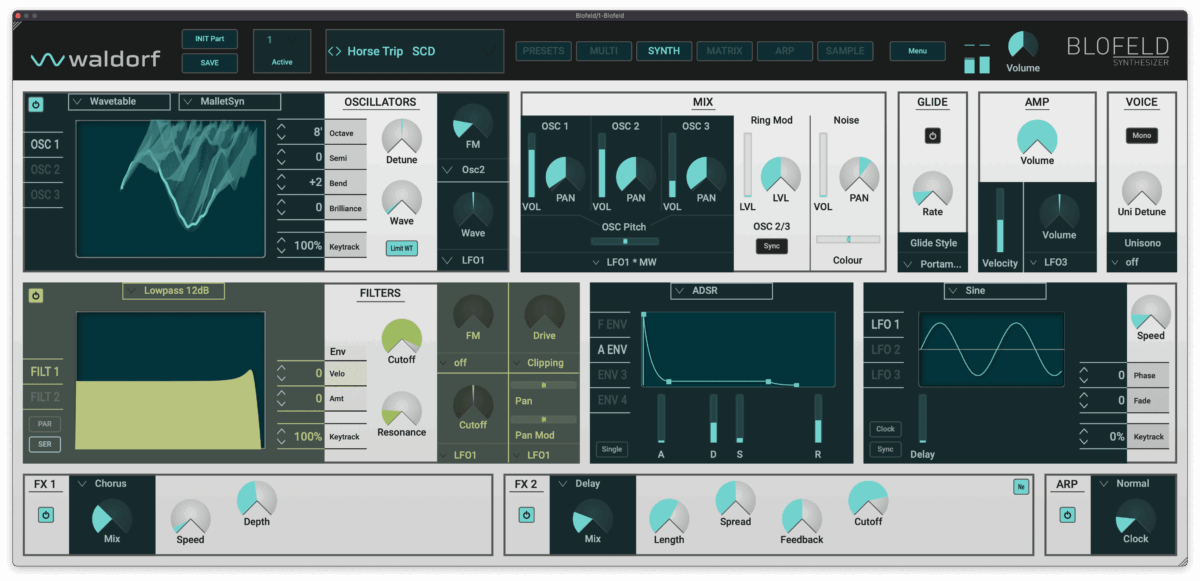
Five new software synths 2025 dropped in the span of three months — and not minor updates either. We’re talking Serum 2, a completely rethought Pigments, Korg finally bringing the Mono/Poly into plugin form, a Novation classic reborn, and Waldorf’s Blofeld making its desktop plugin debut. After spending the last few weeks digging into each of these, here’s what stands out, what’s genuinely useful, and where your money is best spent.
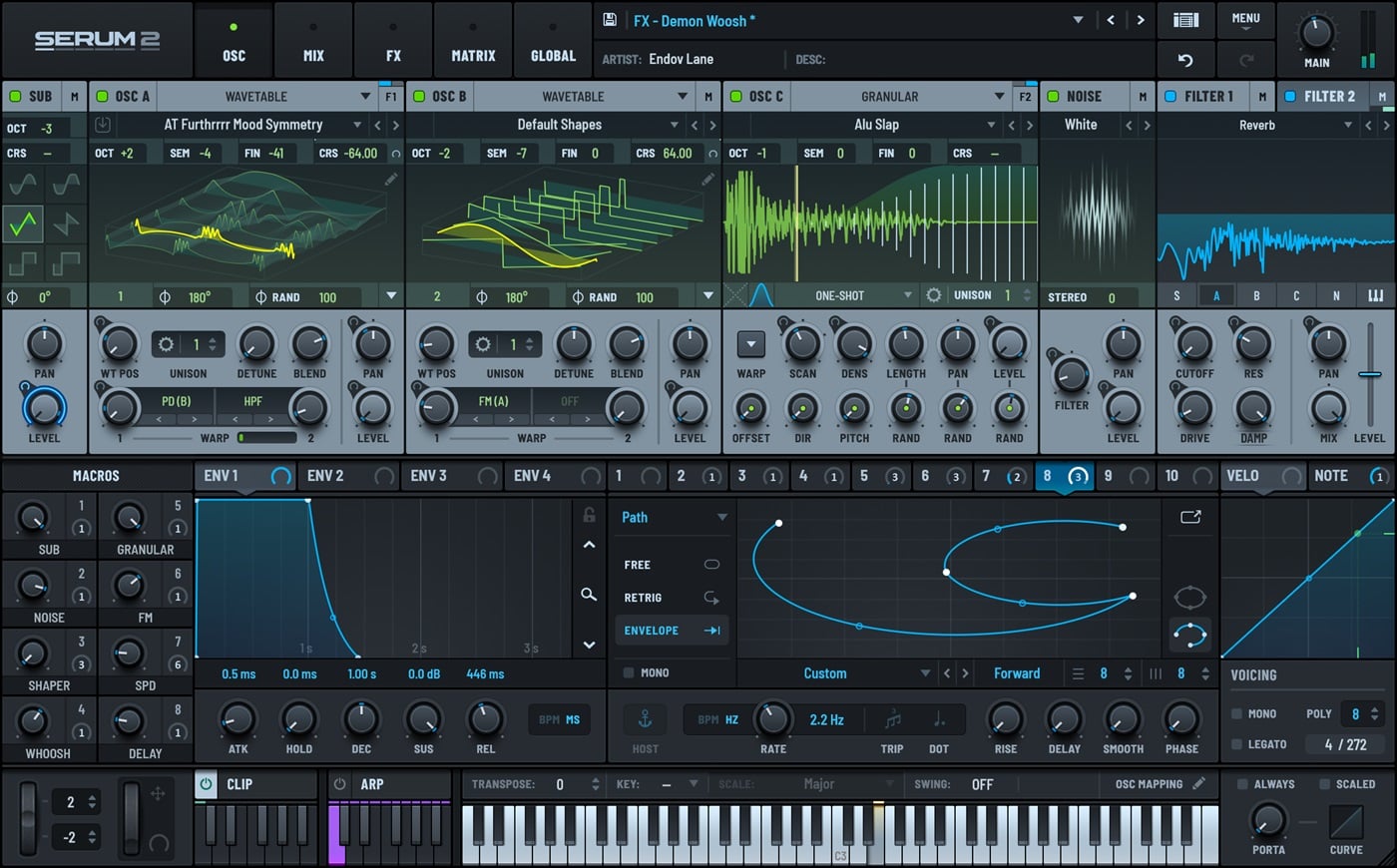
Xfer Records Serum 2 — The New Software Synths 2025 Benchmark
When Steve Duda quietly dropped Serum 2 on March 17, the production world collectively lost its composure — and for good reason. The original Serum defined an era of wavetable synthesis, and version 2 doesn’t just iterate; it reimagines what a flagship soft synth should be in 2025.
The overhauled GUI is fully resizable and noticeably cleaner, with a redesigned preset browser that finally makes navigating thousands of patches painless. Under the hood, the numbers are staggering: 15 effects with three splitter modules for complex routing, new virtual analog filters that genuinely rival hardware character, up to 10 LFOs, and a built-in arpeggiator/sequencer with 12 slots. Spectral morphing between wavetables adds a dimension of sound design that was previously the domain of dedicated granular processors.
Pricing sits at $189 during the introductory period (rising to $249 after June 2025), and Serum 1 owners get the upgrade free. That last detail alone makes this the most generous major synth launch in recent memory.
What impressed me most during testing was how the new effects routing changes the creative workflow. Instead of reaching for external processing, you can build entire signal chains within Serum 2 itself. The three splitter modules let you run parallel effects paths — think distortion on the low end while keeping shimmer reverb on the highs, all contained within a single instance. For producers who have been stacking multiple plugins on a Serum channel strip, this alone could simplify sessions significantly.
Best for: Producers who already live in Serum and anyone looking for a desert-island wavetable synth. If you only buy one plugin this year, this is the safe bet.
Arturia Pigments 6 — Physical Modeling Joins the Party
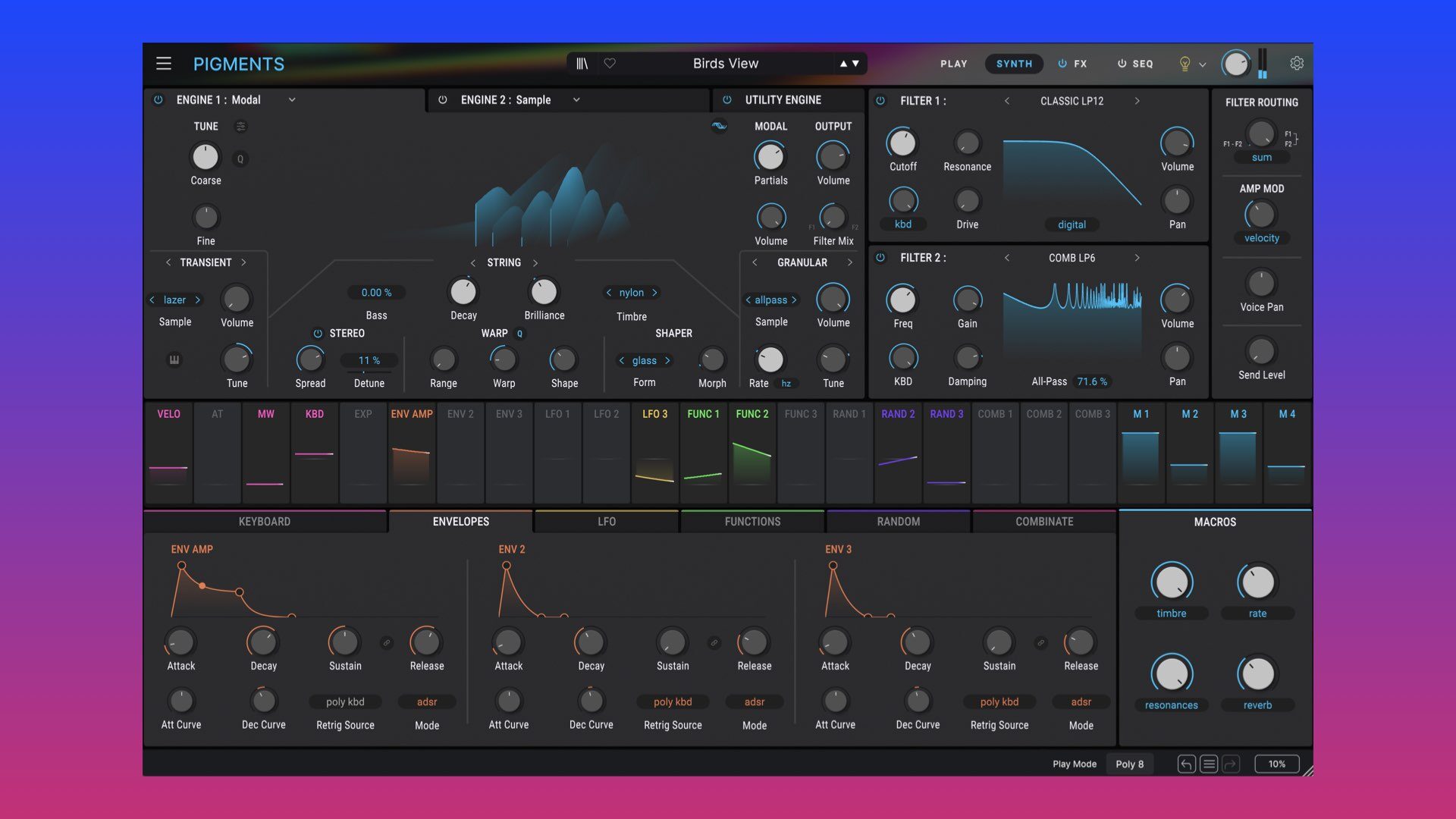
Arturia Pigments 6, released January 27, doesn’t just add features — it adds an entirely new synthesis engine. The Modal engine brings physically-inspired tones into Pigments’ already impressive multi-engine architecture alongside virtual analog, wavetable, granular, and sample engines. You can now design sounds that feel like struck metal, bowed strings, or blown tubes, all within the same interface you use for standard subtractive work.
The filter section received serious attention too. The Multimode V2 filter, Cluster filter, and LoFi filter each bring distinct character, and the new Vocoder effect adds yet another creative dimension. Enhanced per-voice modulation means each voice in a chord can evolve independently — a subtle feature that dramatically increases expressiveness in pad and texture patches.
At $99 introductory ($199 regular), and free for existing Pigments owners, Arturia continues its pattern of delivering flagship updates at fair prices.
Best for: Sound designers who want maximum synthesis variety in a single plugin. If you find yourself switching between five different synths for different tonal qualities, Pigments 6 might replace three of them.
Korg multi/poly native — A Hardware Legend Goes Plugin
Korg’s multi/poly native, announced at NAMM 2025 and released March 6, is a reimagination of the iconic Mono/Poly synthesizer in software form. This isn’t a basic emulation — it’s a full rethink with four oscillators assignable across four voices, analog-modeled lowpass and highpass filters, and 37 modulation sources that go well beyond what the hardware ever offered.
The layering and splitting capabilities let you build complex patches that would require multiple hardware units. A standout feature is hardware patch exchange — if you own the physical multi/poly, you can transfer patches between hardware and software seamlessly. Available as VST3, AU, AAX, and standalone.
Introductory price is $149 (regular $199), with a $49.99 crossgrade for hardware multi/poly owners.
The 37 modulation sources deserve special mention. Where the original hardware had limited modulation routing, the native version opens up possibilities that simply were not physically possible before — assigning velocity-sensitive envelopes to filter cutoff across split zones, for instance, or using one oscillator’s output as a modulation source for another. It turns a vintage-voiced synth into a modern sound design tool without losing the character that made the original beloved.
Best for: Producers chasing that thick, characterful analog sound. Particularly appealing if you work in genres where oscillator stacking and detuning are essential — synthwave, darkwave, cinematic scoring.
GForce / Novation Bass Station — The Budget Sleeper Hit
Here’s the one that might fly under your radar, and that would be a mistake. The GForce/Novation Bass Station plugin is an official collaboration that faithfully emulates the iconic Bass Station hardware — then adds capabilities the original never had. Polyphony, expanded modulation, a step sequencer, and an advanced preset browser transform what was a beloved mono bass synth into a versatile instrument.
Released January 21 at NAMM, the introductory price of £49.99 (regular £99.99) already makes it a steal. But here’s the kicker: it’s completely free for registered Launchkey MK4, FLKey, or SL MK3 owners. If you own any of those Novation controllers and haven’t claimed this yet, you’re leaving money on the table.
Best for: Bass-heavy producers on a budget. Also anyone who owns Novation hardware and wants a free, legitimately excellent synth plugin. The bass tones are thick, immediate, and require almost no tweaking to sit right in a mix.
Waldorf Blofeld Plugin — Wavetable Royalty Returns
The Waldorf Blofeld Plugin is a bit-by-bit emulation of the classic Blofeld desktop wavetable synthesizer, and it brings something unique to this roundup: genuine multi-timbral capability with 16 parts. Released in December 2024 with an iPad version following in April 2025, this is Waldorf’s answer to the question “what if the Blofeld never needed hardware?”
The synthesis architecture is remarkably deep: wavetable, virtual analog, FM, and sample-based engines coexist within a single instance. Over 1,000 presets ship included, and the hardware editor functionality means existing Blofeld desktop owners can use the plugin as a control surface for their hardware unit.
At €149, the Blofeld Plugin sits at a premium, but you’re getting four synthesis engines and 16-part multitimbrality — essentially a workstation inside your DAW. You can layer a wavetable pad, an FM bass, a VA lead, and a sample-based percussion part all within one plugin instance, each responding to different MIDI channels. The iPad version at $12.99 introductory is frankly absurd value and makes the Blofeld one of the most powerful mobile synthesis options available.
Best for: Composers and sound designers who need deep, complex patches. The multi-timbral workflow is ideal for film scoring and electronic music where running one instance instead of sixteen saves real CPU.
Quick Comparison: Which New Software Synths 2025 Fit Your Workflow?
Let’s cut through the noise with a direct comparison:
- Need one synth that does everything? Pigments 6 — five engines, one interface.
- Want the best wavetable synth on the market? Serum 2 — nothing else comes close for wavetable-centric work.
- Chasing analog character? Korg multi/poly native — four oscillators, thick and immediate.
- Tight budget? GForce Bass Station — £49.99 (or free with Novation hardware).
- Need multi-timbral depth? Waldorf Blofeld Plugin — 16 parts in one instance.
Sean’s Take: What 28 Years in Audio Taught Me About Synth Hype Cycles
I’ve watched synth plugin launches come and go since the late ’90s — from the first Reaktor patches that crashed my Pentium III to the Massive era that defined a decade of electronic music. After 28 years working in music production and audio engineering, I’ve developed a pretty reliable filter for separating genuine innovation from marketing polish.
What makes this spring 2025 crop different is that none of these are version 1.0 gambles. Every single one is built on proven architecture: Serum’s wavetable engine was already industry-standard, Pigments’ multi-engine approach had four versions of refinement, the Mono/Poly has 40 years of sonic identity, the Bass Station defined an era of affordable analog, and the Blofeld’s wavetable engine earned its reputation in hardware. These are mature sound engines getting their best software implementations yet.
If I had to pick just two for a stripped-down production setup, I’d go Serum 2 for wavetable/modern sound design and Pigments 6 for everything else. The combination covers virtually every synthesis method at a combined introductory price under $300. But honestly, the GForce Bass Station at £49.99 might deliver the highest satisfaction-per-dollar ratio of any plugin released this year — it just sounds correct straight out of the box, which is exactly what you want when you’re deep in a session and need a bass line that works in 30 seconds, not 30 minutes of patch tweaking.
The broader trend worth watching: hardware-to-software conversions are getting genuinely good. The Korg and Waldorf plugins don’t feel like compromises anymore — they feel like the hardware finally reaching its full potential without physical circuit limitations. That shift changes the calculus for studio investment significantly.
This is a strong season for soft synths. Whether you’re building a new production setup or expanding an existing toolkit, at least two or three of these deserve a serious demo session. The free upgrades for existing Serum and Pigments owners make the decision even easier — if you already own either, you have no excuse not to update today.
Need help choosing the right synth setup for your productions, or want professional mixing and mastering for your tracks?
Get weekly AI, music, and tech trends delivered to your inbox.