Google I/O 2025: Project Astra Real-Time AI Assistant Demo Impresses — 6 Features That Redefine Multimodal AI
May 2, 2025
Teenage Engineering TX-6 at Superbooth 2025: Field System Black, Link Mode, and Why This 160g Mixer Changes Everything
May 5, 2025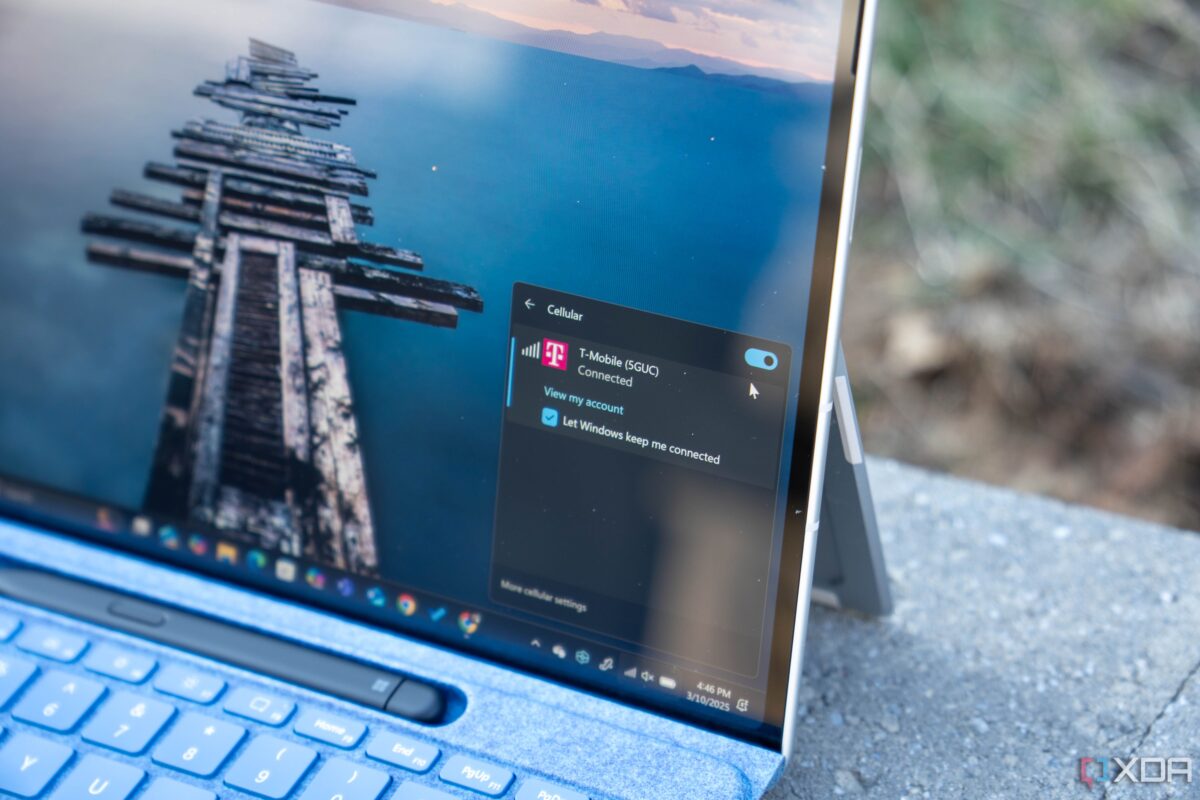
The Surface Pro 11 Snapdragon X Elite just matched the MacBook Air M3 in benchmarks — while running fanless, with 5G, on a tablet. That is not a hypothetical anymore. Spring 2025 brought the updates that tip the scales: better Adreno GPU drivers for actual gaming, a 5G OLED model earning 8.5/10 reviews, and an entirely new $799 Surface Pro 12-inch that changes the competitive math against Apple.
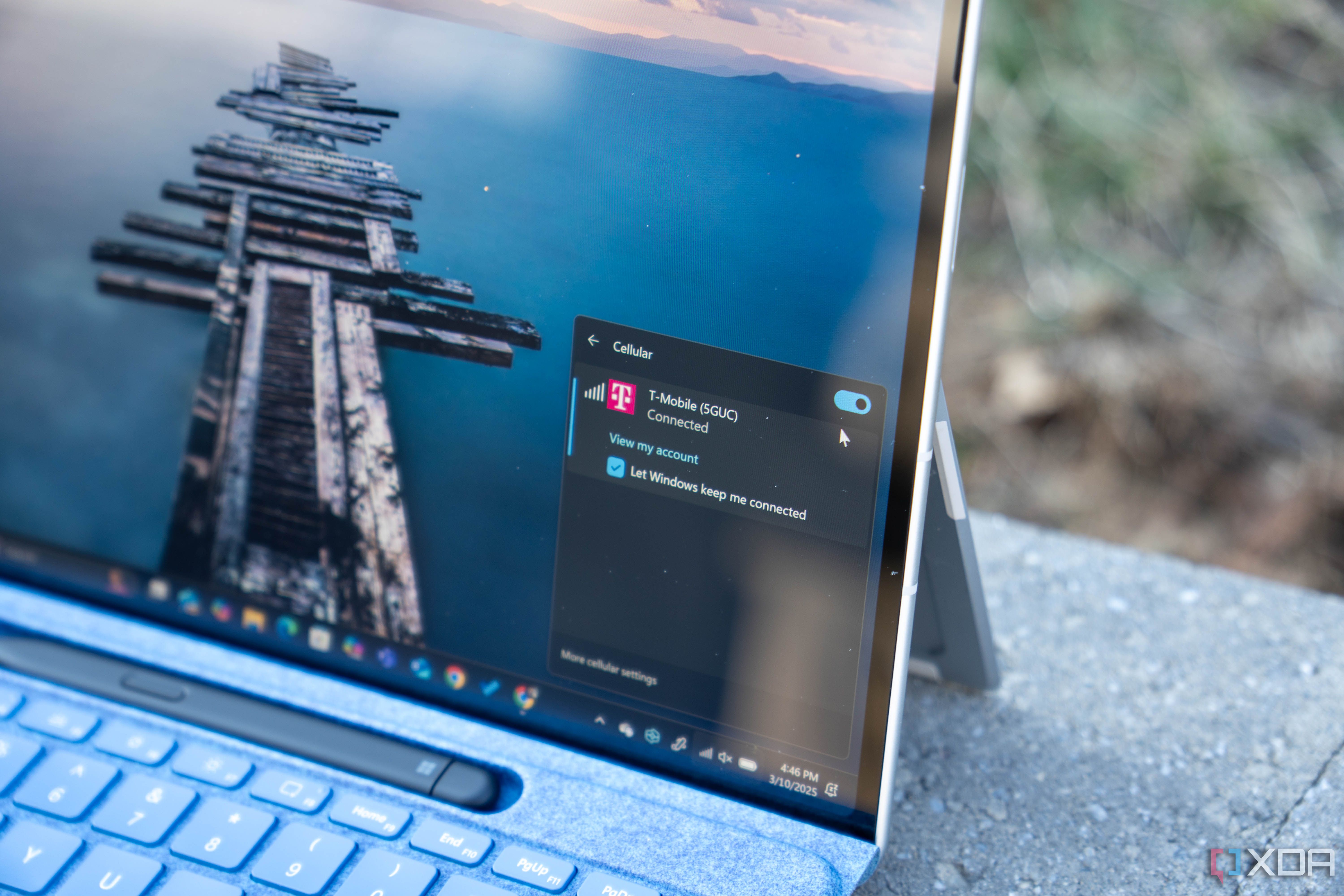
Surface Pro 11 5G: The $1,799.99 OLED Flagship Delivers
The Surface Pro 11 5G model launched in March 2025 and immediately earned strong reviews. XDA Developers gave it an 8.5 out of 10, calling it “the upgrade I needed” — high praise for what is essentially a connectivity addition to an already excellent machine.
The top-tier configuration pairs the Snapdragon X Elite processor with a stunning 13-inch OLED PixelSense Flow display running at 2880×1920 resolution and 120Hz refresh rate, all for $1,799.99. If that price point gives you pause, the base 5G model starts at $1,299.99 with a Snapdragon X Plus, 16GB RAM, and 256GB SSD — still a fully capable Copilot+ PC with cellular connectivity.
Battery life hits up to 14 hours with 65W fast charging support. You get Wi-Fi 7, Bluetooth 5.4, two USB4 ports, and 5G that actually works reliably in the field. The fanless design means zero noise during video calls or focused work sessions — something x86 ultrabooks still struggle with under sustained loads. And the removable M.2 SSD means storage upgrades are a five-minute job, not a trip to the repair shop.
Qualcomm Adreno GPU Driver Update: A Turning Point for Surface Pro 11 Snapdragon X Elite Gaming
Gaming on ARM-based Windows has been the elephant in the room since the platform launched. Qualcomm’s answer arrived in March 2025 with the beta Adreno GPU driver v31.0.96.0, and the improvements are substantial enough to change the conversation.
The headline additions include support for Helldivers 2 and Palworld — two of the most popular titles of 2024-2025 that represent exactly the kind of modern games ARM laptops were previously locked out of. Running these on a fanless tablet would have been unthinkable twelve months ago. Beyond gaming, the driver also enhances stability for ARM64-native creative applications like Adobe Photoshop and Blender, which matters enormously for professionals weighing a switch from Intel or AMD systems.
This is part of Qualcomm’s ongoing push to close the app compatibility gap that has plagued Windows on Arm since its inception. Each driver release expands the list of playable titles and stable professional apps, and the pace is accelerating noticeably. The question has shifted from whether ARM Windows can game at all to how many titles run and how well they perform. That is a fundamentally different conversation than the one we were having a year ago.
New Surface Pro 12-Inch: Copilot+ PC Starting at $799
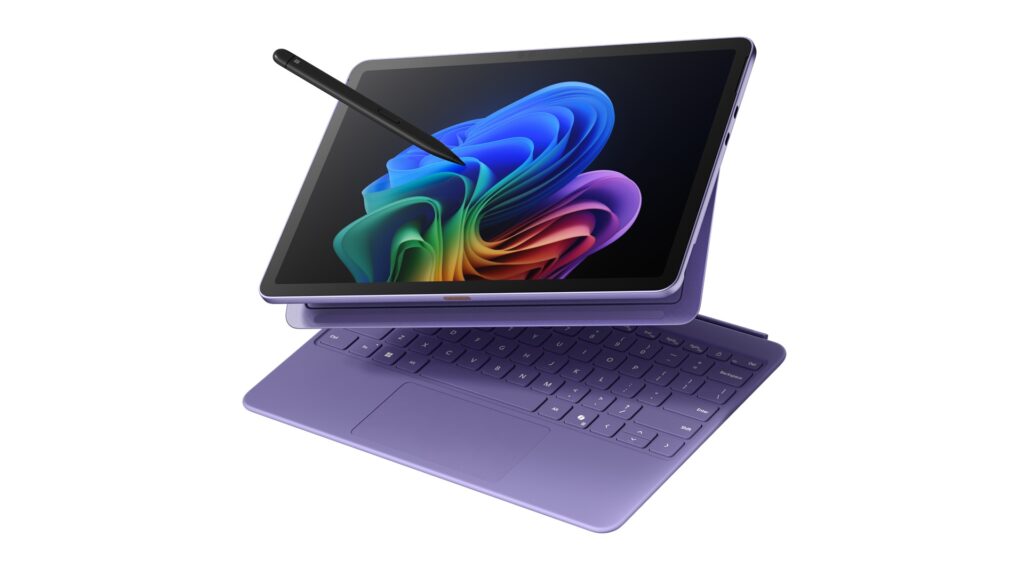
On May 6, 2025, Microsoft announced the all-new Surface Pro 12-inch and Surface Laptop 13-inch, expanding the Copilot+ PC lineup with more affordable, compact options. The Surface Pro 12-inch starts at $799 and ships May 20, 2025.
Powered by the Snapdragon X Plus 8-core processor with a 45 TOPS NPU, it is a legitimate Copilot+ PC at a price point that would have been unthinkable a year ago. The redesigned chassis features uniform bezels, magnetic Surface Slim Pen charging on the back, a keyboard that folds completely flat with full-size backlit keys, and the dedicated Copilot key. Every detail signals that Microsoft is not cutting corners to hit the price — they are redesigning for efficiency.
The companion Surface Laptop 13-inch starts at $899 and delivers 50 percent faster performance than the Surface Laptop 5 in Cinebench 24, with a staggering 23 hours of video playback and 16 hours of web browsing on a single charge. Business versions with Windows 11 Pro and NFC arrive July 22. Microsoft is clearly betting that bringing ARM-based premium PCs below $1,000 is the tipping point for mainstream adoption — and looking at the spec sheets, it is hard to argue they are wrong.
Firmware and NPU Improvements: The Updates That Actually Matter Most
The less glamorous but equally important story is the steady stream of firmware updates Microsoft has been pushing throughout 2025. The March 25, 2025 update brought system stability improvements and enhanced NPU compatibility for AI workloads — the kind of behind-the-scenes work that transforms a good device into a reliable daily driver.
Specifically, TDR (Timeout Detection and Recovery) events have been reduced. If you have ever experienced a brief screen flicker or momentary freeze on a Windows device, that is what TDR events feel like in practice. Fewer of those means a noticeably smoother daily experience. Power management optimizations also deliver faster wake-up speeds, turning the Surface Pro 11 into an instant-on device that rivals the MacBook in responsiveness.
The NPU improvements deserve special attention. As AI workloads become increasingly common — from real-time translation to intelligent photo editing to on-device content generation — having a tuned NPU is not a future-proofing feature anymore. It is a present-day advantage. Microsoft is investing heavily in making sure the Surface Pro 11’s neural processing capabilities keep pace with the software demanding them.
Surface Pro 11 Snapdragon X Elite vs Apple M3 MacBook Air: Where Things Stand in 2025
The comparison everyone wants to make is now actually fair. According to Windows Central’s comprehensive review, the Snapdragon X Elite matches or exceeds the Apple M3 in key benchmarks. The Surface Pro 11 adds a 120Hz OLED touchscreen, a removable M.2 SSD for easy storage upgrades, and a fanless design that runs cooler and quieter than comparable x86 systems — features the MacBook Air simply does not offer.
Where Apple still holds an undeniable advantage is in app ecosystem maturity. macOS ARM-native apps had a multi-year head start, and the creative professional software stack — particularly audio production tools, video editors, and design applications — runs more consistently on Apple Silicon today. The transition from Intel to Apple Silicon was smoother because Apple controlled both hardware and software, giving developers a clearer migration path.
However, the gap is narrowing with every driver update and firmware release. Qualcomm’s aggressive approach to GPU driver improvements and Microsoft’s NPU optimizations are bringing ARM Windows measurably closer to parity with each passing month. The trajectory suggests that by late 2025, the decision between these two platforms will come down to specific workflow needs rather than a blanket “Apple is better for creative work” assumption.
My Take: What 28 Years in Audio and Tech Taught Me About Platform Shifts
I have watched enough platform transitions over 28 years in music production and technology to recognize when a tipping point is approaching. PowerPC to Intel. Intel to Apple Silicon. And now, x86 Windows to ARM Windows. The Surface Pro 11 Snapdragon X Elite is not just another iterative hardware refresh — it represents the moment ARM-based Windows crossed from “interesting experiment” to “viable professional tool.”
As a producer who frequently needs to do quick edits during recording sessions, the fanless design is not a luxury feature — it is a hard requirement. Recording environments demand silence. A laptop fan spinning up during a quiet vocal take can ruin the entire recording. Having a tablet that can run audio software without any fan noise, connected via USB4 to a professional audio interface, with waveforms displayed on a gorgeous 120Hz OLED screen — that is a genuinely compelling workflow that did not exist in the Windows ecosystem before this device.
The honest limitation right now is DAW compatibility on ARM Windows. Not every audio plugin runs natively yet, and emulation introduces latency that is unacceptable in real-time audio work where every millisecond matters. But the NPU improvements are what I am watching most closely. When AI-powered audio processing — noise reduction, stem separation, real-time mastering assistance — starts running natively on that 45 TOPS NPU, this platform becomes something no MacBook can match in specialized creative workflows. The processing headroom for on-device AI is already there; the software just needs to catch up.
The $799 Surface Pro 12-inch is the real strategic signal here. The M1 MacBook Air did not change everything for Apple Silicon because it was the fastest laptop — it changed everything because it made ARM performance accessible. Price drove volume, volume drove developer adoption, and developer adoption made the ecosystem viable. Microsoft is running the exact same playbook with the 12-inch Surface Pro, and the early indicators suggest it is working.
Spring 2025 marks the convergence of better hardware performance, improving software compatibility, and broader price accessibility for the Surface Pro 11 ecosystem. Whether you are a creative professional weighing a switch from macOS, a mobile worker who needs always-on 5G connectivity, or someone looking for a premium Windows tablet experience under $1,000, this lineup finally has a credible answer for each scenario. The ARM Windows era is not coming — it is here.
Get weekly AI, music, and tech trends delivered to your inbox.