AMD Strix Halo Laptop Review: 128GB Unified Memory APU Takes on RTX 4070 and M4 Max
May 12, 2025
ROLI Seaboard Rise 2 Long-Term Review: 6 Months with the Most Expressive MPE Controller
May 13, 2025
When your biggest competitor adopts your open standard, you’ve already won. In March 2025, OpenAI CEO Sam Altman announced full support for Anthropic’s Model Context Protocol across their entire product stack. That single decision may have quietly reshaped the future of AI tool integration.

The world of AI tool integration has been a mess. Every AI application needed custom connectors for every data source — Slack, GitHub, Google Drive, databases, internal systems. If you had 10 AI apps and 10 data sources, you needed 100 custom integrations. The Model Context Protocol, which Anthropic launched in November 2024, attacks this N-by-M problem head-on with a universal, open standard protocol.
What the Model Context Protocol Actually Is
The simplest way to understand MCP is the USB-C analogy. Before USB-C, every device had a different charging port — Micro USB, Lightning, barrel connectors, proprietary jacks. USB-C unified them all. MCP does the same for AI-to-tool connections. One protocol, any AI app, any data source.
The architecture is elegantly simple, built on three components. Hosts are the LLM applications themselves — think Claude Desktop or ChatGPT. Clients maintain persistent connections between hosts and servers. And Servers are the context providers that expose actual data and tools. A Slack MCP server exposes your workspace messages. A GitHub MCP server exposes your repositories. A Postgres MCP server lets AI query your databases directly.
What makes this powerful is the math. Without MCP, connecting 5 AI apps to 5 services requires 25 individual integrations. With MCP, each AI app implements one client and each service builds one server — 10 implementations replacing 25. At enterprise scale with dozens of AI tools and hundreds of internal systems, the efficiency gains become enormous.
The Adoption Wave: When Competitors Shake Hands
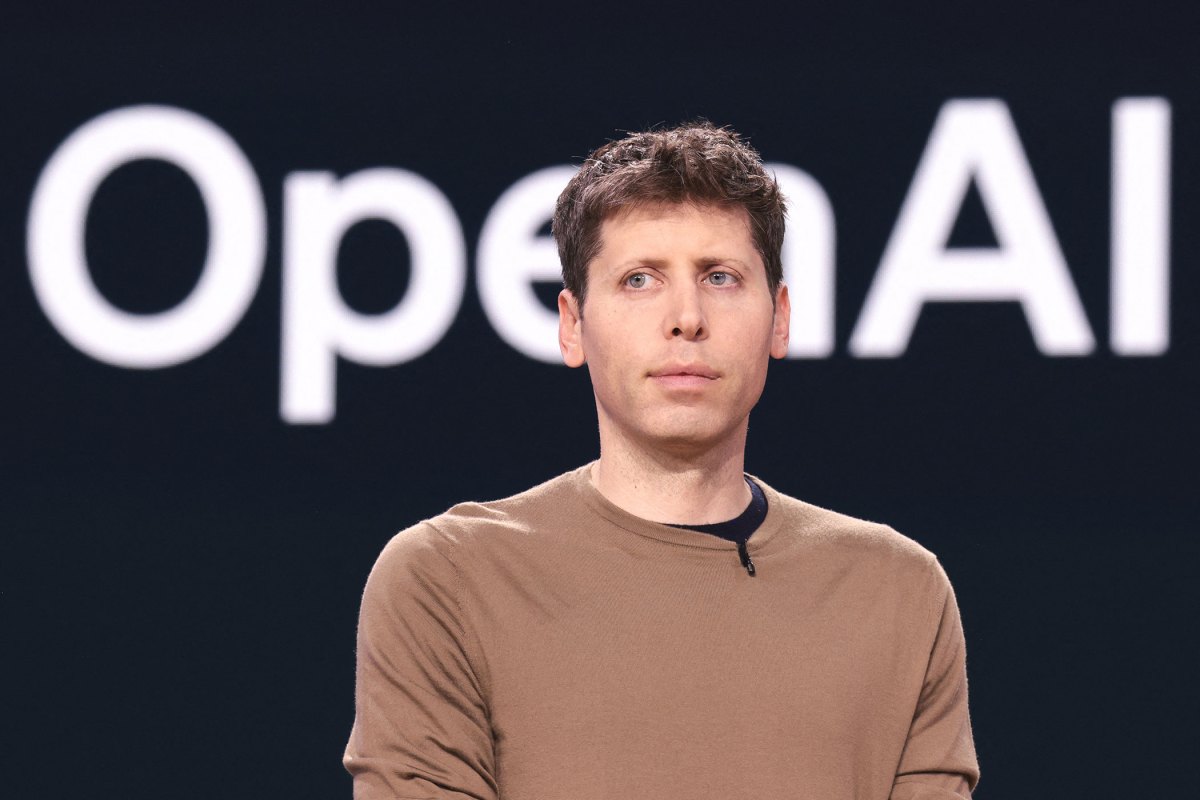
The real story of Model Context Protocol isn’t the technology itself — it’s who’s adopting it. According to TechCrunch, on March 26, 2025, OpenAI announced MCP support across their Agents SDK, Responses API, and ChatGPT Desktop app. A direct competitor adopting a rival’s open standard is virtually unprecedented in the AI space.
The same day brought MCP Spec v2, adding Streamable HTTP transport and OAuth 2.1 authorization — critical upgrades for enterprise deployment. Then in April 2025, Google DeepMind confirmed MCP support in Gemini. The Big Three of AI are now aligned behind a single integration protocol. That hasn’t happened since… well, it hasn’t really happened before in AI.
The Growing Model Context Protocol Ecosystem
Anthropic didn’t just release a spec and hope for the best. The initial launch included TypeScript and Python SDKs, plus pre-built servers for Slack, GitHub, Google Drive, and Postgres. Launch partners included Block (formerly Square), Replit, Codeium, Zed, and Sourcegraph — companies deeply embedded in the developer workflow.
The community response has been explosive. New MCP servers are appearing daily on GitHub, covering everything from cloud services and CI/CD pipelines to CRM systems and internal knowledge bases. Developers are finding that building an MCP server is surprisingly straightforward — the SDK handles the protocol complexity, and you just define your resources, tools, and prompts.
The early partner ecosystem tells a compelling story about where MCP is headed. Replit integrated MCP to let AI agents interact with development environments programmatically. Codeium and Sourcegraph are using it to give AI models deep access to codebases for smarter code assistance. Zed, the next-generation code editor, adopted MCP for seamless AI-powered workflows. These aren’t experimental side projects — they’re core product integrations from companies betting their futures on AI-native development tools.
Enterprise Implications of Model Context Protocol
Red Hat published a detailed analysis in early May 2025, describing MCP as “the missing link in AI integration.” From an enterprise perspective, the value proposition is clear: build your MCP server once, and every AI application can connect to your internal systems. No more building separate integrations for Claude, GPT, Gemini, and whatever comes next.
This fundamentally changes enterprise AI strategy. Instead of being locked into one AI vendor’s ecosystem, companies can maintain a standard MCP infrastructure layer and swap AI providers freely. Use Claude for coding tasks today, switch to GPT for analysis tomorrow — your MCP servers don’t care. The integration layer stays intact.
Under the Hood: Technical Architecture
MCP is built on JSON-RPC 2.0, a lightweight message protocol that’s been battle-tested across the industry. Servers expose three primary capabilities. Resources provide context data — files, database records, API responses. Tools define functions that AI models can invoke — running queries, creating tickets, sending messages. And Prompts offer reusable prompt templates for common workflows.
The elegance is in the simplicity. A basic MCP server can be built in under 50 lines of Python. Wrap your internal database in an MCP server, and suddenly Claude Desktop can query it conversationally. No API gateway needed, no middleware stack, no complex authentication flows — though OAuth 2.1 is there when you need enterprise-grade security.
Consider a practical scenario: a DevOps team wants their AI assistant to check deployment status, read logs, and trigger rollbacks. Without MCP, they’d need to build custom integrations for each AI tool they use. With MCP, they build one server that exposes these capabilities through standardized resources and tools. Any MCP-compatible AI client — whether it’s Claude, ChatGPT, or a custom agent — can immediately access those DevOps functions. The server doesn’t need to know which AI is calling it, and the AI doesn’t need special handling for this particular service.
Spec v2’s Streamable HTTP transport was a game-changer. The original MCP only supported stdio transport, meaning servers had to run locally. With HTTP transport, MCP servers can be deployed to the cloud and shared across teams or organizations. This is what opens the door to enterprise-scale deployment — centralized MCP servers that an entire company’s AI tools can connect to.
My Take: What 28 Years in Tech Taught Me About Standards
In 28 years across music and tech, I’ve watched plenty of “standard wars” play out. MIDI became the universal language of music hardware. VST became the plugin standard. USB-C unified charging cables. The pattern is always the same: a real standard is born the moment competitors adopt it.
MCP is following that exact trajectory. Anthropic created it, but the moment OpenAI adopted it and Google followed, it stopped being one company’s project and became an industry standard. Just like MIDI was Roland’s invention that became universal when Yamaha and Korg signed on.
What I find most compelling about MCP is its potential as the infrastructure layer for the agentic AI era. Until now, AI has been trapped in conversation interfaces — powerful but isolated. MCP provides a standardized gateway for AI to reach into the real world’s tools and data. This is as significant as the App Store was for smartphones. The App Store turned phones into universal tools. MCP could do the same for AI.
I do have one concern though. Protocol success ultimately depends on ecosystem quality. Thousands of MCP servers mean nothing if security, reliability, and performance aren’t consistent. Adding OAuth 2.1 in Spec v2 was the right move, but we’ll also need server certification, a curated registry, and governance frameworks. The standard itself is excellent — now the hard work of building a trustworthy ecosystem begins.
There’s also a deeper strategic insight here. Anthropic made a brilliant move by open-sourcing MCP rather than keeping it proprietary. By giving the standard to the community, they ensured adoption would be driven by merit rather than market power. It’s the same playbook that made HTTP and SMTP successful — open standards that no single company controls tend to win over proprietary alternatives, even when the proprietary option has more resources behind it. Anthropic bet that a rising tide would lift all boats, and with OpenAI and Google now on board, that bet is paying off spectacularly.
What Comes Next for AI Tool Integration
With the Big Three aligned and enterprise adoption accelerating, MCP has the momentum to become the default integration layer for AI applications. The next frontier is vertical-specific MCP servers — healthcare systems, financial data platforms, manufacturing controls — bringing AI into domains that have traditionally been walled off.
Now is the best time to start exploring MCP. The ecosystem is young enough that entry barriers are low, but the direction is clear with backing from every major AI company. Start by wrapping one of your internal systems in an MCP server and connecting it to your AI workflow. Getting in during the standard-formation phase is infinitely better than playing catch-up later.
For developers, the action item is clear: start building MCP servers for your most-used internal tools and data sources. The Python and TypeScript SDKs make it remarkably accessible, and the documentation is thorough. For engineering leaders, the strategic move is to evaluate MCP as your AI integration standard before the ecosystem matures and early movers have already established their position.
The fragmented world of AI tool integration finally has its USB-C moment. And unlike some standards that took decades to win, MCP appears to be on a fast track measured in months. The question isn’t whether MCP will become the standard — it’s how quickly you’ll adopt it.
Want to build MCP-powered AI automation or need help with AI tool integration strategy? Let’s talk.
Get weekly AI, music, and tech trends delivered to your inbox.