Vocal Chain Signal Processing: The Complete Plugin Order and Settings Guide (2025)
May 14, 2025
AI Wearables 2025: Humane AI Pin Dead, Rabbit R1 Surviving, Meta Ray-Ban Dominating — The Brutal Scorecard
May 15, 2025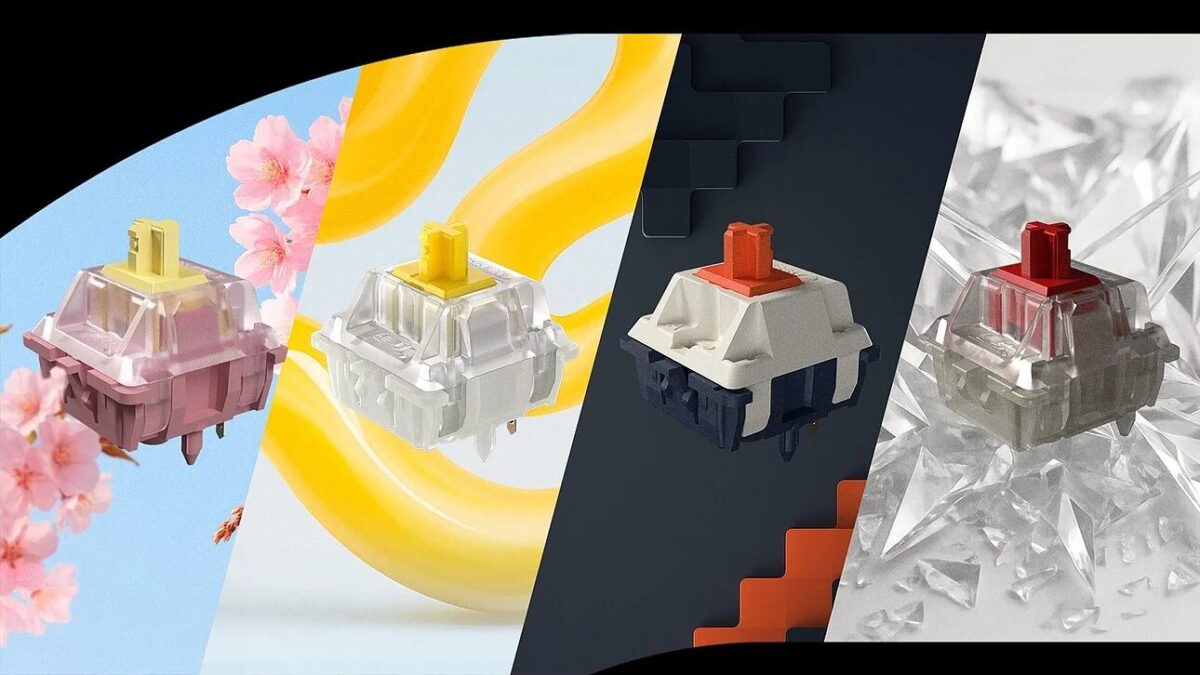
Stop buying mechanical keyboard switches based on Reddit hype. In 2025, the mechanical keyboard switches landscape has fractured into three distinct camps — Cherry’s reinvented MX2A platform, Gateron’s value-packed Jupiter line, and Hall Effect magnetic switches that throw out everything we knew about actuation — and picking the wrong one means either wasting money or missing out on a genuine competitive edge.
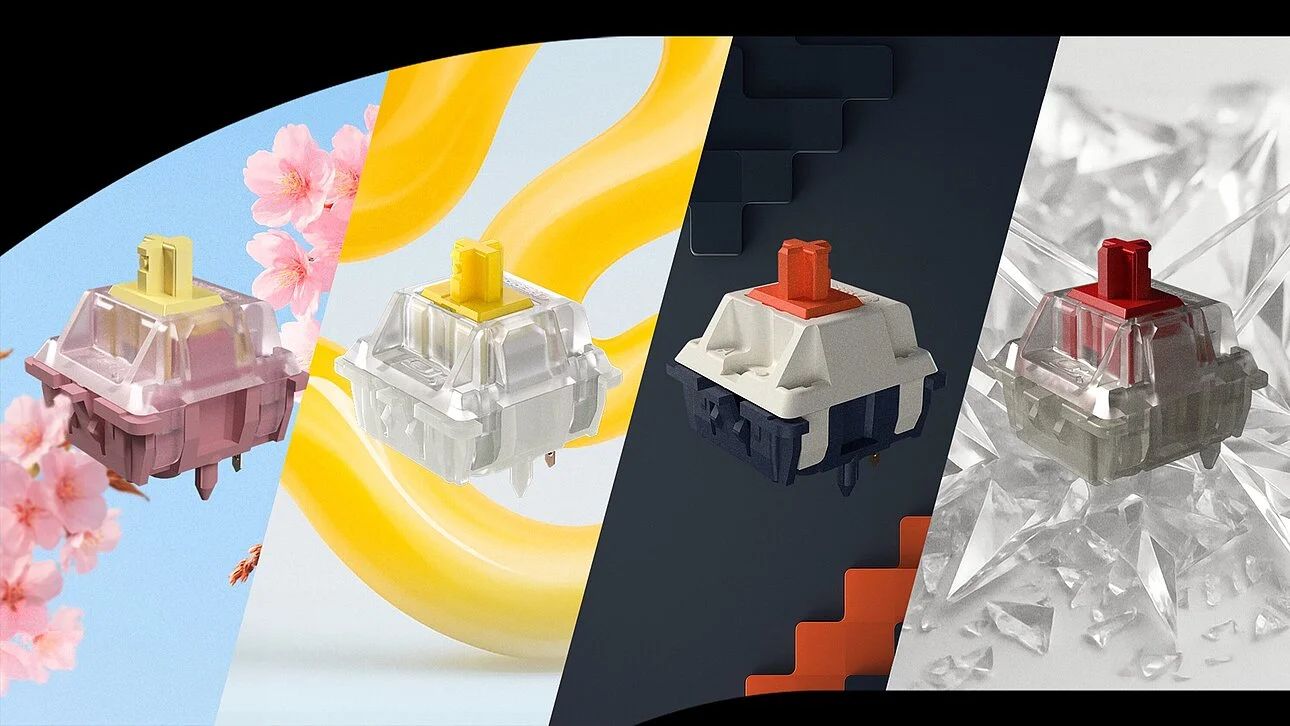
Cherry MX2A: The Legacy Giant Strikes Back with Mechanical Keyboard Switches That Actually Evolve
Cherry spent decades coasting on brand recognition while competitors ate their lunch on smoothness and price. The MX2A platform is their answer — and it’s surprisingly compelling. Three new switches define this generation: MX Honey, a silent tactile that finally gives Cherry a credible office option; MX Blossom, the lightest linear Cherry has ever made at just 35cN actuation force; and MX Falcon, a heavy tactile with a long-pole stem designed for typists who want decisive, bottom-out feedback.
All three carry Cherry’s signature durability rating of 100 million+ actuations. That’s not marketing fluff — Cherry’s stem and housing tolerances remain the tightest in the industry, according to Tom’s Hardware’s coverage of the MX2A launch. Cherry has also introduced inductive sensing technology, which eliminates mechanical wear at the contact point, hinting at a future where even traditional switch makers go contactless.
The real question is whether Cherry’s premium pricing — typically $0.50-0.70 per switch versus $0.25-0.40 for Gateron equivalents — is justified in 2025. For prebuilt keyboards from brands like Ducky or Leopold that come factory-installed with Cherry, the cost difference is baked in. For custom builders, it’s a harder sell unless you specifically want that Cherry stem feel: slightly scratchier than Gateron but with a more defined tactile event and less wobble.
Gateron in 2025: More Than Just “Cheaper Cherry”
Gateron has completely shed its reputation as a budget Cherry clone. The Jupiter line, featuring the Double-Core 5-pin design, delivers factory lubrication that rivals what enthusiasts achieve with hand-lubed switches. The improved housing design reduces stem wobble to nearly Cherry-level tolerances, and the smoother linear travel has made Gateron the default choice for custom keyboard builders worldwide.
As MakeUseOf notes in their switch comparison, Gateron switches are smoother out of the box and more affordable, while Cherry maintains an edge in raw durability and brand trust. For most users, that smoothness advantage matters more in daily typing than a theoretical lifespan difference you’ll never actually reach.
But Gateron’s most interesting 2025 move is the Magnetic Jade — their entry into Hall Effect territory. This switch combines Gateron’s housing expertise with magnetic sensing, offering rapid trigger capability at a price point significantly below dedicated Hall Effect brands like Wooting. It’s a bridge product, and it signals that the line between traditional mechanical and magnetic switches is blurring fast.
Hall Effect Mechanical Keyboard Switches: The Competitive Gaming Revolution
Here’s where things get genuinely different. Hall Effect switches don’t use metal contacts at all. Instead, a magnet on the stem passes through a Hall Effect sensor on the PCB, measuring the exact position of the key at all times. No physical contact means zero debounce delay, no contact degradation, and — most critically — adjustable actuation points and rapid trigger.
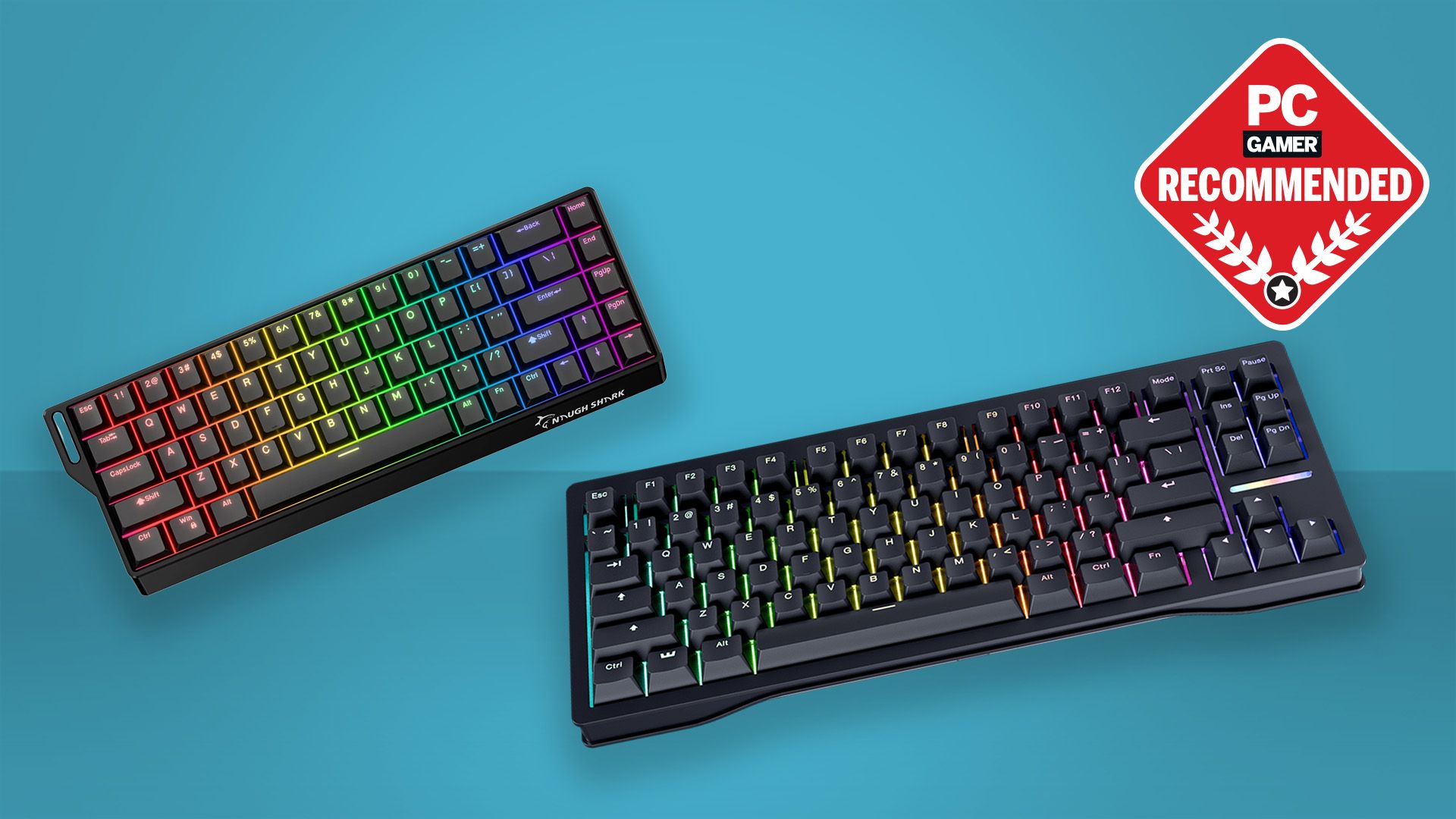
Rapid trigger is the killer feature. Traditional switches actuate at a fixed point — typically around 2mm — and reset at a slightly higher point. Rapid trigger eliminates the reset point entirely: the key re-registers as soon as you reverse direction by a configurable distance, sometimes as little as 0.1mm. For competitive FPS games like Valorant or Counter-Strike 2, this means faster strafing, instant counter-movement, and input speeds that mechanical switches physically cannot match.
PC Gamer’s roundup of the best Hall Effect keyboards puts the Wooting 80HE at the top for good reason: Wooting essentially created the rapid trigger category and their firmware remains the most refined. The 60HE offers the same technology in a compact 60% layout. Other strong contenders include the Razer Huntsman V3 Pro and the DrunkDeer A75, which offers remarkable value for the technology.
The trade-off? Typing feel. Hall Effect switches in 2025 still feel distinctly different from traditional mechanical switches. The magnetic return creates a smoother but less tactile experience — there’s no physical bump to speak of, even in switches marketed as “tactile.” For typing-focused users or anyone who loves the crisp click of a Box White, Hall Effect can feel mushy and unsatisfying.
TMR: The Next Evolution Beyond Hall Effect
While Hall Effect keyboards are still gaining mainstream adoption, the next technology is already emerging. Tunnel Magnetoresistance (TMR) sensors offer higher accuracy than Hall Effect at lower power consumption — a meaningful advantage for wireless keyboards where battery life matters. According to MechanicalKeyboards.com’s technical breakdown, TMR sensors can potentially achieve sub-0.01mm resolution, making actuation point adjustments even more precise.
One particularly interesting TMR capability is hybrid boards — keyboards that mix magnetic sensing switches with traditional mechanical switches on the same PCB. Imagine a keyboard where your WASD cluster uses rapid-trigger magnetic switches for gaming, while the rest of the board uses Cherry MX tactile switches for comfortable typing. That’s not theoretical; it’s already in prototype stages from several manufacturers.
For most buyers in mid-2025, TMR is a “watch this space” technology. But if you’re considering a premium Hall Effect purchase, it’s worth knowing that the technology will likely be superseded within 18-24 months. The fundamentals are proven; it’s just a matter of manufacturing scale bringing prices down.
The Dark Horse: Kailh Box Switches
No mechanical keyboard switches comparison in 2025 is complete without mentioning Kailh’s Box design. The box housing around the stem creates a dust and water-resistant seal that makes these switches uniquely practical for environments where spills or debris are a concern — think studio desks covered in cable dust, or kitchen counters where you might be following a recipe.
The Box White remains one of the best clicky switches ever made — a sharp, clean click without the rattly ping of Cherry Blues. The Box Jade takes this further with a thicker clickbar that produces a heavier, more deliberate click. For tactile fans, the Box Brown alternative offers noticeably more tactile feedback than Cherry’s Browns, which many enthusiasts consider barely distinguishable from linear switches.
Kailh’s innovation continues with improved factory lubrication and tighter tolerances across their 2025 lineup. While they don’t have the brand cachet of Cherry or the enthusiast following of Gateron, Kailh Box switches offer something neither competitor does: genuine environmental resilience without sacrificing typing feel.
2025 Industry Trends: What’s Actually Changing
Three macro trends are reshaping the mechanical keyboard switches market this year. First, factory lubrication has improved dramatically across all manufacturers. The gap between stock and hand-lubed switches has narrowed to the point where casual users genuinely cannot tell the difference. This is a win for everyone — it makes good switches accessible without requiring hobbyist-level dedication.
Second, sound character has become a primary design consideration. Manufacturers are tuning their switches for specific acoustic profiles — deeper “thocky” sounds, higher-pitched “clacky” profiles, or near-silent operation. Cherry’s MX Honey targets the silent segment, while Gateron’s Jupiter line is tuned for that deep, satisfying thock that dominates keyboard sound test videos.
Third, the rapid trigger arms race continues. What started as a competitive gaming feature is trickling down to mainstream keyboards. Razer, SteelSeries, and even Corsair now offer rapid trigger models. The technology is becoming commoditized faster than anyone expected, which means prices will continue to fall throughout the year.
Sean’s Take: What 28 Years in Audio Taught Me About Input Devices
As someone who has spent nearly three decades working in studios — producing, engineering, and running Montadecs — I’ve probably logged more keyboard hours than most people outside of professional writers. DAW shortcuts, MIDI programming, mixing console macros mapped to keyboard commands — my fingers live on these switches eight to twelve hours a day. That gives me a perspective most keyboard reviewers don’t have: what actually holds up under sustained professional use, not just a weekend of gaming.
My honest assessment: for studio work, Cherry MX switches still win on one critical metric — consistency over time. I’ve had Gateron switches develop inconsistent actuation feel after 18 months of heavy use, while a Cherry board from 2019 still feels identical to day one. That consistency matters when you’re muscle-memorizing complex shortcut sequences in Pro Tools or Ableton Live.
But I’ve been testing a Hall Effect board for production work recently, and the adjustable actuation point is a genuine game-changer for creative workflows. Setting a lighter actuation for frequently-used shortcuts while keeping modifier keys heavier to prevent accidental presses — that’s the kind of customization that traditional mechanical switches simply cannot offer. If TMR brings this technology to a more mature, reliable place, I think the studio world will adopt magnetic switches faster than the typing purists expect.
The Verdict: Which Mechanical Keyboard Switches Should You Buy?
There’s no universal answer, but there is a clear decision framework. If you prioritize proven reliability and you’re buying a prebuilt keyboard, Cherry MX2A switches are the safe bet — the new lineup addresses every historical weakness without abandoning what made Cherry the standard. If you’re building a custom board and want the best stock feel per dollar, Gateron Jupiter switches deliver smoothness and sound that punch well above their price point.
If you’re a competitive gamer or you simply want the most advanced input technology available, Hall Effect is the only rational choice. The Wooting 80HE remains the gold standard, but the market is filling with credible alternatives. And if you work in dusty or spill-prone environments, give Kailh Box switches a serious look — their environmental protection is unmatched.
The mechanical keyboard switches market in 2025 is the healthiest it’s ever been. Competition has driven every manufacturer to improve, and the real winner is you — there has never been a better time to find a switch that perfectly matches your fingers, your workflow, and your budget.
Looking for help optimizing your studio workflow or tech setup? Sean Kim brings 28 years of audio and tech experience to every consultation.
Get weekly AI, music, and tech trends delivered to your inbox.