Mechanical Keyboard Switches in 2025: Cherry MX2A vs Gateron vs Hall Effect — Which Actually Wins?
May 14, 2025
Auto-Tune Pro X Deep Dive: 25 Years of Pitch Correction Royalty, Now Enhanced with AI (2025)
May 15, 2025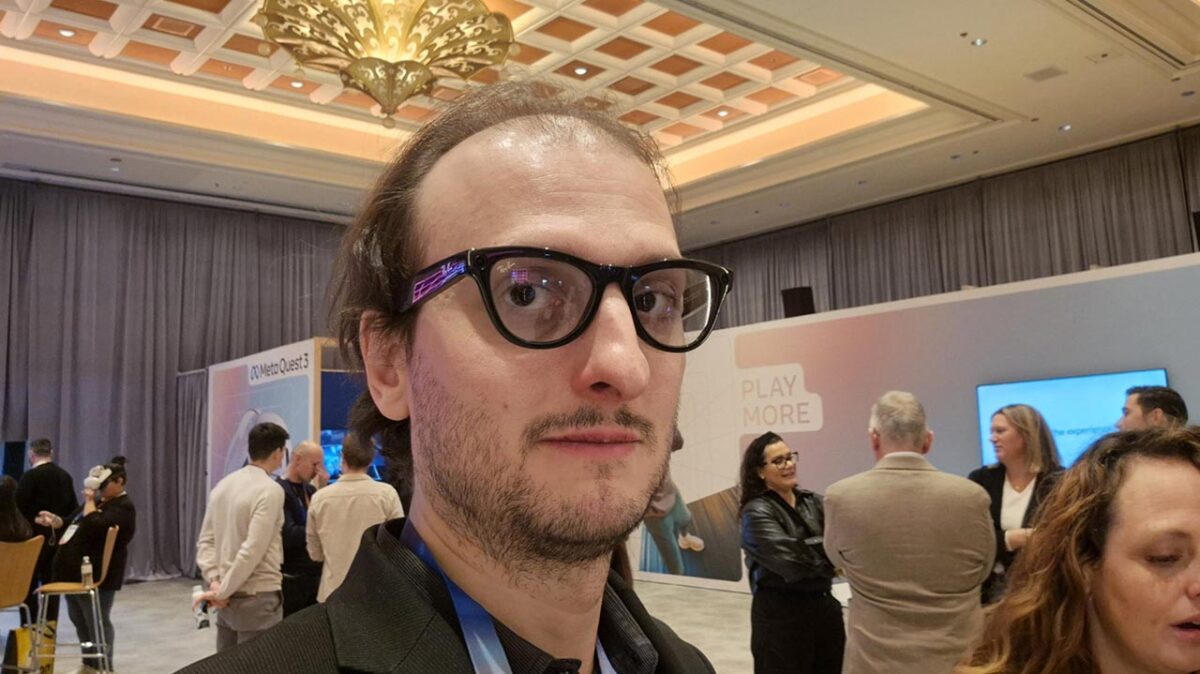
A $699 device turned into a paperweight in under 12 months. No refund. Servers wiped. Done. That’s the reality of AI wearables 2025 — a market where one product literally died, another is clinging to life through sheer update persistence, and a third quietly became the only AI wearable people actually want to use. Let’s break down the Humane AI Pin, Rabbit R1, and Meta Ray-Ban smart glasses — and figure out what this tells us about the future of wearable AI.
Humane AI Pin: The $699 AI Wearable That Became a Cautionary Tale
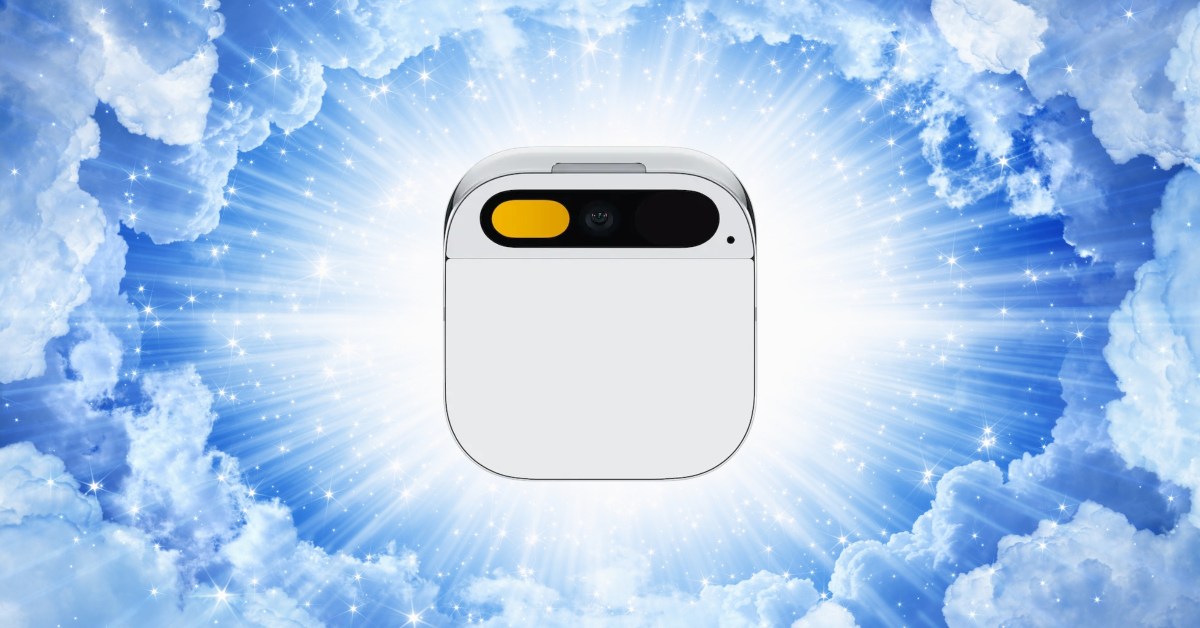
On February 28, 2025, every Humane AI Pin in existence became a brick. The servers went dark. The devices stopped functioning. An entire product category experiment ended not with a whimper, but with a complete shutdown.
As TechCrunch reported, HP acquired Humane’s assets — over 300 patents, the Cosmos AI platform, and the engineering team — for $116 million. That sounds like a lot until you remember the company was rumored to be valued at $750 million to $1 billion just nine months earlier. Founders Imran Chaudhri and Bethany Bongiorno, both former Apple executives, joined HP to form HP IQ, a new AI innovation lab. But for the customers who paid $699 per device? Most got nothing back.
The failure wasn’t a mystery. The AI Pin suffered from overheating, poor camera quality, sluggish AI responses, and a laser projector display that was nearly impossible to read outdoors. Fortune noted that returns actually outpaced sales — a devastating metric for any consumer product. Add a $24/month subscription on top of the $699 hardware price, and you had a product that charged premium prices for a sub-par experience. The final insult? Because the AI Pin was entirely server-dependent, when the servers went down, every feature went with them.
Rabbit R1: The $199 AI Wearable That Refused to Die
If the Humane AI Pin is a cautionary tale about overpromising, the Rabbit R1 is something more interesting — a story about perseverance. This little orange handheld device launched to terrible reviews. Critics called it half-baked, pointless, a solution looking for a problem. And honestly? They weren’t wrong at launch.
But here’s where the story gets interesting. By May 2025, Rabbit had pushed dozens of OTA updates, systematically addressing nearly every launch complaint. Battery life improved. The UI got smoother. GPS, Bluetooth, and music playback all received meaningful upgrades. Tom’s Guide revisited the device after one year and declared it “actually good now” — a remarkable turnaround.
The core concept — a Large Action Model (LAM) that learns to navigate software interfaces on your behalf — remains genuinely innovative. The LAM Playground feature lets you navigate websites using voice commands. The Magic Camera adds creative photo capabilities. Custom voice options make interactions feel more personal. At $199 with no subscription required, the R1 is at least priced honestly for what it delivers.
The limitations are equally real, though. The R1 is still slower than a smartphone for most tasks. LAM capabilities are limited to specific apps. The 2.88-inch screen is too small for complex interactions. There’s no calling or messaging. It’s a supplementary device, not a phone replacement — and that’s a tough sell when your phone is already in your pocket.
Meta Ray-Ban Smart Glasses: Why This AI Wearable Wins in 2025
And then there’s the Meta Ray-Ban smart glasses. At $299 with no subscription fee, these are the clear winner of the AI wearables 2025 landscape — and the reason is almost embarrassingly simple: they look like normal sunglasses.
That’s the killer feature. Not the multimodal AI. Not the real-time translation. Not the 12MP camera or the hands-free calling. The fact that you can wear them in public without looking like a tech demo participant. While Humane strapped a laser projector to your chest and Rabbit asked you to carry yet another gadget, Meta took the most popular sunglasses design in history — the Ray-Ban Wayfarer — and quietly packed it with AI capabilities.
Meta’s engineering team detailed how the multimodal AI system works: say “Hey Meta” and you can ask the glasses about anything you’re looking at. It can identify objects, translate languages in real time, make hands-free calls via WhatsApp and Messenger, play music through open-ear speakers, and even live stream to Instagram and Facebook. All powered by Meta’s Llama AI models, all without a monthly subscription.
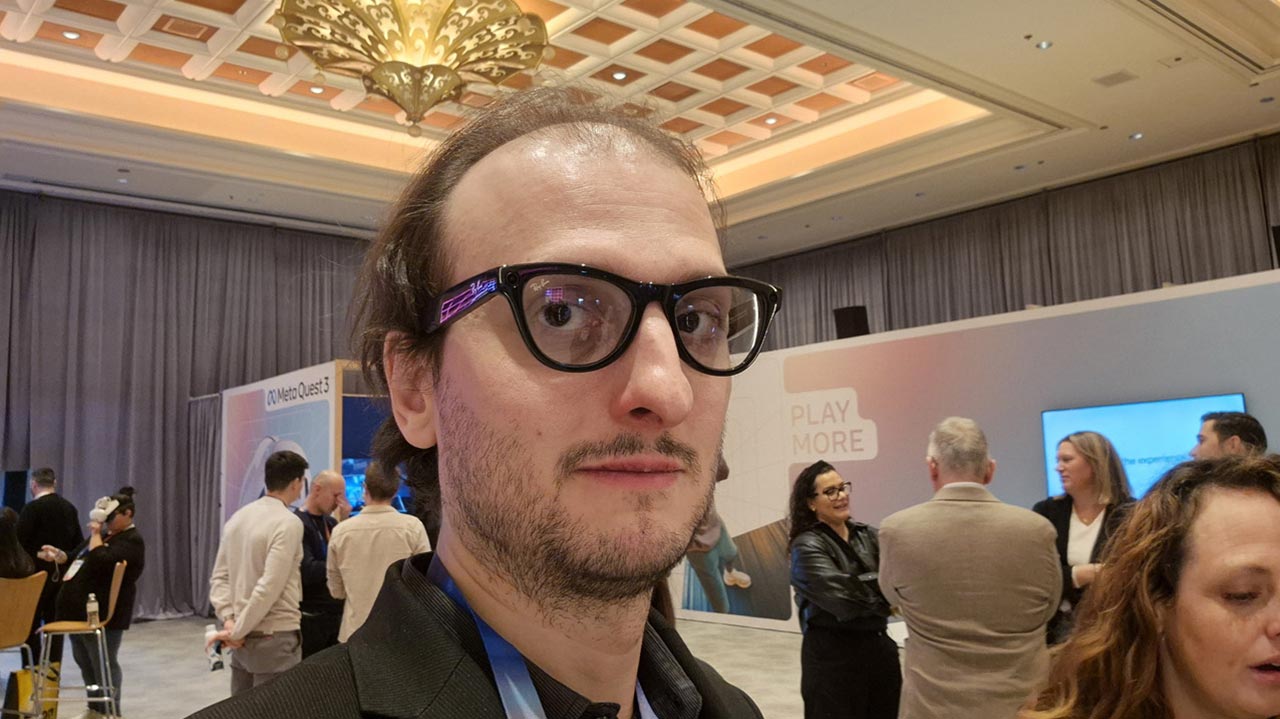
The downsides exist — battery life caps at about 4 hours of continuous use, you need a Meta account, and there are legitimate privacy concerns about always-available cameras on someone’s face. But none of these are dealbreakers in the way that overheating or server shutdowns are dealbreakers.
The Head-to-Head: AI Wearables 2025 Compared by the Numbers
Let’s put all three side by side and let the numbers speak.
Humane AI Pin — $699 + $24/month. Magnetic chest-mounted pin with laser projector display. Permanently shut down February 2025. All devices bricked when servers went offline. HP acquired assets for $116M.
Rabbit R1 — $199, no subscription. Pocket-sized handheld with 2.88-inch touchscreen and scroll wheel. Alive and improving through OTA updates. LAM Playground web agent and Magic Camera features added. Still a niche curiosity rather than a daily essential.
Meta Ray-Ban — $299, no subscription for AI features. Normal-looking Ray-Ban Wayfarer sunglasses with cameras, speakers, and microphones. Multimodal AI assistant, real-time translation, hands-free calls, 12MP photos, 1080p video, music playback, social media integration. The only AI wearable people voluntarily wear in public.
On pure value, the Meta Ray-Ban delivers the most for the money. It functions as actual sunglasses you’d wear anyway, and the AI capabilities are a genuine bonus rather than the sole reason for the purchase. The R1’s $199 price is fair for what it is, but “what it is” remains hard to justify carrying alongside a smartphone. And the AI Pin? It’s a $699 lesson in what happens when you build a server-dependent consumer product without a safety net.
The Bigger AI Wearables Picture: What’s Coming Next
Beyond these three headline devices, the AI wearables market is splitting into two distinct tiers. The first tier includes ambitious devices like the Humane AI Pin, Rabbit R1, and Meta Ray-Ban — products attempting to replace or fundamentally augment the smartphone experience. The second tier is more interesting: affordable, single-purpose AI pendants and pins priced between $49 and $199.
Devices like Bee ($49.99 recording pendant), Friend ($129 emotional support companion), Omi ($89 open-hardware AI assistant), Limitless ($99 conversation transcription tool), and Plaud NotePin (AI meeting recorder) are finding product-market fit faster than the more ambitious devices. They don’t try to be everything. They do one thing well, and they’re priced accordingly.
The overall AI wearables market is projected to reach $180 billion in 2025, making this one of the most rapidly expanding tech categories. May 2025 sits at an inflection point — Humane’s death is still fresh, Google I/O is imminent with expected Android XR announcements, and Meta is quietly expanding Ray-Ban AI features to European markets. The category is simultaneously a cautionary tale and a land of opportunity.
My Take: What 28 Years in Tech Taught Me About AI Wearables
After 28 years working across music production, audio engineering, and technology, I’ve watched countless “revolutionary” devices come and go. The Humane AI Pin’s trajectory reminds me of the early 2000s DAP (Digital Audio Player) wars. Dozens of companies competed on specs — more storage, more features, more buttons. Then Apple showed up with “1,000 songs in your pocket” and the rest became footnotes. The lesson hasn’t changed in 20 years: form factor beats feature lists.
Meta Ray-Ban wins for the same reason the iPod won. It disappears into your life. You’re not wearing a “tech product” — you’re wearing sunglasses that happen to have AI capabilities. In my studio work, the tools I reach for most aren’t the flashiest or most expensive — they’re the ones that integrate seamlessly into my workflow. The most powerful plugin in the world is useless if it disrupts your creative flow. The same principle applies to wearables: the best AI is the one you forget is there.
I’ll give Rabbit credit for one thing — resilience. Pushing OTA updates for a year straight, turning a disastrous launch into a passable product, takes real engineering commitment. But the fundamental question remains: why would I pull out a second device when my phone already does everything the R1 does, faster? At $199, it’s an affordable experiment. But it’s still an experiment, not a solution. The AI wearables that will win long-term are the ones that solve problems you didn’t know you had — without asking you to change your behavior.
The Bottom Line: Form Factor Beats Ambition, Every Time
The 2025 AI wearables scorecard is brutal in its simplicity. Humane AI Pin is dead hardware — a $699 paperweight and the ultimate cautionary tale about overpromising and underdelivering. Rabbit R1 survives through sheer persistence but remains a niche curiosity. Meta Ray-Ban smart glasses win by doing something deceptively simple: being something people actually want to wear. When evaluating the next wave of AI wearables, the first question shouldn’t be “how smart is the AI?” It should be “would I wear this every day without thinking about it?”
Thinking about AI wearable adoption, tech consulting, or building automation systems for your workflow? Let’s talk.
Get weekly AI, music, and tech trends delivered to your inbox.