Music Composition Methods That Actually Work: 7 Practical Techniques Every Producer Should Master in 2026
March 12, 2026
GEMA vs Suno Copyright Case: Munich Court Hearing Could Reshape AI Music Forever
March 13, 2026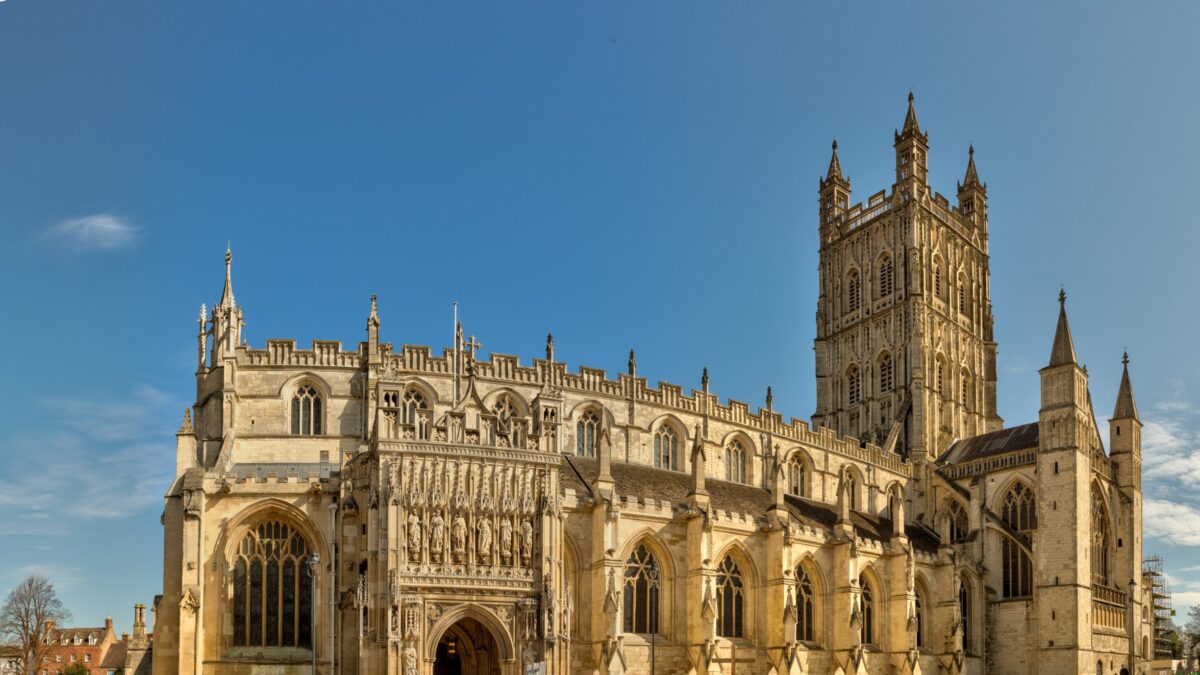
150 Dante endpoints spanning four buildings, 100-plus microphones feeding a full orchestral mix, and not a single analog snake in sight. That is the reality at Grace Community Church in Sun Valley, California, one of the largest Dante audio system church deployments in North America. Across the globe, houses of worship are discovering that replacing copper multicore with a single Ethernet cable does more than clean up the stage. It fundamentally changes what is possible in worship audio.
In this case study roundup, we examine seven real-world Dante audio system church installations, from a 900-year-old English cathedral to a contemporary 800-seat sanctuary running Dante AV. You will find network configuration examples, protocol comparisons, cost breakdowns, and the practical lessons each team learned along the way.
Why Churches Are Adopting Dante Audio System Technology
Analog audio snakes served houses of worship well for decades, but they come with hard limits. A 48-channel copper multicore weighs roughly 2 kg per meter, demands dedicated conduit, and every extension means signal degradation. In heritage buildings where drilling walls is restricted, the physical footprint alone can kill a project.
Audinate’s Dante protocol replaces all of that with standard Gigabit Ethernet. A single Cat6 cable carries up to 512 bidirectional audio channels at sample-accurate synchronization with sub-millisecond latency. For churches, the benefits are immediate: simplified wiring, flexible routing through software, remote monitoring, and a migration path that lets you keep existing consoles by adding a Dante interface card.
7 Dante Audio System Church Case Studies
1. Gloucester Cathedral, UK (900 Years Old)
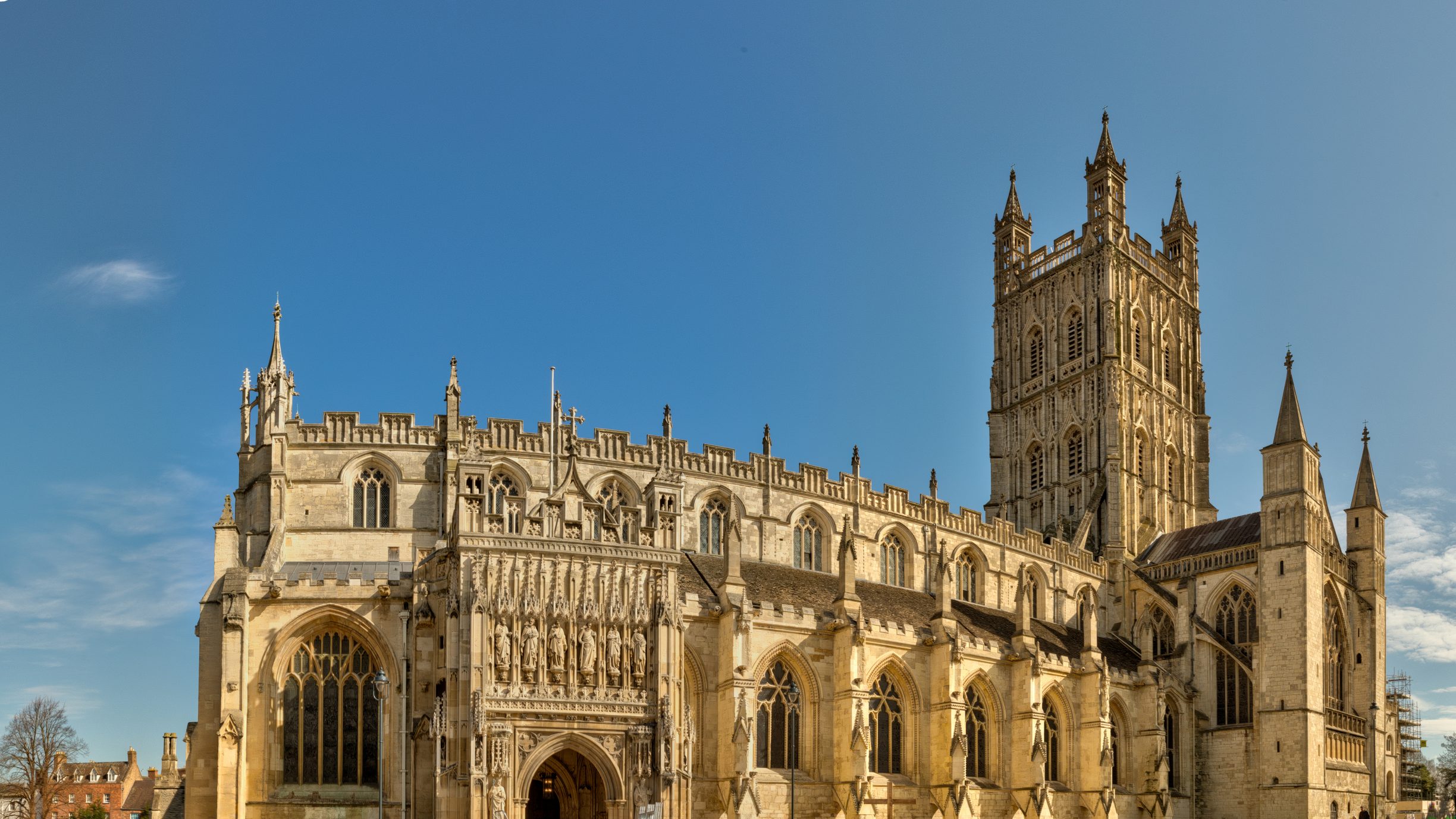
Built in 1089, Gloucester Cathedral is a Grade I listed building where every cable route must be approved by heritage authorities. The audio team deployed Yamaha MTX5D processors and Allen & Heath AHM-64 mixers over Dante, connecting the Lady Chapel to the main Nave with a single network cable. PoE-powered microphones eliminated the need for local power drops in the medieval stone walls, and Crestron touchpanels give clergy simple preset-based control without touching the mix engine. Read the full Audinate case study.
2. City Church of Madison, WI (First Dante AV Worship Deployment)
City Church’s 800-seat sanctuary became one of the first houses of worship to deploy full Dante AV, carrying both 4K60 video and multi-channel audio over standard 1 GbE infrastructure. The installation eliminated every stage box and analog snake on the platform. Their existing front-of-house console stayed in service with the addition of a $500 Dante interface card, proving that migration does not require a forklift upgrade. Full SVC case study here.
3. Grace Community Church, Sun Valley CA (150+ Endpoints)
Grace Community runs one of the most ambitious Dante deployments in worship: over 150 Dante endpoints distributed across multiple buildings on a campus-wide network. The full orchestral worship team uses 100-plus microphones per service. The church began migrating in 2014 and expanded incrementally, a strategy that Dante’s backward-compatible architecture supports gracefully. Read the SVC profile.
4. St. Mary’s Cathedral, Portland OR (1926 Historic)
Serving 400,000 Catholics in the Portland archdiocese, St. Mary’s Cathedral faced the same challenge as Gloucester: running cable through architecturally sensitive spaces in a nearly 100-year-old building. Dante reduced cable runs dramatically, and the digital routing meant audio zones could be reconfigured for different liturgical events without re-patching hardware. Audinate case study.
5. Leigh Church, Greater Manchester UK (Grade II, 710 Seats)
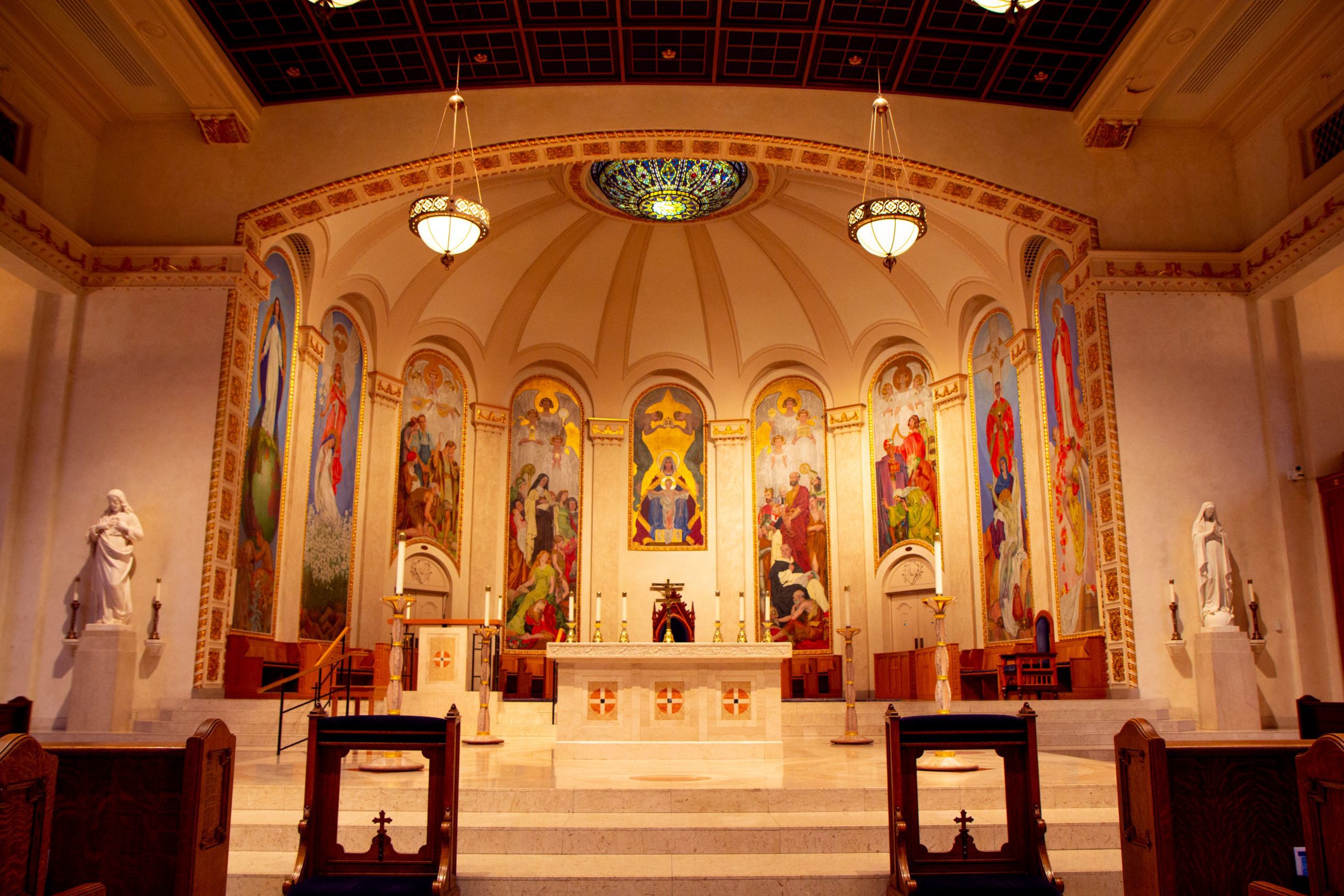
Leigh Church paired Symetrix Prism 8 Dante DSP with AUDAC KYRA column speakers to deliver intelligible speech in a reverberant heritage nave. The Dante backbone simplified wiring through listed fabric, and the Symetrix DSP handles automatic gain and feedback suppression without volunteer intervention. CUK Group case study.
6. New Covenant Christian Community Church (Contemporary)
For a contemporary worship environment demanding high SPL and even coverage, New Covenant deployed WorxAudio TrueLine V5 line arrays driven by PreSonus PDA-1000R Dante-enabled amplifiers. The all-Dante signal chain from console to amp rack delivered crystal-clear coverage with no ground loops or hum, common plagues of long analog copper runs in worship spaces. GetDante case study.
7. The Bridge Church, Chino CA (Multi-Zone Campus)
The Bridge Church needed audio in the main sanctuary, cafe, outdoor plaza, green room, and cry room, all managed from a single interface. LEA CONNECTSERIES CS354D Dante amplifiers with cloud management let the tech team monitor and adjust every zone remotely. Adding a new zone means plugging in another Dante amp and subscribing channels in Dante Controller. LEA Professional case study.
Dante Audio System Church Network Configuration
A reliable Dante deployment starts at the switch. Below are the two most critical configurations: QoS priority mapping using DSCP values and VLAN segmentation to isolate audio traffic from general IT.
DSCP QoS Configuration (Managed Switch)
Dante uses four traffic classes with specific DSCP values. Map these to your switch’s priority queues to prevent audio dropouts when the network handles other traffic. This example uses a NETGEAR M4300 CLI:
# === Dante DSCP → Queue Mapping (NETGEAR M4300) ===
# PTP Clock Sync — highest priority
class-map match-all DANTE_PTP
  match dscp 56
!
policy-map DANTE_QOS
  class DANTE_PTP
    assign-queue 7
!
# Audio Streams — Expedited Forwarding
class-map match-all DANTE_AUDIO
  match dscp 46
!
policy-map DANTE_QOS
  class DANTE_AUDIO
    assign-queue 6
!
# AES67 Interop Traffic
class-map match-all DANTE_AES67
  match dscp 34
!
policy-map DANTE_QOS
  class DANTE_AES67
    assign-queue 5
!
# Dante Control / Discovery
class-map match-all DANTE_CTRL
  match dscp 8
!
policy-map DANTE_QOS
  class DANTE_CTRL
    assign-queue 4
!
# Apply to all Dante-facing ports
interface range 0/1-0/24
  service-policy input DANTE_QOS
  spanning-tree portfast
  no ip igmp snooping fast-leave
VLAN Configuration for Dante Audio Isolation
Separating Dante traffic into its own VLAN prevents broadcast storms from office devices or streaming encoders from affecting audio. A dedicated VLAN also simplifies firewall rules and multicast management:
# === Dante Audio VLAN Setup ===
# Create dedicated Dante VLAN
vlan 10
  name DANTE_AUDIO
!
# Create general network VLAN
vlan 20
  name CHURCH_DATA
!
# Assign Dante device ports to VLAN 10
interface range 0/1-0/16
  switchport mode access
  switchport access vlan 10
  mtu 1500
  spanning-tree portfast
!
# Trunk port to connect switches
interface 0/48
  switchport mode trunk
  switchport trunk allowed vlan 10,20
!
# Enable IGMP snooping for multicast efficiency
ip igmp snooping
ip igmp snooping vlan 10
ip igmp snooping vlan 10 querier
!
# Disable EEE (Energy Efficient Ethernet) — causes audio glitches
interface range 0/1-0/16
  no green-mode eee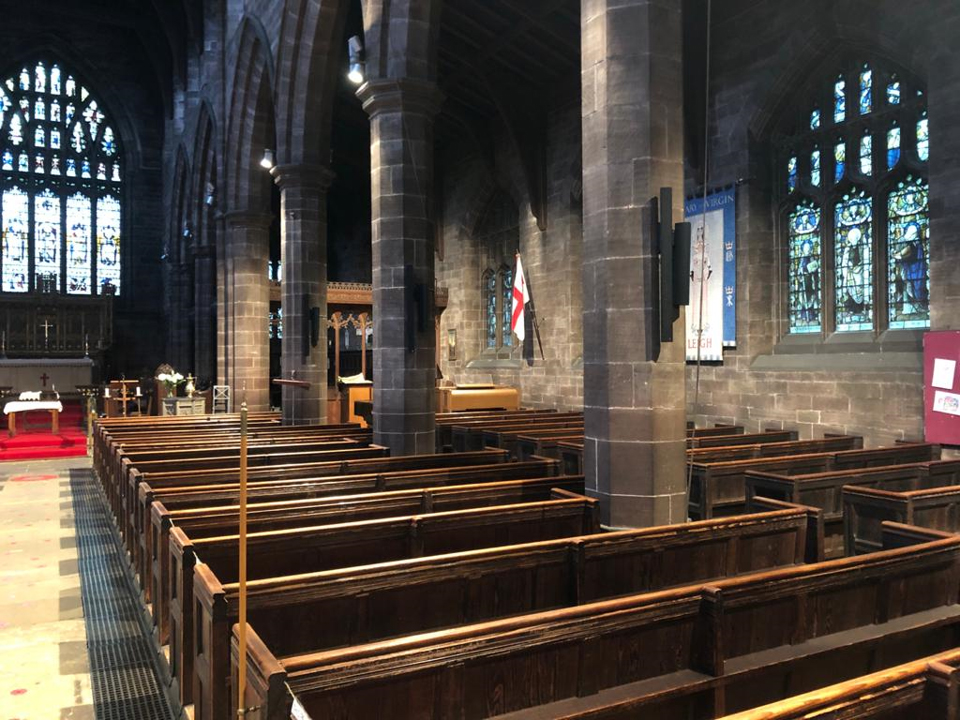
Protocol Comparison: Dante vs AVB vs AES67
Dante is not the only audio-over-IP protocol available, but it dominates the worship market for good reasons. Here is how the three major protocols compare:
| Feature | Dante | AVB (Milan) | AES67 |
|---|---|---|---|
| Network Layer | Layer 3 (IP) | Layer 2 (Ethernet) | Layer 3 (IP) |
| Switch Requirements | Standard managed GbE | AVB-certified switches only | Standard managed GbE |
| Max Channels (1 GbE) | 512 x 512 | Varies by implementation | Varies by implementation |
| Latency (typical) | 0.15 – 5 ms selectable | 2 ms guaranteed | 1 ms typical |
| Routable (Layer 3) | Yes | No (Layer 2 only) | Yes |
| Product Ecosystem | 4,000+ products, 600+ manufacturers | Growing (~200 products) | Interop standard (subset) |
| Multicast Management | Automatic via Dante Controller | Built into AVB stream reservation | Manual / SAP |
| AES67 Interoperability | Yes (since firmware 4.x) | Possible with bridge | Native |
| Licensing | Audinate license required for manufacturers | Open IEEE standard | Open AES standard |
| Best For | Worship, live, install | Broadcast, fixed install | Interop between ecosystems |
For most churches, Dante wins on practicality: it works over existing network switches, has the largest product ecosystem by a wide margin, and Dante Controller provides a visual routing matrix that volunteer tech teams can learn in an afternoon. The recent addition of AES67 compatibility means Dante devices can interoperate with AES67 gear when needed.
Liturgical vs Contemporary Worship: Dante Audio Specs
The audio demands of a traditional liturgical service and a contemporary worship band are vastly different. Here is a specification comparison to guide system design:
| Specification | Liturgical / Traditional | Contemporary / Band-Led |
|---|---|---|
| Typical Input Count | 4 – 12 channels | 32 – 64+ channels |
| Primary Sources | Lectern mic, choir mics, organ DI | Drums, guitars, keys, vocals, IEMs |
| SPL Target | 70 – 80 dB(A) | 90 – 100 dB(A) |
| Coverage Priority | Speech intelligibility (STI > 0.6) | Even SPL, sub-bass extension |
| Monitor System | None or simple foldback | 16-32 ch IEM mixes via Dante |
| DSP Requirements | AEC, auto-mix, feedback suppression | Multi-bus mixing, dynamics, effects |
| Dante Endpoints (typical) | 6 – 20 | 40 – 150+ |
| Network Bandwidth | < 50 Mbps | 200 – 600 Mbps |
| Recommended Console Tier | Yamaha TF / Allen & Heath dLive | Yamaha CL/QL, DiGiCo SD, Avid S6L |
| Redundancy | Optional (single network) | Primary + Secondary Dante network |
Cost Tier Breakdown for Dante Audio System Church Installations
Budget is always a factor for houses of worship. Here is a realistic cost tier breakdown for Dante-based audio systems, from a small chapel to a large multi-campus deployment:
| Tier | Venue Size | Dante Endpoints | Key Components | Estimated Cost (USD) |
|---|---|---|---|---|
| Entry | 50 – 200 seats | 4 – 8 | Dante-enabled mixer (Yamaha TF1), 1 stage box, 1 managed switch, Cat6 cabling | $8,000 – $15,000 |
| Mid | 200 – 800 seats | 10 – 40 | Digital console + Dante card, 2-3 stage boxes, DSP processor, 2 managed switches, IEM system | $25,000 – $65,000 |
| Advanced | 800 – 2,000 seats | 40 – 100 | Premium console (CL5/dLive), multiple DSPs, Dante-enabled amps, redundant network, Dante AV | $80,000 – $180,000 |
| Enterprise | 2,000+ / Multi-campus | 100 – 300+ | Flagship console, campus-wide fiber + Dante switches, multiple zones, broadcast integration | $200,000 – $500,000+ |
These figures include equipment, cabling, and basic installation labor but exclude acoustic treatment, loudspeakers, and architectural modifications. Many churches start at the Entry tier and expand incrementally, exactly as Grace Community Church demonstrated over its decade-long migration.
Key Takeaways from These Dante Church Deployments
Across all seven installations, several patterns emerge. First, Dante’s ability to work within heritage and architecturally sensitive buildings is a game-changer. Gloucester Cathedral, St. Mary’s Portland, and Leigh Church all cite reduced physical cable runs as the primary reason for choosing Dante over analog. Second, the incremental migration path matters. Grace Community Church’s 10-year rollout proves you do not need to replace everything at once. Third, multi-zone campus deployments like The Bridge Church in Chino show that Dante scales laterally with minimal additional infrastructure. Finally, even budget-conscious churches like City Church of Madison can join the Dante ecosystem by adding a $500 interface card to an existing console.
Whether you are wiring a 100-seat chapel or a multi-building campus, a Dante audio system gives your church a future-proof foundation. The protocol is mature, the product ecosystem is unmatched, and the case studies above prove it works in real worship environments every single week.
Planning a Dante audio network for your church or worship space? Our team designs, configures, and deploys AoIP systems for houses of worship of every size.