OpenAI o3 Gets 80% Cheaper and Launches o3-pro: What the Biggest API Price Drop of 2025 Means for Developers
June 10, 2025
Best Portable SSDs June 2025: 3 Thunderbolt 5 Drives That Hit 6,000 MB/s
June 10, 2025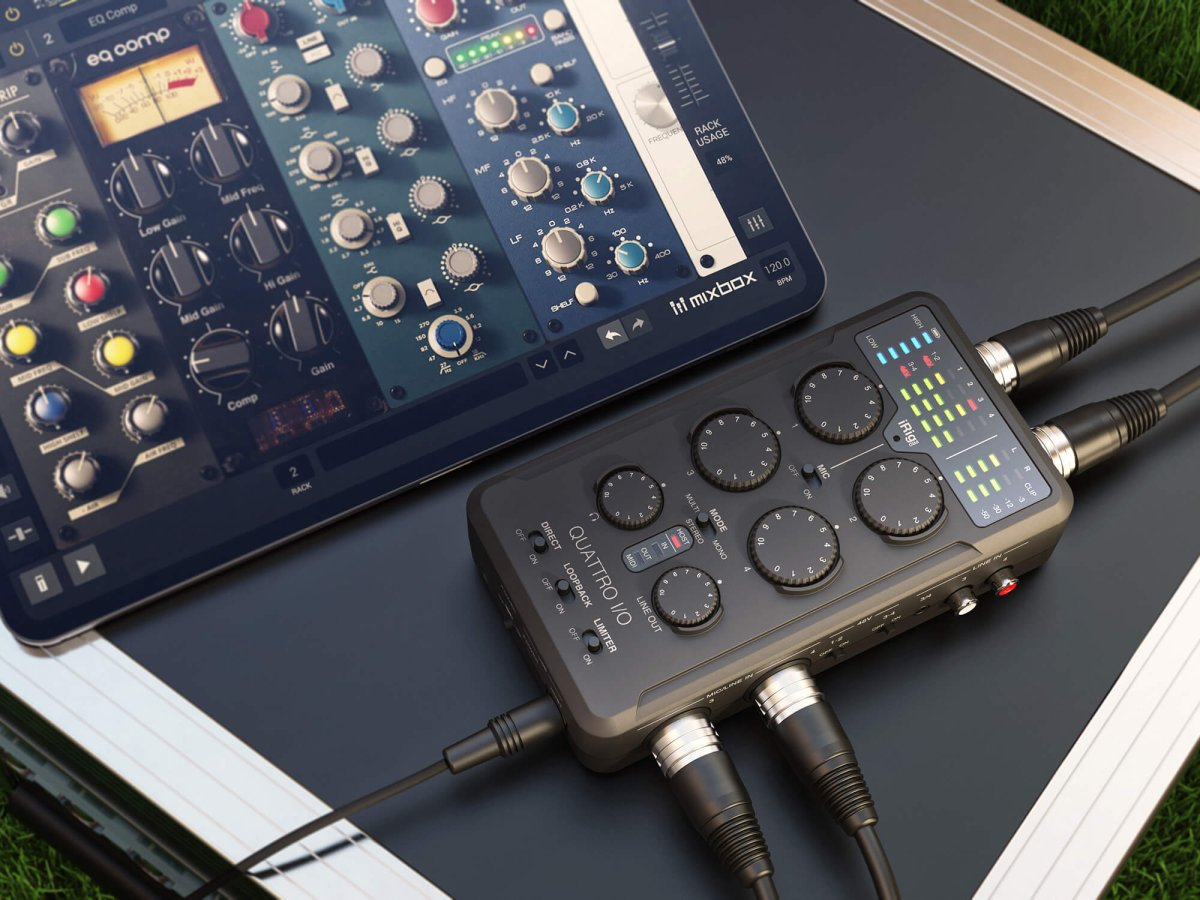
Four full-size XLR inputs, phantom power on every channel, MIDI I/O, battery operation, and iPhone compatibility — all in something that weighs less than a can of soda. The iRig Pro Quattro I/O from IK Multimedia sounds like a spec sheet that someone invented to win an argument about portable recording. But after putting it through real-world sessions, the remarkable thing is that nearly every one of those promises holds up.
Why the iRig Pro Quattro I/O Exists — And Why It Matters
If you have ever tried to record a four-piece band rehearsal on location, capture ambience for a film project, or run a multi-guest podcast away from your studio, you know the pain. Most portable interfaces give you two inputs and call it a day. The few that offer four channels tend to be bulky, expensive, or both. IK Multimedia saw that gap and built the iRig Pro Quattro I/O to fill it — a genuinely portable 4-input interface priced at $349.99 that works with practically every device you own.
As Sound On Sound noted in their review, this unit “can do everything — it transforms to meet different scenarios.” That is not hyperbole. The iRig Pro Quattro I/O operates as a USB audio interface, a standalone mixer, a field recorder companion, and a streaming hub, depending on how you configure it.
Build Quality and Design: Function Over Fashion
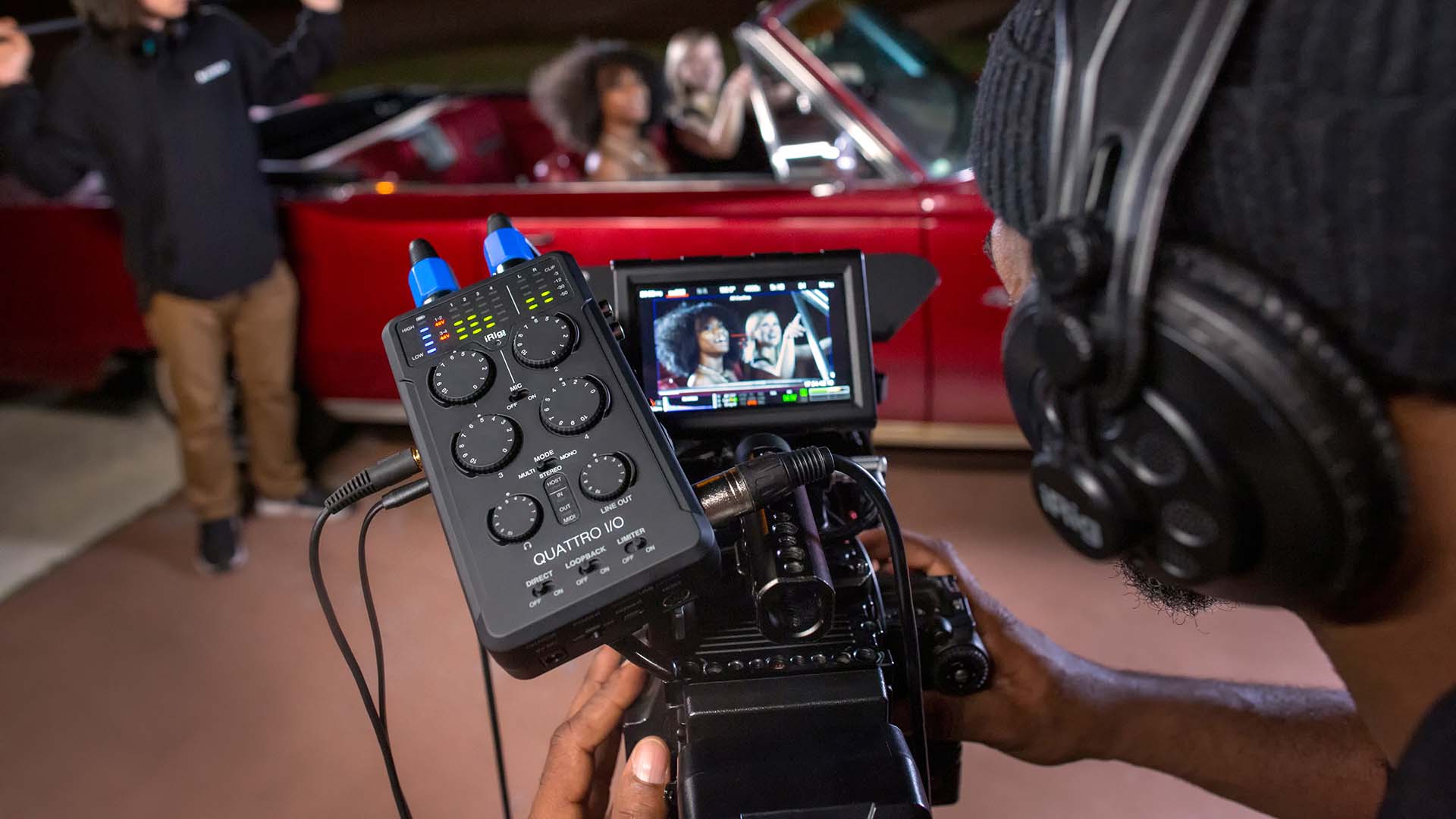
Let’s address the elephant in the room first. The iRig Pro Quattro I/O is not a looker. MusicRadar’s review diplomatically described it as “a touch old-fashioned looking,” and that is fair. The chunky plastic body and utilitarian layout will not win any design awards. But here is the thing — at 0.72 lbs (326g), you stop caring about aesthetics the moment you drop it into a bag and forget it is there.
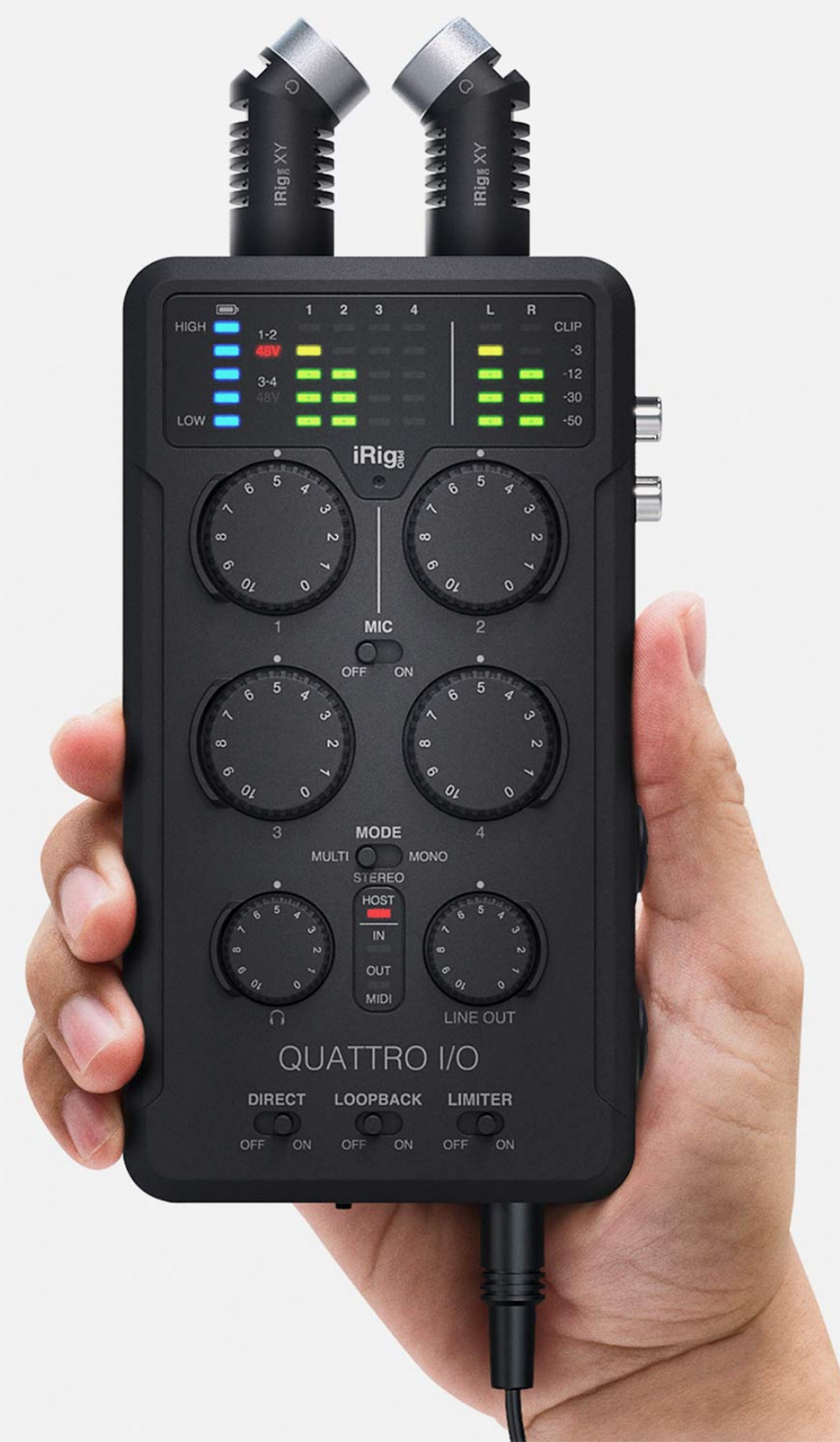
The control layout is straightforward and logical. Four gain knobs sit on top, each with a multicolor LED meter. The main volume and headphone level controls are easily accessible. There is a threaded insert on the bottom for tripod or mic stand mounting, which is a thoughtful touch that transforms the unit from a desk interface into a proper field tool.
One legitimate design criticism: the XLR combo jacks are mounted upside down compared to most interfaces. It takes a session or two to build the muscle memory, but it is not a dealbreaker. The Micro USB port, however, is harder to forgive in a product that launched in 2022. USB-C should have been standard, and the absence of it remains the iRig Pro Quattro I/O’s most conspicuous compromise.
iRig Pro Quattro I/O Audio Performance: Where It Really Counts
Specs on paper are one thing. How does the iRig Pro Quattro I/O actually sound? In short — surprisingly good for this price and size class. The preamps are quiet and clean, handling everything from dynamic mics to condensers with confidence. Recording at 24-bit/96kHz, the noise floor is low enough that you will not hear the preamps in your recordings unless you are pushing extreme gain on ribbon microphones.
As RedShark News observed, the sound quality is “very good” with “quiet preamps comparable to professional competitors.” Having tested it against interfaces at twice the price point, that assessment tracks. You are not getting Sound Devices MixPre-3 II-level preamps here, but you are getting performance that comfortably exceeds what the price and form factor suggest.
Each of the four channels supports 48V phantom power (switchable in pairs: channels 1-2 and channels 3-4), so you can run condenser mics alongside dynamic mics without issues. The combo jacks accept XLR, 1/4″ TRS/TS, and there are additional stereo RCA and 3.5mm line inputs — giving you a genuinely impressive total input count for a device this small.
Standout Features That Set the iRig Pro Quattro I/O Apart
Built-in JFET Limiter and Safety Channel
This is where the iRig Pro Quattro I/O shows it was designed by people who actually record in the field. Channels 1 and 2 feature a built-in JFET-based limiter that catches transient peaks before they clip your recording. If you have ever had a drummer suddenly hit harder during a live take or a speaker unexpectedly shout during a podcast interview, you know why this matters.
Even better, there is a Safety mode that records a parallel channel at -12dB below your set level. This is the same concept that high-end field recorders like the Sound Devices MixPre series use. If your main recording clips, the safety channel has you covered. Having this in a $349 portable interface is genuinely remarkable.
Loopback+ for Streaming and Podcasting
Loopback+ is IK Multimedia’s internal routing system that lets you send audio from your computer back into the interface’s input mix. For podcasters, this means you can blend Skype or Zoom callers with your local microphone signal and record everything in one pass. For streamers, you can route game audio alongside your voice and music. It effectively turns the iRig Pro Quattro I/O into a one-box streaming solution without needing virtual audio routing software.
Standalone Mixer Mode
Disconnect the USB cable and the iRig Pro Quattro I/O continues working as a standalone mixer powered by four AA batteries. This is not a gimmick — it is a genuine use case for live performances, house of worship setups, or any scenario where you need a quick mixer without dragging a laptop along. Battery life ranges from 1.5 to 3 hours depending on phantom power usage, which is enough for most sessions.
Universal Device Compatibility
The iRig Pro Quattro I/O is MFi certified for iPhone and iPad, works with Android devices, connects to Mac and PC via USB, and even hooks up to DSLR cameras. IK Multimedia also includes a full 5-pin DIN MIDI adapter, so you can connect MIDI keyboards or hardware synths. This level of cross-platform compatibility is nearly unmatched in this category.
Recording Modes: Multitrack, Stereo, and Mono
The iRig Pro Quattro I/O supports three recording configurations. In multitrack mode, each input records to its own track — essential for post-production flexibility. Stereo mode creates a stereo mixdown of all inputs, useful for quick captures. Mono mode sums everything to a single channel, which has its uses for reference recordings or voiceover work.
The ability to switch between these modes quickly is particularly valuable in the field, where you might start with a multitrack podcast recording and then switch to stereo for ambient room capture without missing a beat.
Software Bundle: Immediate Production Value
IK Multimedia bundles a substantial software package with the iRig Pro Quattro I/O. Desktop users get AmpliTube SE and T-RackS SE, while iOS users receive AmpliTube CS, VocaLive, Mic Room, iRig Recording, and SampleTank. These are not demo versions — they are functional tools that add genuine production value, especially for mobile creators who might be using the interface primarily with an iPhone or iPad.
The Deluxe version ($449.99+) adds a matched pair of XY condenser microphones, an external power supply, and a carrying case. If you are planning to use this for field recording, the Deluxe bundle is worth the premium — the XY mics are surprisingly capable for stereo ambient capture.
How the iRig Pro Quattro I/O Compares to the Competition
In the portable multi-input space, the iRig Pro Quattro I/O competes with the Zoom PodTrak P4, RODE RODECaster Duo, and Sound Devices MixPre-3 II. Here is how it stacks up:
- Zoom PodTrak P4 ($199): More affordable and podcast-focused, but limited to four headset-level inputs with no phantom power and no instrument inputs. The iRig Pro Quattro I/O is more versatile.
- RODE RODECaster Duo ($449): Better built-in processing and a touchscreen interface, but larger, heavier, and does not run on batteries. If desktop podcasting is your primary use, the RODECaster wins. For mobile work, the iRig is the clear choice.
- Sound Devices MixPre-3 II ($749+): Superior preamps and build quality, plus 32-bit float recording. But at more than double the price with only three inputs, it serves a different market — professional film and broadcast recordists who demand the absolute best.
The iRig Pro Quattro I/O occupies a unique sweet spot: more capable than budget podcast interfaces, more portable than prosumer recording solutions, and more affordable than professional field recorders. No other single device covers quite the same range of use cases at this price point.
Who Should Buy the iRig Pro Quattro I/O?
After extensive testing, the iRig Pro Quattro I/O is ideal for:
- Mobile podcasters who record interviews on location and need more than two inputs
- Musicians who want to capture rehearsals, demos, or live performances without hauling a full rig
- Content creators who work across iPhone, iPad, and computer and need one interface for everything
- Field recordists who need a backup or lightweight alternative to dedicated recorders
- Streamers who want Loopback routing without software workarounds
Who should look elsewhere? If you exclusively work at a desk and never need portability, a dedicated desktop interface like the Focusrite Scarlett 4i4 or MOTU M4 will give you better value. If you need 32-bit float recording for critical field work, save up for the Sound Devices MixPre series.
Final Verdict: A Swiss Army Knife That Actually Cuts
The iRig Pro Quattro I/O is not perfect. The Micro USB port feels dated, the design won’t win beauty contests, and battery life could be longer. But these are minor complaints against a device that genuinely delivers on an ambitious promise: four professional-quality inputs in something you can toss in a backpack and forget about until you need it.
In an industry where “portable” usually means “compromised,” IK Multimedia built something that refuses to make the usual trade-offs. Whether you are capturing a location podcast, tracking a band rehearsal in a living room, or streaming from a hotel room, the iRig Pro Quattro I/O handles it all with surprising competence. At $349.99, it is one of the most versatile audio investments a mobile creator can make.
Need professional mixing, mastering, or help optimizing your mobile recording workflow? Sean Kim at Greit Studios has 28+ years of audio engineering experience.
Get weekly AI, music, and tech trends delivered to your inbox.