Mistral AI Codestral: Why This 86.6% HumanEval Coding Model Is a Serious GitHub Copilot Challenger
June 16, 2025
Stability AI CEO Departure: How Emad Mostaque’s Exit Reshaped Open Source AI Image Generation
June 17, 2025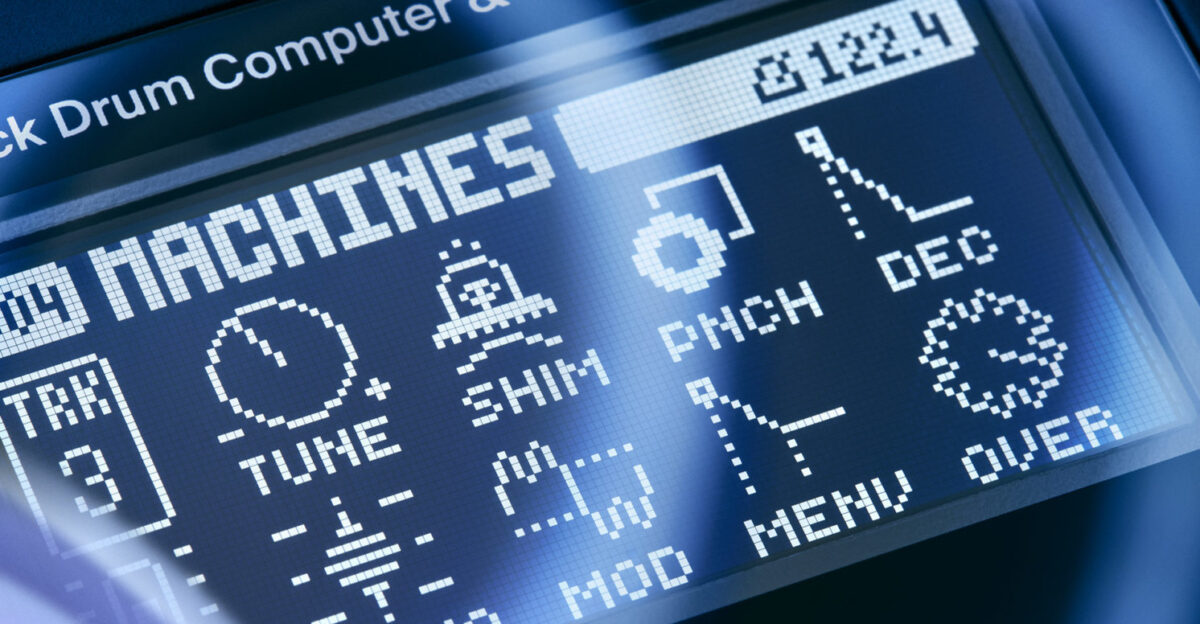
Elektron just dropped what might be the most significant free update the Syntakt has ever received — and if you haven’t installed OS 1.30 yet, you’re missing out on an entirely new dimension of this groovebox. Four new machines, a Euclidean sequencer that practically writes beats for you, and workflow improvements that make the 1.20 era feel ancient. Here’s everything that changed.
Elektron Syntakt OS 1.30: Four New Machines from the Analog Rytm Family
The headline feature of Elektron Syntakt OS 1.30 is the addition of four machines ported directly from the Analog Rytm. This cross-pollination strategy is something Elektron has been refining for years, and it pays off massively here — each machine fills a gap that Syntakt users have been vocal about since launch.
SY CHIP: C64-Inspired Synthesis with an Analog Edge
The star of this update is undeniably SY CHIP. If you grew up with Commodore 64 music or have any affection for the legendary SidStation, this machine will feel like coming home. SY CHIP delivers authentic chiptune synthesis — square waves, pulse-width modulation, and that unmistakable lo-fi digital character — but with the Syntakt’s analog filter chain adding warmth that pure digital emulations simply cannot replicate.
What makes SY CHIP particularly compelling is its versatility. Push it into melodic territory and you get leads that cut through any mix with razor precision. Pull it back into percussion mode and those glitchy, clicky transients become the foundation for experimental beats that sit somewhere between Elektron’s signature sound and 8-bit nostalgia. In my testing, layering SY CHIP with one of the existing analog machines creates textures that neither could achieve alone.
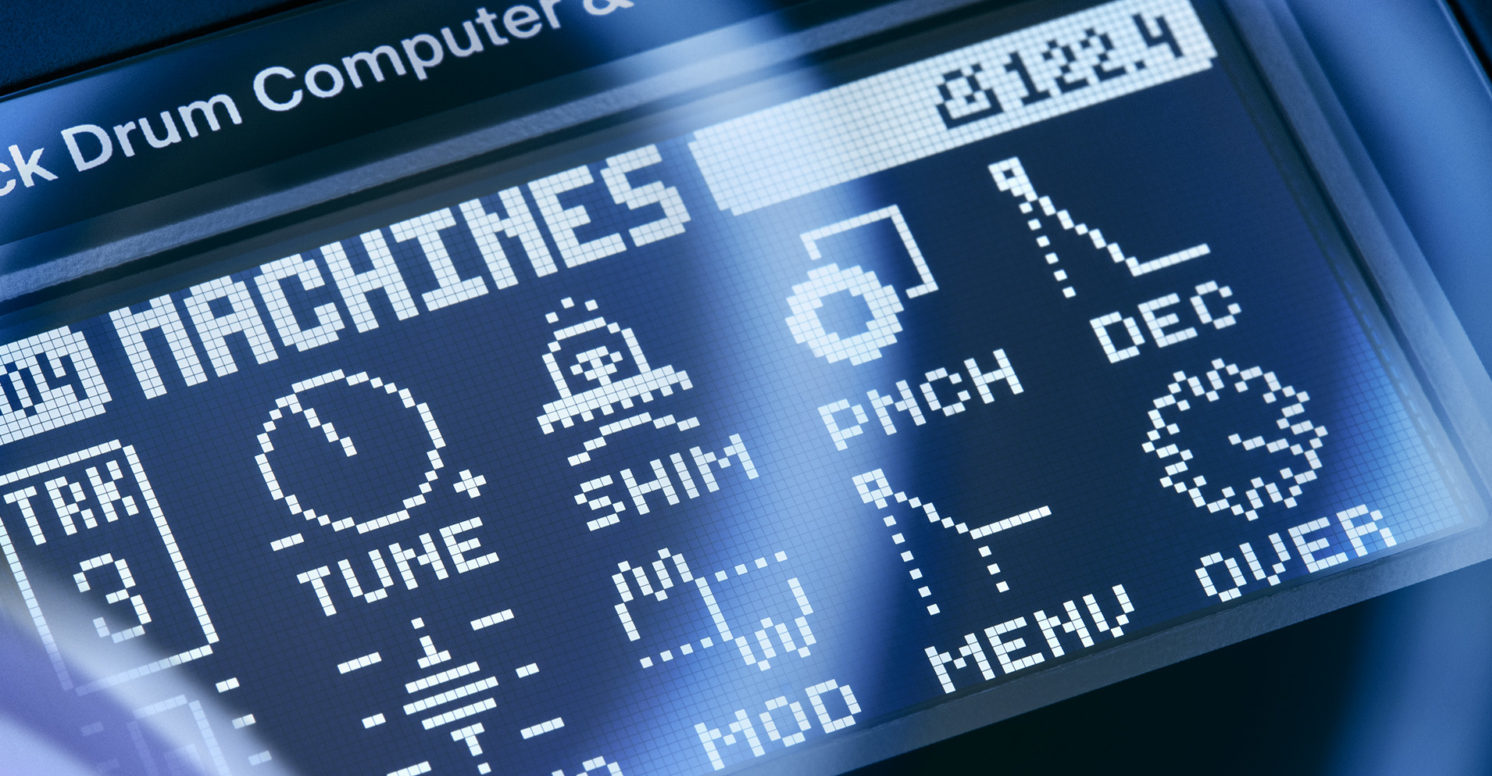
BD ACOUSTIC and SD ACOUSTIC: Realistic Drums Meet Elektron Processing
BD ACOUSTIC and SD ACOUSTIC bring acoustic drum modeling to the Syntakt’s digital tracks. BD ACOUSTIC extends kick drum synthesis with what Elektron describes as “more boom options” — think deep, resonant kicks that respond naturally to velocity and can be tuned from tight studio kicks to massive boomy drops. SD ACOUSTIC does the same for snares, adding crack variations that range from tight funk snaps to wide, ambient-infused hits.
These aren’t sample-based — they’re synthesis models that react to parameter changes in real-time. That distinction matters enormously for live performance. You can morph a kick from a tight electronic punch to a boomy acoustic thud mid-pattern without any artifacts or crossfade issues.
HH LAB: The Metallic Experimentation Machine
HH LAB is Elektron’s self-described “metallic monster,” and that’s an accurate characterization. This machine doesn’t just model hi-hats — it opens up an entire spectrum of metallic percussion synthesis. From realistic closed and open hats to industrial noise bursts, cymbal-like textures, and completely abstract metallic tones, HH LAB rewards experimentation. Combined with the Syntakt’s per-track effects, you can create hi-hat patterns that evolve and shift in ways that sample-based approaches struggle to match.
Euclidean Sequencing: Mathematics Meets Groove
The second major addition in Elektron Syntakt OS 1.30 is Euclidean mode — a sequencing approach based on Bjorklund’s algorithm that distributes a given number of beats as evenly as possible across a defined number of steps. If that sounds academic, the results are anything but. Euclidean rhythms naturally produce patterns that feel organic, syncopated, and musically interesting — many traditional rhythms from West African drumming to Brazilian samba can be described as Euclidean distributions.
On the Syntakt, activating Euclidean mode lets you set the number of pulses and the sequence length, and the algorithm handles placement. The beauty is in real-time parameter adjustment: changing the pulse count or rotation offset while a pattern plays creates instant rhythmic variations that would take minutes to program manually. For producers who work with polyrhythmic structures — stacking 7-beat cycles against 16-step patterns, for instance — this is transformative.
Having worked with Euclidean sequencers in modular setups for years, I can say that Elektron’s implementation stands out for its integration with the existing workflow. It doesn’t replace manual step programming — it augments it. You can start with a Euclidean foundation and then manually override specific steps, combining algorithmic generation with human intention.
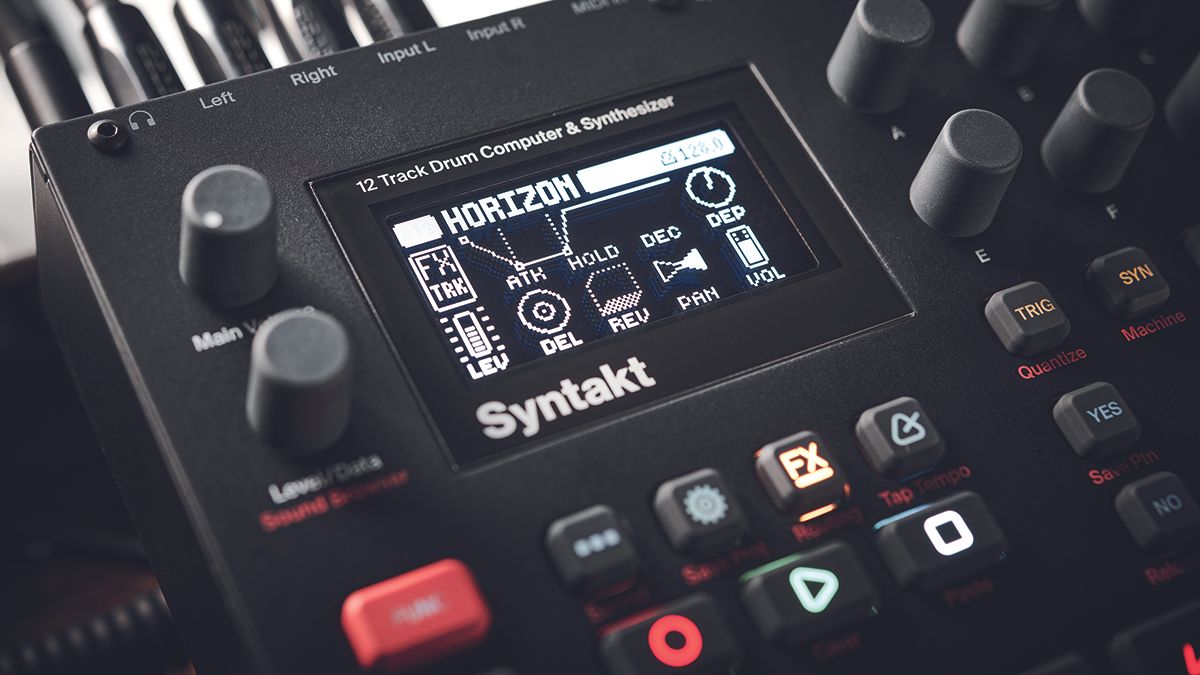
Page Loop and Workflow Enhancements
Page Loop is one of those features that sounds minor on paper but dramatically changes how you work. It isolates a specific sequencer page so you can loop and refine it without waiting for the full pattern to cycle. If you’ve ever tried to fine-tune the last 16 steps of a 64-step pattern, you know the frustration of waiting through 48 steps to hear your changes. Page Loop eliminates that entirely.
Additional workflow improvements in this update include:
- New trig conditions (LST, Not LST, Not A:B) — These expand conditional triggering, letting you create patterns that evolve based on whether they’re the last iteration of a chain or not. Combined with pattern chaining, this opens up arrangement-level variation within a single pattern.
- Prepare Mutes — Queue mute and unmute states before they execute, enabling seamless live transitions without the timing pressure of hitting buttons on the exact beat.
- Sound saving from trigs — Save a complete Sound directly from a sequencer trig, including all parameter locks. This is huge for sound design workflows where you’ve dialed in the perfect variation on step 7 and want to capture it as a reusable preset.
- Parameter lock visibility — Step recording mode now shows visual indicators for parameter locks, making it immediately clear which steps have custom values.
- LFO slew for RND waveforms — Smooths random LFO output, turning stepped randomness into flowing, organic modulation.
- Random pattern name generator — A small but welcome addition for anyone who’s tired of naming patterns “Pattern 01” through “Pattern 99.”
BD SHARP Square Waveform: A Subtle but Powerful Addition
Existing machine BD SHARP also received attention with a new square waveform option. This might seem incremental, but in practice it significantly expands BD SHARP’s tonal range. The square waveform produces a more aggressive, harmonically rich kick that sits differently in a mix compared to the existing waveforms. For techno and industrial producers, this is the kind of surgical improvement that makes a real difference in the studio.
Overbridge 2.13 Compatibility and What It Means
OS 1.30 ships with Overbridge 2.13 compatibility, ensuring that all new machines and features work seamlessly with Elektron’s DAW integration plugin. This means you can stream individual track audio from the new SY CHIP, BD ACOUSTIC, SD ACOUSTIC, and HH LAB machines directly into your DAW at full quality — essential for anyone using the Syntakt as part of a hybrid hardware/software setup.
The Bigger Picture: Elektron’s Cross-Platform Strategy
The decision to port machines from the Analog Rytm to the Syntakt is strategically brilliant. It addresses one of the most common criticisms of the Syntakt at launch — that its machine count felt limited compared to the Rytm’s extensive library. By bringing BD ACOUSTIC, SD ACOUSTIC, HH LAB, and SY CHIP across, Elektron effectively makes the Syntakt a more complete standalone instrument while reinforcing the value of staying within their ecosystem.
For producers who own both units, the shared machine set means patterns and sounds can be conceptually translated between devices. For those considering their first Elektron purchase in 2025, the Syntakt with OS 1.30 is arguably the strongest entry point the lineup has ever offered — a hybrid analog-digital groovebox with a deep machine library, Euclidean sequencing, and Overbridge integration, all in a compact form factor.
At a time when competitors are racing to add AI-powered features and cloud connectivity, Elektron’s approach remains refreshingly focused: give musicians better tools to make music with their hands, on hardware that doesn’t require a subscription or an internet connection. OS 1.30 is the strongest argument yet that this philosophy works.
Looking to integrate hardware grooveboxes into your production workflow, or need professional mixing and mastering for your electronic tracks?
Get weekly AI, music, and tech trends delivered to your inbox.