Udio Sessions Changes Everything: Inpainting and Section-Level Editing Hit AI Music in July 2025
July 1, 2025
Roland Jupiter-X 2025 Update: 9 New ZEN-Core Sound Packs, Legendary ACB Refresh, and GALAXIAS 1.5
July 3, 2025
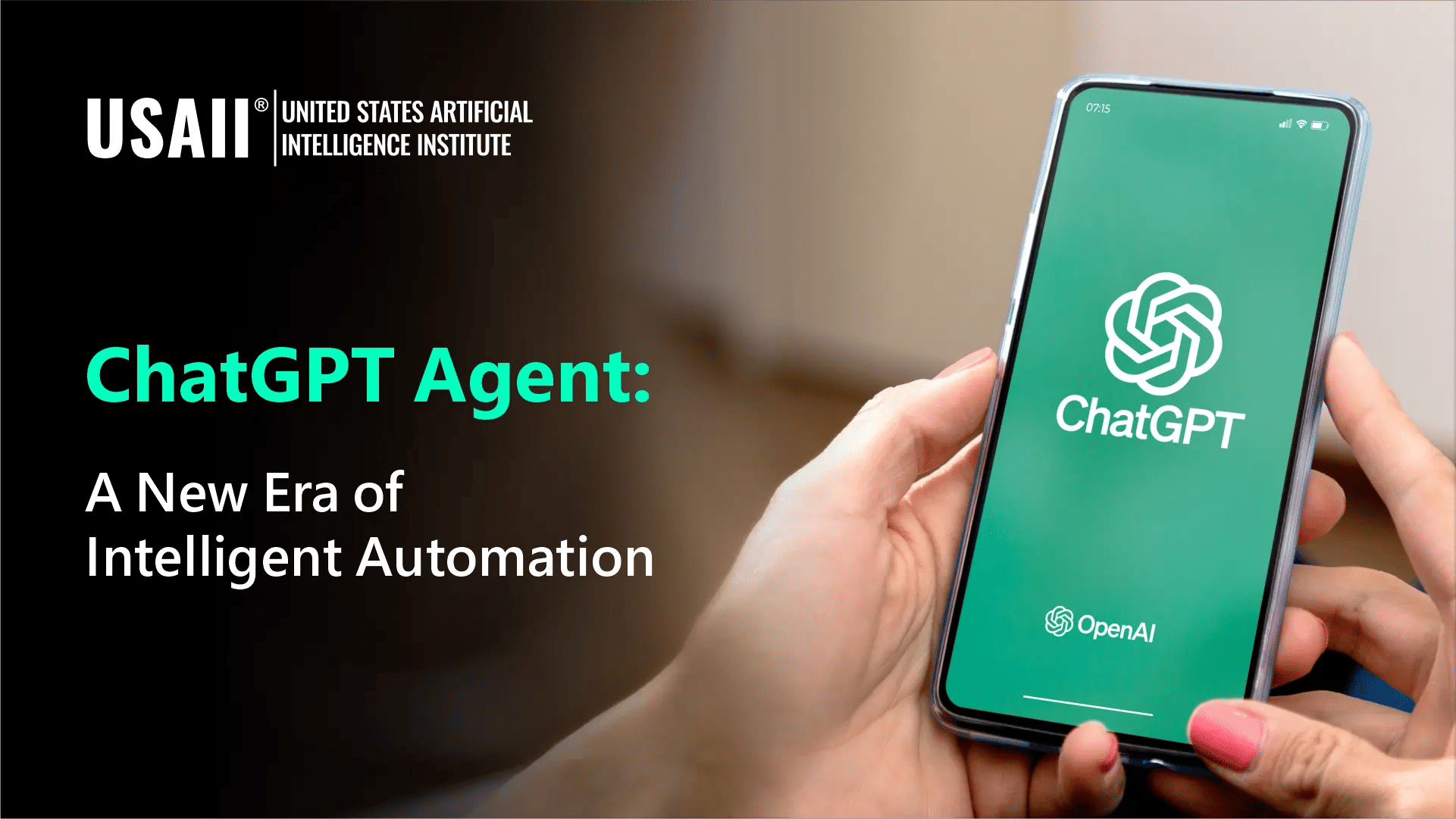
OpenAI just merged three of its most powerful capabilities into a single system — and ChatGPT will never be the same. The new ChatGPT Agent doesn’t just answer your questions. It browses websites, executes code, synthesizes research, and takes action on your behalf. This is the biggest architectural shift since GPT-4.
What Is ChatGPT Agent? Three Systems, One Interface
At its core, ChatGPT Agent is a unified agentic system that brings together three previously separate capabilities: Operator’s ability to interact with websites through a visual browser, Deep Research’s skill in synthesizing information across multiple sources, and ChatGPT’s conversational intelligence. Instead of switching between different tools, the agent intelligently selects which capabilities to deploy based on your request.
Think of it this way: before this launch, asking ChatGPT to “analyze three competitors and create a slide deck” would have required you to do the browsing, paste in the data, and format the output yourself. Now, the ChatGPT Agent handles the entire pipeline — navigating competitor websites, extracting relevant data, running analysis code, and generating an editable presentation — all from a single prompt.

The Technical Stack: CUA Model and Reinforcement Learning
The ChatGPT Agent is powered by the Computer-Using Agent (CUA) model, which combines GPT-4o’s vision capabilities with advanced reasoning trained through reinforcement learning. This is what enables the agent to interact with graphical user interfaces — it can literally see what’s on screen and decide where to click, type, and scroll.
The agent’s toolbox includes four primary capabilities:
- Visual Browser — Interacts with the web through a GUI, handling complex multi-step website navigation like booking flights, filling forms, and comparing products across tabs
- Text-Based Browser — For simpler reasoning-based web queries where full visual rendering isn’t necessary, delivering faster results for straightforward information retrieval
- Terminal — Executes code with limited network access, enabling data analysis, file processing, and computational tasks directly within the conversation
- API Access — Connects to external services through ChatGPT Connectors, pulling data from Gmail, GitHub, Google Drive, and other integrated platforms
Real-World Use Cases: What ChatGPT Agent Actually Does
During the live announcement, OpenAI demonstrated several compelling workflows. Sam Altman described the system’s philosophy as fundamentally collaborative: “The primary goal is for ChatGPT Agent to be highly collaborative.” Users can interrupt tasks mid-execution, request confirmations before critical steps, and redirect the agent’s focus on the fly.
Here are the standout demonstrations from the launch:
- Calendar Intelligence — “Look at my calendar and brief me on upcoming client meetings based on recent news.” The agent accesses your calendar through Connectors, then researches each client using its browser, delivering a contextual briefing document
- Shopping Automation — “Plan and buy ingredients to make Japanese breakfast for four.” The agent researches recipes, finds ingredient availability at nearby stores, and can proceed to place orders through supported e-commerce sites
- Competitive Analysis — “Analyze three competitors and create a slide deck.” The agent browses competitor websites, extracts data points, runs analysis code, and generates an editable slideshow — all without human intervention between steps
- File Retrieval and Processing — The demo showed the agent pulling files from Google Drive, processing them, and creating formatted presentations from raw data
Pricing and Availability: Pro Gets 400, Plus Gets 40
The rollout follows OpenAI’s tiered access model:
- Pro subscribers ($200/month) — 400 agent messages per month, immediate access starting launch day
- Plus subscribers ($20/month) — 40 agent messages per month, rolling out over the following days
- Team subscribers — 40 agent messages per month, same rollout timeline as Plus
- Enterprise and Education — Access expected in the coming weeks after launch
Users can purchase additional agent message capacity through a flexible credit system. At 40 messages per month on the Plus plan, that works out to roughly 1-2 agent tasks per day — enough for occasional power use, but Pro subscribers clearly get the more practical allocation for daily workflows.
The Competitive Landscape: How ChatGPT Agent Stacks Up
OpenAI isn’t operating in a vacuum. Google’s Gemini 2.5 has been dominating the LMArena leaderboard since March 2025 with its multimodal-first approach and 1 million token context window. Anthropic’s Claude has carved out a niche in long-context analysis with its 200,000-token window and exceptional retrieval accuracy. Microsoft Copilot continues to leverage its Office 365 integration for enterprise workflows.
What makes ChatGPT Agent different is the action layer. While Gemini and Claude excel at analysis and generation, ChatGPT Agent can actually do things in the real world — browse websites, click buttons, fill out forms, and execute multi-step workflows that previously required human hands on a keyboard. This is the fundamental distinction that positions OpenAI ahead in the agentic AI race.
However, there are legitimate concerns. Security is the elephant in the room. The agent needs to navigate websites, which means exposure to malicious sites, phishing attempts, and prompt injection attacks embedded in web content. OpenAI has acknowledged this, stating they plan “robust alert systems” with warnings that will gradually relax as the system matures. For enterprise customers handling sensitive data, this could be a dealbreaker until the security model proves itself in production.
What This Means for Developers and Power Users
For developers, the ChatGPT Agent represents both opportunity and disruption. The agent can execute code through its terminal, interact with GitHub repositories through Connectors, and automate development workflows that previously required separate tooling. If you’re building AI-powered applications, the agent’s ability to chain browsing, coding, and analysis into coherent workflows could accelerate prototyping cycles significantly.
For power users in creative and business fields, the implications are equally significant. The agent can research topics across dozens of websites, compile findings into structured reports, generate visual presentations, and even handle procurement tasks — all from natural language instructions. The barrier to complex multi-step automation just dropped from “needs a developer” to “needs a prompt.”
The Bigger Picture: From Assistant to Autonomous Agent
ChatGPT Agent marks a fundamental shift in how we interact with AI. The conversational chatbot era is giving way to the agentic era, where AI doesn’t just inform — it acts. OpenAI has drawn a clear line: the future of ChatGPT is not better text generation, it’s better task execution.
The 400/40 message limits suggest OpenAI is being cautious about compute costs and safety at scale. These limits will likely increase as infrastructure scales and safety systems mature. But even at current limits, having an AI that can browse the web, run code, and take action on your behalf is a paradigm shift that every professional should be paying attention to.
Whether you’re a developer automating workflows, a business analyst compiling competitive intelligence, or a creative professional juggling research and production, ChatGPT Agent is the most significant upgrade to ChatGPT since its original launch. The question isn’t whether agentic AI will reshape how we work — it’s how quickly you’ll adapt your workflows to take advantage of it.
Want to build AI-powered automation pipelines or integrate agentic AI into your business workflows? Sean Kim has been architecting AI systems for production environments.
Get weekly AI, music, and tech trends delivered to your inbox.