Steinberg Cubase 14: Pattern Editor, 6 Modulators, and New Plugins That Redefine Music Production
August 6, 2025
GPT-5 SWE-Bench Coding Performance Hits 74.9% — But Real-World Tests Tell a Different Story
August 7, 2025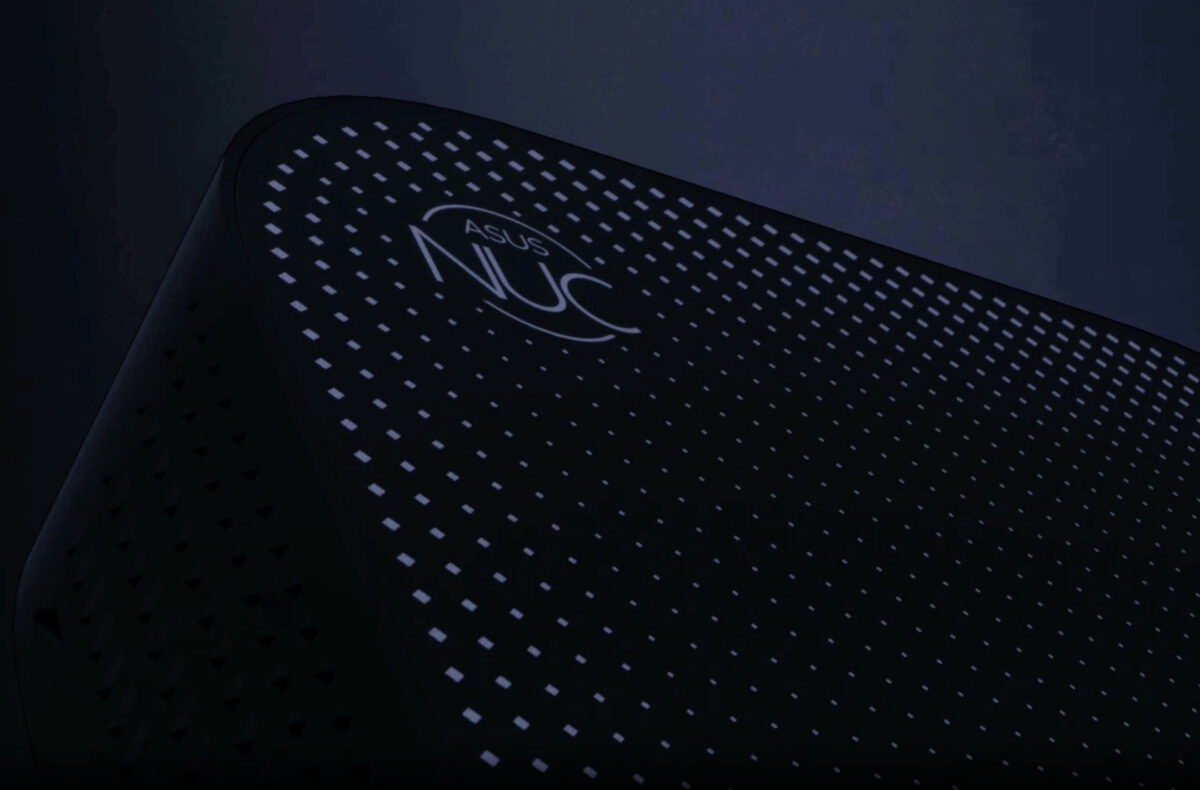
30 watts. That’s all the Intel Lunar Lake NUC mini PC draws while running Cyberpunk 2077 at 60 FPS. In a form factor smaller than most hardcover books, Intel’s latest architecture is rewriting what’s possible for compact desktops — and after testing the ASUS NUC 14 Pro AI and GMKtec NucBox K13, I’m convinced the traditional tower PC is becoming optional for most home and office users.
Why Lunar Lake Changes the Intel Lunar Lake NUC Mini PC Game
Intel’s Lunar Lake architecture (officially Core Ultra 200V series) represents a fundamental shift in how Intel builds mobile and ultra-compact processors. Unlike previous generations, Lunar Lake integrates LPDDR5X memory directly onto the processor package using Intel’s Foveros 3D packaging technology. This eliminates the need for separate memory modules, dramatically reducing the motherboard footprint and power consumption.
The result? Mini PCs that genuinely fit in your pocket while delivering performance that would have required a mid-tower desktop just three years ago. The Core Ultra 7 256V and Core Ultra 9 288V processors pack 4 Lion Cove performance cores and 4 Skymont efficiency cores, paired with Intel Arc 140V integrated graphics based on the Xe2 (Battlemage) architecture.
The NPU delivers up to 48 TOPS of AI compute, making these the first NUC-class systems to qualify as Microsoft Copilot+ PCs — a detail that matters increasingly as Windows AI features roll out throughout 2025.
ASUS NUC 14 Pro AI: The Premium Pick
ASUS inherited Intel’s NUC brand and has clearly invested in making it their own. The NUC 14 Pro AI is the world’s first Lunar Lake-powered NUC, measuring just 130 × 130 × 34mm — a 0.6-liter volume that’s roughly the size of a post-it note stack.
Configuration options span from the Core Ultra 5 226V to the flagship Core Ultra 9 288V with 32GB of onboard LPDDR5X-8533 memory. The unit I evaluated featured the Core Ultra 9 288V, and the specs tell an interesting story:
- CPU: Core Ultra 9 288V — 4P + 4E cores, up to 5.1 GHz boost
- GPU: Intel Arc 140V — 8 Xe2 cores
- RAM: 32GB LPDDR5X-8533 (soldered, non-upgradeable)
- NPU: 48 TOPS
- Connectivity: Wi-Fi 7, Bluetooth 5.4, dual Thunderbolt 4
- Size: 130 × 130 × 34mm (0.6L)
- Power profiles: 23W (Whisper), 34W (Standard), 37W (Performance)
- Price: ~$1,100
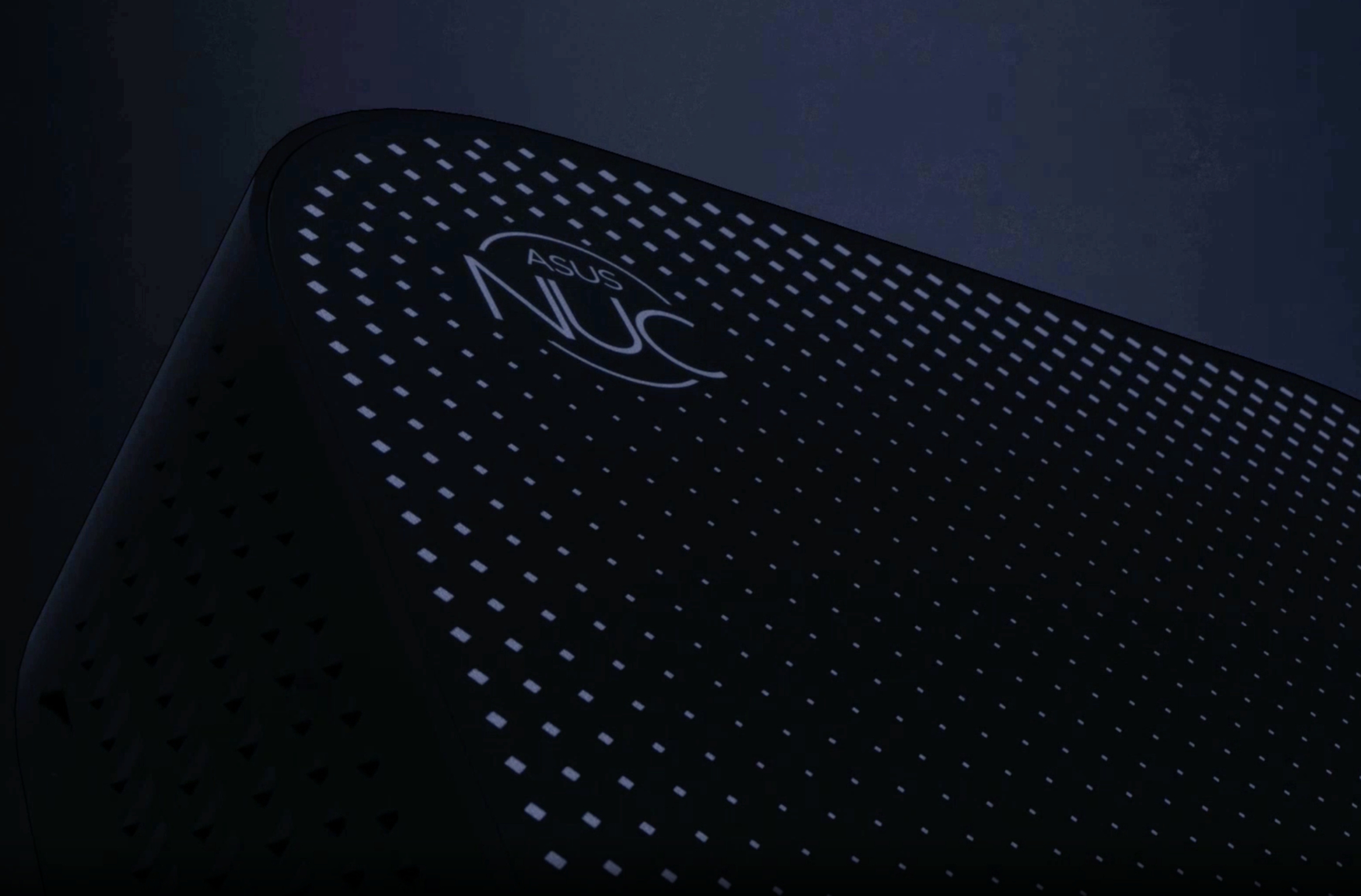
The dedicated Copilot+ button on the top panel and built-in fingerprint sensor signal ASUS’s enterprise ambitions. This isn’t just a home theater PC — it’s positioned as a genuine business workstation replacement. VESA mount compatibility means it can disappear behind a monitor, turning any desk into a clean, cable-managed workspace.
ASUS NUC 14 Pro AI: Real-World Performance
In benchmark testing, the Core Ultra 9 288V running at a 37W performance profile delivers respectable numbers. However, GSMArena’s comparative review revealed what many suspected: Apple’s M4 Mac mini outperforms the 288V by 36% in Cinebench 2024 single-core, 43% in multi-core, and a staggering 145% in GPU rendering via Blender.
That said, the comparison isn’t entirely fair. The M4 Mac mini starts at $499 for the base model but climbs to $1,399+ for comparable storage and memory. The ASUS NUC 14 Pro AI at ~$1,100 includes Windows licensing, broader peripheral compatibility, and the Thunderbolt 4 ecosystem that many office environments already rely on.
GMKtec NucBox K13: The Value Champion
If the ASUS NUC 14 Pro AI is the enterprise-grade option, the GMKtec NucBox K13 is the one that delivers Lunar Lake to the masses. At $670–$720, it undercuts the ASUS by nearly $400 while offering remarkably similar core specifications.
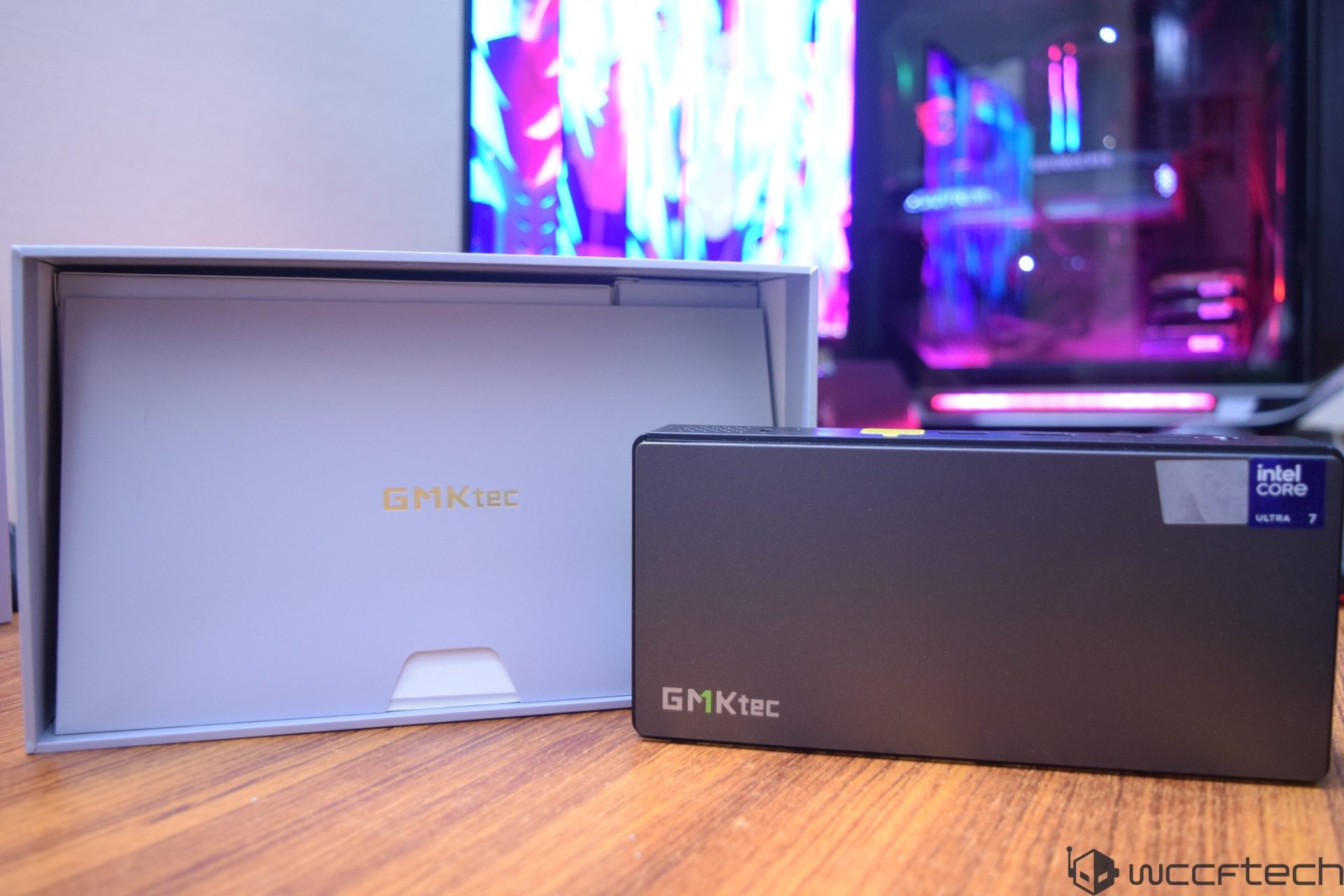
The K13 takes a different design approach — a slim rectangular form factor measuring 186 × 88 × 36.6mm and weighing just 506 grams. It’s more portable than the ASUS but slightly larger in footprint. According to WCCFTech’s comprehensive review, GMKtec calls it a “pocket-sized machine,” and that’s barely an exaggeration.
GMKtec NucBox K13 Benchmarks: The Numbers
The Core Ultra 7 256V in the K13 delivered these benchmark results:
- Geekbench 6 Single-Core: 2,711 — competitive with mid-range laptop processors
- Cinebench 2024 Multi-Core: 606 — trailing the Ryzen AI MAX+ 395’s 1,383 significantly
- 3DMark Port Royal: 2,153 — entry-level ray tracing capable
- Cyberpunk 2077 (Medium, 1080p): 60 FPS with XeSS upscaling
- Forza Horizon 5: 91 FPS average
- F1 24 (High): 70 FPS without frame generation
The power efficiency story is the real headline here. The K13 draws just 3W at idle and peaks at 37W under sustained load. During gaming, it settled at roughly 30W while keeping temperatures under 60°C — a thermal profile that many full-sized desktops would envy.
K13 Connectivity and Expandability
GMKtec packed a surprising amount of connectivity into the K13’s tiny chassis:
- 2× USB4 40Gbps (with PD 3.0 @ 100W and DP 1.4)
- 2× USB 3.2 Gen2
- 1× HDMI 2.1
- 2× DisplayPort
- 5GbE LAN — a standout feature at this price
- Dual M.2 PCIe Gen4 SSD slots (up to 8TB total)
The 5GbE LAN port is particularly notable. Most mini PCs in this price range offer 2.5GbE at best, making the K13 an interesting option for home lab enthusiasts or anyone working with large file transfers.
The main trade-offs? NotebookCheck’s review flagged a high-pitched fan noise during demanding tasks, no OcuLink port, and the universal Lunar Lake limitation — non-upgradeable soldered RAM capped at 16GB.
MSI Cubi NUC AI+: The Third Contender
MSI’s entry in the Lunar Lake NUC race deserves mention. The Cubi NUC AI+ 2MG comes in both 0.5L and 0.8L form factors, offers dual 2.5GbE Ethernet ports, and targets enterprise deployments with enhanced security features. At the time of writing, pricing and availability are still being finalized, but MSI’s track record with the Cubi line suggests competitive positioning.
The Elephant in the Room: Mac mini M4
Any honest review of Lunar Lake NUC mini PCs must address Apple’s M4 Mac mini. Starting at $499, Apple’s offering delivers significantly more raw performance per dollar. The M4 was 36% faster in single-core CPU tasks, 43% faster in multi-core, and 64% faster in CPU-based Blender rendering.
But performance isn’t everything. The Lunar Lake NUCs win on several fronts that matter for specific use cases:
- Windows compatibility: Enterprise software, Active Directory, legacy applications
- Port diversity: The K13’s 5GbE and triple display outputs beat the Mac mini’s configuration
- Form factor variety: From the K13’s 506g portable design to the ASUS’s square footprint
- Copilot+ integration: Native Windows AI features vs. Apple Intelligence
- Dual SSD support: The K13 supports two M.2 drives; the base Mac mini offers a single SSD
For Windows-dependent workflows — particularly in enterprise environments, IT departments, and mixed-OS offices — the Lunar Lake NUCs remain the most compelling compact option available.
Who Should Buy What?
After extensive testing, here’s my honest recommendation breakdown:
ASUS NUC 14 Pro AI (~$1,100) — Best for enterprise and business users who need managed IT compatibility, Thunderbolt 4 peripherals, and the reassurance of ASUS’s business support. The Copilot+ button and fingerprint sensor signal serious office intent.
GMKtec NucBox K13 ($670–$720) — Best value for home office users, home lab enthusiasts, and anyone who wants Lunar Lake without the premium tax. The 5GbE LAN, dual SSD slots, and sub-$700 price make it the enthusiast’s choice.
MSI Cubi NUC AI+ — Worth watching for IT fleet deployments once pricing is confirmed. Dual 2.5GbE and enterprise security features could make it the managed environment winner.
The Lunar Lake generation proves that Intel’s NUC vision — powerful computing in the smallest possible package — is very much alive, even if Intel itself has handed the brand to ASUS. Whether you’re building a clean home office, deploying digital signage, or setting up a lightweight development machine, these sub-liter PCs deliver more capability per cubic centimeter than anything we’ve seen before.
Get weekly AI, music, and tech trends delivered to your inbox.