AES 2025 Preview: 7 Studio Monitors, Microphones, and Processing Gear That Will Dominate the Show Floor
September 2, 2025
iPhone 17 Pro AI Features: Why Apple Delayed Siri LLM and What Visual Intelligence Actually Does
September 3, 2025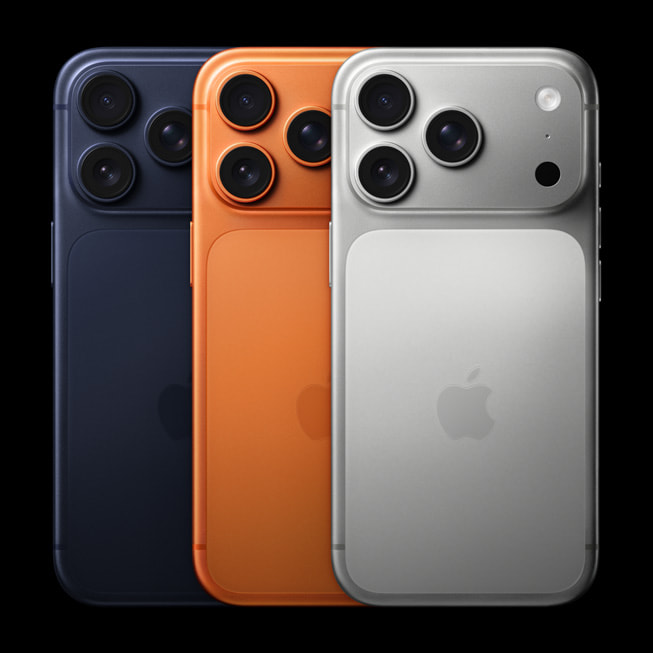
Apple just dropped the iPhone 17 Pro — and the iPhone 17 Pro vs Galaxy S25 Ultra debate is officially the hottest topic in tech. The question everyone’s asking isn’t whether it’s good. It’s whether it’s good enough to dethrone Samsung’s flagship, which has been sitting comfortably at the top of the Android flagship throne since February. After spending years covering both ecosystems, I can tell you this: the gap between these two has never been more interesting.
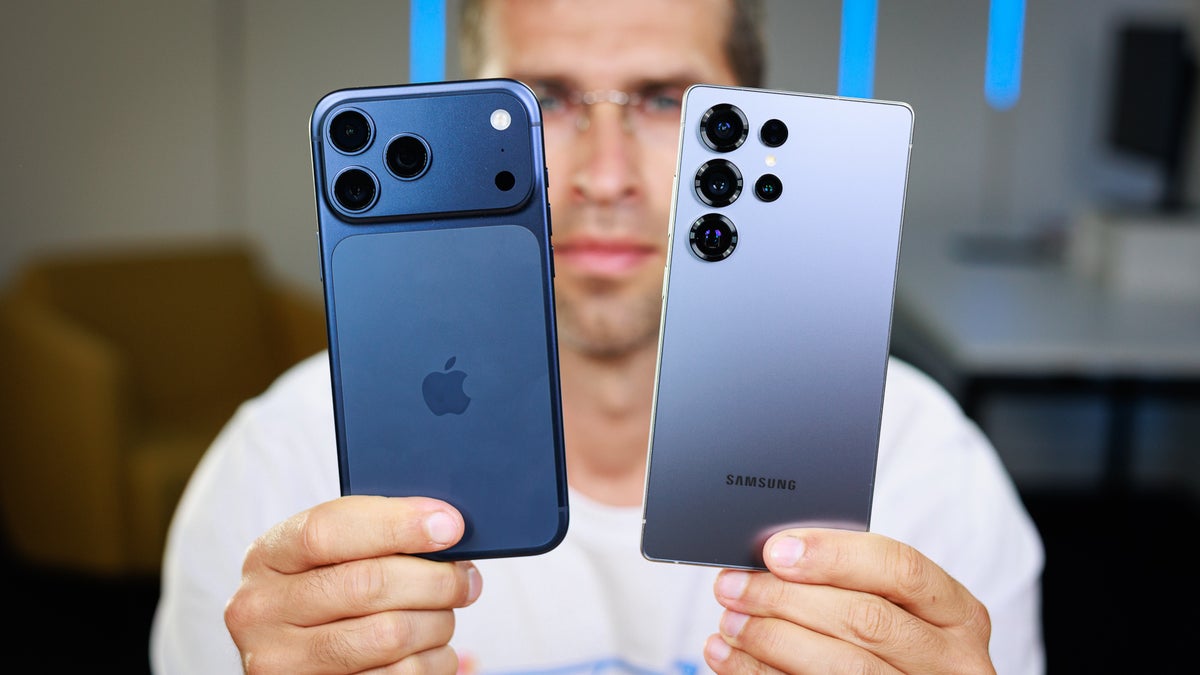
iPhone 17 Pro vs Galaxy S25 Ultra: Design and Build Quality
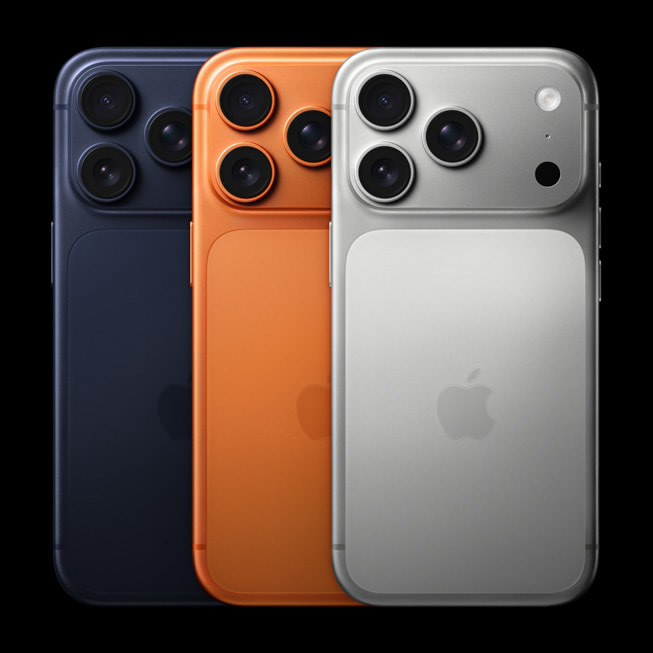
Apple made a bold move this year by ditching titanium and returning to aluminum — but not just any aluminum. The iPhone 17 Pro features a unibody brushed aluminum frame made from aerospace-grade 7000-series alloy, with an Apple-designed vapor chamber laser-welded directly into the chassis. It’s a fundamentally different approach to smartphone engineering, and it pays off in thermal performance. The result is a phone that sustains peak performance longer than any previous iPhone.
Samsung, meanwhile, doubles down on premium materials with the Galaxy S25 Ultra’s titanium-coated frame and Gorilla Armor front glass. At 218g and 8.2mm thin, the S25 Ultra is both lighter and thinner than the iPhone 17 Pro’s 8.75mm profile. Samsung’s floating camera ring design continues to stand out as one of the most distinctive design languages in the smartphone industry.
Then there’s durability. Apple’s Ceramic Shield 2 now covers both front and back, offering 3x better scratch resistance on the front and 4x better crack resistance on the back compared to previous generations. Samsung counters with Gorilla Armor on the front and Victus 2 on the back. Both phones carry IP68 water resistance, but Apple claims survivability up to 6 meters for 30 minutes versus Samsung’s standard 1.5 meters — a significant difference for accident-prone users.
Display: 3,000 Nits vs Anti-Reflective Coating
Both flagships deliver stunning 120Hz displays, but they approach excellence differently. The iPhone 17 Pro’s 6.3-inch Super Retina XDR OLED pushes up to 3,000 nits peak outdoor brightness — a 50% jump from the iPhone 16 Pro’s 2,000 nits. For anyone who’s ever struggled to read their screen on a sunny day, this is a genuine quality-of-life improvement.
The Galaxy S25 Ultra responds with a larger 6.9-inch QHD+ Dynamic AMOLED 2X panel at 2,600 nits peak brightness. While Samsung can’t match Apple’s raw brightness numbers, its anti-reflective Gorilla Armor coating actually delivers superior outdoor visibility in practice. The 1440p resolution also gives Samsung a technical edge in sharpness, though you’d need a magnifying glass to notice the difference in daily use.
If screen real estate matters to you, the S25 Ultra’s 6.9-inch display is substantially larger than the iPhone 17 Pro’s 6.3-inch panel. You’d need to step up to the iPhone 17 Pro Max to match Samsung’s screen size.
A19 Pro vs Snapdragon 8 Elite: The Performance Battle
Apple’s A19 Pro chip continues the company’s tradition of silicon dominance. Built on a 3nm process, the hexa-core CPU delivers over 25% faster single-core performance than the Snapdragon 8 Elite in GeekBench benchmarks. The 6-core GPU now includes Neural Accelerators integrated into each GPU core, making on-device AI processing significantly faster. Apple claims 40% better sustained performance compared to the A18 Pro, thanks largely to the new vapor chamber thermal system.
Qualcomm’s Snapdragon 8 Elite (custom-tuned for Galaxy) fights back with its octa-core architecture — two performance cores plus six efficiency cores. This configuration gives the S25 Ultra a theoretical advantage in heavily multithreaded workloads. In real-world usage, both chips handle everything from 4K video editing to intensive gaming without breaking a sweat. The 12GB of RAM in both devices ensures smooth multitasking regardless of which chip is under the hood.
Where the A19 Pro truly shines is in its 16-core Neural Engine combined with GPU Neural Accelerators. This dual AI processing approach makes the iPhone 17 Pro a powerhouse for on-device machine learning tasks — a capability that becomes increasingly important as Apple Intelligence expands.
Camera Systems: 48MP Triple Fusion vs 200MP Quad Setup
This is where the iPhone 17 Pro vs Galaxy S25 Ultra comparison gets really interesting. Apple completely redesigned its camera system for the first time since the iPhone 11 Pro, introducing a horizontal “plateau” camera bar housing three 48MP Fusion sensors. The standout feature is the new 48MP telephoto with a next-generation tetraprism design and a sensor 56% larger than its predecessor, delivering 4x optical zoom with sensor crop enabling 8x optical-quality zoom — the longest zoom ever on an iPhone.
Samsung’s quad-camera approach on the S25 Ultra remains formidable. The 200MP main sensor captures extraordinary detail, the upgraded 50MP ultrawide brings noticeably better low-light performance, and the dual telephoto setup (10MP 3x + 50MP 5x) offers flexible zoom options up to 100x Space Zoom. For sheer pixel count and zoom range, Samsung still holds the numerical advantage.
But numbers don’t tell the whole story. Apple’s computational photography engine, powered by the A19 Pro’s Neural Engine, produces images with more natural color science and better dynamic range in challenging lighting. Samsung’s processing tends to over-sharpen and boost saturation — a style some love and others find artificial. For video, both devices shoot 4K at 120fps, but the iPhone 17 Pro adds ProRes RAW, Apple Log 2, and genlock support, making it a serious tool for professional videographers.
Apple’s new 18MP Center Stage front camera also deserves mention. It’s the first square sensor on an iPhone, enabling automatic portrait-to-landscape switching for group selfies and ultra-stabilized 4K HDR front-facing video. Samsung’s 12MP selfie camera is adequate but can’t match Apple’s front-camera innovation this generation.
AI Features: Apple Intelligence vs Galaxy AI
The AI battle between these two flagships reveals fundamentally different philosophies. Samsung launched Galaxy AI months earlier with the S25 Ultra in January, offering features like real-time call translation, generative photo editing, AI-powered search (Circle to Search), transcript summarization, and the new Now Brief daily digest. Samsung’s partnership with Google Gemini gives Galaxy AI a conversational assistant that handles complex queries impressively.
Apple Intelligence on the iPhone 17 Pro focuses on on-device processing with the A19 Pro’s Neural Engine. Features include Image Playground, Clean Up (object removal from photos), Live Translation across Messages and FaceTime, and Visual Intelligence for screenshot-based searching. However, as TechCrunch noted, the much-anticipated LLM-powered Siri hasn’t arrived yet — Apple delayed it, promising a future software update.
Samsung wins on AI feature breadth today. Apple wins on privacy-first on-device processing and the promise of deeper ecosystem integration. For users who value immediate AI capabilities, the Galaxy S25 Ultra has a clear head start. For those who prioritize data privacy and trust Apple’s long-term AI roadmap, the iPhone 17 Pro’s foundation is solid even if some features are still arriving.
Battery Life and Charging: The Endurance Test
Battery has traditionally been Samsung’s stronghold, but the iPhone 17 Pro closes the gap significantly this year. Apple claims the iPhone 17 Pro Max delivers up to 39 hours of video playback with its 5,088 mAh battery (eSIM model), compared to the Galaxy S25 Ultra’s 31 hours from its 5,000 mAh cell. That’s a meaningful 8-hour advantage for Apple in video playback — largely thanks to the A19 Pro’s efficiency improvements and the new vapor chamber thermal design.
For charging, Samsung takes the wired speed crown at 45W versus Apple’s 40W Dynamic Power Adapter. Both reach 50% in roughly 20-25 minutes. Apple’s MagSafe wireless charging at 25W significantly outpaces Samsung’s 15W Qi wireless charging — a notable advantage for desk and nightstand charging.
The iPhone 17 Pro (non-Max) has a 3,998 mAh battery that keeps up well through a full day but won’t match the S25 Ultra’s 5,000 mAh capacity in heavy usage scenarios. If battery endurance is your top priority, the S25 Ultra or iPhone 17 Pro Max are your best bets.
Software Updates and Long-Term Value
Samsung made headlines by committing to seven years of OS updates for the Galaxy S25 series. That means the S25 Ultra will receive Android updates through 2032 — an unprecedented promise from an Android manufacturer. Apple typically supports iPhones for about five to six years, though recent models have stretched that further. The iPhone 17 Pro ships with iOS 26 featuring the new “Liquid Glass” design language, and Apple’s track record of long-term software optimization remains industry-leading.
Both ecosystems offer distinct advantages. Samsung’s DeX mode transforms the S25 Ultra into a desktop replacement when connected to a monitor. Apple’s ecosystem integration — Continuity, AirDrop, Handoff, Universal Clipboard — remains unmatched if you’re already invested in Mac, iPad, and Apple Watch. Your existing device ecosystem will likely be the strongest factor in this decision.
Pricing and Storage: The Value Equation
Apple surprised many by pricing the iPhone 17 Pro at $1,099 — $200 less than the Galaxy S25 Ultra’s $1,299 starting price. Both start at 256GB, but Apple now offers up to 1TB on the Pro (and an industry-first 2TB on the Pro Max). Samsung caps at 1TB. With Apple’s aggressive trade-in program offering up to $700 for iPhone 13 or newer, and carrier deals reaching $1,100 off, the effective cost of entry can be remarkably low.
Samsung typically offers its own trade-in deals and often drops prices faster throughout the year. By the time you’re reading this comparison, the S25 Ultra may already be available at significant discounts — something Apple rarely offers outside of carrier promotions.
The Verdict: Which Flagship Should You Buy in Fall 2025?
After analyzing every major aspect of the iPhone 17 Pro vs Galaxy S25 Ultra comparison, the answer depends entirely on what you prioritize. The iPhone 17 Pro wins on raw chip performance, video recording capabilities, thermal management, battery efficiency, water resistance depth, wireless charging speed, and starting price. The Galaxy S25 Ultra wins on display size, camera zoom range, megapixel count, wired charging speed, software update commitment, S Pen support, and current AI feature availability.
For content creators and videographers, the iPhone 17 Pro’s ProRes RAW and Apple Log 2 support make it the clear professional choice. For photography enthusiasts who want maximum zoom flexibility and raw resolution, the Galaxy S25 Ultra’s 200MP sensor and 100x Space Zoom remain unmatched. For everyday users, both phones deliver an exceptional experience — the real differentiator is your preferred ecosystem.
One thing is certain: Fall 2025 is the best time to be a flagship smartphone buyer. Whether you choose Apple’s engineering elegance or Samsung’s feature-packed approach, you’re getting a device that would have seemed like science fiction just five years ago.
Need help choosing the right tech for your creative workflow? Whether it’s mobile production, studio integration, or automation consulting — we can help you build the perfect setup.
Get weekly AI, music, and tech trends delivered to your inbox.