Hip-Hop Vocal Mixing: 10-Step Chain Processing Guide from Recording to Master
September 9, 2025
Amazon Alexa Plus: LLM-Powered Assistant Gets September Preview With Agentic AI and New Echo Hardware
September 10, 2025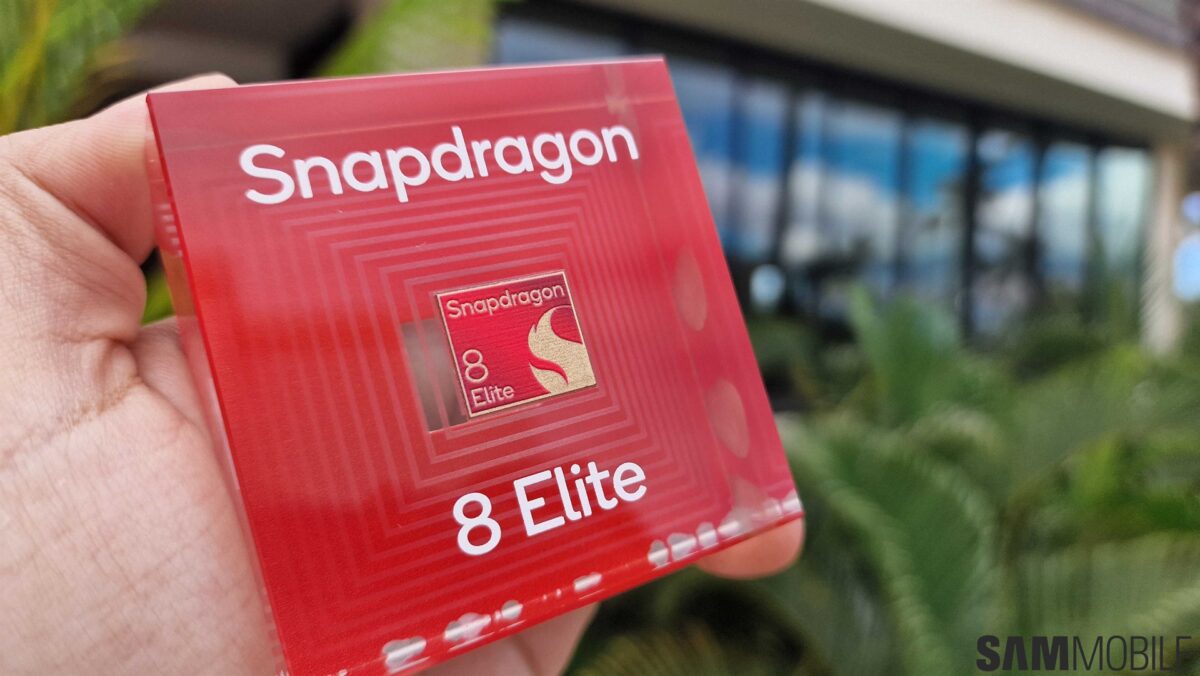
Qualcomm’s Snapdragon Summit kicks off in just two weeks — and the leaks around the Samsung Galaxy S26 lineup are already impossible to ignore. Benchmark numbers that looked like typos a month ago are turning out to be real, a controversial chipset split is taking shape, and Samsung’s One UI 8 beta is dropping hints about an AI overhaul that could redefine what a flagship phone actually does. If you’ve been waiting for a reason to hold off on upgrading, this might be it.
Snapdragon 8 Elite 2: The Numbers That Broke the Benchmark
Let’s start with what everyone’s talking about. The Snapdragon 8 Elite 2 — Qualcomm’s next flagship SoC expected to be officially unveiled at Snapdragon Summit on September 23-25 in Hawaii — has been leaking benchmark scores that genuinely raise eyebrows. According to Tom’s Guide, early AnTuTu results are flirting with the 4 million mark, with Geekbench posting single-core scores above 4,000 and multi-core north of 11,000. That’s roughly a 26% performance leap over the current 8 Elite — in a single generation.
To put that in perspective, the jump from Snapdragon 8 Gen 2 to 8 Gen 3 was around 15-20%. A 26% single-generation improvement is the kind of leap we haven’t seen since the early days of the ARM architecture race. The chip is built on TSMC’s N3P process — a refined 3nm node — and packs third-generation Oryon CPU cores hitting a peak clock speed of 4.6GHz.
But the GPU story might be even more compelling. The new Adreno 840 is reportedly 30% faster than its predecessor, paired with a massive 16MB GMEM cache. For mobile gaming and on-device AI processing, that’s a substantial jump. The NPU is rated at 100 TOPS (trillion operations per second), which positions this chip not just as a phone processor, but as a legitimate edge AI computing platform.
The ‘For Galaxy’ Custom Chip: Samsung Gets Special Treatment
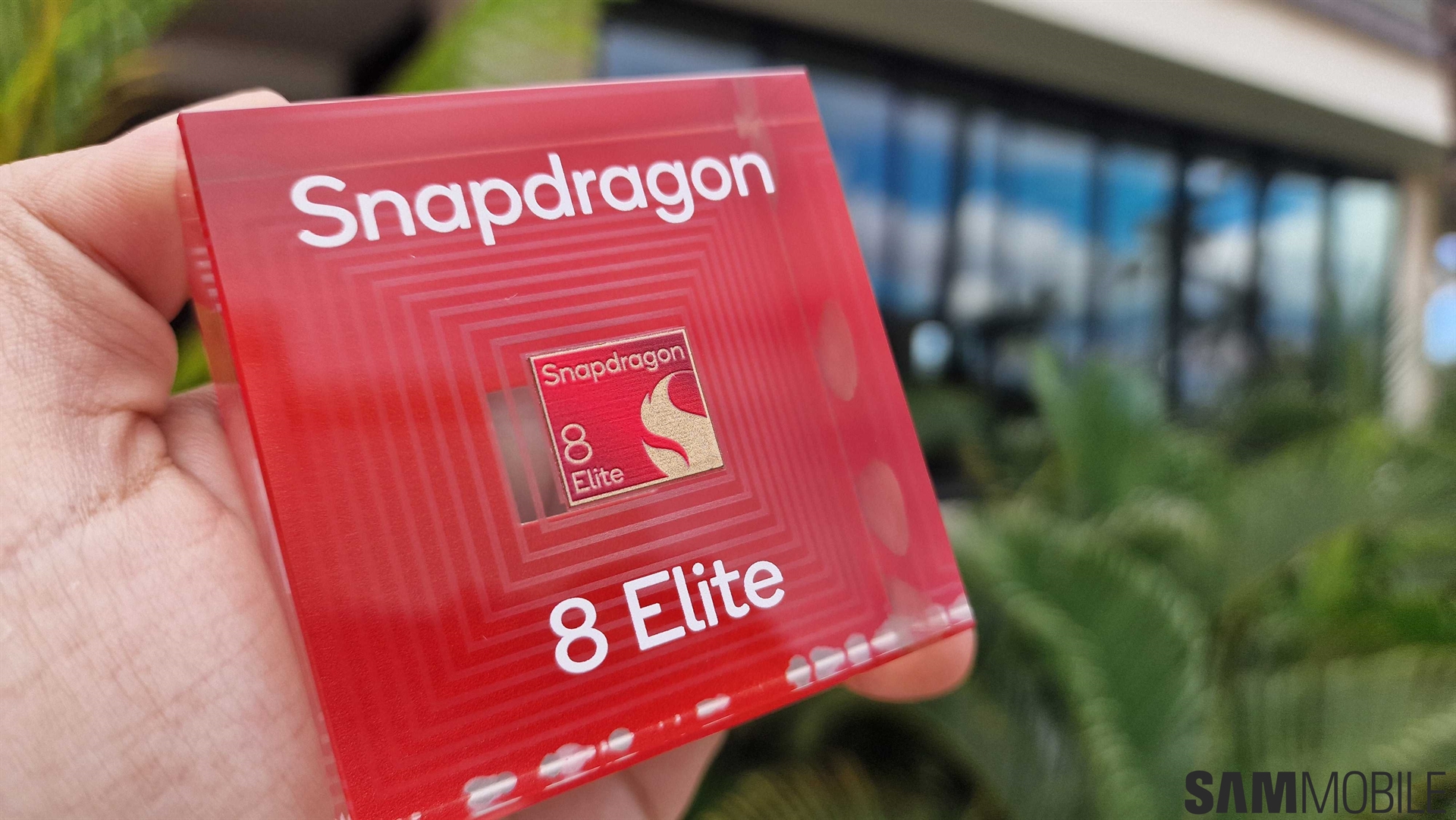
Here’s where things get really interesting. Android Central reports that Samsung may receive a custom “for Galaxy” variant of the Snapdragon 8 Elite 2, featuring even higher clock speeds — potentially reaching 4.74GHz. That’s the kind of binning advantage that Samsung’s deep partnership with Qualcomm can deliver, and it would give the Galaxy S26 Ultra a measurable edge over competing flagships using the standard chip.
There’s also an intriguing rumor floating around about Samsung’s own 2nm process being involved in manufacturing some of these custom variants. While unconfirmed, the idea of Samsung Foundry producing a Qualcomm chip on a cutting-edge node — rather than relying solely on TSMC — would be a fascinating shift in the semiconductor landscape. It could reduce Samsung’s dependency on TSMC allocation while showcasing its own foundry capabilities to the world.
The Exynos-Snapdragon Split Returns (Again)
Samsung’s long-running chipset split strategy is back, and the details are becoming clearer. According to PhoneArena, the Galaxy S26 lineup will follow a tiered approach:
- Galaxy S26 Ultra: Snapdragon 8 Elite 2 globally — no Exynos variant for the flagship model
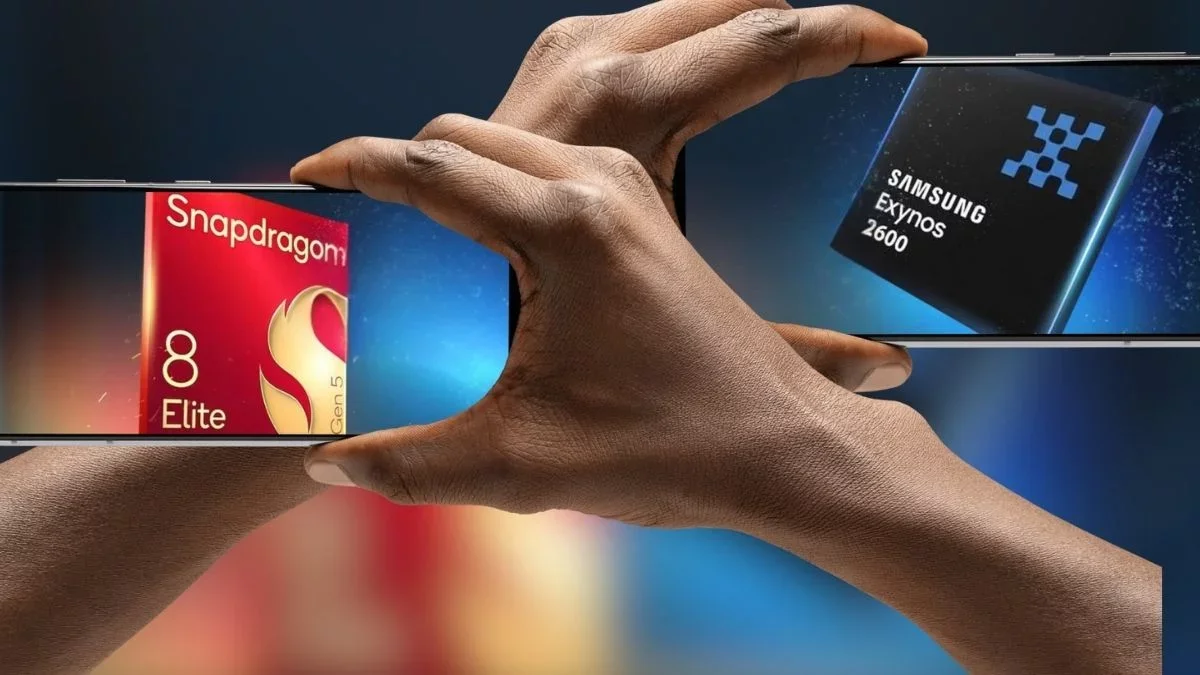
- Galaxy S26 and S26+: Snapdragon in the US, Japan, and China; Exynos 2600 for Europe and the rest of the world
This is both good and bad news depending on where you live. The Ultra getting Snapdragon globally is a win — Samsung clearly learned from years of consumer backlash about Exynos performance gaps. But the standard S26 models still being split means European and other regional buyers may once again feel like they’re getting a lesser product.
The Exynos 2600 is still largely a mystery at this point. Samsung’s mobile chip division has been quiet, which could mean they’re either working on something genuinely competitive or simply trying to fill a cost-optimization role. Early whispers suggest it will be built on Samsung’s 3nm GAA (Gate-All-Around) process, but hard benchmark data is nonexistent as of early September 2025. Whether the Exynos 2600 can close the gap with Qualcomm’s best remains one of the biggest open questions heading into 2026.
One UI 8 and the Galaxy AI Evolution
While the hardware leaks grab the headlines, Samsung’s software story might matter just as much. The One UI 8 beta is now attracting attention, and SamMobile has been tracking significant Galaxy AI enhancements that are likely to define the Samsung Galaxy S26 experience.
Three features stand out from the early beta leaks:
- Call Assist: Real-time call transcription and AI-powered suggestions during phone conversations — think of it as a personal assistant that listens and helps in real time
- Transcript Assist: Enhanced meeting and voice memo transcription with automatic summary generation and action item extraction
- Audio Eraser improvements: Building on the Galaxy S24’s introduction, the new version reportedly handles complex audio scenes with multiple overlapping sound sources far more accurately
These features align perfectly with the 100 TOPS NPU in the Snapdragon 8 Elite 2. Samsung appears to be building an AI experience that runs primarily on-device rather than relying on cloud processing — a meaningful distinction for privacy-conscious users and those in areas with unreliable connectivity. If they can genuinely deliver real-time call assistance without noticeable latency, that would be a feature worth upgrading for regardless of the hardware specs.
Samsung Galaxy S26 Ultra: What to Expect from the Flagship
Putting the pieces together, the Samsung Galaxy S26 Ultra is shaping up to be a significant upgrade. Here’s the emerging picture based on everything leaked so far:
- Processor: Snapdragon 8 Elite 2 “for Galaxy” custom variant (4.74GHz peak)
- GPU: Adreno 840 with 16MB GMEM cache (30% faster graphics)
- AI: 100 TOPS NPU powering enhanced Galaxy AI features
- Software: One UI 8 with Call Assist, Transcript Assist, and improved Audio Eraser
- RAM: Expected 12-16GB LPDDR5X
- Process: TSMC N3P (3nm) — possibly Samsung 2nm for the custom “for Galaxy” variant
The camera system remains the biggest unknown. Samsung typically saves camera details for closer to launch, and as of September 2025, credible camera leaks are sparse. Given the S25 Ultra’s already impressive 200MP primary sensor, the S26 Ultra may focus more on computational photography improvements powered by the new NPU rather than megapixel increases.
Timeline: What Happens Next
The roadmap for the next few months is unusually clear:
- September 23-25, 2025: Qualcomm Snapdragon Summit in Hawaii — official Snapdragon 8 Elite 2 unveiling with confirmed specs, benchmarks, and partner announcements
- October-November 2025: One UI 8 beta expands to more devices; expect detailed feature breakdowns and performance comparisons
- December 2025 – January 2026: Pre-launch leaks intensify — final design, camera specs, and pricing
- January 2026: Expected Galaxy S26 series announcement at Galaxy Unpacked
Snapdragon Summit will be the first major milestone. Once Qualcomm officially confirms the 8 Elite 2 specs, we’ll know exactly what Samsung has to work with — and whether those eye-popping benchmark numbers hold up under real-world conditions.
Should You Wait for the Galaxy S26?
If you’re currently on a Galaxy S24 or S25, the honest answer is: wait for Snapdragon Summit before making any decisions. A 26% performance jump paired with meaningful AI features and potentially better power efficiency on 3nm could make the S26 a genuine generational leap rather than an incremental update.
If you’re on an older device — S23 or earlier — and struggling with performance, the current S25 series is excellent and widely available at competitive prices. The S26 is still months away, and early rumors don’t always translate into real-world advantages.
The biggest wildcard remains the Exynos split. If you’re in Europe and eyeing the standard S26 or S26+, the Exynos 2600 is a genuine unknown. Historically, Samsung’s Exynos chips have trailed Qualcomm’s offerings in GPU performance and power efficiency. Whether Samsung has finally closed that gap with the 2600 is something we won’t know until independent reviews surface — likely not until early 2026.
What’s clear is that Samsung is positioning the Galaxy S26 as more than just a spec bump. The combination of significantly faster hardware, a dedicated AI-first software experience in One UI 8, and a global Snapdragon commitment for the Ultra model suggests Samsung is taking the fight to Apple’s A-series and Google’s Tensor chips with renewed urgency. The next few weeks — starting with Qualcomm’s Snapdragon Summit — will tell us whether the hype is justified.
Get weekly AI, music, and tech trends delivered to your inbox.