Amazon Alexa Plus: LLM-Powered Assistant Gets September Preview With Agentic AI and New Echo Hardware
September 10, 2025
Best 4K Monitors 2025: 7 Updated September Picks for Creators and Gamers
September 10, 2025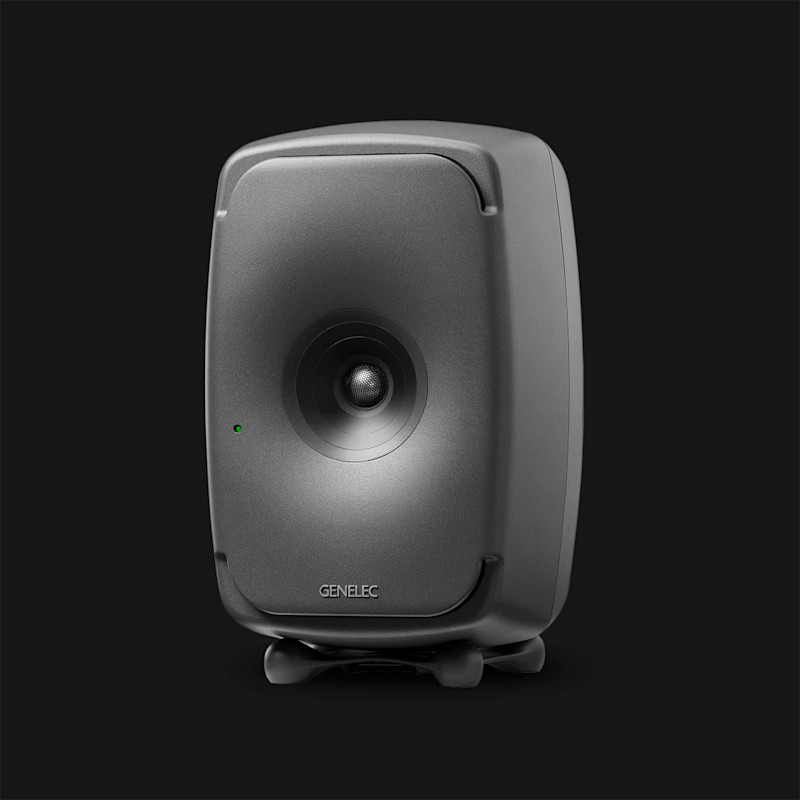
The first time I heard a mix through the Genelec 8351B, I instinctively reached for the pan knobs — certain something had shifted. Nothing had. The phantom center was simply that precise, that razor-sharp. After 28 years of trusting various monitoring systems, that moment redefined what I expected from a studio monitor.
What Makes the Genelec 8351B Different: The Coaxial Advantage
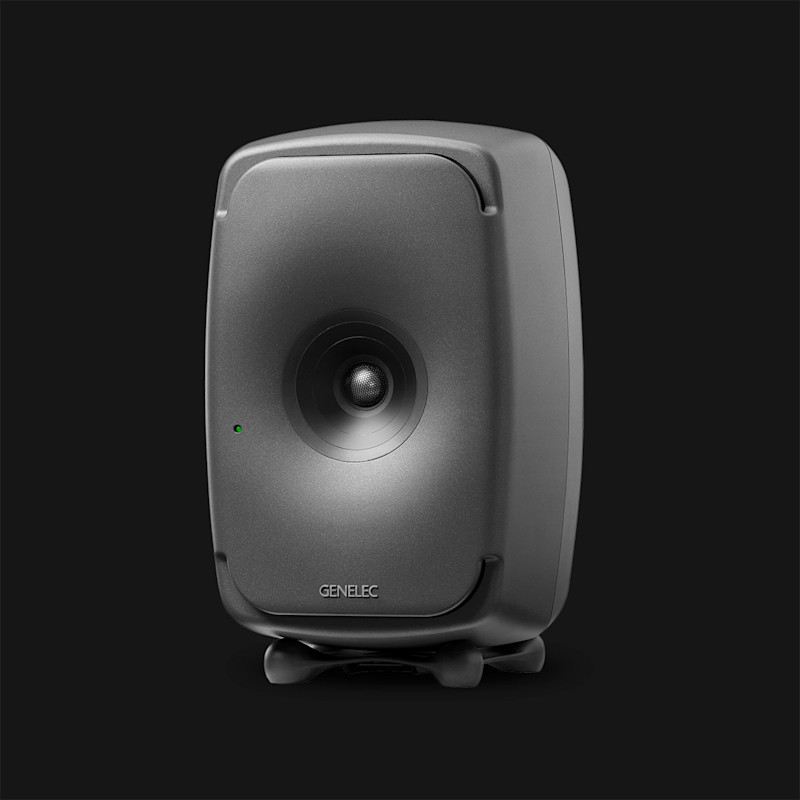
The Genelec 8351B is not just another three-way monitor. It is the centerpiece of Genelec’s The Ones series — a family of point source SAM monitors that represent over a decade of coaxial driver research. The fundamental problem it solves is one that has plagued conventional multi-way designs since their inception: when your tweeter, midrange, and woofers radiate from different physical locations, phase coherence and imaging suffer, especially off-axis.
Genelec’s answer is their proprietary Minimum Diffraction Coaxial (MDC™) driver technology. The 25mm aluminum dome tweeter sits concentrically within the 130mm midrange driver, and both are acoustically aligned to radiate from the same point in space. This is not a new concept — coaxial designs have existed for decades — but Genelec’s MDC approach solves the diffraction artifacts that have historically compromised coaxial performance.
Genelec 8351B Specifications: The Engineering Under the Hood
The 8351B packs serious engineering into a 14.3 kg die-cast aluminum enclosure. Here are the numbers that matter:
- Driver configuration: Dual 218 × 101 mm racetrack woofers + 130 mm coaxial midrange + 25 mm aluminum dome tweeter
- Amplification: 250W (bass) + 150W (mid) + 150W (treble) — all Class D
- Frequency response: 32 Hz – 43 kHz (−6 dB) / 38 Hz – 20 kHz (±1.5 dB)
- Max SPL: 113 dB short-term, 118 dB peak
- Crossover points: 320 Hz and 2,800 Hz
- Connectivity: XLR analog, XLR AES/EBU digital, 2× RJ45 for GLM network
- Self-generated noise: ≤5 dB SPL (A-weighted at 1 m)
- Price: Approximately $4,267 USD per unit
Compared to the previous 8351A, the B revision increased amplifier power from 150W/120W/90W to 250W/150W/150W — a significant upgrade that delivers a 2 dB maximum output boost. The crossover was also lowered from 470 Hz to 320 Hz, reducing the directivity mismatch at the critical bass-to-midrange transition. According to Sound On Sound’s detailed review, the B revision also shaved 4.7 kg off the weight through adopting switched-mode power supplies.
ACW Technology: The Invisible Woofers That Actually Work
The most visually striking aspect of the 8351B is what you cannot see. The dual racetrack woofers are hidden behind the enclosure’s aluminum shell, radiating through carefully engineered slots on both ends. Genelec calls this Acoustically Concealed Woofer (ACW™) technology.
Why conceal the woofers? By removing the conventional bass driver from the front baffle, Genelec eliminates the physical obstruction that typically causes diffraction and comb filtering in the midrange and high-frequency domains. The result is a monitor where all three frequency bands behave as if they originate from a single point — the definition of true point source monitoring.
In my experience, this translates directly to mix decisions. Low-end information feels integrated with the rest of the spectrum rather than “attached.” Kick drums, bass guitars, and synth pads occupy their frequency space with a clarity that makes EQ decisions faster and more confident.
GLM Calibration: Where the Genelec 8351B Truly Separates Itself
Hardware specifications tell only half the story. The 8351B is a SAM (Smart Active Monitoring) system, meaning it connects to Genelec’s GLM (Genelec Loudspeaker Manager) software via its dual RJ45 network ports. GLM 4.1 runs an AutoCal 2 algorithm that measures your room’s acoustic response and applies corrective EQ filters — up to 20 per monitor (16 notch filters + 4 shelf filters), a substantial upgrade from the 10 filters available in earlier versions.
Grammy-winning engineer Richard Chycki put it best: “I haven’t experienced this before, where I could take speakers to any studio and they always sound 100% consistent.” That portability of reference is the real value proposition. You are not buying a monitor — you are buying a calibrated monitoring system that adapts to whatever room you put it in.
The 8351B also offers an extended phase linearity mode that reduces low-frequency group delay to less than 5 ms down to 70 Hz — comparable to sealed-box designs — at the cost of only 7.5 ms additional latency. For critical mastering work or any session where phase accuracy matters, this is a meaningful option.
Who Uses the Genelec 8351B: From Metropolis to Madrid
The 8351 series has earned trust across a remarkable range of professional contexts. Veteran engineer Obie O’Brien — whose credits span Jon Bon Jovi, Queen’s Brian May, Alice Cooper, and 30+ unreleased Motown recordings by Marvin Gaye and Stevie Wonder — upgraded from his beloved Genelec 1031As (used since 1995) to the 8351A in 2018. His mastering engineer Phil Nicolo noticed the difference immediately, calling to ask: “Did you change your monitors? Stuff sounds amazing.”
Producer Dave Eringa, known for his work with the Manic Street Preachers, Kylie Minogue, and Roger Daltrey, first experienced the 8351B during a mixing session at London’s Metropolis Studios with legendary engineer Michael Brauer. After two decades of trusting Genelec, the 8351B became his new reference.
Even in challenging acoustic environments, the 8351 delivers. Spanish artist Abraham Mateo installed 8351s in an untreated attic studio and, after GLM calibration, achieved enhanced bass definition, improved mid-range clarity, and wider stereo imaging — even at close listening distances of 40 cm. That is the coaxial point source advantage at work.
Genelec 8351B vs Neumann KH 310: The Comparison Everyone Asks About
At roughly $4,267 per unit, the 8351B costs more than double the Neumann KH 310 (~$1,800). Is it worth it? The answer depends on what you prioritize.
The KH 310 is an excellent three-way monitor with a flat, neutral character and a sealed-box design that avoids port resonances entirely. It is arguably the best value in its price range for critical listening. But it is a conventional three-way design with drivers at different physical locations.
The 8351B‘s coaxial point source design delivers stereo imaging and phantom center precision that the KH 310 simply cannot match. Multiple engineers who have compared both in the same room report that the Genelecs produce a “holographic” soundstage with a phantom center so sharp it feels like a physical object between the speakers. Add GLM calibration into the equation, and the 8351B offers a level of room-corrected accuracy that requires separate hardware (like Sonarworks) with the KH 310.
My take: if your work demands the highest imaging precision — immersive audio mixing, detailed mastering, or any context where spatial accuracy is paramount — the Genelec 8351B justifies the premium. For tracking, arrangement work, or budget-conscious studios, the KH 310 remains an outstanding choice.
The Ones Lineup: Where the 8351B Fits
The 8351B sits at the sweet spot of Genelec’s five-model The Ones range:
- 8331A — Compact (104 dB SPL, 45 Hz – 37 kHz) — nearfield/small rooms
- 8341A — Mid-size (110 dB SPL, 38 Hz – 37 kHz) — versatile all-rounder
- 8351B — Full-range (113 dB SPL, 32 Hz – 43 kHz) — professional studios
- 8361A — Flagship (118 dB SPL, 30 Hz – 43 kHz) — large control rooms
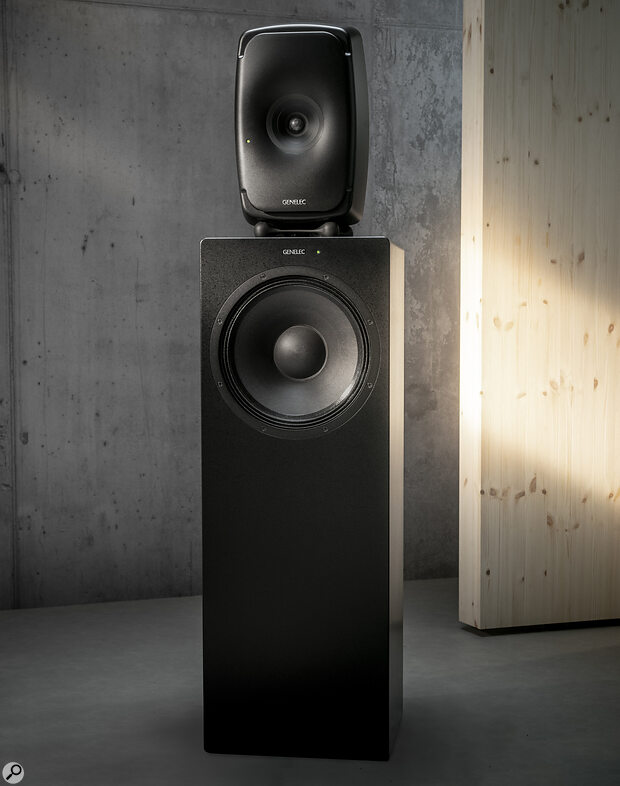
- W371A — Adaptive woofer system (120 dB SPL, 23 Hz – 500 Hz) — bass extension module
For most professional studios with moderate-to-large control rooms, the 8351B provides the best balance of output capability, low-frequency extension, and physical footprint. If your room is smaller than roughly 25 m², consider the 8341A. If you need concert-level SPL or work primarily in large dubbing stages, the 8361A is the logical step up.
Final Verdict: A Monitor That Earns Its Price
The Genelec 8351B is not inexpensive. At approximately $8,500 per pair, it demands serious commitment. But what you receive is not merely a loudspeaker — it is a precision measurement instrument disguised as a studio monitor. The combination of MDC coaxial imaging, ACW bass integration, 550 watts of Class D power, and GLM room calibration creates a monitoring experience where the speakers genuinely disappear, leaving only the music and its spatial relationships.
As Grammy-winning engineer Paul Norris observed: “Having good speakers is a great asset, and they’ll last you a lifetime.” After spending extensive time with the 8351B, I am inclined to agree. For professionals who treat monitoring accuracy as a non-negotiable tool rather than a luxury, the Genelec 8351B sets the standard that everything else is measured against.
Looking for professional mixing, mastering, or Dolby Atmos consultation with monitoring systems that reveal every detail? Let’s talk about your next project.
Get weekly AI, music, and tech trends delivered to your inbox.