Intel Core Ultra 300 Desktop Preview: Nova Lake on 18A Process, LGA 1954 Socket, and Why Arrow Lake Builders Should Wait
September 12, 2025
Best DAW for Beginners September 2025: Complete Comparison Guide
September 15, 2025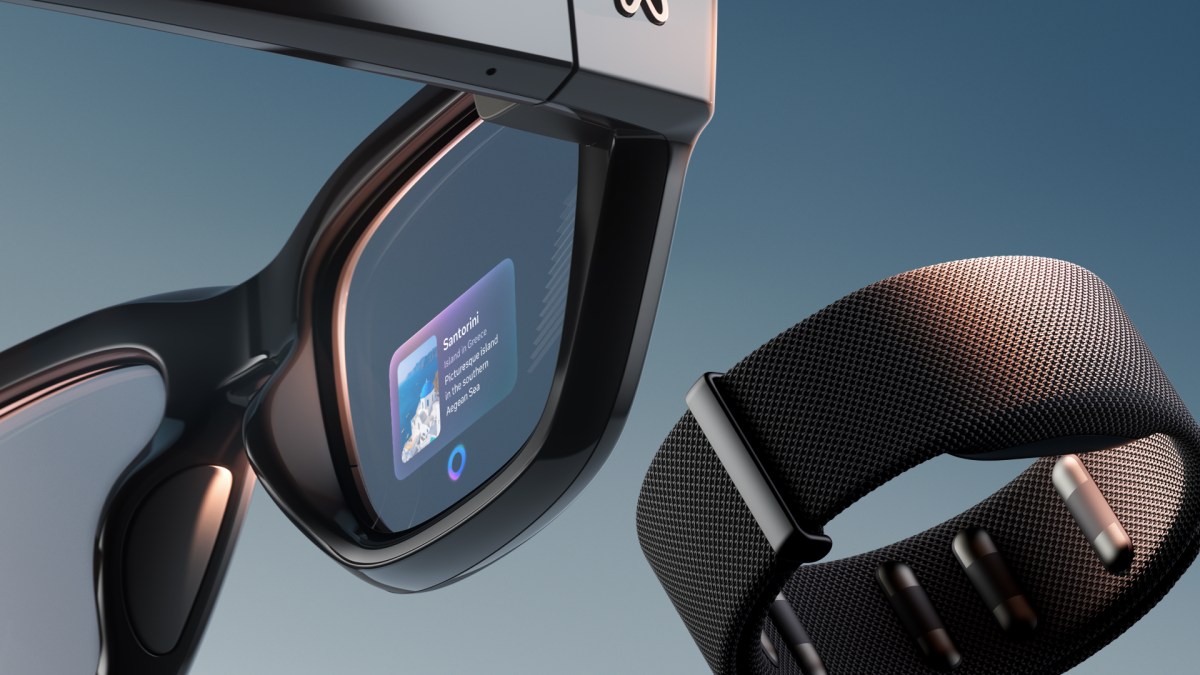
This Meta Connect 2025 preview comes two days before Mark Zuckerberg takes the stage — and the leaks alone have been enough to reshape expectations for what Meta’s hardware division can deliver. Forget iterative updates: this year’s Connect, scheduled for September 17–18, is shaping up to be the most ambitious product unveiling Meta has attempted since the original Quest launch.
Why This Meta Connect 2025 Preview Matters More Than Previous Years
Meta Connect has historically been the launchpad for Quest hardware — Quest 2 in 2020, Quest 3 in 2023, Quest 3S in 2024. But 2025 is different. Instead of a new headset, Meta is pivoting hard toward AI-powered wearables and software-defined experiences. The rumored “Hypernova” smart glasses, upgraded Quest AI capabilities, and deeper Meta AI integration suggest Zuckerberg’s vision of the metaverse is evolving from VR-first to AI-first.
For anyone tracking the intersection of AI and consumer hardware, this is the event to watch. Here’s everything we expect — and what the leaks tell us about Meta’s 2026 roadmap.
Meta Ray-Ban Display: The ‘Hypernova’ Smart Glasses Everyone’s Talking About
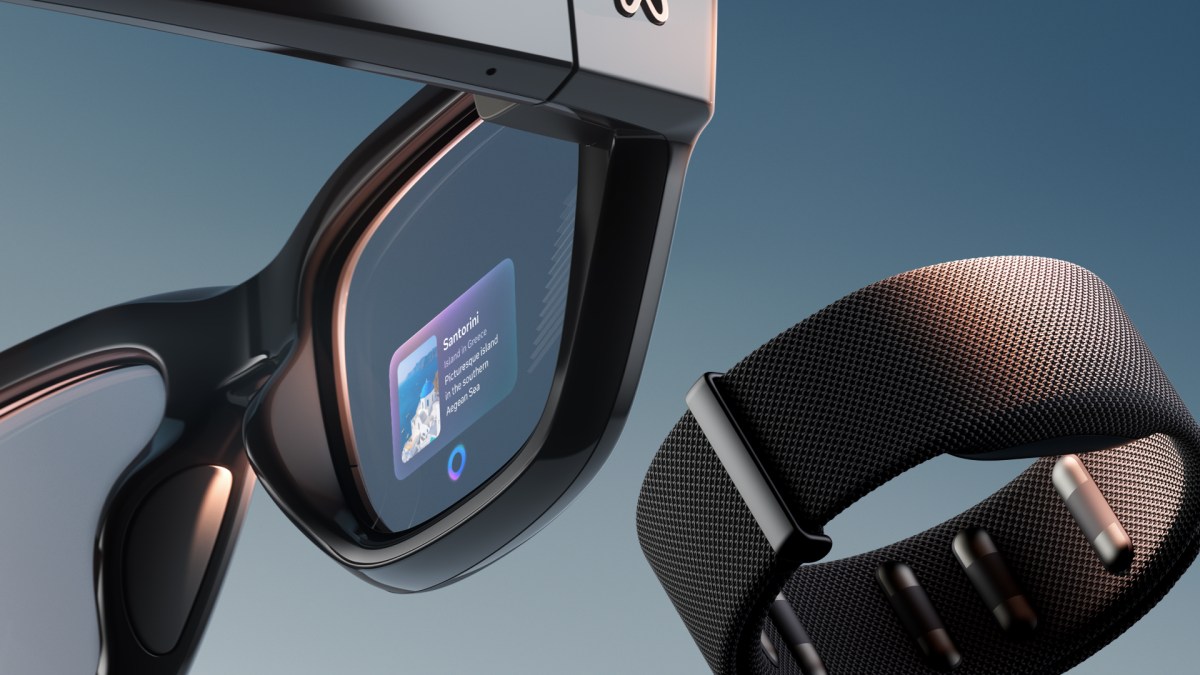
The biggest hardware announcement is almost certainly the next-generation Ray-Ban smart glasses, internally codenamed “Hypernova.” According to pre-event reports from Tom’s Guide and TechCrunch, these aren’t just upgraded camera glasses — they’re the first Ray-Ban Meta frames with a built-in display.
Here’s what the leaks suggest about the Meta Ray-Ban Display:
- Monocular display — A 600×600 pixel screen integrated into the right lens with a 20-degree field of view
- Extreme brightness — Up to 5,000 nits for outdoor visibility, running at up to 90Hz refresh rate
- Meta Neural Band — A bundled sEMG wristband that reads muscle signals from your wrist for gesture control
- Live captioning and translation — Real-time speech-to-text displayed directly in your field of view
- Starting at $799 — Including both the glasses and Neural Band controller
The Neural Band is particularly interesting. Surface electromyography (sEMG) technology interprets subtle hand movements — a pinch, a flick, a squeeze — without requiring you to raise your hand to your face or pull out your phone. If it works as described, this could be the input method that makes smart glasses genuinely practical rather than a novelty.
Ray-Ban Meta Gen 2: The Camera Upgrade
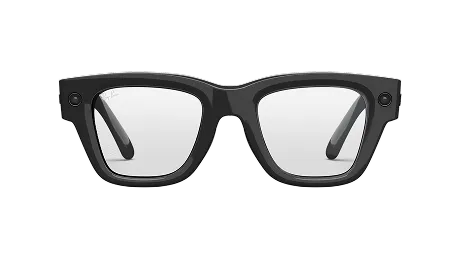
Alongside the Display model, Meta is expected to unveil Ray-Ban Meta (Gen 2) — an upgraded version of the current best-selling smart glasses. Key improvements include 2x battery life (up to 8 hours of mixed use) and ultra HD 3K video recording, more than doubling the pixel count of the original. A new “conversation focus” feature will use the open-ear speakers to amplify the voice of the person you’re talking to in noisy environments.
Quest AI Features: From Wake Word to Always-On Assistant
Meta isn’t launching a Quest 4 at Connect 2025 — the first time since 2021 that a new headset won’t headline the event. But the software updates coming to Quest 3 and Quest 3S are arguably more transformative than new hardware.
The central theme: Meta AI is transitioning from a prompted assistant to an always-available companion. According to Android Headlines, battery and energy efficiency optimizations are enabling Meta AI to run persistently on Quest headsets, responding to real-time environmental queries, generating dynamic avatar emotions, and providing voice-guided navigation.
- Real-time environmental queries — Ask Meta AI about objects in your mixed reality space and get contextual answers
- Dynamic avatar emotions — AI-driven facial expression mapping for more natural social VR interactions
- Horizon TV — A new entertainment hub bringing Netflix, Hulu, Prime Video, ESPN, Peacock, and Disney+ to Quest with Dolby Atmos audio support
- Hyperspace Capture — Gaussian splatting technology that lets you scan your room in minutes and create a photorealistic 3D digital twin
Horizon Engine and Meta’s Metaverse Infrastructure Play
One of the more technical announcements expected is Meta Horizon Engine — a new platform built from scratch to power the next generation of metaverse experiences. The engine promises better graphics, faster performance, and the ability for developers to generate “nearly infinite connected spaces with realistic physics and interactions.”
Paired with Meta Horizon Studio, which enables AI-generated creation of 3D worlds, Meta is clearly betting that the content creation bottleneck — not hardware limitations — is what’s been holding back metaverse adoption. If developers can spin up photorealistic environments in hours instead of months, the VR content library could expand dramatically.
Llama on Device: The AI Model Inside Your Glasses
Perhaps the most technically ambitious expectation for Meta Connect 2025 is deeper integration of Llama models directly into hardware. The Snapdragon AR1+ Gen 1 chip powering the new glasses is reportedly capable of running Meta’s Llama 3.2 with 1 billion parameters and 128K token context — entirely on-device.
On-device AI inference means faster responses, offline capability, and better privacy since your queries don’t need to leave the device. For a product you wear on your face all day, that privacy dimension could be the difference between mainstream adoption and niche curiosity.
We’re also expecting updates on Llama 4 and how Meta plans to integrate its most capable open-source models across its hardware ecosystem — from Quest headsets to Ray-Ban glasses to the Meta AI app.
What This Means for the AI Hardware Landscape
Meta Connect 2025 arrives at a pivotal moment. Apple’s Vision Pro has proven that premium mixed reality hardware has a market — but at $3,499, a very small one. Google is pushing AI-first with Gemini across Android. And OpenAI is reportedly exploring hardware partnerships of its own.
Meta’s approach — affordable AI glasses at $799, free Quest software updates, open-source Llama models — is the most aggressive consumer play in the AI hardware space. If the Ray-Ban Display delivers even 70% of what the leaks promise, it could define the next category of personal computing the way AirPods defined wireless audio.
The question isn’t whether Meta Connect 2025 will be interesting. It’s whether Zuckerberg’s bet on AI glasses as the smartphone successor starts to look less like a vision and more like a timeline. We’ll know in 48 hours.
Want to stay ahead on AI hardware and tech trends as they unfold? Whether it’s Meta Connect announcements or Apple Intelligence updates, we break down what matters for creators and tech professionals.
Get weekly AI, music, and tech trends delivered to your inbox.