Circle of Fifths for Beat Making: 5 Chord Progression Tricks Every Producer Needs
September 24, 2025
AI Note Taking App Comparison: Notion AI vs Obsidian AI vs Mem vs Reflect — Which Second Brain Wins in 2025?
September 25, 2025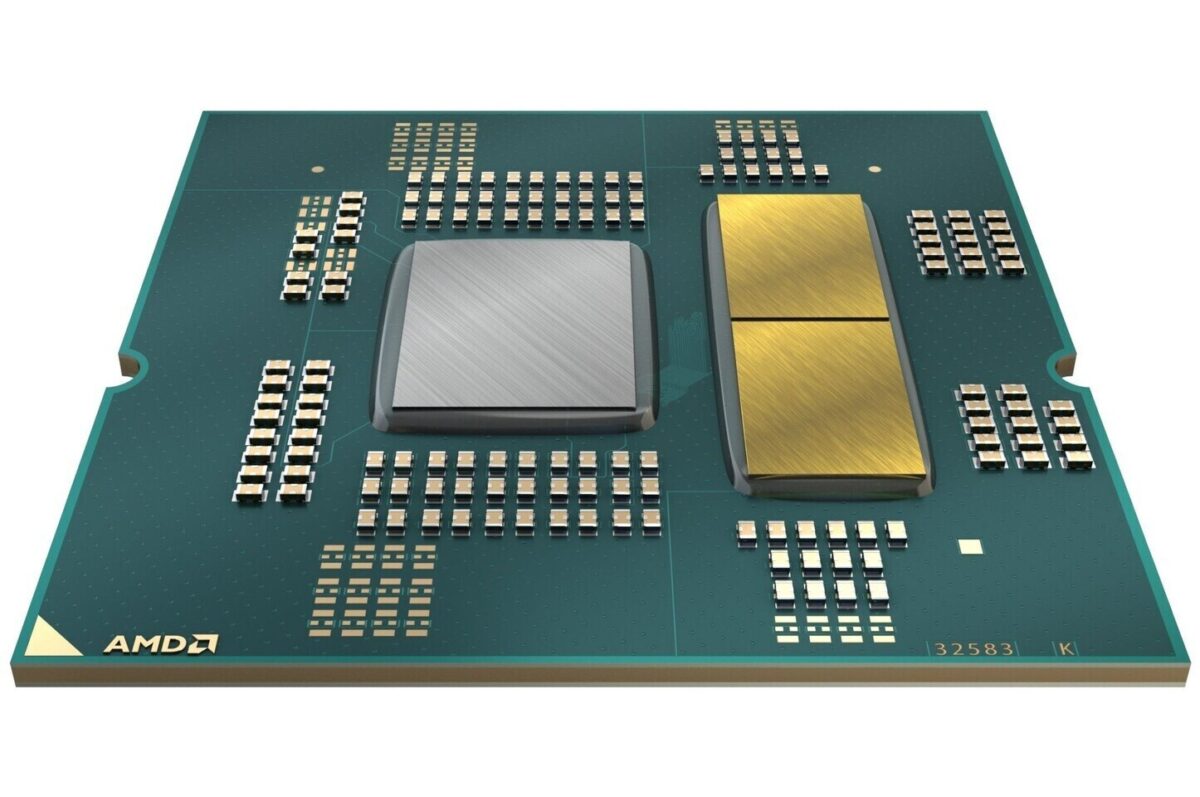
Forget everything you thought you knew about AMD’s incremental CPU upgrades. Zen 6 isn’t an evolution — it’s a ground-up revolution, and the leaked specs suggest AMD is about to make Intel’s entire 2026 desktop lineup look like a placeholder.
AMD Zen 6: A Complete Architecture Overhaul, Not Just a Refresh
When AMD moved from Zen 4 to Zen 5, the improvements were meaningful but predictable — better branch prediction, wider front-end, incremental IPC gains. Zen 6 throws that playbook out the window. According to recently surfaced AMD developer documentation, Zen 6 is built from scratch with an entirely new design philosophy: a deliberately wide, throughput-oriented architecture featuring an eight-slot dispatch engine.
That’s a significant shift. Where Zen 5 used a unified scheduler, AMD Zen 6 moves to six separate schedulers, each handling different execution units more efficiently. The result? Better instruction-level parallelism, reduced pipeline stalls, and what early analysts estimate could be a 10-15% raw IPC improvement before you even factor in clock speed gains.
12-Core CCDs and 48MB L3: The Numbers That Matter
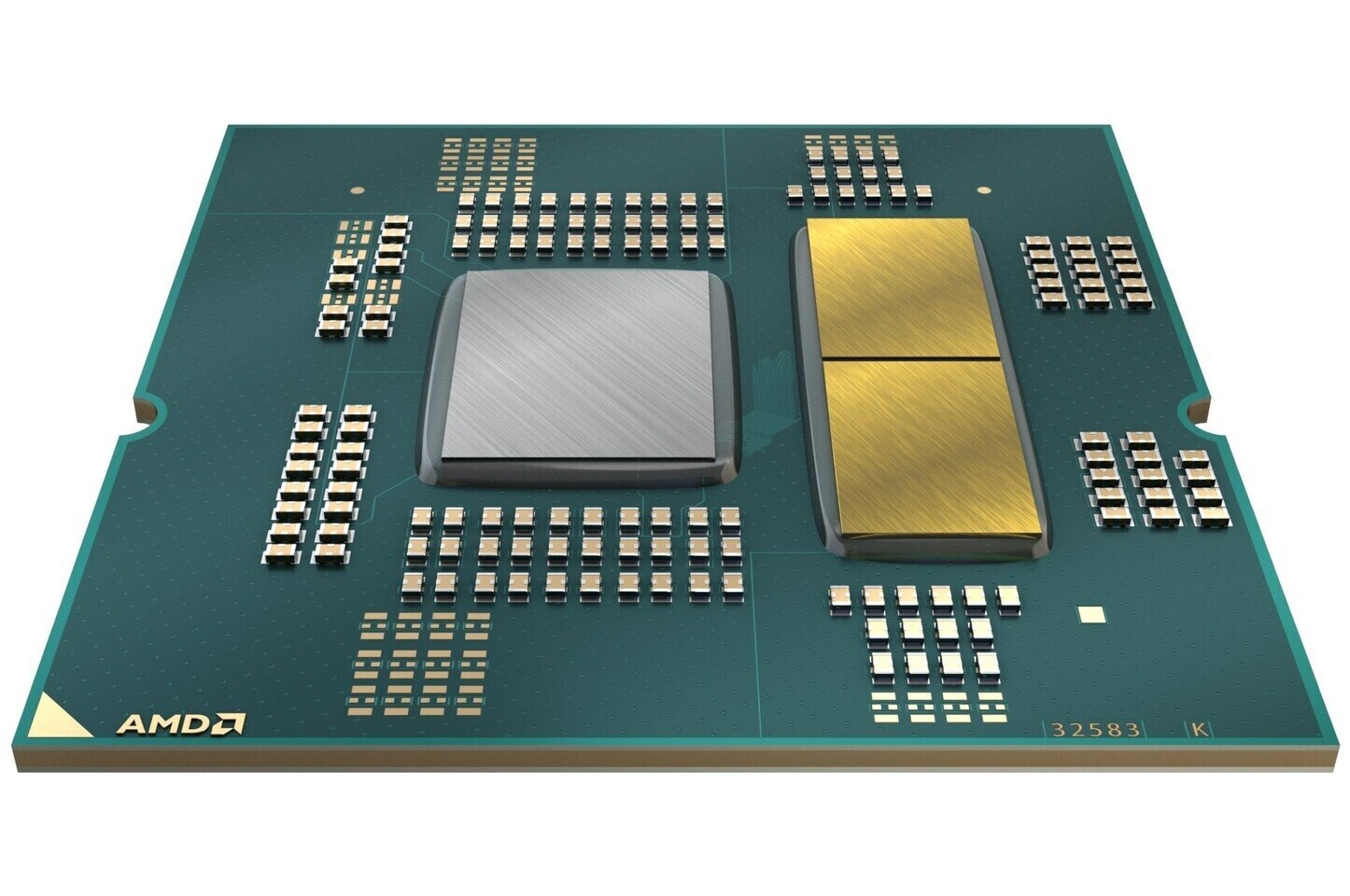
Here’s where AMD Zen 6 gets genuinely exciting for desktop enthusiasts. Each Core Complex Die (CCD) now houses 12 cores — a massive 50% increase from the 8-core CCDs that have defined AMD’s chiplet architecture since Zen 2. For a dual-CCD desktop flagship, that means 24 cores and 48 threads on the consumer AM5 platform.
The cache hierarchy gets a proportional upgrade. L3 cache jumps from 32MB to 48MB per CCD, giving a dual-CCD configuration a total of 96MB of L3. And for gamers eyeing the inevitable X3D variant? The 3D V-Cache is rumored to increase from 64MB to 96MB per stack, potentially delivering a staggering 144MB of total L3 cache on a gaming-optimized SKU.
Let’s put that in perspective: the current Ryzen 9 9950X3D with Zen 5 tops out at 16 cores with 96MB of combined L3 (32MB standard + 64MB V-Cache). A hypothetical Zen 6 X3D could hit 24 cores with 144MB — that’s 50% more cores and 50% more cache simultaneously.
TSMC 2nm: AMD Gets First Dibs on the World’s Most Advanced Node
Perhaps the most strategically significant detail: AMD has secured first-mover status on TSMC’s N2P (2nm) process for its Zen 6 CCDs. The I/O die will use TSMC’s N3P (3nm) node. This makes AMD Zen 6-based EPYC “Venice” processors the first HPC product manufactured on TSMC’s 2nm technology — a massive win for AMD’s datacenter ambitions and a clear signal about the company’s manufacturing partnership priorities.
What does 2nm actually mean for desktop users? Expect meaningfully better power efficiency. TSMC’s N2 node promises approximately 10-15% speed improvement at the same power, or 25-30% power reduction at the same speed compared to N3. Combined with Zen 6’s architectural IPC gains, AMD is projecting a total performance improvement in the range of 20-25% generation over generation.
New Instruction Sets: AMD Zen 6 Gets Serious About AI on the CPU
The instruction set extensions tell a story about where AMD sees CPU workloads heading. Zen 6 introduces full-width AVX-512 execution with native support for FP64, FP32, FP16, and BF16 data formats, including fused multiply-accumulate (FMA/MAC) operations and mixed floating-point/integer vector execution.
New instruction extensions include AVX512_BMM (block matrix multiplication), AVX_NE_CONVERT, AVX_IFMA, AVX_VNNI_INT8, and AVX512_FP16. These aren’t just spec-sheet bullet points — they directly accelerate machine learning inference, image processing, and scientific computing workloads on the CPU cores themselves, reducing dependency on discrete AI accelerators for lighter tasks.
For content creators running AI-assisted audio processing, video upscaling, or local LLM inference, this means noticeably faster performance on CPU-bound AI tasks without waiting for NPU or GPU offload.
5 Reasons AMD Zen 6 Could Dominate the 2026 Desktop Market
1. AM5 Socket Compatibility. Zen 6 desktop chips (codenamed “Olympic Ridge”) will retain AM5 socket compatibility. If you built an AM5 system with Zen 4 or Zen 5, your motherboard investment is protected. A BIOS update should be all you need — no new board, no new cooler, no new DDR5 kit.
2. 50% More Cores at the Same TDP Tier. Going from 8 to 12 cores per CCD on a more efficient process node means AMD can likely deliver 24-core desktop chips at the same or lower power envelope as today’s 16-core flagships. That’s a generational leap in multi-threaded value.
3. Intel’s Counter Looks Weak. Intel’s Arrow Lake-S Refresh is widely viewed as a stopgap for 2026, with the real next-gen Nova Lake architecture not expected until 2027. That gives AMD Zen 6 a potential 12-month window of architectural superiority on the desktop.
4. Cache Monster Gaming Potential. If the 3D V-Cache rumors hold, a 24-core/144MB-cache gaming CPU would be unprecedented. Even at lower clocks, the sheer cache advantage could push frame rates in cache-sensitive titles to new heights.
5. AI Workload Readiness. The new AVX-512 extensions and BF16/INT8 support position Zen 6 as the first desktop CPU architecture that takes local AI inference seriously at the ISA level, not just through bolted-on NPUs.
The Codename Map: Olympic Ridge, Medusa Point, and Venice
AMD’s Zen 6 lineup spans three major segments. Olympic Ridge is the desktop Ryzen family — expected to launch as the Ryzen 10000 series. Medusa Point covers mobile APUs with a hybrid 4+6 core configuration (performance + efficiency cores), targeting laptops in the 2027 timeframe. And Venice is the server-grade EPYC lineup, which may arrive first in late 2026 given datacenter demand.
For desktop builders, the key question is timing. AMD’s official roadmap confirms Zen 6 for 2026, but recent leaks suggest the desktop launch specifically could slip into early 2027. Server and mobile variants may lead the rollout, with desktop following shortly after.
Should You Wait or Buy Now?
If you’re on AM4 or older, the current Zen 5 lineup on AM5 is a fantastic upgrade that gives you a platform ready for Zen 6 later. If you’re already on AM5 with a Zen 4 or Zen 5 chip, sitting tight makes sense — Zen 6 will be a drop-in upgrade whenever it arrives.
The bottom line: AMD Zen 6 represents the most ambitious architectural leap since the original Zen reset in 2017. A ground-up redesign on the world’s most advanced process node, with 50% more cores, 50% more cache, and native AI acceleration — this isn’t iterative improvement. This is AMD betting the entire desktop CPU playbook on a clean-sheet design, and the early specs suggest that bet could pay off spectacularly.
Planning a workstation build around next-gen CPUs? Whether it’s a music production rig, AI development machine, or all-around creative powerhouse — timing your build right matters.
Get weekly AI, music, and tech trends delivered to your inbox.