Together AI Mixture of Agents (MoA) Deep Dive: How 6 Open-Source Models Beat GPT-4o at 65.1% AlpacaEval
September 24, 2025
AMD Zen 6 Architecture Preview: 12-Core CCDs, TSMC 2nm, and 5 Reasons Next-Gen Ryzen CPUs Could Dominate 2026
September 24, 2025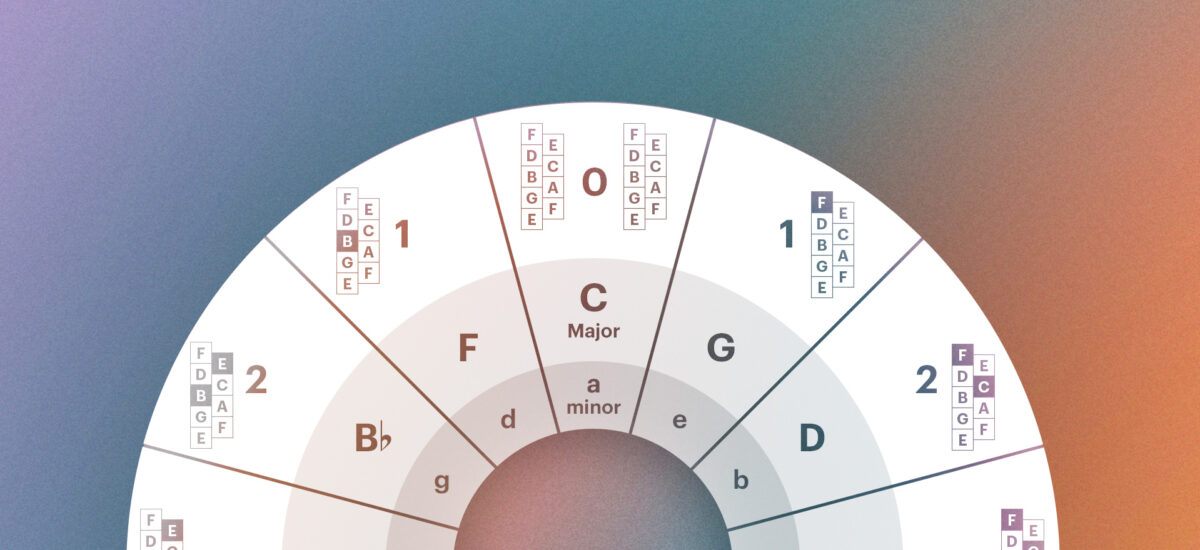
I’ve been producing for over two decades, and here’s what separates the producers who keep getting sync placements from the ones stuck in loop packs: they understand circle of fifths beat making. Not as some dusty theory concept from a textbook — but as a practical weapon that unlocks chord progressions you’d never stumble onto by ear alone.
What Is the Circle of Fifths (And Why Beat Makers Should Care)
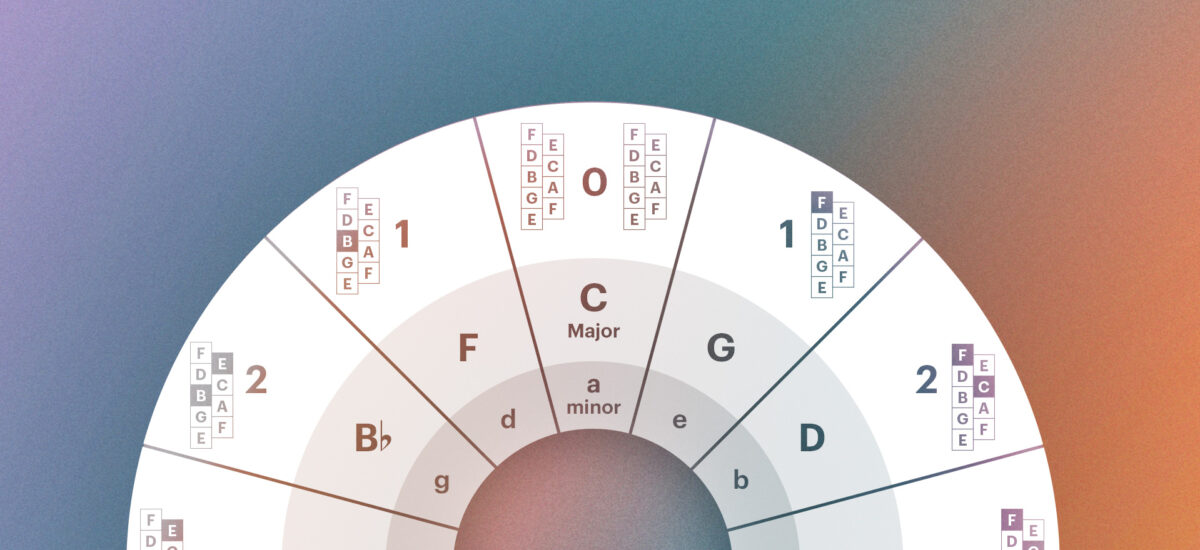
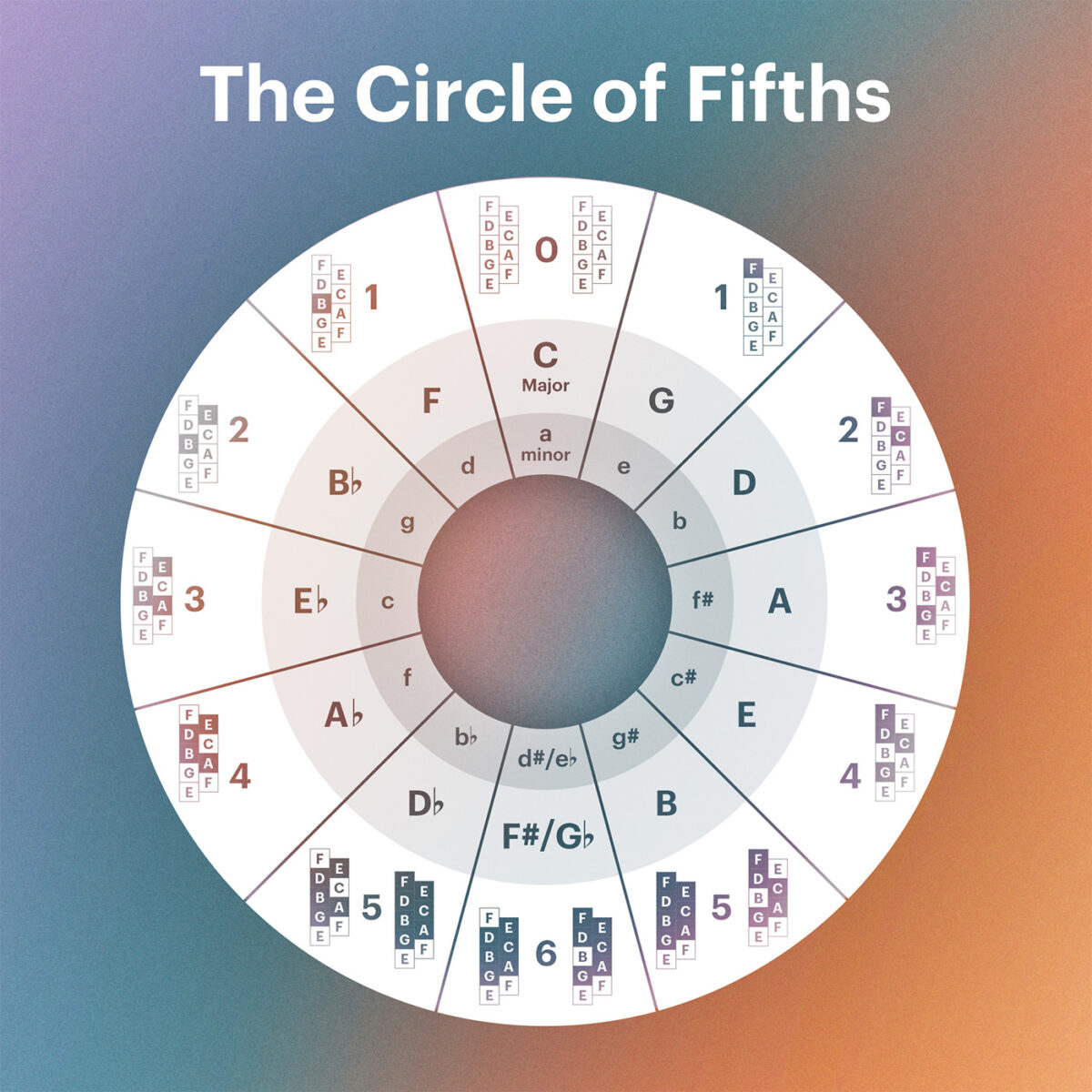
The circle of fifths is a visual map of all 12 musical keys arranged by their harmonic relationships. Picture a clock face: C major sits at 12 o’clock, and as you move clockwise, each key is a perfect fifth above the previous one — C, G, D, A, E, B, F#, and so on. The outer ring shows major keys; the inner ring reveals their relative minors.
Here’s why this matters for circle of fifths beat making: adjacent keys on this wheel share the most notes. That means chords from neighboring keys will always sound good together. No guessing, no random clicking on your MIDI controller hoping something works. The circle gives you a harmonic roadmap.
Trick #1: The Adjacent Chord Method for Instant Progressions
This is the fastest way to build solid chord progressions using the circle of fifths. Pick any key as your home base — let’s say C major. Now look at the two keys flanking it on the circle: F major (counterclockwise) and G major (clockwise). Those three chords — C, F, and G — form the backbone of countless hits from “Happy Birthday” to Johnny Cash’s “Ring of Fire”.
But here’s where it gets interesting for modern beat making. Expand your selection to six adjacent chords — three major and three minor. In C major, that gives you: C major, G major, F major, A minor, E minor, and D minor. Any combination of these six chords will sound harmonically coherent. Drop them into your DAW’s piano roll, experiment with voicings, and you’ve got weeks of beat ideas without ever hitting a wrong note.
Quick Recipe: The Six-Chord Block
- Pick your root key on the circle (e.g., C major)
- Grab the chord one step clockwise (G major) and one step counterclockwise (F major)
- Add the relative minor of each: A minor (relative of C), E minor (relative of G), D minor (relative of F)
- Mix and match these six chords in any order — they all work together
Trick #2: The Relative Minor Shortcut for Dark Beats
Trap, drill, and dark hip hop live in minor keys. The circle of fifths gives you the fastest way to find relative minor keys: move three steps clockwise from any major key. Starting at C major? Three steps clockwise takes you through G and D to land on A minor — the relative minor of C major. Both keys share exactly the same notes, but A minor gives you that darker, moodier feel that dominates modern beat making.
This is particularly powerful when you’re sampling. Found a soulful loop in Eb major? Three steps clockwise on the circle tells you C minor uses the same notes. Transpose your 808 pattern and melodic layers to C minor, and everything locks in without clashing. Producer Nick Mira has talked about using this exact technique when crafting beats for Juice WRLD — understanding key relationships meant he could flip samples faster while keeping everything harmonically tight.
Trick #3: The ii-V-I Engine — From Jazz to Lo-Fi Hip Hop
The ii-V-I progression is the most important chord movement in Western harmony, and the circle of fifths explains exactly why it works. On the circle, V sits one step clockwise from I, and ii sits one step clockwise from V. This creates a natural gravitational pull: Dm → G → C in the key of C major. Each chord resolves to the next with maximum harmonic satisfaction.
In modern hip hop production, the ii-V-I is everywhere. It’s the DNA of lo-fi beats, neo-soul hip hop, and that polished sound you hear on Tyler, The Creator’s “Boredom.” Here’s how to apply it in your DAW:
- Key of C major: Dm7 → G7 → Cmaj7 (classic lo-fi)
- Key of Eb major: Fm7 → Bb7 → Ebmaj7 (soulful, warm)
- Key of Ab major: Bbm7 → Eb7 → Abmaj7 (R&B feel)
Add seventh chords (maj7, min7, dom7) to each degree for that lush, jazzy texture. The circle of fifths tells you which notes belong in those extended chords without any guesswork.
Trick #4: Key Modulation for Builds and Drops
Want to create that ear-catching moment when a beat shifts energy — like a pre-chorus lift or a bridge that hits different? That’s modulation, and the circle of fifths is your GPS for smooth key changes.
The rule is simple: adjacent keys on the circle = smooth modulation. Distant keys = dramatic, surprising shifts. Moving from C major to G major feels natural because they share six out of seven notes. But jumping from C major to F# major (opposite side of the circle) creates tension and surprise — think Kanye West-level production drama.
For EDM producers, this is critical for builds. Start your verse in A minor, then modulate up to E minor (one step clockwise) for the drop. The shared notes make the transition seamless, but the new key center creates a noticeable lift in energy. EDMProd notes that this adjacent-key modulation technique is one of the most practical applications of the circle for electronic producers.
Modulation Cheat Sheet
- 1 step on circle: Subtle lift (verse → chorus). Example: Am → Em
- 2 steps on circle: Noticeable shift (bridge, breakdown). Example: Am → Bm
- 3+ steps on circle: Dramatic change (key drops, genre-bending moments). Example: Am → C#m
- Opposite side (tritone): Maximum tension. Example: C → F# (use sparingly)
Trick #5: The Camelot Wheel — Circle of Fifths for the Digital Age
If the traditional circle of fifths looks intimidating, the Camelot Wheel is its producer-friendly twin. It maps every key to a simple number-letter code (1A through 12B), and the rule is dead simple: you can mix or transition to any adjacent number or switch between A and B at the same number.
Software like Mixed In Key and Serato DJ Pro already use the Camelot system. But here’s the beat making angle: when you’re stacking loops, samples, and one-shots from different packs, Camelot codes tell you instantly which elements will work together. A melody tagged “8A” (A minor) will blend perfectly with a bass loop tagged “8B” (C major) or “7A” (D minor).
This is also invaluable for sample flipping. If you find a vocal chop in 5B (Db major) and want to pitch it to match your beat in 8A (A minor), the Camelot Wheel tells you that’s a three-step jump — significant but workable with the right transition chords.
Putting It All Together: A Circle of Fifths Beat Making Workflow
Here’s my actual workflow when I sit down to make a beat using the circle of fifths:
- Step 1: Pick a key based on mood. Dark trap? D minor or G minor. Upbeat pop? G major or A major.
- Step 2: Build a six-chord block from the circle (Trick #1).
- Step 3: Start with a ii-V-I or i-iv-v foundation (Trick #3), then swap chords from your block.
- Step 4: For the hook or drop, modulate one step on the circle (Trick #4).
- Step 5: Use the Camelot Wheel (Trick #5) to find compatible samples and one-shots.
After 28 years in music production, I can tell you that the producers who understand harmonic relationships consistently create more engaging, more placeable, and more emotionally resonant beats. The circle of fifths isn’t just theory — it’s the cheat code that top producers have been using since Quincy Jones was cutting records. The only difference now is that you can apply it directly in your DAW with zero sheet music required.
Start with one trick, master it, then stack the others. Within a month, you’ll hear the difference in every beat you make.
Want to take your productions further? Whether you need professional mixing, mastering, or help setting up your production workflow, Sean brings 28+ years of hands-on experience.
Get weekly AI, music, and tech trends delivered to your inbox.