Synthwave Production Techniques: The Complete Guide to Crafting Retro Sounds with Modern Tools
October 13, 2025
AI Chip Landscape 2025: NVIDIA Dominance, AMD’s Surge, Intel’s Decline, and the Custom Silicon Revolution
October 14, 2025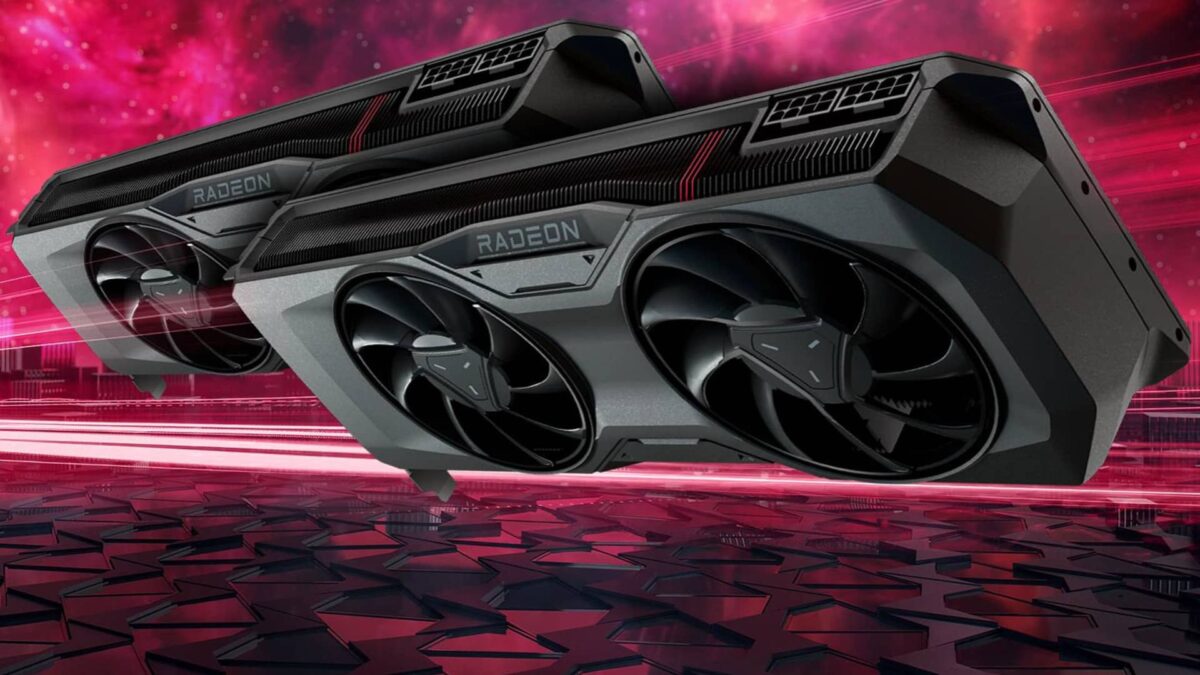
32GB of GDDR7 memory. Boost clocks hitting 4.0GHz. A TDP pushing 450 watts. If the leaked specs of the AMD Radeon RX 9080 XT are anywhere close to reality, NVIDIA’s stranglehold on the high-end GPU market is about to face its most serious challenge in years.
For the past several generations, AMD has essentially conceded the performance crown to NVIDIA. The RX 7900 XTX was competitive, but it never truly threatened NVIDIA’s dominance at the absolute top. Now, leaked engineering sample details from hardware leaker Moore’s Law is Dead suggest AMD is preparing a full-scale assault on the high-end market with RDNA 4 — and the AMD Radeon RX 9080 XT appears to be the spearhead of that offensive.
AMD Radeon RX 9080 XT Leaked Specifications: What We Know
The leaked details paint a picture of an aggressively specced GPU. The AMD Radeon RX 9080 XT is built on an enhanced version of the Navi 48 die, utilizing the RDNA 4 architecture. At its core, we’re looking at 112 Compute Units packing 7,168 stream processors — a substantial increase that positions this firmly in high-end territory.
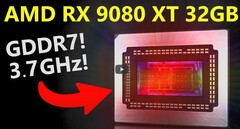
According to TweakTown’s coverage of the leak, the memory configuration is where things get really interesting. AMD is reportedly testing three VRAM options: 16GB, 24GB, and 32GB of GDDR7 on a 256-bit memory bus. That top-end 32GB configuration would double the memory of NVIDIA’s RTX 5080, which ships with 16GB of GDDR6.
Clock speeds are equally ambitious. The engineering samples show boost clocks reaching up to 4.0GHz, with game clocks falling in the 3.4 to 3.7GHz range during lab testing. These are aggressive frequencies that suggest AMD is pushing the silicon hard to maximize performance.
Power Consumption: The Price of Performance
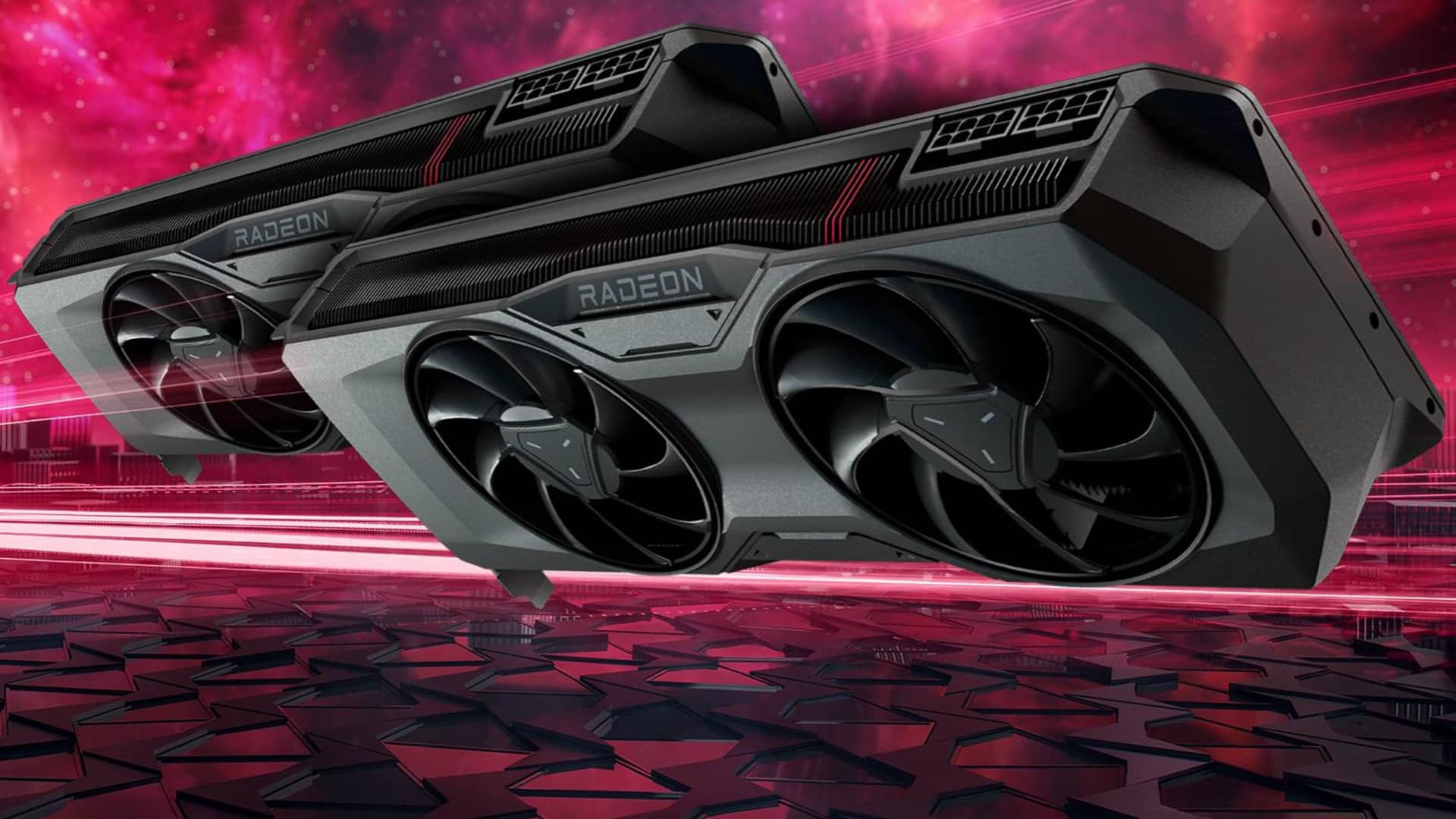
All that performance comes at a cost — literally, in watts. The TDP for the AMD Radeon RX 9080 XT is estimated between 360W and 450W, which is already substantial. But Notebookcheck reports that some overclocked engineering samples have exceeded 500W during testing. That’s approaching space heater territory.
This power draw presents a significant engineering challenge for cooling solution design. Prototypes spotted at partner facilities reportedly lack finalized cooling solutions, which makes sense given the thermal management requirements of a 450W+ GPU. Partner board makers will need to develop robust triple-fan or even liquid cooling solutions to keep temperatures in check.
The manufacturing process plays a crucial role here. The RX 9080 XT is expected to use either TSMC’s N4X (4nm) or N3X (3nm) process node. A move to 3nm would provide meaningful power efficiency gains, though whether AMD opts for the more mature 4nm or the cutting-edge 3nm remains to be seen. Either way, process node optimization will be critical in bringing that power consumption down to manageable levels for the final retail product.
For context, NVIDIA’s RTX 5080 reportedly runs at around 300W TDP. If AMD ships at 400W or above, power supply requirements alone could push system build costs higher — most users would need at least an 850W PSU, and overclocking enthusiasts might want to look at 1000W units. This is a practical consideration that could influence purchasing decisions, especially for users building in smaller form factors where thermal management is already constrained.
Performance Projections: Taking on the RTX 5080 Super
Here is where the AMD Radeon RX 9080 XT leak gets truly exciting. Confidential benchmark data suggests performance gains of 15% to 40% over the RX 9070 XT, with an average uplift of approximately 28% at 4K resolution. Certain compute-heavy workloads show gains spiking as high as 45%.
To put those numbers in perspective: the RX 9080 XT could potentially rival the performance of NVIDIA’s RTX 5080 Super. Some analysts have even suggested performance approaching RTX 4090 levels in specific scenarios. If those projections hold true, AMD would finally have a product that can compete at the very top of the GPU market — something the company hasn’t convincingly achieved since the early days of the RX 7900 XTX.
Key Specifications at a Glance
Here’s a summary of the leaked AMD Radeon RX 9080 XT specifications based on all available reports:
- Architecture: RDNA 4 (Enhanced Navi 48 die)
- Compute Units: 112 CU (7,168 stream processors)
- Memory: Up to 32GB GDDR7 on a 256-bit bus
- Boost Clock: Up to 4.0GHz (Game Clock: 3.4–3.7GHz)
- TDP: 360–450W (overclocked samples exceeding 500W)
- Interface: PCIe 5.0
- Process Node: TSMC N4X or N3X
- Expected Launch: Late 2025
FSR 4 Redstone: RDNA 4’s Secret Weapon
One of the most intriguing aspects of the RX 9080 XT story is why AMD hasn’t rushed it to market. The answer appears to be FSR 4 Redstone — AMD’s next-generation upscaling technology. NVIDIA’s DLSS has dominated the AI upscaling conversation for years, and AMD clearly wants FSR 4 to be a genuine competitor rather than a stopgap solution.
FSR 4 Redstone is expected to leverage dedicated AI acceleration hardware within the RDNA 4 architecture, moving beyond the shader-based approach of previous FSR versions. This represents a fundamental shift in AMD’s upscaling strategy — from a software-driven solution to a deeply integrated hardware-software approach that mirrors what NVIDIA has done with dedicated Tensor Cores for DLSS.
The timing makes strategic sense. Launching the RX 9080 XT without a competitive upscaling solution would hand NVIDIA an easy talking point. By waiting for FSR 4 Redstone, AMD can present a complete package that competes across every meaningful metric — raw performance, VRAM capacity, upscaling quality, and presumably price.
The 32GB VRAM Advantage: Why Memory Matters More Than Ever
Perhaps the single most compelling spec in the AMD Radeon RX 9080 XT leak is that 32GB GDDR7 memory configuration. As PC Guide’s analysis correctly points out, this isn’t just a numbers game — it represents a fundamental advantage for an increasingly important segment of GPU buyers.
Content creators working with 8K video timelines, 3D artists loading high-resolution textures, and AI enthusiasts running local models all benefit enormously from expanded VRAM. With 32GB of GDDR7, the RX 9080 XT could comfortably run large AI models like Stable Diffusion XL without VRAM constraints, handle complex 3D scenes that would choke a 16GB card, and future-proof against the ever-increasing memory demands of modern games and applications.
The GDDR7 standard itself brings meaningful bandwidth improvements over GDDR6, reducing bottlenecks in both high-resolution gaming and compute workloads. Combined with the increased capacity, this makes the RX 9080 XT particularly attractive for professional and prosumer use cases where NVIDIA’s 16GB offerings may fall short.
AMD’s Broader High-End Roadmap: Beyond the RX 9080 XT
The RX 9080 XT isn’t AMD’s only high-end RDNA 4 play. Leaked information suggests an even more powerful RX 9090 XT is also in development, featuring 8,192 stream processors, 32GB of memory, a 512-bit memory bus delivering 1,280 GB/s of bandwidth. This model would compete directly with NVIDIA’s RTX 5090.
The fact that AMD is rebuilding its entire high-end lineup — not just releasing a single competitive product — signals that RDNA 4 represents a major strategic shift. After the RX 7000 series, where AMD focused primarily on the mid-range market and let NVIDIA own the high-end conversation, this generation appears to be about competing across the entire product stack. Both models are expected to support PCIe 5.0 and arrive before the end of 2025.
Release Timeline and Pricing Outlook
The AMD Radeon RX 9080 XT is currently projected for a late 2025 launch window. Two key factors are gating the release: the completion of FSR 4 Redstone development and finalization of cooling solutions capable of handling the card’s considerable thermal output.
No official pricing information has surfaced, but AMD has historically positioned itself as the value alternative to NVIDIA. If the company maintains that strategy, we could see the RX 9080 XT priced below the RTX 5080 Super while offering competitive or superior performance and double the VRAM. That would be a compelling value proposition that could genuinely shift market dynamics.
The pricing question becomes even more interesting when you consider the VRAM advantage. NVIDIA charges a premium for its professional-tier cards with higher memory capacities. If AMD can deliver 32GB of GDDR7 at a consumer-grade price point, it could attract a significant number of professional and prosumer buyers who currently feel forced into NVIDIA’s more expensive Quadro or workstation-class options simply because they need more memory. This is especially relevant for machine learning engineers and AI researchers running large language models locally, where VRAM capacity directly determines which models you can fine-tune and run inference on.
Of course, it’s important to remember that everything discussed here is based on leaks and engineering samples. Final specifications, performance numbers, and pricing could all change before the official launch. Engineering samples represent a snapshot of a GPU in development — clock speeds can be adjusted, memory configurations can be finalized, and TDP targets can be refined as AMD optimizes the design.
That said, the direction is clear. AMD is building a genuinely competitive high-end GPU, and if the leaked AMD Radeon RX 9080 XT specs are even close to what ships, NVIDIA has every reason to pay attention. For anyone considering a GPU upgrade, late 2025 just became a date worth circling on the calendar.
Need help choosing the right GPU for your workflow, building a custom system, or optimizing your AI pipeline? Let’s talk.
Get weekly AI, music, and tech trends delivered to your inbox.