Claude Team Plan Pricing in November 2025: Standard vs Premium Seats and What They Mean for Your Team
November 19, 2025
Holiday Tech Gift Guide 2025: Best Gadgets for Every Budget
November 19, 2025
A $30/month AI subscription sounds reasonable — until you realize the features your development team actually needs cost $150/seat. In November 2025, Anthropic reshaped the Claude Team Plan pricing structure in ways that matter for every team evaluating AI tools this Black Friday season.
Two major changes landed almost simultaneously. First, Claude Opus 4.5 launched on November 24 with a 67% API price reduction — from $15/$75 to $5/$25 per million tokens. Second, Anthropic formalized premium seats within the Team Plan, giving organizations granular control over who gets Claude Code access and at what cost. Together, these shifts fundamentally alter the Claude Team Plan pricing equation.
Claude Team Plan Pricing Structure: Standard vs Premium Seats
As of November 2025, the Claude Team Plan pricing splits into two distinct seat types. Standard seats cost $25/month with annual billing or $30/month billed monthly, requiring a minimum of five users. Premium seats run $150/month per user, unlocking Claude Code and delivering 6.25x the usage capacity of a Pro plan.
Here’s what matters — standard seats alone include 1.25x Pro-level usage, SSO with domain capture, admin console access, and integrations with Microsoft 365 and Slack. But if your team needs Claude Code in a managed team environment, premium seats are non-negotiable.
Opus 4.5 API Price Cut: Why Team Plan Users Should Care
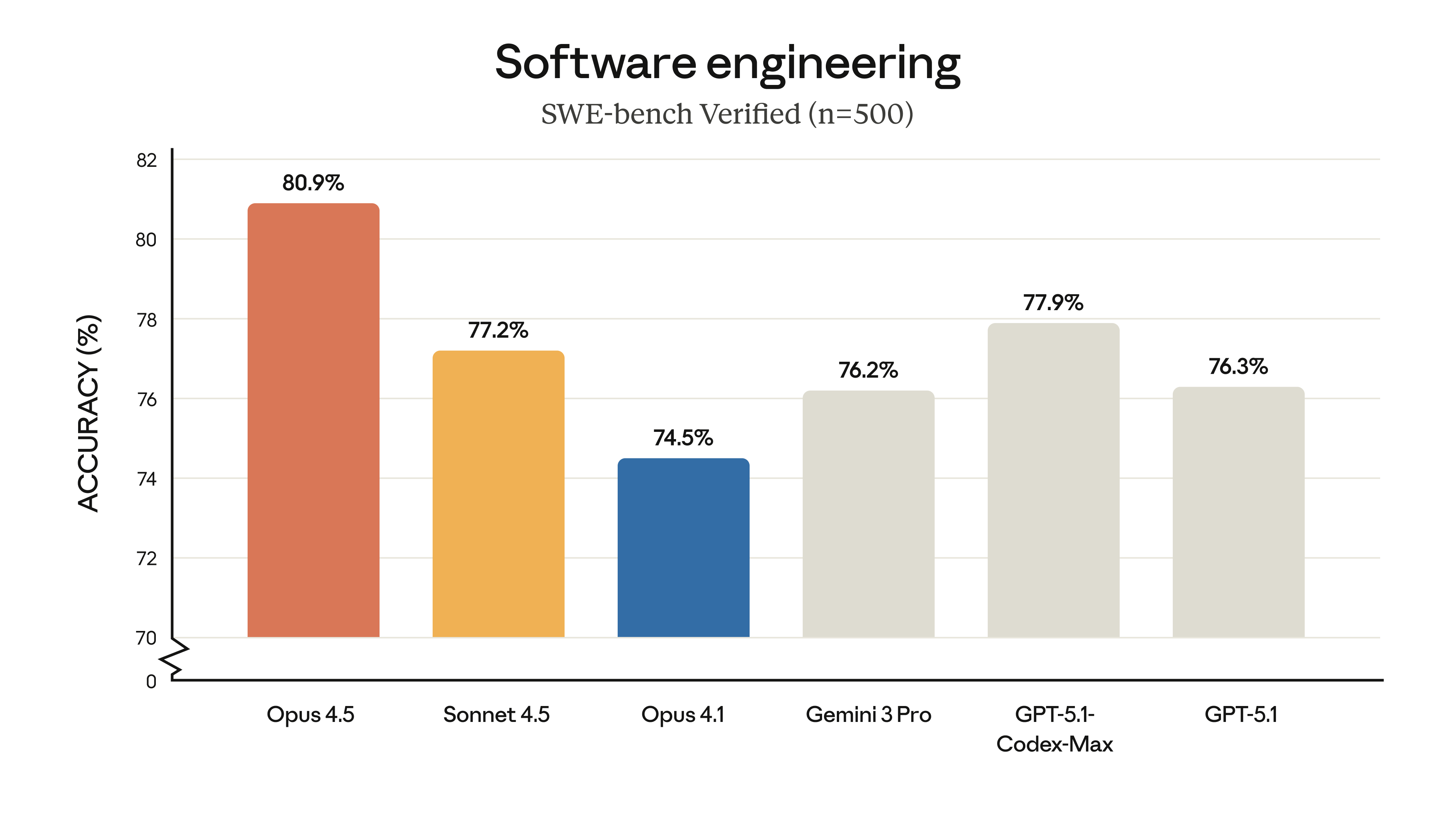
When Claude Opus 4.5 dropped on November 24, 2025, the API pricing shifted dramatically — input tokens went from $15 to $5, output from $75 to $25 per million tokens. That’s a 67% reduction across the board. While Team Plan subscribers don’t call the API directly, this price cut signals something important about Anthropic’s operational economics.
Lower API costs mean Anthropic’s per-query serving costs have decreased substantially. For Team Plan users, this translates into two practical benefits: immediate access to a faster, more capable Opus 4.5 model within the same subscription, and the likelihood of expanded usage limits in future updates. Anthropic has historically passed cost savings to subscribers — the Sonnet 4.5 and Haiku 4.5 models launched alongside Opus at $3/$15 and $1/$5 respectively, creating a complete model lineup at price points that would have been unthinkable a year earlier.
To put the 67% reduction in perspective: a year ago, running Opus-class queries at scale would cost an enterprise roughly $90 per million tokens round-trip. Now it’s $30. For organizations building internal tools on the Claude API alongside their Team Plan subscriptions, this changes the ROI calculation entirely. A marketing team generating 50 long-form reports per month, each consuming roughly 100K tokens, sees their API costs drop from $450 to $150 monthly — savings that easily offset the cost of adding another standard seat to the Team Plan.
The $150 Premium Seat Value Proposition: Claude Code Changes Team Workflows
The premium seat’s $150/month price tag raises eyebrows at first glance. But run the numbers from a development team productivity perspective, and the calculus shifts.
Claude Code is a terminal-based AI coding assistant that understands entire repository contexts, handles multi-file edits, runs tests, and manages Git workflows autonomously. Within the Team Plan’s premium seats, administrators get granular spend controls, self-serve seat management, and analytics showing code acceptance rates and suggestion utilization.
Consider a 5-person team: 3 developers on premium seats ($150×3 = $450) and 2 non-technical staff on standard seats ($25×2 = $50) totals $500/month. That’s more expensive than GitHub Copilot Business ($19×5 = $95), but Claude Code’s agentic capabilities — autonomously finding bugs, drafting pull requests, and conducting code reviews — operate at a fundamentally different level. For teams where developer time costs $80-150/hour, saving even 2-3 hours per week per developer covers the premium seat cost entirely.

ChatGPT Team vs Claude Team: A Black Friday Comparison
Comparing AI team plans at the November 2025 Black Friday price point reveals meaningful differences. OpenAI’s ChatGPT Team costs $25/user/month (annual) and includes GPT-4o, DALL-E 3, and Advanced Data Analysis. Google’s Gemini Business integrates into Google Workspace at $20/user. Claude Team Plan pricing for standard seats matches ChatGPT at $25/user.
Where Claude Team separates itself comes down to three factors. First, Projects lets teams organize chats, documents, and code into topic-specific knowledge bases that persist across conversations. Second, the premium seat tier means your entire AI stack — chat, analysis, and coding — lives on one platform. Third, Anthropic’s safety-first approach appeals to regulated industries where compliance requirements around data handling and AI governance are non-negotiable.
The trade-offs are equally clear. ChatGPT Team leads in image generation (DALL-E) and plugin ecosystem breadth. Gemini’s native Google Workspace integration is unmatched for organizations already embedded in that ecosystem. Claude Team Plan pricing delivers the strongest value for teams focused on content creation, deep analysis, and software development. It’s also worth noting that Anthropic’s approach to data privacy — training data is not used from Team or Enterprise plans by default — gives Claude an edge in industries where data sensitivity is paramount, from healthcare startups handling PHI to legal firms processing privileged communications.
Enterprise Plan vs Team Plan: When to Upgrade
The Team-to-Enterprise decision isn’t purely about headcount. Enterprise adds SCIM provisioning for automated user lifecycle management, comprehensive audit logs, expanded context windows, and custom contracts. Industry estimates place Enterprise pricing around $60/seat for 70+ users on 12-month commitments.
The upgrade trigger points are clear: when you need SCIM-based automated provisioning, when audit logs become a compliance requirement, or when you’re scaling past 50 users and need custom usage limits. Below 50 users, the Team Plan’s premium-plus-standard seat mix covers most business requirements without the overhead of enterprise contract negotiations.
There’s also a middle ground worth considering. Some organizations run a hybrid approach: Team Plan for day-to-day AI usage across the company, plus separate API access for engineering teams building custom integrations. With the Opus 4.5 price cuts, this hybrid strategy has become significantly more cost-effective. A 20-person company might run 15 standard Team seats ($375/mo), 5 premium seats ($750/mo), and spend another $200-400/mo on API calls for internal tools — totaling roughly $1,300-1,500/month for comprehensive AI coverage across the entire organization.
November Decision Checklist: Choosing the Right Claude Team Plan Configuration
For team leaders rationalizing AI tool subscriptions this Black Friday season, here’s a practical framework.
- Audit your developer ratio — Identify how many team members actually need Claude Code. Assign premium seats only to developers; everyone else gets standard.
- Commit to annual billing — The $5/seat/month savings on standard seats adds up. For a 5-person team, that’s $300/year back in your budget.
- Check tool overlap — If you’re already paying for GitHub Copilot, Cursor, or similar coding tools, standard seats might suffice. Don’t double-pay for AI coding assistance.
- Evaluate SSO vs SCIM needs — Team Plan includes SSO but not SCIM. If automated user provisioning is a hard requirement, you need Enterprise.
- Use the trial first — Anthropic offers Team Plan trials. Never commit to annual billing without testing the workflow fit first.
The bottom line: Claude Team Plan pricing in November 2025 reflects Anthropic’s broader strategy of making enterprise-grade AI accessible while monetizing premium capabilities. The Opus 4.5 API price cut shows the company can compete on cost. The premium seat tier shows it can segment value effectively. For teams making AI subscription decisions this Black Friday, the question isn’t whether to invest in AI tools — it’s whether Claude’s particular combination of safety, capability, and pricing flexibility fits your team’s workflow better than the alternatives.
Need help evaluating AI tools for your team or building automation workflows? With 28+ years in music, audio, and tech, I help teams navigate the AI landscape.
Get weekly AI, music, and tech trends delivered to your inbox.