RNBO Move Takeover: Run Custom Max Patches on Ableton Move — A New Era of Open Hardware Sound Design
March 19, 2026
Grok 4.20 Multi-Agent Architecture: 4 AI Agents Debate Each Other Before Answering You
March 19, 2026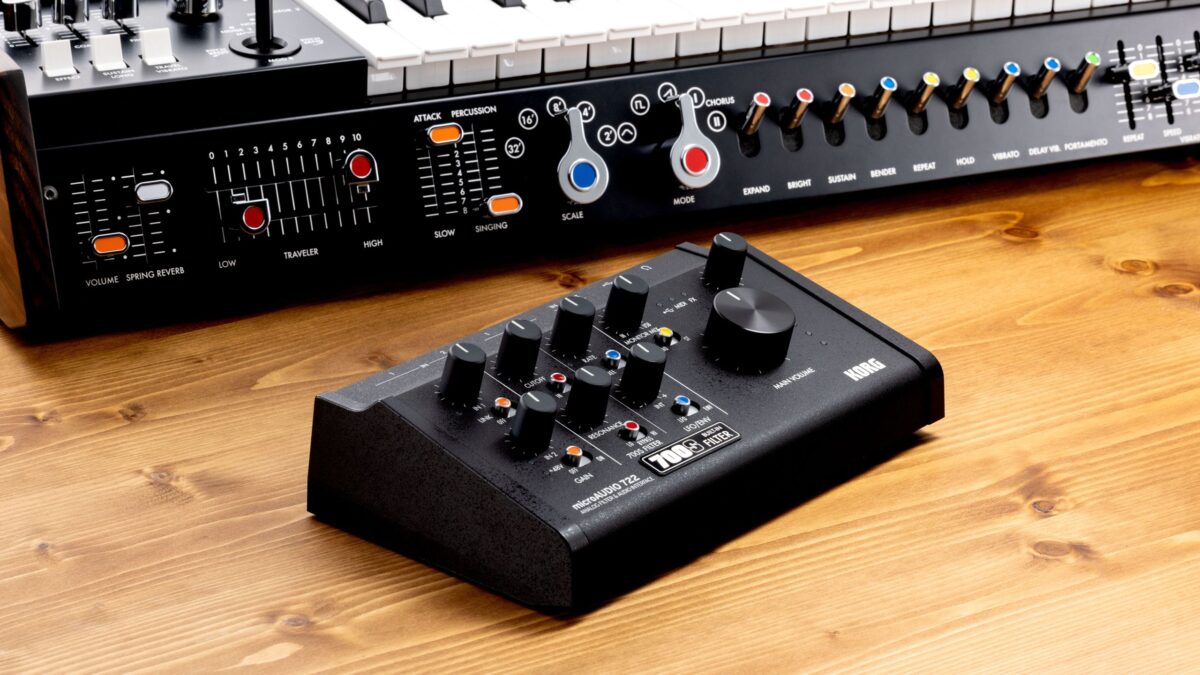
A $269 audio interface with a built-in analog synth filter. That’s not a typo. Korg microAudio 722 Filter Ark ships with actual hardware analog filter circuitry inside the chassis — and a software plugin that recreates four of Korg’s most legendary filter designs. If you’ve ever wanted MS-20 filter grit without buying a dedicated hardware unit, this might be the most interesting audio interface release of 2026.
Korg microAudio 722 Filter Ark — What Makes This Interface Different
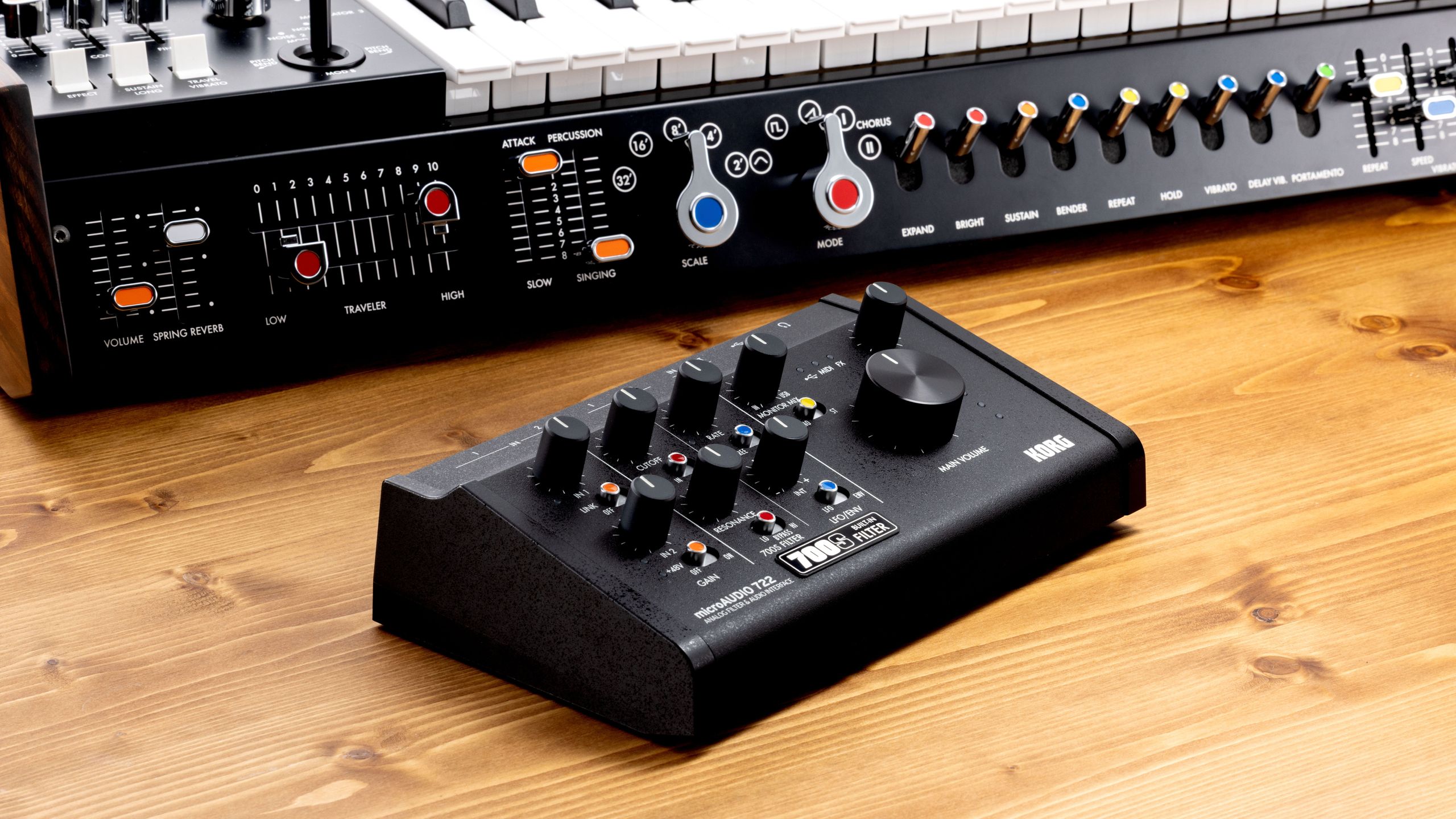
Korg’s microAudio 722 launched in March 2026, and it immediately stands apart from every other interface in its price range. On paper, it’s a 7-in/2-out USB-C audio interface priced at $269. But the real story is the hardware analog filter built directly into the unit — a feature that no competing interface at any price point currently offers.
The microAudio lineup comes in two models. The microAudio 22 ($199) provides 2-in/2-out with the same analog filter. The microAudio 722 ($269) adds five more inputs and more flexible routing options. Both models include the built-in analog filter and ship with the Filter Ark plugin as a bundle.
This isn’t a software simulation running on an internal DSP. It’s genuine analog filter circuitry with dedicated hardware controls for cutoff and resonance. The filter can process audio passing through the interface in real time, or function as a standalone external filter for synthesizers and drum machines without a computer connected.
Why a Hardware Analog Filter in an Audio Interface Actually Matters
After 28 years working in audio engineering, I can tell you that the character of a real analog filter is something software still struggles to fully replicate. The natural saturation when you push the resonance, the nonlinear behavior of the filter curve, the way harmonics interact at the edge of self-oscillation — these are properties of actual circuits that plugin designers have been chasing for decades.
Having that filter available at the recording stage changes the workflow fundamentally. Instead of recording a clean signal and processing it later with plugins, you can commit to a filtered sound during tracking. For electronic music producers, this means printed analog character in every take. For sound designers, it means real-time filter manipulation with the tactile feedback of physical knobs.
The standalone capability is equally significant. Connect a hardware synthesizer or drum machine to the microAudio 722, and you have an external analog filter processor without needing a computer at all. For live performers, this eliminates the need for a separate filter pedal or Eurorack module in the signal chain. Considering that dedicated hardware analog filters like the Sherman FilterBank or Vermona Action Filter typically cost $200-400 on their own, the microAudio 722’s integrated approach offers substantial value.
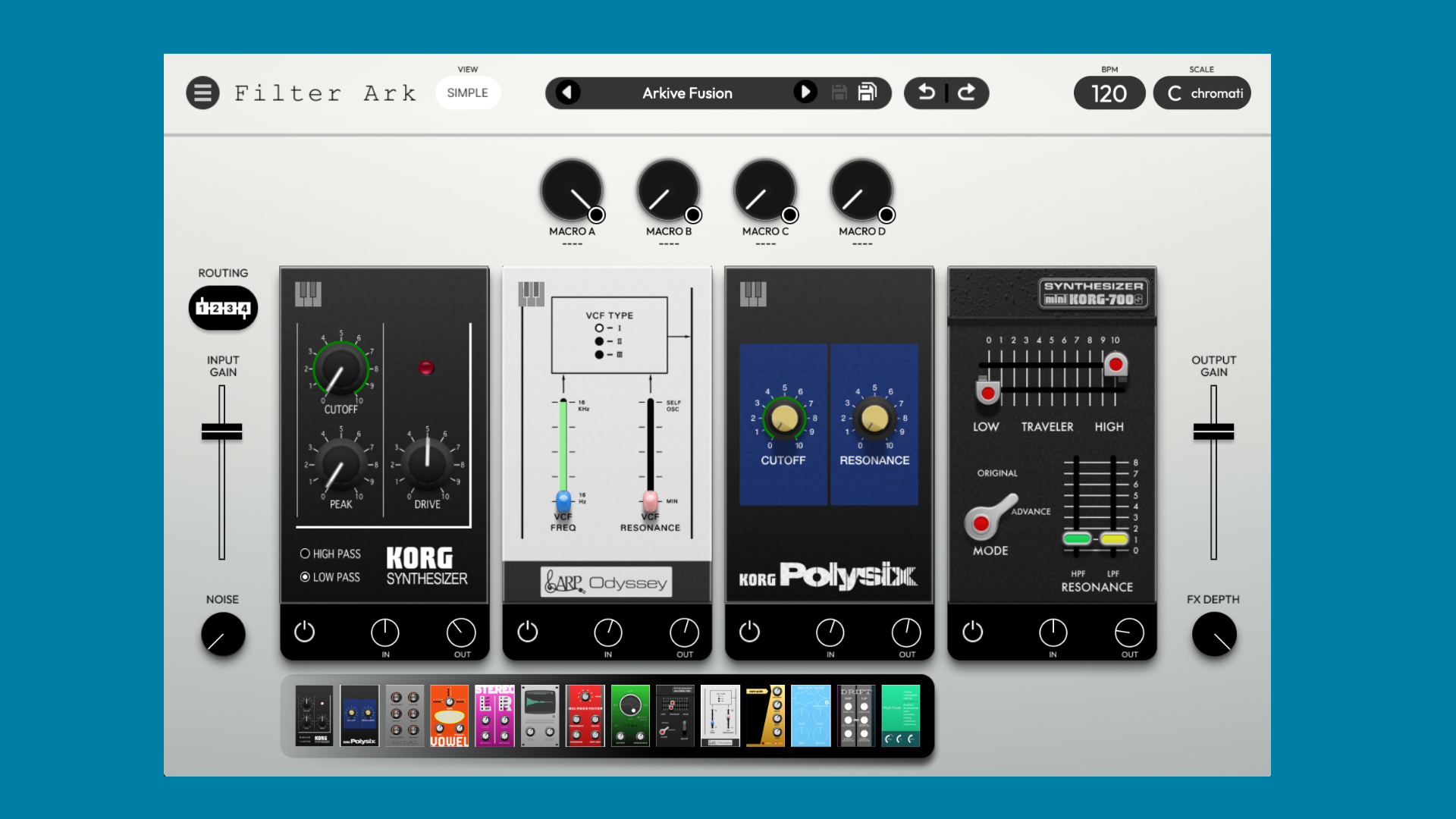
Filter Ark Plugin — Four Legendary Korg Filters in Software
Every microAudio 722 purchase includes the Filter Ark plugin, which recreates four of Korg’s most iconic filter designs in software. When purchased separately, Filter Ark costs $49.99 at its introductory price — a meaningful addition to the bundle’s overall value.
The four filter models span decades of Korg’s synthesizer history, each with a distinct sonic personality:
- MS-20 Filter — The aggressive, gritty high-pass/low-pass filter from Korg’s legendary semi-modular synth. Perfect for industrial textures, techno, and aggressive sound design. When pushed hard, this filter produces the characteristic screaming resonance that defined an entire era of electronic music.
- Polysix Filter — The warm, musical low-pass filter from Korg’s classic polyphonic synthesizer. Ideal for lush pads, smooth strings, and gentle lead sounds. Where the MS-20 filter bites, the Polysix filter caresses.
- miniKORG 700S Filter — The distinctive traveler filter from Korg’s 1970s mono synth. Its unique dual-slider design created sounds that no other filter architecture could replicate, making it a favorite for experimental sound design.
- ARP Odyssey Filter — The state-variable filter from the classic ARP Odyssey, known for its versatile character across low-pass, high-pass, and band-pass modes. Especially effective for funky basslines and cutting lead tones.
The real power of Filter Ark lies in its ability to combine these four filters in series or parallel configurations. Chain the MS-20 high-pass into the Polysix low-pass for a band-pass effect with analog character from two different eras. Run the ARP Odyssey and miniKORG 700S in parallel and blend their outputs for timbres that never existed in hardware. The combinatorial possibilities are vast, and each configuration produces genuinely different results.
Three Practical Studio Workflows With the microAudio 722
Workflow 1: Character Recording Chain. Run your microphone preamp output through the built-in analog filter before it hits the converter. This adds analog coloration at the recording stage — subtle warmth on vocals, gentle high-frequency roll-off on acoustic guitars, or dramatic filter sweeps on synth recordings. Unlike plugin processing, this character is baked into the recording, giving you committed analog texture without any CPU overhead.
This commit-to-print approach was standard practice in analog studios for decades, and there’s a reason many top engineers still prefer it. When you make tonal decisions during recording rather than deferring everything to the mix, you end up with tracks that have identity and direction from the start. The microAudio 722 makes this workflow accessible at the $269 price point — something that previously required separate preamps, outboard EQ, and dedicated filter hardware.
Workflow 2: Live Performance Processor. In standalone mode, the microAudio 722 operates without a computer. Feed a drum machine or synthesizer through the analog filter and manipulate cutoff and resonance in real time during a performance. For DJ sets or live electronic acts, this replaces a dedicated filter effects unit. The physical knobs provide the immediate, tactile control that touchscreens and mouse automation simply cannot match.
Consider the typical live electronic setup: a drum machine, a synthesizer or two, and some form of effects processing. Adding a standalone filter to this chain usually means either a Eurorack module (plus case and power supply) or a dedicated filter pedal. The microAudio 722 serves double duty — it’s your audio interface for the laptop-connected portions of your set, and a standalone filter for the hardware portions. That’s one less piece of gear to carry, power, and cable up.
Workflow 3: DAW Hybrid Reamping. Send a software instrument’s output from your DAW through the microAudio 722’s analog filter and record the result back in. This reamping workflow gives virtual instruments the character of hardware analog processing — the subtle harmonic distortion, the frequency-dependent saturation, the organic movement that distinguishes analog from digital. It’s a practical alternative to owning dedicated analog synthesizer hardware that costs thousands.
The hybrid reamping approach is particularly effective with software synthesizers that sound technically accurate but lack the organic quality of hardware. Run a Serum bass patch through the microAudio 722’s analog filter with moderate resonance, and you’ll hear the difference immediately — the low end gains weight and movement that the original digital signal simply didn’t have. Automate the send in your DAW, record multiple passes with different filter settings, and you’ve built a library of analog-processed variations from a single software patch.
Competitive Positioning — Is $269 the Right Value?
The $269 audio interface market is one of the most competitive segments in music technology. Focusrite Scarlett, Universal Audio Volt, MOTU M4, and Audient iD14 all occupy this space with proven track records for clean conversion and reliable preamps. Against these established competitors, the microAudio 722 takes a fundamentally different approach.
If your primary need is the lowest possible latency and the cleanest possible signal path, the dedicated audio interface specialists may still have the edge. But if you’re a sound designer, electronic music producer, or anyone who values creative signal processing alongside standard I/O, the microAudio 722 offers something genuinely unique. No other interface at any price combines audio conversion with a real analog filter circuit.
The math works out favorably too. A comparable audio interface runs $150-250. A standalone analog filter unit costs $200-400. The Filter Ark plugin adds another $49.99 in value. The microAudio 722 bundles all three for $269. Even accounting for compromises in any individual component, the total package represents strong value for producers who would benefit from all three elements.
It’s also worth considering the Filter Ark plugin’s standalone value in this equation. Even if you already own an audio interface you’re happy with, the Filter Ark plugin at $49.99 gives you access to four meticulously modeled Korg filter circuits inside your DAW. For Korg Collection 6 users, the synergy is even stronger — running MS-20 or Polysix virtual instruments through Filter Ark’s matching filter models creates a cohesive Korg sound design ecosystem within a single plugin chain.
The smartest approach for most electronic music producers would be to evaluate whether the analog filter aligns with their workflow. If you’re already using filter plugins extensively in your mixes, or if you’ve been considering a hardware filter module for your setup, the microAudio 722 delivers both needs in a single compact device. For studios looking to add analog character without investing in expensive outboard gear, this is the most cost-effective entry point Korg has ever offered.
Need professional mixing, mastering, or help building an analog-hybrid studio workflow? Get in touch with Greit Studios.
Get weekly AI, music, and tech trends delivered to your inbox.