OpenAI DevDay 2025: GPT-5 Pro API, AgentKit, and 5 Developer Features That Change How You Build with AI
October 8, 2025
How to Mix for Club Sound Systems: 7 DJ-Focused Production Tips That Actually Translate
October 8, 2025
Want to know how to mix for club sound systems without your tracks falling apart on the dance floor? The first time I heard my own track on a Funktion-One rig, the kick I’d spent hours sculpting turned into a muddy thud. The bass that sounded tight on my Genelecs was rattling the walls in all the wrong ways. The hi-hats? Gone — swallowed by the room. After 28 years of working in audio engineering, I can tell you this: learning to mix for club systems is a completely different discipline from mixing for headphones or studio monitors.
Here’s the uncomfortable truth — most bedroom producers have never heard their tracks on a Funktion-One rig or even a decent club PA. And that disconnect between the studio and the dance floor is where mixes go to die. Club sound systems reproduce frequencies that your studio monitors physically cannot. They sum low frequencies to mono. They expose every phase issue you didn’t know existed. This guide covers the essential techniques to mix for club sound systems so your tracks actually translate from your DAW to the dance floor.
How to Mix for Club Sound Systems: Mono Compatibility First
Most club sound systems sum everything below 80-100Hz to mono. This isn’t a design flaw — it’s physics. Low frequencies have long wavelengths, and stereo information at those frequencies causes phase cancellation in large rooms. As Pheek’s guide on crafting club-ready tracks emphasizes, your kick, bass, and snare must be mono-compatible or they’ll simply vanish on a club system.
Here’s what this means in practice:
- Make everything below 80Hz mono. Use a utility plugin or mid/side EQ to collapse the stereo field below 80Hz. Any stereo information in the sub-bass range is asking for phase cancellation on club systems.
- Use a correlation meter religiously. Free plugins like Voxengo SPAN include a correlation meter. If it drops below zero, you have phase issues that will cost you on a club system. Check it constantly.
- Build a mono-checking habit. Every 15-20 minutes during your mix session, hit that mono button. If elements disappear, fix them before moving on. What vanishes in mono will vanish in the club.
- Align kick and bass phase. When your kick and bass hit simultaneously, phase misalignment causes massive low-end energy loss. Zoom into the waveforms, check polarity, and nudge timing if needed. This single step can add perceived loudness without touching a limiter.

Bass Management: Controlling the Low End for Large PA Systems
The low end is where the biggest gap exists between studio mixing and club mixing. According to Mixmag’s guide to Ibiza’s soundsystems, high-end rigs like Funktion-One and D&B Audiotechnik reproduce frequencies down to 32Hz and below. Your studio monitors likely roll off around 45-50Hz. That means there’s an entire octave of bass energy you can’t even hear in your studio — but the club audience will feel it in their chest.
Effective bass management for club systems comes down to these principles:
- High-pass everything at 20Hz. Apply a high-pass filter at 20Hz on your master and individual tracks to remove inaudible rumble that eats headroom. For non-bass elements, set the high-pass much higher — 80Hz for pads, 150Hz for vocals, even higher for effects.
- Keep low-end no more than 4dB above mids. When your sub-bass energy exceeds the midrange by more than 4dB, club systems lose punch and clarity. The bass overwhelms everything else and turns into an unfocused rumble.
- Focus energy in the 40-60Hz sweet spot. Research on DJ speaker frequency response shows that the 40-60Hz range is where the physical “thump” lives in a club. This is the frequency range that makes people move. Concentrate your sub-bass energy here.
- Separate sub-bass from mid-bass. Think of 20-60Hz (sub-bass) and 60-250Hz (mid-bass) as two distinct instruments. Use EQ to carve clear lanes for each. Overlapping sub and mid-bass is the number one cause of muddy low end on club systems.
Mastering to -10 LUFS: Loudness and Dynamic Range for the Club
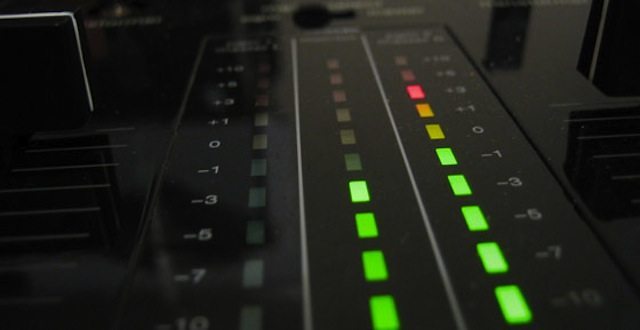
Club music typically targets an integrated loudness of around -10 LUFS. This is significantly louder than Spotify’s -14 LUFS normalization target, and for good reason — DJs need tracks with energy and presence that cut through a noisy club environment. But chasing loudness without understanding dynamic range is where most producers go wrong.
Slamming a limiter to hit -8 LUFS might look impressive on a meter, but it kills the transients that give your kick its punch and your snare its snap. As Funktion-One founder Tony Andrews has emphasized, keeping your signal chain clean is paramount. A clipping, over-limited track sounds absolutely brutal on a high-powered PA — and not in a good way.
Here’s a mastering checklist for club-ready tracks:
- Target -10 to -8 LUFS integrated. Techno and house generally sit around -9 LUFS. Drum and bass can push to -8 LUFS. Going louder than -8 LUFS almost always sacrifices too much dynamic range.
- True Peak below -1dBTP. Inter-sample peaks cause clipping on D/A converters in club systems. Always use a True Peak limiter and set the ceiling to -1dBTP or lower.
- Maintain at least 6dB of dynamic range. Check your Loudness Range (LRA) measurement. If it drops below 6dB, your track will sound flat and lifeless on a big system. Dynamics are what create energy and movement on the dance floor.
- Gate your reverb tails. Club rooms have their own natural reverb — often a long one. When your track’s reverb tails overlap with the room’s acoustics, the low end gets washed out. Use gating or sidechain compression to keep reverb tails tight, especially in the bass frequencies.
Frequency Optimization: Understanding Different Club Sound Systems
Not all club systems are created equal. Funktion-One rigs use horn-loaded designs that deliver exceptional midrange clarity. D&B Audiotechnik systems are known for their flat, even frequency response. But regardless of the specific system, certain mixing principles apply universally.
- Clean up 250Hz-500Hz ruthlessly. This range coincides with room resonances in most club spaces. Muddy mixes almost always have too much energy here. Use reductive EQ with broad cuts — think wide Q, subtle reduction. Narrow boosts and wide cuts is the golden rule.
- Protect the 2-5kHz presence range. This is where vocal intelligibility, synth leads, and hi-hat definition live. Make sure these elements have space, but don’t over-boost. Extended listening at club volumes in this range causes ear fatigue fast.
- Go easy above 10kHz. High frequencies are naturally absorbed by air and bodies in a large room. A mix that sounds airy and bright in the studio will translate just fine in the club. Over-hyping the top end in your mix leads to harshness at club volumes.
- Mix bass first. Start every session with the kick and bass. Get those right, and everything else falls into place on top. This bottom-up approach is the standard workflow for club music production and the single best habit you can build.
Studio-to-Club Workflow: Practical Steps That Actually Work
Theory is one thing. Applying it under deadline pressure with your next release date looming is another. Here’s the workflow I’ve refined over 28 years of working across studios, clubs, and live venues.
- Use reference tracks — always. Pull 3-5 tracks that you know sound great on club systems. Use a spectrum matching plugin to compare your frequency balance objectively. Your ears lie to you after an hour of mixing. References don’t.
- Check on at least four playback systems. Headphones, nearfield monitors, car speakers, and a Bluetooth speaker. If your mix translates well across all four, it will almost certainly work in a club. This takes 10 minutes and saves you from embarrassment.
- Consider stem mastering. Instead of bouncing a single stereo file to your mastering chain, export stems — kick, bass, melodic elements, drums. Stem mastering gives you far more control over the final balance and lets you optimize each element independently for club playback.
- Test in a real club when possible. Many clubs offer sound check time before events. Take advantage of it. Play your tracks, walk the room, listen from different positions. No amount of studio reference checking replaces hearing your track on the actual system where it’ll be played.
Learning how to mix for club sound systems isn’t about cranking up the volume or piling on more sub-bass. It’s about understanding the physical reality of how large speaker systems reproduce sound in big rooms full of people. Mono compatibility, disciplined bass management, proper loudness targeting, and frequency optimization — master these four pillars, and your tracks will hit hard on any system, from a basement club to a festival main stage. The distance between a bedroom mix and a club-ready track is shorter than you think. It just requires the right approach.
Need your tracks professionally mixed and mastered for club systems? 28 years of audio engineering experience at your service.
Get weekly AI, music, and tech trends delivered to your inbox.