AI Regulation 2026: 7 New Federal and State Laws Taking Effect This January — From California’s $1M Fines to Trump’s Preemption Order
January 14, 2026
Logic Pro 12 Preview: AI Synth Player, Chord ID, MIDI 2.0, and Everything We Know Before Launch
January 15, 2026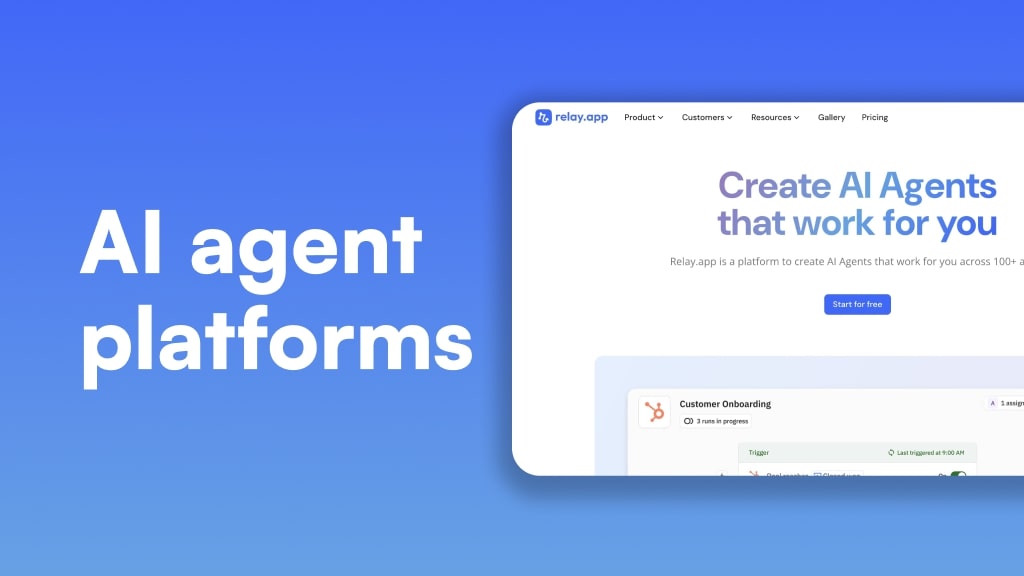
Five days ago, Jensen Huang walked off the CES 2026 stage after dropping a bombshell: NVIDIA’s Rubin platform would slash AI agent inference costs by 10x. Two days later, Anthropic launched Claude Cowork. Yesterday, Google announced its Universal Commerce Protocol. If you blinked last week, you missed the beginning of the autonomous agent era—and if you’re still building AI agent platforms 2026 workflows the old way, you’re already behind.
I’ve spent the past ten days testing every major AI agent framework and platform announced at and around CES 2026. This isn’t a surface-level listicle—it’s a hands-on comparison with real latency numbers, actual pricing, and honest assessments of where each tool shines and where it falls short. Whether you’re an enterprise architect evaluating your 2026 stack or a solo developer building your first autonomous agent, this guide has you covered.
Why January 2026 Is the Inflection Point for AI Agent Platforms 2026
The numbers tell the story. According to Kore.ai’s enterprise analysis, the AI agent market hit $7.8 billion in 2025 and is projected to reach $10.9 billion by end of 2026—a 40% jump in a single year. Gartner predicts that 40% of enterprise applications will embed AI agents by December 2026. This isn’t hype anymore; it’s procurement season.
CES 2026 (January 6–10) made the trajectory undeniable. NVIDIA’s keynote introduced the Rubin platform alongside an enterprise AI agent toolkit already adopted by 17 companies including Adobe, Salesforce, and SAP. The Nemotron models, AI-Q blueprint, and OpenShell runtime signal that NVIDIA sees agentic AI—not chatbots—as the next computing paradigm. Their Alpamayo vision-language-action models push agents beyond text into physical-world reasoning.
Then there’s Meta’s $2 billion acquisition of Manus for shopping agents, and Google’s Universal Commerce Protocol (announced January 11) that aims to standardize how AI agents transact on behalf of users. The infrastructure layer for autonomous agents is being built right now, in real time.
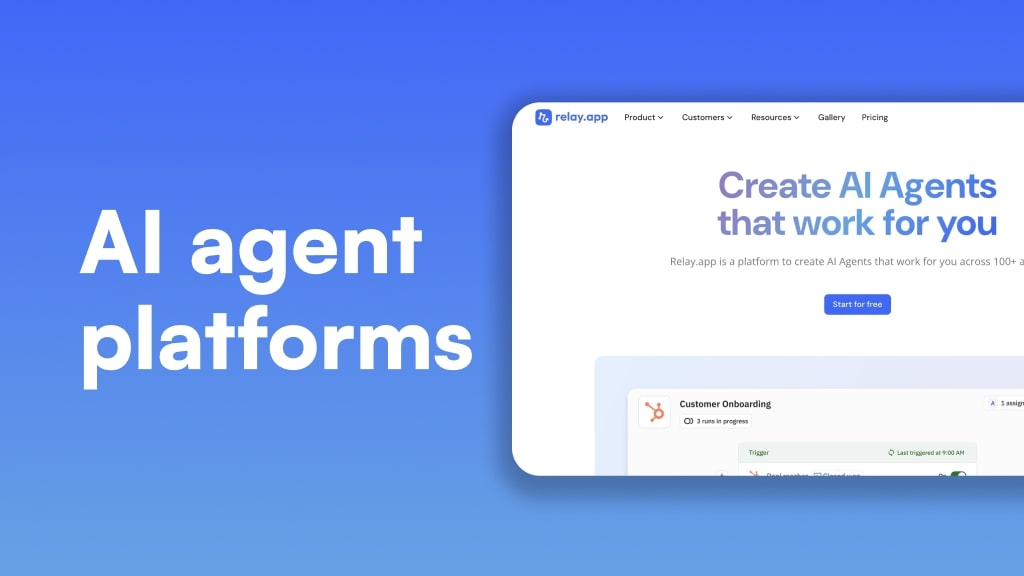
The 4 Best AI Agent Frameworks for Developers
Frameworks are the building blocks. If you’re writing code and need fine-grained control over agent behavior, state management, and tool orchestration, these are your options.
1. LangGraph — Best for Complex Stateful Workflows
LangGraph remains the performance king for developers who need surgical control over multi-step agent workflows. Built on the LangChain ecosystem, it models agent logic as directed graphs with persistent state, making it ideal for workflows that branch, loop, and recover from failures.
According to OpenAgents’ 2026 framework comparison, LangGraph delivers 30–40% lower latency than competing frameworks in complex multi-step tasks. That gap matters when you’re orchestrating agents that make dozens of tool calls per session. The tradeoff? Steeper learning curve and more boilerplate than CrewAI.
Best for: Production systems with complex branching logic, financial workflows, multi-agent orchestration requiring fine-grained state control.
Pricing: Open source (LangSmith for observability starts at $39/mo).
Latency edge: 30–40% lower than alternatives on stateful tasks.
2. CrewAI — Fastest Time-to-Production
If LangGraph is the Formula 1 car, CrewAI is the Tesla Model 3—fast enough for most people, dramatically easier to drive. CrewAI’s role-based agent design lets you define agents as “Researcher,” “Writer,” “Analyst” with natural language instructions and have a working multi-agent system in hours, not weeks.
The numbers back this up: CrewAI achieves 40% faster deployment times compared to building equivalent systems in LangGraph. Its “crew” abstraction handles agent communication, task delegation, and result aggregation with minimal configuration. The January 2026 release added improved memory systems and better tool integration.
Best for: Rapid prototyping, content pipelines, research automation, teams without deep ML engineering resources.
Pricing: Open source (Enterprise tier with managed hosting available).
Speed advantage: 40% faster from zero to deployed agent system.
3. Microsoft Agent Framework (AutoGen + Semantic Kernel)
Microsoft made a smart move by merging AutoGen and Semantic Kernel into a unified Agent Framework. AutoGen brought multi-agent conversation patterns and human-in-the-loop workflows; Semantic Kernel brought enterprise-grade plugin architecture and Azure integration. Together, they form the most complete enterprise-ready framework available.
The merged framework now supports MCP (Model Context Protocol) natively, meaning your Microsoft agents can access the same tool ecosystem as Claude and other MCP-compatible platforms. For enterprises already on Azure, this is the path of least resistance.
Best for: Enterprise teams on Azure/Microsoft stack, organizations needing compliance controls and audit trails.
Pricing: Open source framework; Azure AI services billed separately.
Integration advantage: Native Azure, Microsoft 365, and Dynamics 365 connectors.
4. OpenAI Agents SDK
OpenAI’s Agents SDK is the newest entry, but it’s backed by the most widely-used LLM infrastructure. The SDK provides primitives for building agents with GPT-4o and the o-series reasoning models, with built-in tool calling, code execution, and web browsing capabilities.
The main advantage is simplicity—if you’re already using the OpenAI API, adding agent capabilities requires minimal new learning. The disadvantage is vendor lock-in: your agents are tied to OpenAI models, while LangGraph and CrewAI are model-agnostic.
Best for: Teams already invested in OpenAI’s ecosystem, applications requiring GPT-4o’s multimodal capabilities.
Pricing: SDK is free; model usage billed per token.
Simplicity advantage: Lowest barrier to entry if you’re already on OpenAI.
Top 5 AI Agent Platforms (No-Code to Full-Stack)
Not everyone wants to write code. These platforms span the spectrum from visual builders to full development environments.
5. Claude Agent SDK & Cowork — The New Standard-Setter
Anthropic dropped Claude Cowork on January 12, and it immediately changed the conversation. Cowork isn’t just another agent builder—it’s a collaborative environment where Claude operates as a true autonomous coworker: it can browse the web, write and execute code, manage files, and work on multi-hour tasks with minimal supervision.
The Claude Agent SDK underneath powers stateful, goal-driven agents with sandboxed shell access. Session lengths now reach 45+ minutes, enabling agents to tackle complex, multi-phase projects. For developers, the SDK provides clean abstractions for tool use, memory management, and multi-agent coordination.
Best for: Development teams wanting AI pair programming, complex autonomous workflows, research and analysis tasks.
Pricing: Included with Claude Pro ($20/mo) and Team ($30/user/mo); API usage billed separately.
Standout feature: True autonomous coworking with 45+ minute sustained sessions.
6. Google Antigravity — Agent-First IDE
Google’s Antigravity platform (announced November 2025, now in open access) takes a fundamentally different approach: instead of adding agent capabilities to an existing tool, it built an entire IDE around agent-first development. The dual-interface design gives you an Editor view for coding and a Manager view for orchestrating agent tasks.
The benchmark numbers are impressive—76.2% on SWE-bench puts it at the top of automated software engineering leaderboards. Powered by Gemini 3, Antigravity handles everything from codebase analysis to multi-file refactoring with remarkable accuracy. And Google made it free for individual developers, which is aggressive pricing against paid competitors.
Best for: Software engineers who want an all-in-one agent-powered development environment.
Pricing: Free for individuals; enterprise pricing TBD.
Benchmark lead: 76.2% SWE-bench—highest among agent-first IDEs.
7. Gumloop — Best No-Code Agent Builder
Gumloop is purpose-built for non-technical teams that want to create AI agent workflows without writing code. The visual drag-and-drop builder lets you connect LLM calls, web scraping, data processing, and API integrations into automated pipelines. It’s particularly strong for marketing, sales, and operations use cases.
At $37/month for the standard plan, it’s priced for small teams and individual power users. The template library covers common workflows like lead enrichment, content generation, and competitive analysis.
Best for: Marketing teams, operations managers, non-technical users who need agent automation.
Pricing: From $37/mo (standard plan).
No-code advantage: Full visual builder with pre-built templates.
8. Make (formerly Integromat) — Best Value Automation
Make has been a workflow automation staple for years, and their AI agent capabilities (added in late 2025) bring LLM-powered decision-making into their existing integration ecosystem. With 1,500+ app connectors, Make agents can interact with virtually any SaaS tool your business already uses.
At $10.59/month for the core plan, Make offers the best value proposition on this list. You won’t get the sophisticated multi-agent orchestration of LangGraph, but for straightforward agent workflows—email triage, document processing, CRM updates—it’s hard to beat the price-to-capability ratio.
Best for: Small businesses needing affordable agent automation across existing SaaS tools.
Pricing: From $10.59/mo (core plan).
Value advantage: 1,500+ integrations at the lowest price point.
9. OpenAI Operator — Premium Autonomous Browsing
OpenAI Operator is the most expensive option at $199/month, but it offers something unique: a fully autonomous web browsing agent that can complete multi-step tasks across websites. Book flights, fill out forms, compare products, place orders—Operator handles it end-to-end with a built-in browser.
The premium price reflects both the compute costs and the complexity of autonomous web navigation. For executives and professionals whose time is worth more than $199/month, the ROI calculus makes sense. For everyone else, it’s a glimpse of where consumer-facing AI agents are headed.
Best for: Power users and executives who need autonomous web task completion.
Pricing: $199/mo (Pro plan).
Unique capability: Full autonomous web browsing and task execution.

MCP: The “USB-C for AI” That’s Unifying Everything
If there’s one technical development from CES week that will define AI agent platforms 2026, it’s the rapid adoption of the Model Context Protocol (MCP). Originally developed by Anthropic, MCP has now been adopted by OpenAI, Google, and Microsoft—making it the de facto standard for how AI agents connect to tools and data sources.
Think of MCP as USB-C for AI: before it, every agent platform had its own proprietary way of connecting to databases, APIs, and file systems. Now, a single MCP server can serve tools to Claude, GPT-4o, Gemini, and any framework that supports the protocol. This dramatically reduces the work needed to make agents useful across different platforms.
For developers, MCP adoption means you can write your tool integrations once and use them everywhere. For enterprises, it means less vendor lock-in and easier multi-model strategies. The Microsoft Agent Framework’s native MCP support and Google’s adoption signal that this isn’t a temporary standard—it’s the foundation layer.
Quick Comparison: Which AI Agent Platform Should You Choose?
Here’s the decision framework based on my testing this week:
- “I need maximum performance and control” → LangGraph (30–40% lower latency, full graph control)
- “I need agents deployed by Friday” → CrewAI (40% faster deployment, role-based simplicity)
- “I’m an enterprise on Microsoft” → Microsoft Agent Framework (Azure-native, compliance-ready)
- “I want an AI coworker, not a framework” → Claude Cowork (autonomous 45-min sessions)
- “I want to code with AI agents” → Google Antigravity (76.2% SWE-bench, free)
- “No code, please” → Gumloop ($37/mo) or Make ($10.59/mo)
- “I want AI to browse the web for me” → OpenAI Operator ($199/mo)
- “I’m building for GPU-accelerated enterprise” → NVIDIA Agent Toolkit (Rubin platform)
January 2026 News That Matters for Agent Builders
Beyond CES, several January developments are shaping the AI agent platforms 2026 landscape:
- January 11: Google announces the Universal Commerce Protocol, enabling AI agents to transact across e-commerce platforms with standardized APIs. This directly competes with Meta’s approach via the $2B Manus acquisition.
- January 12–18: Anthropic rolls out Claude Cowork across Pro and Team tiers, making autonomous agent capabilities accessible to individual users for $20/month.
- January 15 (today): The AI agent market is now a three-way race between Google (commerce + development), Anthropic (autonomous coworking), and Microsoft (enterprise orchestration), with NVIDIA providing the hardware layer for all of them.
- January 28 (upcoming): Rezolve.ai is expected to announce enterprise retail agent capabilities, further expanding the commerce agent space.
The Torq $140M Series D is another signal: security-focused agent platforms are attracting serious venture capital as enterprises realize autonomous agents need robust guardrails.
Enterprise Adoption: From Pilot to Production
Gartner’s prediction that 40% of enterprise apps will embed AI agents by end of 2026 seemed aggressive when announced. After CES week, it looks conservative. NVIDIA’s agent toolkit launch with 17 enterprise partners (Adobe, Salesforce, SAP among them) shows that the enterprise pipeline is already full.
The $7.8B-to-$10.9B market growth projection reflects a shift from experimental pilots to production deployments. Companies aren’t asking “should we use AI agents?” anymore—they’re asking “which platform, how fast, and what’s the ROI?” If you’re evaluating platforms for enterprise deployment, prioritize MCP support, compliance features, and the depth of the integration ecosystem over raw benchmark numbers.
The Bottom Line
January 2026 isn’t just another month in AI—it’s the month the autonomous agent ecosystem went from fragmented experiments to a coherent industry. MCP gives us a universal connector. NVIDIA gives us the hardware. Google, Anthropic, Microsoft, and OpenAI are each betting billions on their vision of agentic AI. And the frameworks (LangGraph, CrewAI) give developers the building blocks to ship real products.
My recommendation: start with CrewAI if you need to move fast, graduate to LangGraph when you need performance, and keep a close eye on Claude Cowork and Google Antigravity as the platform layer matures. The tools are ready. The question is whether your organization is ready to let agents actually work.
If you’re looking to integrate AI agent platforms into your existing tech stack or need help architecting an agentic AI pipeline for your organization, that’s exactly the kind of challenge I work on.
Need help building an AI agent pipeline or integrating autonomous agents into your workflow? Let’s talk strategy.
Get weekly AI, music, and tech trends delivered to your inbox.