AI Predictions 2026: 7 Industry Trends That Will Reshape Technology Next Year
December 25, 2025
AI Predictions 2026: 7 Trends That Will Reshape the Industry Next Year
December 25, 2025
Over 60% of music producers now rely on AI-assisted tools in their daily workflow — and that number is set to climb even higher in 2026. As we close out 2025, the music production trends 2026 landscape is shaping up to be one of the most transformative years the industry has ever seen. From generative AI settling into the mainstream to spatial audio becoming the default mixing format, the way we create, collaborate, and distribute music is evolving at breakneck speed.
Whether you’re a bedroom producer, a professional engineer, or somewhere in between, understanding what’s coming can give you a serious edge. Here’s a deep look at the tools, technologies, and cultural shifts that will define music production in 2026.
AI Integration in DAWs: From Novelty to Necessity
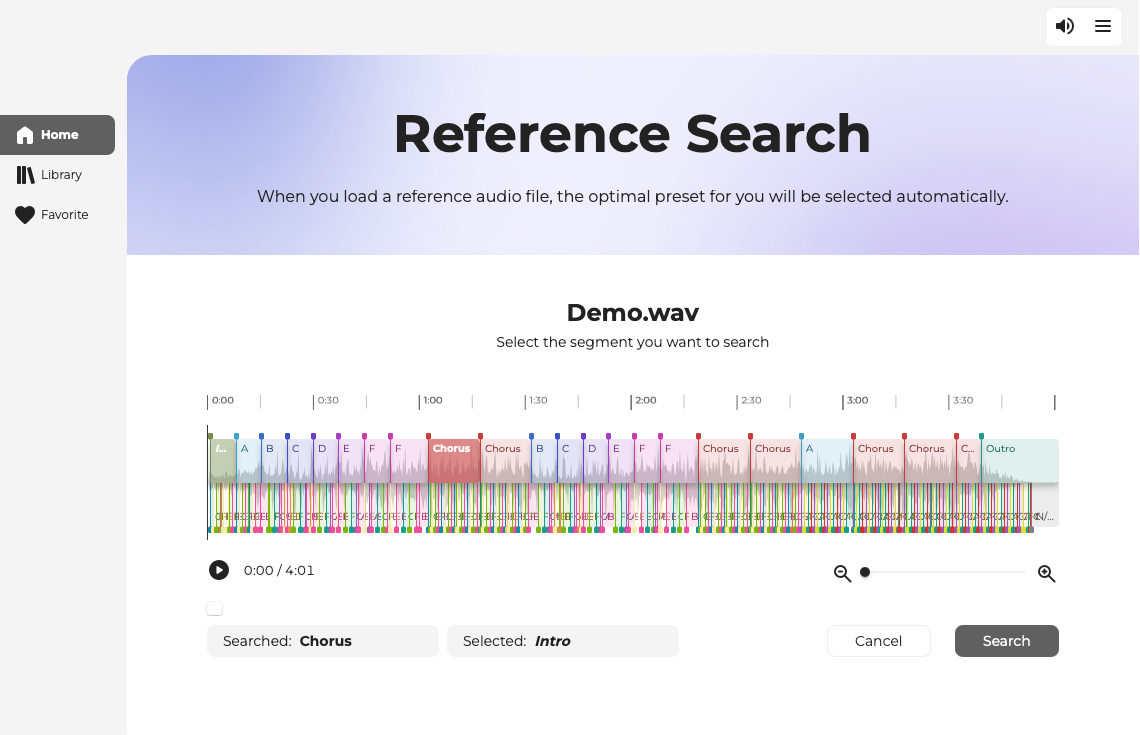
The biggest story of 2025 was how deeply AI became embedded in the tools we already use. Apple’s Logic Pro introduced the AI Session Player, letting producers generate realistic drum, bass, and keyboard parts that adapt to existing arrangements in real time. Ableton rolled out real-time stem separation directly inside Live, making sample-based production faster and more intuitive than ever. Even FL Studio jumped in with browser-based stem separation that works without any local processing power.
These aren’t gimmicks — they’re practical tools that save hours of work. Consider the time savings alone: what used to require manually chopping samples for an afternoon can now be accomplished in seconds with AI-powered stem separation. Arrangement suggestions that once demanded extensive music theory knowledge are now available at the click of a button, democratizing production for newcomers while accelerating workflows for veterans.
In 2026, expect every major DAW to ship AI features as standard. PreSonus and Bitwig are both rumored to be developing their own AI-assisted composition tools, and open-source DAWs like Ardour are exploring community-driven AI plugins. The question is no longer whether AI belongs in your production workflow, but how you’ll use it to enhance your creative process without letting it take the wheel.
Generative AI Music Platforms: The New Power Players
Beyond DAW integrations, standalone generative AI platforms have carved out their own space in the ecosystem. Suno has emerged as the dominant platform for AI-generated vocal songs, while Udio leads in raw audio quality. For cinematic and orchestral composition, AIVA continues to be the go-to tool for film and game composers looking for rapid prototyping.
The legal landscape is catching up, too. Warner Music Group settled with Suno in November 2025, paving the way for licensed data models that respect copyright while enabling innovation. Universal Music Group has followed with similar licensing deals. This shift toward legitimate, licensed AI models is one of the most important music production trends 2026 will solidify — expect a clearer framework for how AI-generated music fits into commercial releases.
For producers, these platforms are best used as idea generators and starting points. Feed them a concept, refine the output, and layer your own musicianship on top. That hybrid approach is where the real magic happens. Think of it like having a tireless collaborator who can sketch out dozens of variations in minutes — you still make all the final decisions about what stays, what goes, and what gets transformed into something entirely new.
One practical workflow gaining traction: use Suno or Udio to generate rough demos from text prompts, then import those stems into your DAW as reference material or starting layers. This bridges the gap between pure AI generation and traditional production, giving you creative fuel without sacrificing originality.
Spatial Audio Goes Mainstream
If 2024 was the year spatial audio got serious, 2025 was the year it became unavoidable. Dolby Atmos plugin downloads surged 31% year-over-year, and the ecosystem now boasts over 2,100 spatial audio tools. That’s not a niche — that’s an industry standard in the making.
LANDR launched a stereo-to-Atmos remastering service that lets artists convert their existing catalog to spatial formats without rebuilding sessions from scratch. Meanwhile, binaural audio tools grew 42%, driven by headphone-first listeners on Spotify, Apple Music, and Tidal.
In 2026, mixing in spatial audio will shift from a premium add-on to a baseline expectation for professional releases. Apple Music already prioritizes Atmos-enabled tracks in its algorithmic recommendations, and Spotify has been expanding its spatial audio catalog throughout 2025. For independent producers, this means that learning Atmos workflows isn’t just a nice-to-have — it’s becoming a competitive necessity.
The good news is that the barrier to entry has never been lower. Apple’s free Spatial Audio tools, combined with affordable monitoring solutions from companies like Genelec and IK Multimedia, mean you can start experimenting with immersive mixing without a massive investment. If you haven’t started learning Atmos workflows, now is the time — the demand has never been higher, and early movers will have a significant advantage as the format becomes standard.
Hardware and Plugins Worth Watching
2025 delivered some standout releases that will continue to shape production heading into the new year:
- Serum 2 — Steve Duda’s long-awaited sequel brings a completely redesigned engine with expanded modulation and wavetable capabilities. This is already becoming the go-to synth for electronic producers.
- Akai MPC Live III — Standalone production gets another upgrade with improved sampling, built-in spatial audio monitoring, and tighter DAW integration.
- Roland TR-1000 — Roland’s next-generation drum machine blends classic analog modeling with AI-assisted pattern generation.
- Arturia AstroLab 37 — A compact version of the AstroLab bringing stage-ready keyboard performance to smaller setups.
- ValhallaDSP FutureVerb — A fresh reverb plugin from one of the most trusted names in audio processing, featuring AI-modeled room acoustics.
- Native Instruments Absynth 6 — The return of one of NI’s most beloved synths, now with granular synthesis and deep Komplete integration.
Keep an eye on these throughout 2026 as updates and community-built presets expand their capabilities even further.
The Human-First Backlash: Authenticity as a Selling Point
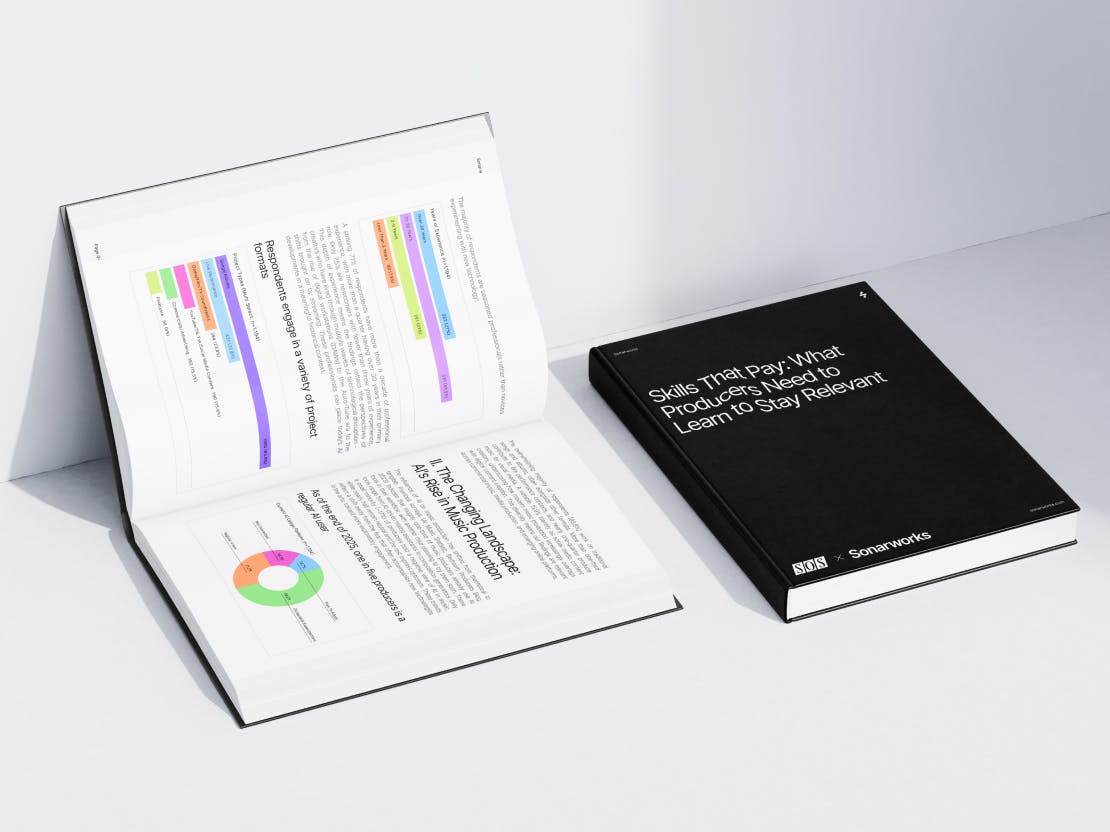
Not everyone is celebrating the AI revolution. A recent survey of over 1,100 producers revealed that 77% fear AI-driven homogenization — the idea that music will start sounding increasingly the same as more people rely on the same algorithms and models.
This concern is spawning a counter-movement. “Certified human” badges are beginning to appear on releases and profiles, signaling that a track was produced without generative AI. An authenticity premium is emerging, where hand-crafted, human-produced music commands higher perceived value — especially in sync licensing, live performance, and collector markets.
In 2026, the most successful producers will likely be those who find the sweet spot: using AI to handle tedious tasks while keeping the creative decisions unmistakably human. Your unique perspective, taste, and imperfections are what make your music yours — and that’s something no algorithm can replicate.
Cloud Collaboration and the Distributed Studio
Remote collaboration platforms like Soundtrap and BandLab have matured significantly. Real-time co-production sessions — where two or more producers work on the same project simultaneously from different continents — are now stable and practical.
This trend connects directly to the broader industry shift toward globalization. Emerging markets in Africa, Southeast Asia, and Latin America are producing world-class talent, and cloud tools remove the geographic barriers that once kept collaborations local. A producer in Seoul can now lay down a beat, send it to a vocalist in Lagos, have it mixed by an engineer in London, and master it in Los Angeles — all within the same project file, all in real time.
In 2026, expect more cross-cultural productions and genre-blending projects born from distributed studio setups. The technical friction of remote collaboration has been solved. What remains is the creative opportunity — and it’s enormous. Producers who actively seek out international collaborators will have access to sounds, rhythms, and perspectives that give their music a distinctive edge in an increasingly crowded marketplace.
Music Production Trends 2026: Industry-Level Shifts
Beyond the studio, several macro-level trends will influence how producers approach their craft and careers in the coming year:
- Modular deal structures — Labels are moving away from traditional advances in favor of flexible, revenue-share agreements tailored to each project.
- Digital sovereignty — Smart producers are building direct relationships with fans through email lists and SMS communities rather than depending solely on algorithm-driven platforms.
- Micro-touring circuits — Intimate venue tours with 200–500 capacity rooms are becoming more profitable and sustainable than chasing arena-scale bookings.
- Emerging market globalization — Production styles from Lagos, Jakarta, and São Paulo are influencing mainstream Western pop, creating demand for producers who understand diverse sonic palettes.
Understanding these shifts isn’t just industry trivia — it directly impacts the kind of music that gets commissioned, licensed, and streamed in 2026.
How to Prepare for 2026
With so much changing, here’s a practical checklist to make sure you’re ready:
- Learn at least one AI tool deeply — Pick one (Logic’s Session Player, Ableton’s stem separation, or a generative platform like Suno) and integrate it into your actual projects.
- Start mixing in spatial audio — Even if your releases don’t require it yet, build the skill now. Free Dolby Atmos plugins and Apple’s Spatial Audio tools make this accessible.
- Invest in your unique sound — As AI makes production easier for everyone, your distinctive creative voice becomes your most valuable asset.
- Build direct fan connections — Start or grow an email list. Own your audience relationship instead of renting it from streaming platforms.
- Explore cloud collaboration — Connect with producers in other regions. Cross-cultural projects are where some of the most exciting music will come from next year.
2026 promises to be a pivotal year for music production. The tools are more powerful, the barriers are lower, and the opportunities are more global than ever. The producers who thrive will be those who embrace new technology while staying rooted in the human creativity that makes music meaningful.
Ready to take your productions to the next level in 2026? Whether you need mixing, mastering, or full production support, our team stays on the cutting edge of every trend covered here.
Get weekly AI, music, and tech trends delivered to your inbox.