Logic Pro 12 Preview: AI Synth Player, Chord ID, MIDI 2.0, and Everything We Know Before Launch
January 15, 2026
Free Music Production Software 2026: 7 Best Free DAWs for Beginners
January 16, 2026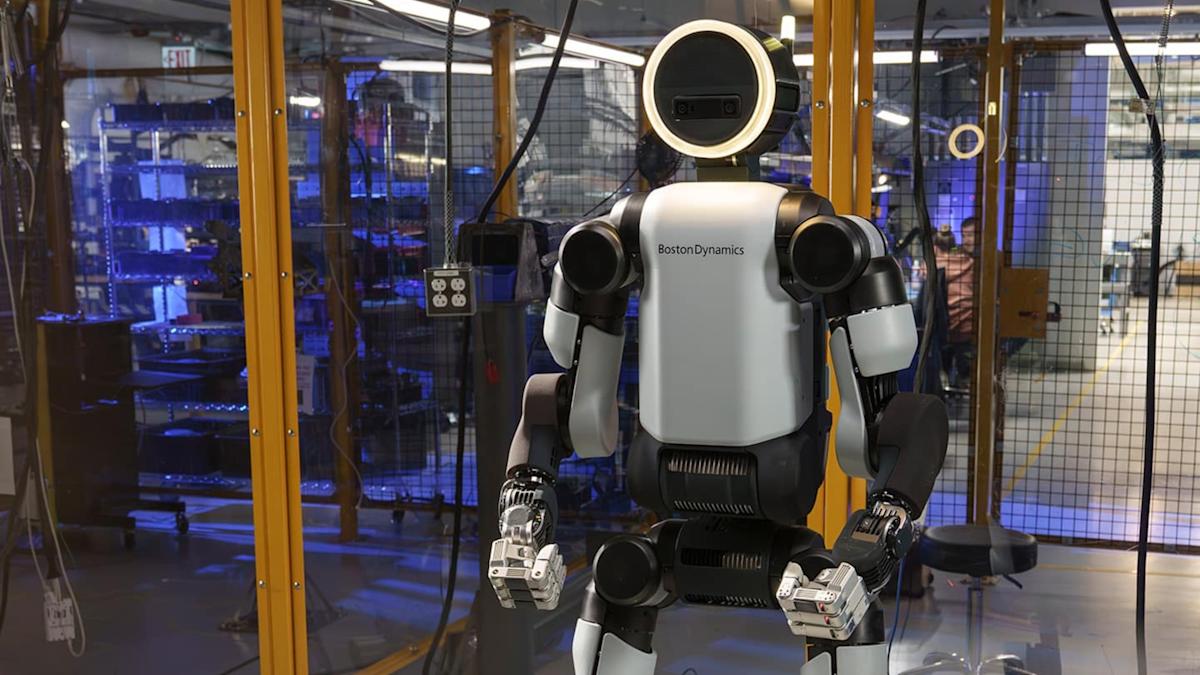
Forty companies brought humanoid robots to CES 2026. Not as prototypes behind glass — as production-ready machines that actually picked things up, walked across stages, and in one case, cleaned an entire living room by themselves. After years of flashy demos that led nowhere, this January in Las Vegas finally delivered the receipts.
From Boston Dynamics unveiling the production version of Atlas to Figure AI’s Helix system autonomously tidying a room, CES 2026 robotics marked the clearest shift yet: humanoid robots are no longer a question of “if” but “how fast.” Here are the five demos that mattered most — and what they tell us about where this industry is actually headed.
1. Boston Dynamics Atlas: The Robot That Won Best of CES 2026
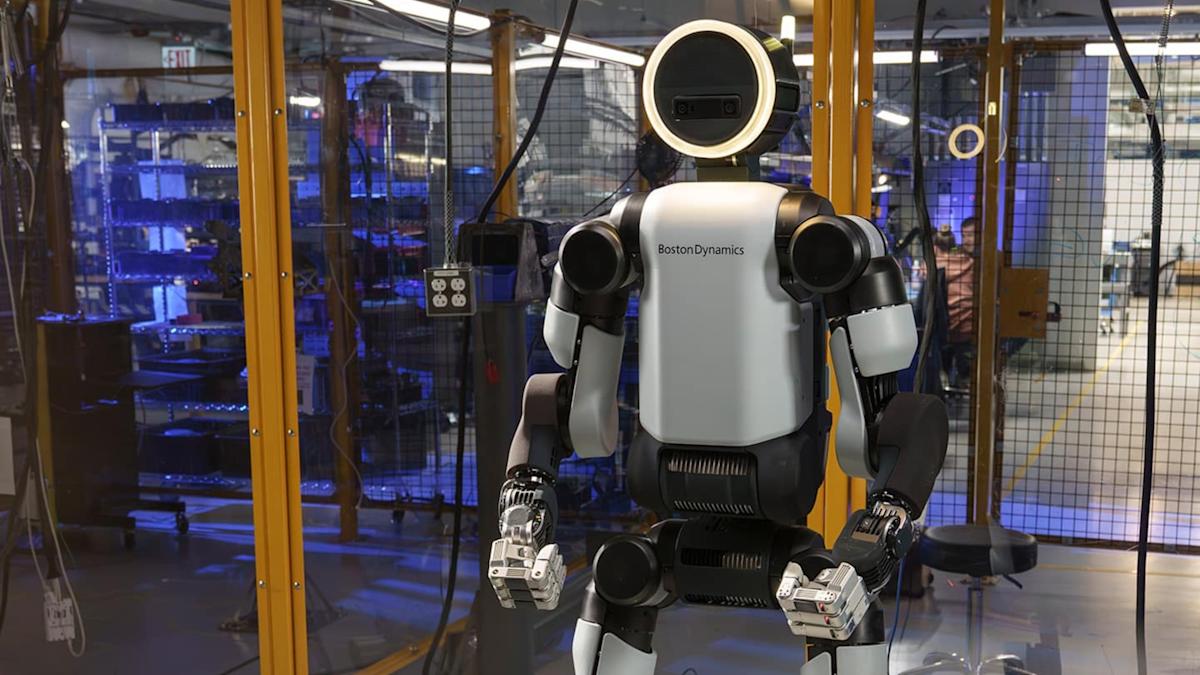
Boston Dynamics didn’t just show up to CES — they stole the show. On January 5, the company unveiled the production-ready version of its all-electric Atlas humanoid robot during Hyundai’s global media day presentation. The robot picked itself up from a flat position on the floor, walked fluidly across the stage for several minutes, waved to the crowd, and swiveled its head like an owl — all while an engineer remotely piloted it from nearby.
The numbers are staggering. Atlas now boasts 56 degrees of freedom, a 7.5-foot reach, and a 110-pound lifting capacity. Its clever joint design enables continuous 360-degree rotation in the hips, wrists, and neck — meaning it can twist its entire torso and rotate its head in ways that are, frankly, a bit unsettling to watch. The robot operates in temperatures from -4°F to 104°F and runs on a 4-hour battery.
But the real news isn’t the specs — it’s the deployment timeline. All Atlas units for 2026 are already fully committed. Fleets will ship to Hyundai’s Robotics Metaplant Application Center in Georgia and to Google DeepMind, where they’ll integrate Gemini Robotics AI foundation models. By 2028, Atlas will help assemble cars at Hyundai’s electric vehicle facility near Savannah. CNET recognized the achievement by naming Atlas the “Best Robot” in the Best of CES 2026 Awards.
2. Figure AI’s Helix 02: The Robot That Cleaned a Room Without Being Told How
If Atlas represented industrial muscle, Figure AI’s demo represented something arguably more impressive: domestic intelligence. The company’s Helix 02 system — running on their Figure 03 humanoid — looked around a messy living room, decided what was out of place, picked items up, and put them back where they belonged. No pre-programmed routine. No human guidance. Just a robot reasoning about its environment in real time.
This wasn’t a one-off trick either. Two months before CES, Figure had already demonstrated loading a dishwasher — the longest autonomous humanoid task ever recorded at that point. At the show, the company announced several key milestones for 2026: 24/7 autonomous operation capability, production deployments starting that year, and home pilots for long-horizon tasks in unseen environments by year-end. The Helix 02 full-body AI system enables the robot to navigate unpredictable, ever-changing home environments and handle household tasks the way humans would.
Industry observers called it “one of the most insane CES 2026 robotics demos” of the event, and it’s not hard to see why. While most humanoid robots are still proving they can walk straight, Figure’s robot was making judgment calls about where a shoe belongs.
3. Agility Robotics Digit: Already in Amazon’s Warehouses
While others were showcasing what their robots could do someday, Agility Robotics showed up with a robot that’s already doing it. Digit, the company’s bipedal humanoid, is currently deployed in Amazon and GXO Logistics warehouses — making it arguably the first humanoid robot in genuine production deployment at scale.
At CES 2026, Agility presented a session titled “Robots Among Us: Welcome to the Age of Humanoids,” bringing together experts in AI, robotics, and automation to discuss the transition from experimental to operational. Digit’s human-like gait and dynamic agility are specifically engineered for navigating complex warehouse environments, handling packages, and performing repetitive logistics tasks that are difficult to automate with traditional fixed systems.
The next-generation Digit, expected in early 2026, brings the payload capacity up to 50 pounds with improved battery life and enhanced manipulation capabilities. With the Arc cloud platform running fleet management, Agility is positioning Digit not as a single impressive machine but as a scalable workforce — a fundamentally different approach from the one-robot-at-a-time demos most competitors are still delivering.
4. The Dark Horses: Unitree’s $16K Robot and LG’s Kitchen Helper
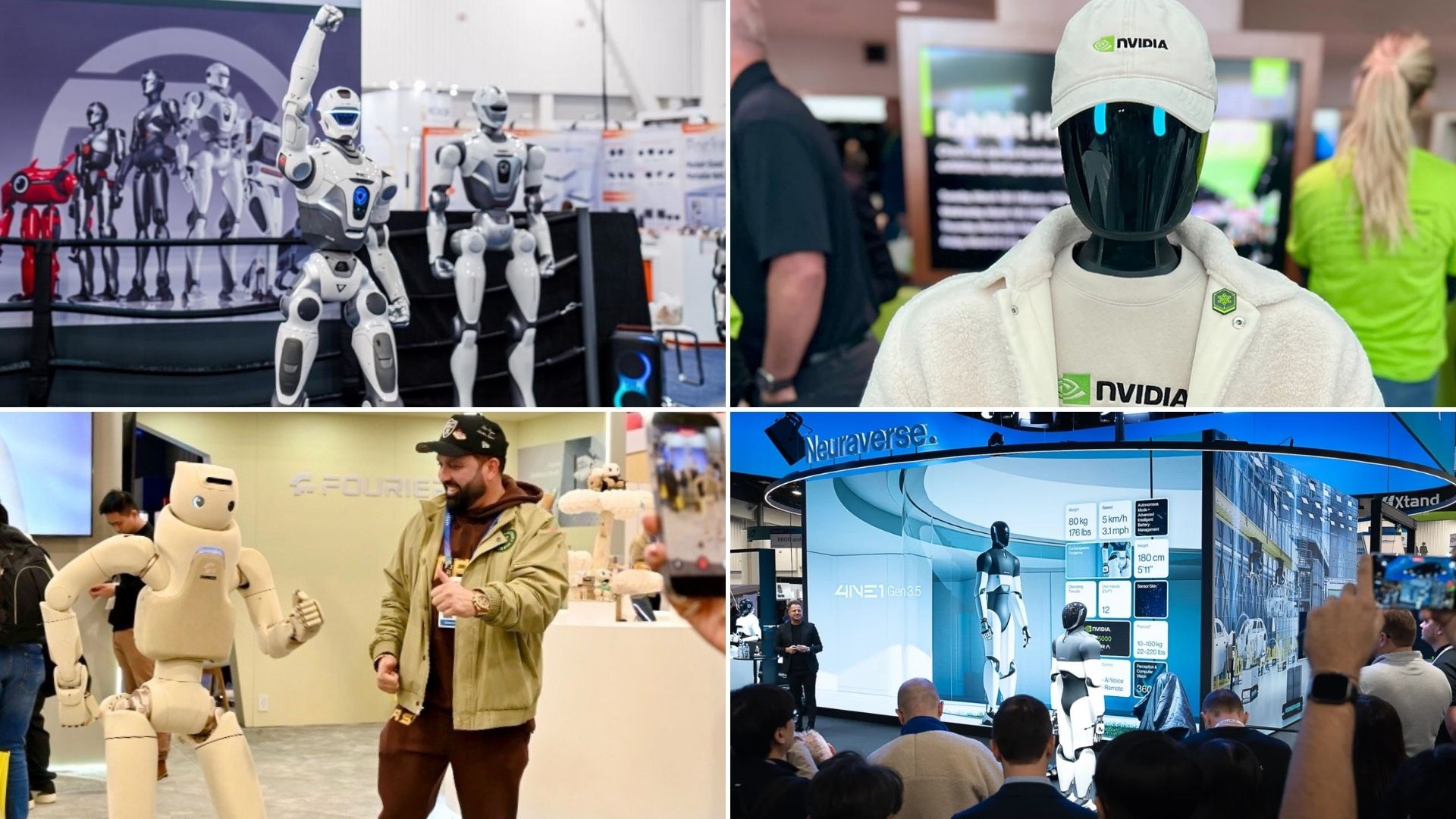
Not every breakout CES 2026 robotics moment came from billion-dollar companies. Chinese manufacturer Unitree Robotics showcased its full lineup — the compact G1, industrial H2, and service-oriented R1 — with the G1 drawing particular attention through live martial arts demonstrations that showed remarkable balance and agility. At approximately $16,000, the G1 costs less than a mid-range car, signaling that mass-market humanoid robots may arrive faster than anyone expected.
LG’s CLOiD stole hearts with a different approach entirely. Korea’s tech giant unveiled its wheeled humanoid, demonstrating breakfast preparation, laundry folding, and dishwasher loading. With a height-adjustable torso, dual seven-degree-of-freedom arms, five-fingered hands, and LG’s “Affectionate Intelligence” system integrated with the ThinQ smart home ecosystem, CLOiD represents the most consumer-friendly vision of household robotics seen to date.
Germany’s NEURA Robotics made a statement with its third-generation 4NE1, designed in collaboration with Studio F.A. Porsche. With a 100-kilogram lifting capacity and patented artificial skin for collision detection, plus the Neuraverse operating system enabling real-time skill-sharing across entire robot fleets, NEURA is targeting both industrial and household applications simultaneously.
5. What CES 2026 Robotics Actually Tells Us About the Next 3 Years
The most significant thing about CES 2026 wasn’t any single robot — it was the pattern. For the first time, the conversation shifted from “can humanoid robots work?” to “where will they work first?” Three clear trends emerged from the show floor:
- Industrial deployment is real and imminent. Boston Dynamics Atlas ships to Hyundai and Google DeepMind this year. Agility’s Digit is already in Amazon warehouses. AgiBot has shipped over 5,000 units globally. These aren’t press releases — they’re purchase orders.
- Home robots are 2-3 years out, not 10. Figure AI’s autonomous room-cleaning demo, LG’s CLOiD kitchen helper, and SwitchBot’s Onero H1 all showed household robots performing real tasks without hand-holding. The technology gap between “factory floor” and “living room” is closing faster than expected.
- AI foundation models are the differentiator. The Boston Dynamics–Google DeepMind partnership for Gemini Robotics integration, Figure AI’s Helix system, and NEURA’s Neuraverse fleet OS all point to the same conclusion: the robot body is becoming commoditized. The real competition is in the AI brain that drives it.
With 40+ companies showcasing humanoid robots at a single event, and EngineAI offering a full-size humanoid for $25,000, the economics are shifting rapidly. CES 2026 wasn’t just the year humanoid robots showed up — it was the year they showed up for work.
Get weekly AI, robotics, and tech trends delivered to your inbox — no hype, just the demos that actually matter.
Get weekly AI, music, and tech trends delivered to your inbox.