Music Industry Predictions 2026: AI, Streaming Wars, and the Live Event Boom Reshaping Everything
January 23, 2026
How to Use AI for Music Production: Ethical and Practical Guide 2026
January 26, 2026
84% of students are already using AI for schoolwork. Meanwhile, only 9% of CTOs believed their institutions were ready for it. That gap — between how fast students adopt AI education tools 2026 and how slowly schools respond — is finally getting addressed. In January 2026, both Microsoft and Google dropped major AI education announcements at CES and Bett UK within days of each other.
The numbers tell a compelling story: 69% of teachers say AI tools have improved their teaching methods, and students receiving AI-powered instruction saw a 62% increase in test scores. AI in education is no longer an experiment — it’s becoming infrastructure. Here are the 5 most significant AI education tools that emerged from CES and Bett UK 2026, and what they mean for how students learn.

1. Microsoft Learning Zone — The ISTE-Certified AI Learning App
Microsoft Learning Zone is a new AI-powered Windows app announced at Bett UK 2026. What sets it apart from the flood of edtech AI tools is its ISTE (International Society for Technology in Education) certification. This means the tool has been vetted by educators — it’s not just another chatbot slapped with an “educational” label.
The app analyzes each student’s learning patterns and serves personalized content accordingly. Parents and teachers get a monitoring dashboard to track progress. Microsoft also announced “Elevate for Educators,” a program aiming to certify 20 million teachers in AI within two years. That’s an ambitious number, but it signals how seriously Microsoft is investing in the education AI space.
The ISTE certification matters more than most people realize. The education technology market is flooded with tools that promise “AI-powered learning” but lack pedagogical rigor. ISTE’s stamp of approval means Microsoft Learning Zone follows evidence-based learning design principles — not just impressive demos, but actual educational outcomes.
2. Google Gemini Classroom — Practice SATs and Audio/Video Submissions
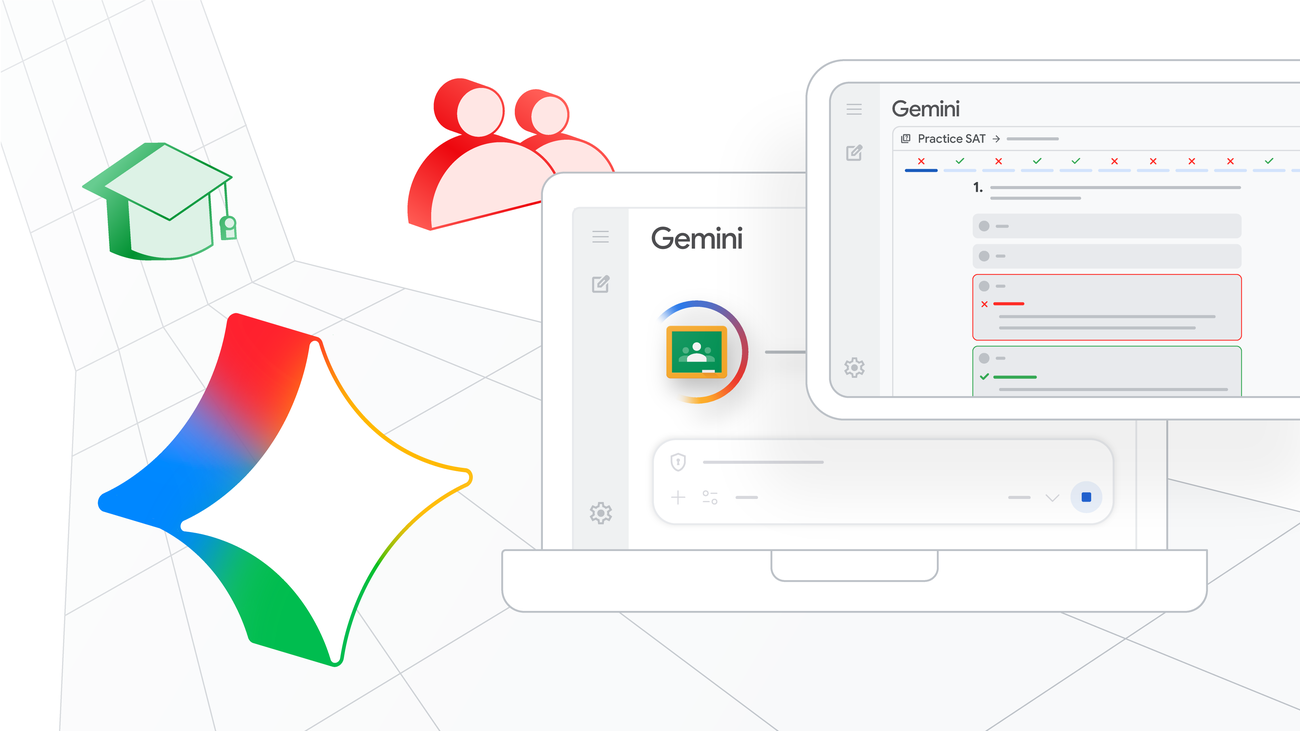
Google announced major Gemini integration into Classroom at Bett UK 2026. The headline feature is “Practice SATs” — Gemini assesses a student’s current level and generates SAT-style practice questions targeting their weak areas. Instead of grinding through generic practice books, students get adaptive problem sets that evolve with their understanding.
But the more quietly revolutionary update is audio and video recording in Google Classroom. Students can now record oral presentations and submit them directly. Teachers can give voice feedback instead of typed comments. This might sound like a small feature, but it fundamentally changes the assignment paradigm — moving beyond text-only submissions to support diverse learning styles.
The data backs this approach: 55% of teachers say AI tools give them more time for direct student interaction. When AI handles the adaptive practice and assessment, teachers can focus on the human elements of education — mentoring, encouragement, and creative problem-solving that no algorithm can replace.
3. NotebookLM — 100 Notebooks, 50 Sources, Completely Free
Google’s NotebookLM has been spreading through education circles like wildfire, and for good reason. You can create up to 100 notebooks, each containing up to 50 source documents. All of this is free.
The key differentiator is what I’d call “source-grounded AI.” Unlike ChatGPT, which draws from its entire training dataset, NotebookLM only responds based on the documents you upload. For education, this is a game-changer. Upload a textbook PDF, and the AI generates quizzes, explains concepts, and creates summaries exclusively from that textbook. No hallucinated facts from random internet sources — just your course material, made interactive.
In The 74 Million’s review, which tested over 200 education tools, NotebookLM ranked among the top picks. Teachers are using it to create study guides from lecture notes, generate discussion questions from research papers, and build review materials from multiple source texts. The 100-notebook limit means a teacher can essentially create an AI-powered study companion for every unit in every class they teach.
4. Microsoft Study and Learn Agent — Adaptive Exercises for Ages 13+
Alongside Learning Zone, Microsoft introduced the “Study and Learn Agent” — an AI agent specifically designed for students aged 13 and older. The agent generates adaptive practice exercises that respond to student performance in real time. Get a question wrong, and the agent explains the underlying concept, adjusts difficulty, and provides scaffolded practice until mastery is demonstrated.
What differentiates this from standalone AI tutoring apps is deep integration with the Microsoft 365 ecosystem. “Teach in Microsoft 365 Copilot” provides teachers with free lesson preparation tools, and the learning data from Study and Learn Agent feeds directly into teacher dashboards. Teachers don’t have to juggle between separate AI tools and their existing workflow — everything lives in one ecosystem.
The institutional adoption is already accelerating. Ohio State University has made AI education mandatory, and the California State University system signed contracts with Microsoft, OpenAI, and Google. Canvas LMS partnered with OpenAI to embed AI directly into the most widely used learning management system. The message is clear: AI in education has moved from “should we?” to “how fast can we?”
5. MagicSchool AI and Eduaide.ai — AI Platforms Built for Teachers
The first four tools focus primarily on student learning. MagicSchool AI and Eduaide.ai flip the script — they’re built to reduce the administrative burden on teachers. Lesson planning, exam creation, rubric generation, parent email drafts — the repetitive tasks that eat into teaching time get handed off to AI.
MagicSchool AI offers over 70 AI tools specifically designed for educators. Eduaide.ai specializes in assessment tools, making it easy to generate differentiated quizzes and tests aligned with specific learning standards. Both platforms understand that the bottleneck in education isn’t student access to information — it’s teacher time and energy.
Industry leaders’ 2026 predictions overwhelmingly point to AI transitioning from chatbot novelty to integrated educational infrastructure. The CEO of ACT noted that institutions can now use enrollment data to create personalized learning plans from day one. CareerVillage emphasized that AI is moving beyond isolated chatbots into unified support systems that connect advising, tutoring, and career guidance.
AI Education Tools 2026: What This Means Going Forward
Two themes connect all five tools. First, personalization. Every tool adapts to individual student levels rather than delivering one-size-fits-all content. Second, accessibility. NotebookLM is completely free. Microsoft is offering AI certification to 20 million teachers at no cost. Google is integrating Gemini into existing Classroom accounts for free. The cost barrier that often keeps cutting-edge technology out of education is being systematically dismantled.
But challenges remain. That 9% CTO readiness figure is a stark reminder that technology alone doesn’t transform education — school infrastructure, teacher training, and institutional policies need to keep pace. The Canvas LMS-OpenAI partnership points to a pragmatic path forward: rather than asking schools to adopt entirely new platforms, embed AI into the tools they already use.
2026 is shaping up to be the year AI education moves from pilot programs to production infrastructure. The tools are here, the data supports them, and both Microsoft and Google are betting billions that schools are ready. The real question isn’t whether AI will reshape education — it’s whether institutions can adapt fast enough to match the pace their students have already set.
Need tech consulting or automation solutions for AI integration? Sean Kim can help.
Get weekly AI, music, and tech trends delivered to your inbox.