NVIDIA GTC 2026 in 5 Days: 3 Reasons Feynman’s 1.6nm Chips Matter for Music Producers
March 11, 2026
TypeScript 7 Project Corsa: How the Go Rewrite Delivers 10x Faster Builds on Apple Silicon Macs
March 11, 2026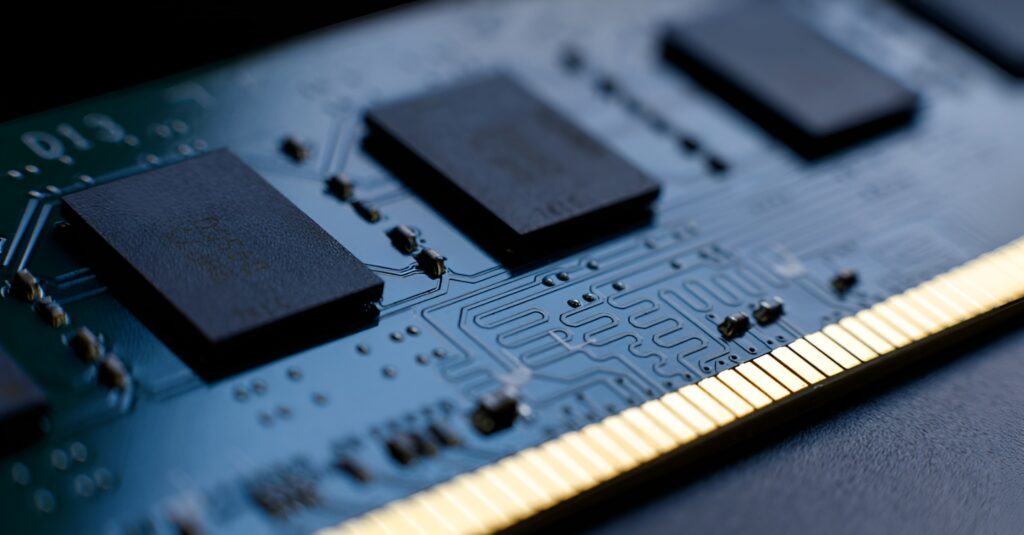
If you’ve priced out a music production workstation recently, you’ve probably noticed something alarming: DDR5 RAM has nearly quadrupled in price since September 2025. This isn’t a temporary blip — it’s the result of a structural shift in the global semiconductor industry. Here’s what’s happening, how it affects audio professionals, and what you can realistically do about it.
![[Placeholder] DDR5 memory modules](https://res.cloudinary.com/dvbcyctrb/image/upload/v1773223448/blog/references/ykfyjynlbruc1fdtm3he.jpg)
AI Data Centers Are Eating the World’s Memory
The world’s three largest memory manufacturers — Samsung, SK Hynix, and Micron — have pivoted aggressively toward producing HBM (High Bandwidth Memory) for AI data centers. The numbers are staggering: up to 70% of global DRAM production in 2026 is destined for AI workloads. Micron has even exited its consumer memory brand, Crucial, entirely.
The fundamental problem is physics: for every bit of HBM produced, manufacturers must forgo producing three bits of conventional DRAM. When Microsoft, Google, Meta, and Amazon are willing to pay premium prices for HBM to power their AI infrastructure, consumer memory becomes an afterthought.
The Price Reality: DDR5 by the Numbers
DRAM prices have risen 80-90% quarter over quarter in 2026. Samsung’s 32GB DDR5 module jumped from $149 to $239 — a 60% increase. The raw cost of a single 16GB module now exceeds $225 before manufacturer margins and shipping. HP disclosed that DRAM now accounts for 35% of its PC build cost, up from 15-18% just one quarter earlier.
Dell, Lenovo, and HP have announced 15-20% PC price hikes for early 2026. Some vendors have even started selling pre-built PCs without RAM — a “Bring Your Own RAM” model that would have seemed absurd a year ago. IDC projects PC shipments will drop over 10% in 2026, and Gartner isn’t much more optimistic.
What This Means for Music Producers
For music producers and audio engineers, RAM isn’t optional — it’s the lifeblood of modern production workflows. Loading large orchestral sample libraries from Kontakt, Spitfire Audio, or EastWest demands a minimum of 64GB, and power users often need 128GB or more. At current prices, a 64GB DDR5 kit runs $450-500, roughly double what it cost a year ago.
The GPU side isn’t spared either. NVIDIA plans to slash RTX 50-series production by 30-40% in H1 2026 due to GDDR7 shortages, as memory suppliers prioritize AI data center allocations. If you were counting on a new GPU for real-time audio processing or AI-assisted plugins, expect longer wait times and higher prices.
![[Placeholder] Samsung SK Hynix HBM3 memory chips](https://res.cloudinary.com/dvbcyctrb/image/upload/v1773223457/blog/references/nummtigb5vlvjrgcfjw0.png)
Survival Strategies: Should You Build Now or Wait?
Industry analysts expect elevated prices and extended lead times to persist throughout 2026-2027, with meaningful stabilization unlikely before 2028. Here’s what you can realistically do:
- If you need a workstation now: Configure with 32-64GB and leave empty DIMM slots for future expansion when prices (hopefully) normalize.
- Mac users: Apple Silicon’s unified memory can’t be upgraded after purchase. If you’re buying an M5 Pro or M5 Max MacBook Pro, invest in the memory configuration you’ll need for the next 3-4 years upfront.
- Hold your existing RAM: Don’t sell your current DDR4 or DDR5 modules. Prices are climbing, and what you have is worth more every month.
- Optimize your workflow: Use disk streaming in your sample libraries (Spitfire’s streaming engine, Native Instruments’ DFD) to reduce RAM footprint. Freeze and bounce tracks more aggressively. Consider template optimization to load only what you need.
- Consider used/refurbished: The secondary market for DDR5 modules is heating up but still offers better value than retail. Check reputable sellers on platforms like eBay or r/hardwareswap.
The Bigger Picture
The 2026 DRAM shortage isn’t just a pricing inconvenience — it’s a structural reallocation of the semiconductor industry’s resources from consumers to enterprise AI. For music producers, the takeaway is clear: maximize what you have, plan upgrades strategically, and keep monitoring the memory market. The era of cheap, abundant RAM is over, at least for now.
Get weekly AI, music, and tech trends delivered to your inbox.